Turkey hunting for biodiversity data

Apr 13, 2026

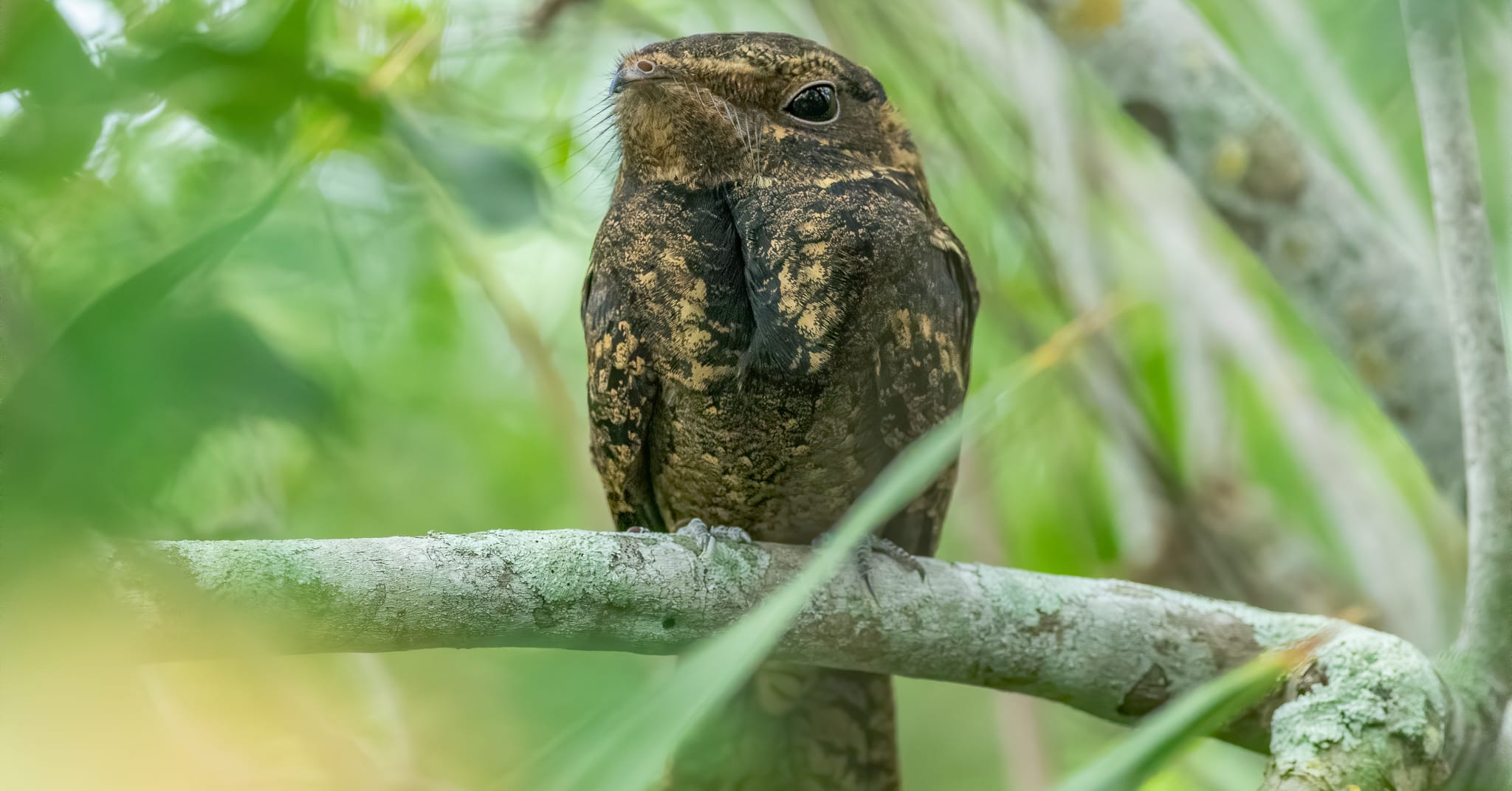
The Stoddard Bird Lab is pilot testing a new app that engages turkey hunters in collecting data on Chuck-will’s-widow, a declining species in the eastern United States. Turkey hunters are known for listening to the woods, and this new data collection effort aims to use this skill to document the status of another classic spring call – the Chuck-will’s-widow.

The Chuck-will’s-widow has experienced a significant decline and is a Species of Greatest Conservation Need (SGCN) in Georgia, with a priority tier of the highest conservation concern. It is more often heard than seen, and its unique call makes it easy to identify.

Private land SGCN data are highly sought after for conservation efforts, but they are also difficult to obtain and collecting it can inconvenience private landowners. By creating a survey that hunters can choose to participate in, we can gather important data at a relatively low cost and with minimal inconvenience. The survey is available through the free Survey123 app and allows participants to easily record the Chuck-will’s-widows they happen to hear in the woods. The Stoddard Bird Lab will review the recordings to confirm the identification and use the automatically submitted spatial information to inform subsequent research and monitoring efforts.

The survey is not just limited to turkey hunters. Anyone who is in the woods early in the morning can submit data.

Listen to the call of a Chuck-will’s-widow

Add the survey to your phone’s home screen to start gathering data

Tips for submitting data

The Chuck-will’s-widow often calls in the predawn darkness. To keep the glow of your phone screen to a minimum while hunting, dim the brightness.

The app needs your location and access to your microphone to collect data. A sound recording of less than five minutes is preferrable.


 

About the Author
Kate Richardson
Kate (Gentry) Richardson leads research in the Stoddard Bird Lab of Tall Timbers with a focus on ecology, conservation, and management of species that benefit from fire. Kate previously served as Imperiled Species Biological Administrator and Gopher Tortoise Program Coordinator with the Florida Fish and Wildlife Conservation Commission. Before moving to Florida, she worked as a postdoctoral researcher at Purdue University studying mixed-species bird flocks across a gradient of foraging habitat. She earned her graduate degrees at George Mason University studying noise pollution impacts to songbirds in the San Francisco, CA and Washington, DC metropolitan areas.
  • Recent Articles
    Managing overstory is vital to bobwhite, timber health

    This updated article is based on content originally published in the Tall Timbers Bobwhite Quail Management Handbook Managing the overstory on a property can be the most important decision made by a landowner, as it affects not only habitat suitable for bobwhite quail...

    Wildfire Emissions Prevention Act advancing in Congress

    The U.S. Senate unanimously passed the Wildfire Emissions Prevention Act (WEPA), a bipartisan bill to encourage the use of prescribed fire by reducing regulatory hurdles associated with recent changes to the Clean Air Act.

    Managing invasive Lespedeza

    Above: Nonnative, invasive Lespedeza species, bicolor lespedeza (Lespedeza bicolor), left, and sericea lespedeza (Lespedeza cuneata). The genus Lespedeza contains many native plant species distributed throughout the Southeastern U.S. These legumes all have trifoliate...

    Prescribed fire risk-pool insurance expanding to western states

    A pilot project to develop private-market solutions in the Southeast for prescribed fire liability insurance is now expanding to several western states. Those efforts have continued to evolve, demonstrating that innovative partnerships can help expand access to...

    Related Articles