A decade ago, you’d have been hard pressed to find a wild bobwhite quail across the 7,000 acres of Spring Mill Plantation.
Now, in 2026 the property – situated near Millen, Georgia in the state’s Coastal Plains Region – boasts an impressive population and serves as a shining example of how intensive habitat management can successfully restore the iconic gamebird.
It’s no fluke that during a single-day hunt in December 2025, Spring Mill owner Ben Wall moved 43 coveys of wild bobwhite. It’s the product of setting a goal to restore quail populations and carrying out a vision to transform the property.
When Wall, who is the CEO and president of Atlantic Waste Services, first saw the property it was an industrial timber tract heavily stocked with pine trees and close to no openings that would support quail.
He grew up a bird hunter with bird dogs in the house and a father who would jump at any chance to hunt quail in Southeast Georgia.
“But as time went on, wild birds became more and more scarce and it got harder to find them,” he said.
After a few quail hunts in other regions of the state and with the help of Tall Timbers, he saw the potential in Spring Mill and decided to purchase it.
“I fell in love with this piece of property,” Wall said.
Precision management and proof of concept
With row pines “as thick as the hair on a dog’s back,” as Wall said, the work was cut out to restore the property to one that could support wild quail.
He began working with Tall Timbers and eventually connected with Paul Grimes, the Director of Tall Timbers’ Carolina Regional Quail Program, who saw the property as a blank slate.
They set a goal of at least three coveys per hour and began planning where to start on the property. The plan included the hallmarks of quail management and, eventually, the translocation of wild birds once conditions were right as few bobwhite were present.
“We started with identifying a core 1,500 acres to begin work on,” Grimes said. “That was important because we needed to select some area of the property where we could dial in resources and management and really get it precise.”
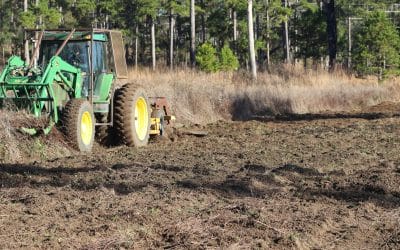
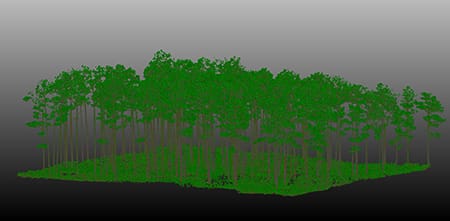
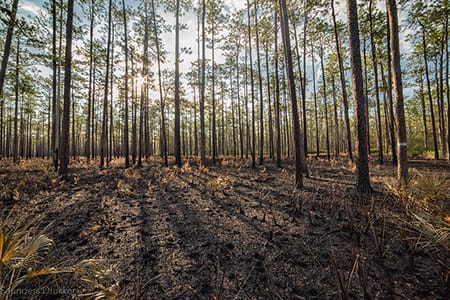
The pines were thinned to allow an open over story to allow abundant sunlight reaching the ground. As timber was being thinned, brood fields were incorporated across roughly 20% of the uplands scattered every 200-250 yards. Wall and his managers began reintroducing prescribed fire to the property. A feed line was established and eventually predator management was initiated, with traps placed at one per 20 acres.

“There’s a sense of accomplishment knowing I went and grew these birds,” said Spring Mill owner Ben Wall, left.
Overall, the timeline spanned two years of intense work that transformed the dense timber into quail habitat.
“Nearing the end of the plan, the habitat was responding,” Grimes said. “The woods were looking great and the understory was looking like we needed it to.”
Once the habitat began to flourish, quail began to appear – likely birds that pioneered from adjoining properties – but numbers were deemed insufficient to establish a viable population, necessitating an augmentation of additional quail from another site.
For Grimes, the transformation and results show proof of concept for a process developed through Tall Timbers’ decades of stewardship to build a flourishing wild quail population.
“This is one of several properties that have defied common consensus and shown that you can achieve high, huntable populations of wild quail beyond the Red Hills and Albany and sustain it,” he said.
“We saw an immediate boom. The numbers just went off the charts,” Grimes continued. “We didn’t have to move that many birds. The response was so fast and so incredible that we met the objective early.”
Each year, the number of quail found in Spring and Fall monitoring has nearly doubled, Wall said.
The journey to developing Spring Mill into a premier wild bird property has taken a lot of work, but given the region’s timber markets and the habitat and infrastructure improvements, Wall said, it holds more value now than it did when he purchased it.
To add more value and a revenue stream to continue quail management, Wall is developing an 800-acre produce and 250-acre blueberry operation.
At the same time, Wall is converting center-pivot crop fields into quail habitat by planting longleaf pine trees and grasses and developing a patchwork of brood fields.
The hope is that the same success takes hold there.
Wall tries to hunt a full day on his birthday in December each year. Based on the past two years, Spring Mill doesn’t seem to be slowing down.
In 2024, he flushed 26 coveys in a single day. In 2025, that number grew to 43 in a single day.
“There’s a sense of accomplishment knowing I went and grew these birds,” Wall said. “My hope this year is we get into the low 50s.”