Two Rare Liatris Species Named for Beadel Fellows Angus Gholson & Bob Godfrey
Liatris, commonly called gay feather or blazing star, is an herbaceous perennial wildflower with composite flower heads, and is in the Aster family. Several liatris species can found in the native ground cover of the sandhills, mesic longleaf pinelands, scrub and pine flatwoods communities in Florida. The plant ranges from 1– 4 feet tall, with flower spikes that are 6–12 inches long; it blooms in the late summer/early fall, August to October. Two rare species can only be found in the Panhandle of Florida, Liatris gholsonii and Liatris provincialis Godfrey, and they are named for two of Tall Timbers’ past Beadel Fellows, Angus Gholson and Robert K. Godfrey, respectively.
Liatris gholsonii, commonly called Bluffs blazing star or Gholson’s blazing star, was discovered by Loren C. Anderson in 2002, and named for Angus Gholson. The habitat for this species is the bluffs and ravines of the upper Apalachicola River in the Florida Panhandle; Gholson’s stomping grounds.
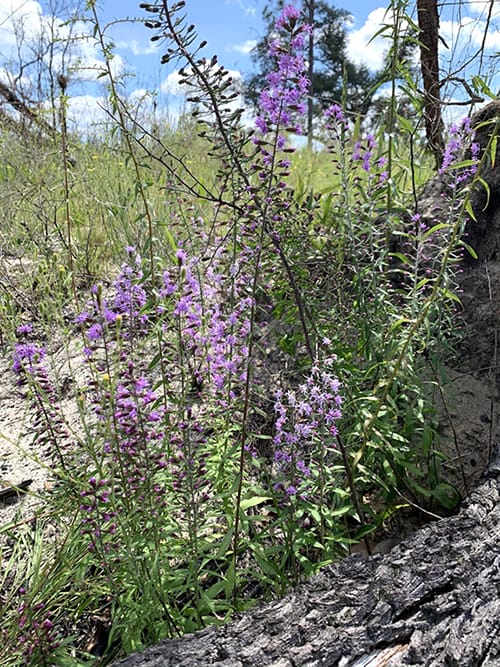
Liatris gholsonii observed in Liberty County, Florida. Observation © lillybyrd · some rights reserved.
This area of the Panhandle was heavily damaged by Hurricane Michael in 2018. A 2019 assessment by the Florida Natural Areas Inventory to the Florida Park Service of the forest damage at Torreya State Park, which is situated on the high bluffs overlooking the Apalachicola River, noted that “many hardwood forests along the uplands at the tops of the ravines likely developed through decades of fire exclusion or fire not burning all the way to the edge of the ravines. Additionally, a rare plant species, Gholson’s blazing star (Liatris gholsonii), occupies this ecotone area along the upper slopes between sandhill and the sloping hardwood dominated ravine and could potentially benefit from restoring fire to these areas.”
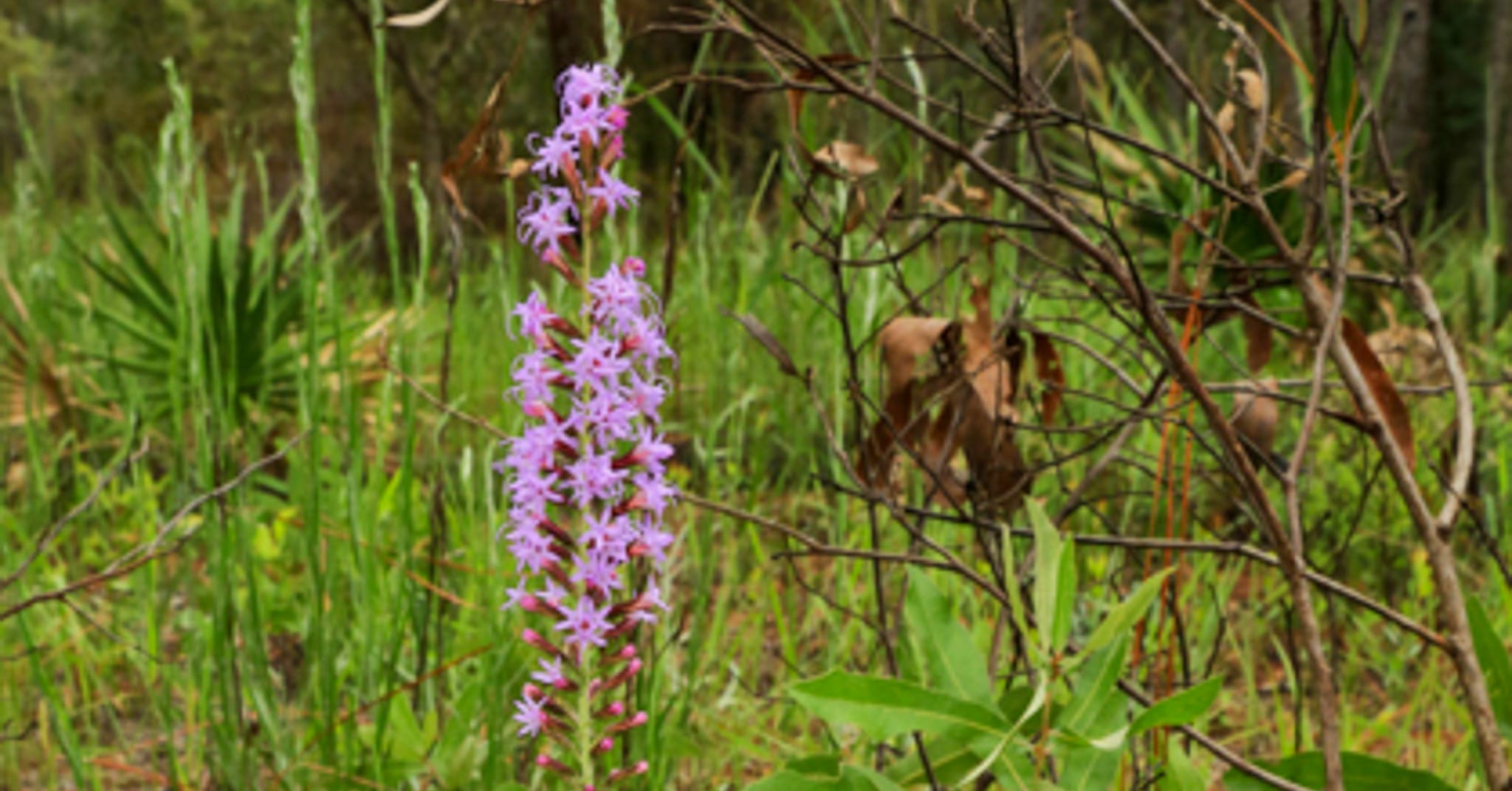
Liatris provincialis Godfrey was discovered by Robert Godfrey on Alligator Point, in Franklin County in 1959. Its habitat is the transition zone between coastal scrub and flatwoods and between sandhill and flatwoods near the Gulf coast of Franklin and Wakulla Counties where it is endemic, and primarily found on protected sites at the St. Marks National Wildlife Refuge.
Originally published in the 2022 Tall Timbers eJournal.
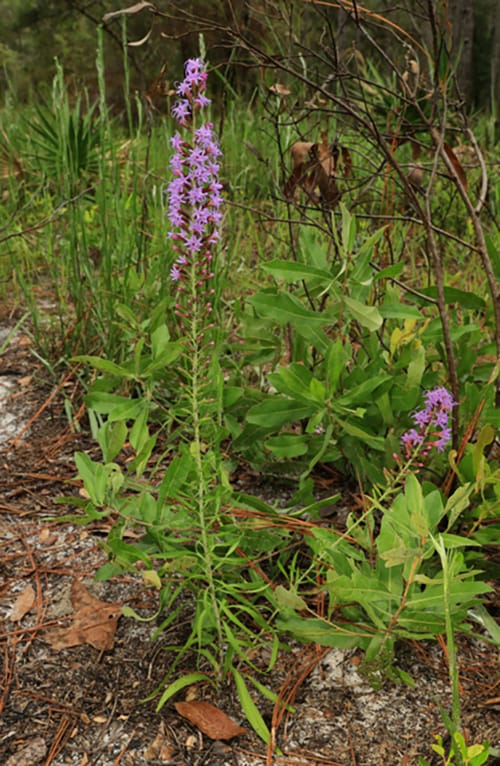
Liatris provincialis Godfrey in bloom at St. Marks National Wildlife Refuge. Photo by Alan Cressler