Many of us have been gifted a houseplant only to have our neglect cause its untimely demise.
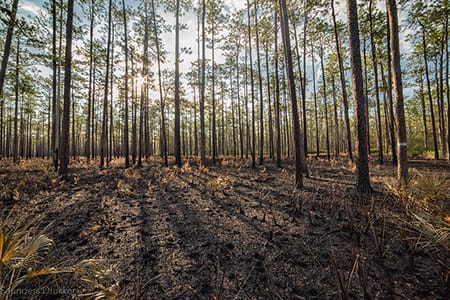
While the windowsill provided the sunlight it needed, the cracked soil suggests something else was lacking: water. While that lapse in memory only claimed the life of a simple houseplant, when drought occurs in our forests, effects experienced by the plants can be transferred up the food chain to others. It’s up to biologists and land managers to watch for stressors like these to protect vulnerable ecosystems.
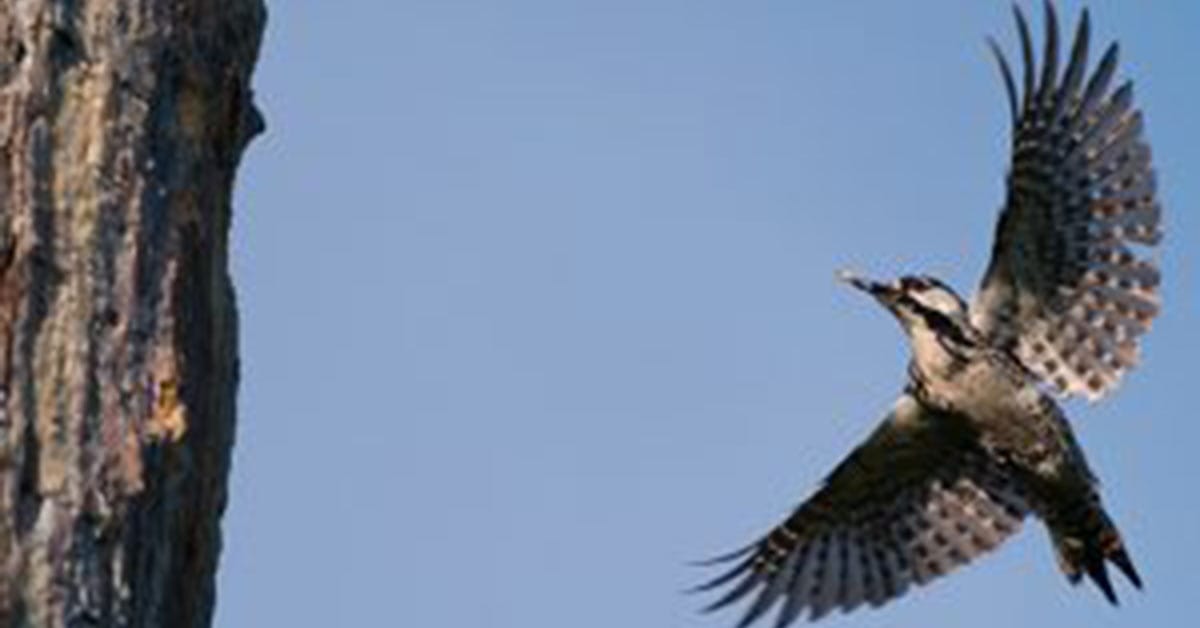
That’s why biologists with the Stoddard Bird Lab at Tall Timbers are keeping an eye on the federally threatened red-cockaded woodpecker. These important woodpeckers create cavities that provide homes to over 30 other species including frogs, squirrels, and wood ducks (see our article on this ‘ecosystem engineer’ effect). Thus, when a historic drought covered over 95% of the Southeast this year, an opportunity to discover how drought impacts this important species presented itself.

As the drought index increased in 2026 (black line), the number of eggs and nestlings lost increased as well (blue shaded area).
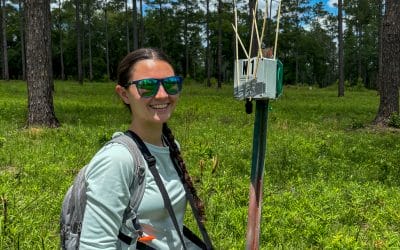
The 2026 drought occurred when the red-cockaded woodpeckers were nesting, a critical time where doting parents and family members incubate eggs and feed the young. Biologists searched woodpecker groups across the Red Hills for nests and tracked the contents over time (Fig. 1).
When an egg or chick was lost, it was recorded as brood loss and added to our long-term nest monitoring dataset that dates back to 2018. These losses were then associated with weather conditions recorded by Tall Timbers’ Game Bird Lab’s local weather stations to gain a precise and nuanced view of the impact of weather events on nest success.
The results were clear— when drought intensified, brood loss followed.
A whopping 97% of nests monitored in 2026 experienced some amount of brood loss, including total nest failure. On a brighter note, the data also showed a slight benefit of warmer temperatures leading to fewer brood losses.
On cooler spring days, temperatures over 70°F are ideal for many insects, including some that the woodpeckers regularly eat (see our article on woodpecker foraging). Easy to find bugs makes the job of feeding hungry nestlings a bit easier. However, this was only a slight benefit to the birds and was greatly overshadowed by the negative effect of drought.

Tall Timbers staff support RCW through installation of artificial nest boxes. Multiple homes support the family dynamic of the birds which can improve nest success.
So what does the forecast look like for the Red Hills woodpeckers? Climate predictions show longer and more severe droughts will occur more often into the foreseeable future. However, there are several ways we can support our birds given the rough outlook.
You can’t control the weather, but you can prepare for it. La Niña years bring drier weather to the southeastern U.S.
While it’s difficult to predict the weather for next Tuesday, climatologists can often predict these large-scale patterns well ahead of time. In the face of a tough breeding season, we can support groups of woodpeckers by providing additional cavities. The young of the previous year help to feed the current year’s nest. So providing homes to the helpers should give tired parents an easier lift.
Armed with information, we can better support the species that contribute most to a diverse and healthy ecosystem.