The U.S. Senate unanimously passed the Wildfire Emissions Prevention Act (WEPA), a bipartisan bill to encourage the use of prescribed fire by reducing regulatory hurdles associated with recent changes to the Clean Air Act.
Following the September Senate vote, WEPA now heads to the U.S. House of Representatives where Tall Timbers is advocating for a vote after the November midterm elections.
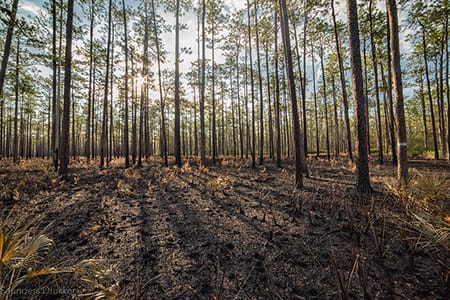
WEPA is Tall Timbers’ top Congressional priority. This legislation ensures that states are not penalized for smoke from prescribed fires, which are essential for wildfire mitigation, improving wildlife habitat and supporting species diversity. WEPA reduces regulatory barriers so land managers can apply prescribed fire safely and at scale and creates a grant program to prevent or mitigate the impact from wildfire smoke to community buildings.
Notably, Tall Timbers was the first organization to advocate for WEPA as a sensible approach to regulating PM 2.5 (soot) from prescribed fire.
Over the last two years, Tall Timbers has become the “go to” stakeholder throughout WEPA negotiations with Senate Environment and Public Works (EPW) staff. We have educated Senate EPW committee members, conferred with committee staff on bill language and strategy, and built a coalition of partners in the prescribed fire space collaborating to pass WEPA.
Working closely with our Washington D.C. consulting team at the Brumidi Group, Research Director and subject matter expert Morgan Varner and Advocacy Coordinator Neil Fleckenstein have met with staff representing seven U.S. Senators on both sides of the aisle to explain the importance of WEPA and advocate for its passage.
Tall Timbers strongly believes that WEPA represents a common-sense approach for keeping prescribed fire on the landscape nationally, reducing wildfire risk, and improving ecosystem health and wildlife habitat.
For additional information about Tall Timbers’ involvement with the Wildfire Emissions Prevention Act, contact Advocacy Coordinator Neil Fleckenstein at neil@talltimbers.org.