Fall and winter is a good time to control select non-desirable plants. One of the primary targets during the winter months is privet.
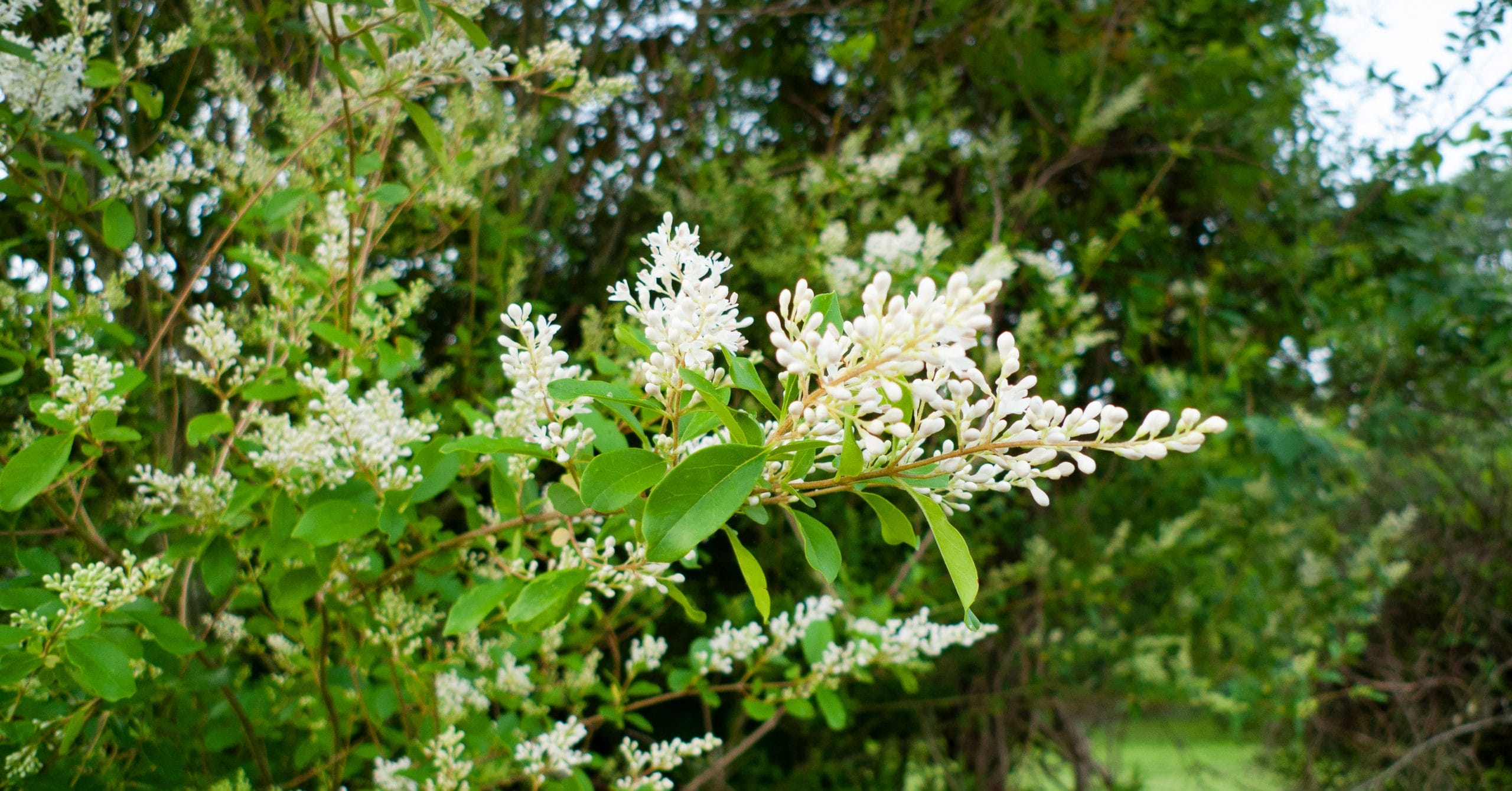
While there are several species of exotic privet in the southeast, Chinese privet (Ligustrum sinense) is the most widespread. This plant forms dense stands that shades out desirable vegetation.
While frequent fire tends to keep privet controlled, it can be aggressive and dominant in areas with less frequent fire. For example, privet can convert open productive wetlands to dense thickets limiting fire from being used and reducing habitat for waterfowl and amphibians.
Also, these dense patches of privet offer ideal cover for predators such as raccoon and feral pig which can complicate management of desired upland species including bobwhite and wild turkey.
Because privet tends to remain evergreen in much of the southeast, it can often be sprayed in the winter (November – January) with limited collateral damage to dormant desirable plants.
Foliar applied glyphosate is the herbicide of choice during this period. Apply a 4-5% solution (5-6 ounces of herbicide per gallon of water) when using a product with 41% active ingredient of glyphosate and spray the entire plant until wet.
Adding a non-ionic surfactant is critical as the waxy leaves of privet tend to shed water (and the herbicide) if a surfactant is not used. If spraying in wetlands, be sure to use an aquatic labeled glyphosate product.

Because privet tends to remain evergreen in much of the southeast, it can often be sprayed in the winter (November – January) with limited collateral damage to dormant desirable plants.
Note that extended cold can cause privet to go into dormancy and even to drop its leaves, therefore only spray privet if the leaves are green and semi glossy indicating the plant is actively growing.
Privet up to about 8’ can be sprayed from a ground-based sprayer. The edges of firebreaks, forests, and wetlands can be efficiently sprayed with a fan sprayer mounted on a tractor or UTV.
A high-pressure nozzle with a long hose is effective for areas off of roads/edges but is labor intensive.
Tall privet (> 8’) is best controlled with a basal bark herbicide application or with a forestry mulcher and later follow up foliar spray after the privet resprouts.
If using basal bark, each stem should be sprayed. Be sure to wet (to the point of runoff) the entire circumference from the base up about 12” with the herbicide solution.
For basal bark treatment, the recommended solution is 20-30% triclopyr ester (if using a product with approximately 60% active ingredient) and 80-70% crop oil or diesel which acts as a surfactant to help penetrate the bark.
For large areas of privet, it may be more efficient to use a forestry mulcher and grind the privet to the ground. Once it resprouts up to knee to waist high the following fall, it can then be effectively sprayed with the same glyphosate foliar solution detailed above.
While privet is easy to kill with herbicide, it readily comes back from seed, making periodic control necessary in areas lacking frequent fire.
Despite the cost of control, removing privet often results in higher diversity of plants, better wildlife habitat for many species, and can help the land manager meet their goals.