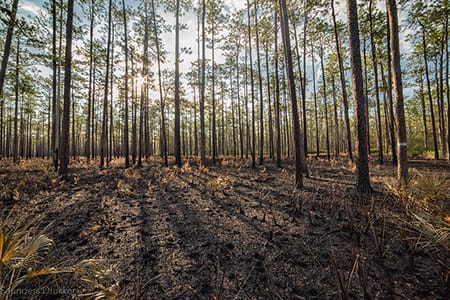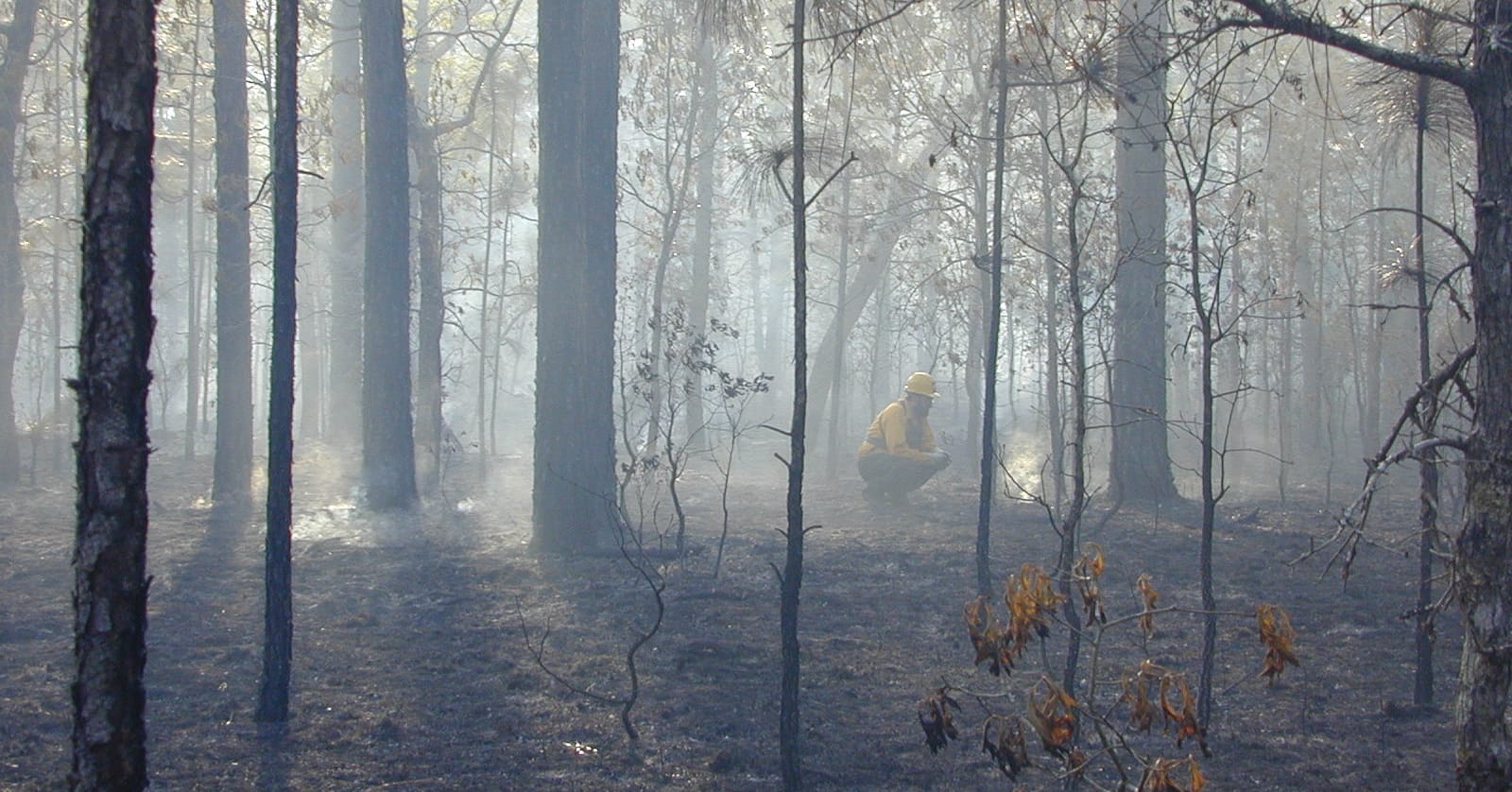
Now in its fourth year, a new Burning for Birds project phase kicked off in December 2025, and builds upon restoration work on thousands of acres utilizing prescribed fire to benefit fire-dependent birds recorded across multiple project sites in the Southeast.
Target species for Phase 4 of the Southeastern Burning for Birds Collaborative project include Northern bobwhite, Bachman’s sparrow, brown-headed nuthatch, Eastern towhee, and summer tanager.
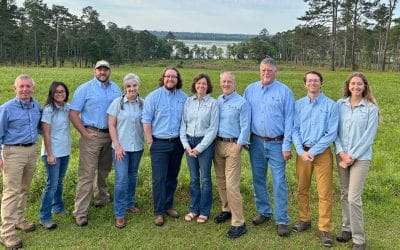
Collaborative partners (Tall Timbers, Alachua Conservation Trust, Aiken Land Conservancy, Putnam Land Conservancy, and Georgia Conservancy) have leveraged grant funding for additional restoration work on conservation lands, and they continue to build partnerships to raise awareness about the importance of prescribed fire for bird conservation.
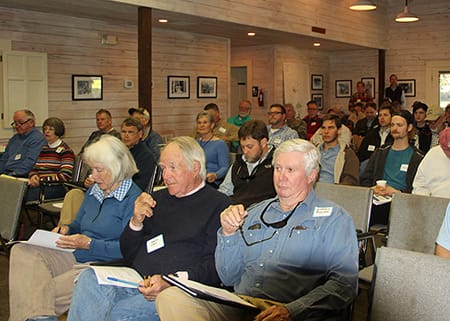
Upcoming outreach events are planned across the region, including a bioblitz, to collect project data and showcase project sites.
As the Southeastern Burning for Birds Collaborative continues its work, momentum for awareness of beneficial prescribed fire is carried to the Delmarva Peninsula. An exciting new relationship has taken shape between the Cornell Lab of Ornithology, Eastern Shore Land Conservancy (ESLC) in Maryland, and Tall Timbers.
Similar to the Burning for Birds effort, Biologically Beneficial Blazes is a new project designed to promote and expand the use of prescribed fire for bird habitat enhancement on Maryland’s Eastern Shore.
Supported by the Cornell Lab of Ornithology Land Trust Small Grant Program, the one-year Biologically Beneficial Blazes project will build local capacity, engage landowners through the Eastern Shore Prescribed Burn Association and connect the Delmarva region with broader fire networks active across the Southeast.
Tall Timbers has been working in the Delmarva region over the past few years to restore habitat for fire-dependent species like the bobwhite and increase the use of prescribed fire by establishing a Game Bird regional program that is dually focused on returning fire to the landscape.
The Southeastern Burning for Birds Collaborative has been growing its efforts to effectively link fire management with bird conservation since 2020. A common goal of the Collaborative and ESLC’s new project is to strengthen regional partnerships.
ESLC will collaborate with land trusts across Delmarva and meet with members of the Southeastern Burning for Birds Collaborative.
The complimentary activities of Burning for Birds and Biologically Beneficial Blazes blend management, outreach, and collaboration and reflect the expanding recognition that fire is not only a management tool, but an ecological necessity–one that sustains the open, diverse, and bird-rich landscapes that define so much of the Southeast and the eastern United States.
Follow the efforts of the Southeastern Burning for Birds Collaborative during Phase 4 of the project by visiting www.burningforbirds.org.