The story of wild quail in the Delmarva Peninsula, a spit of land bordered by the Chesapeake Bay and Atlantic Ocean, is a common one in areas where the bird was once prevalent.
People remember the distinctive “bob white” call throughout the agricultural field-dominated landscape in the 1980s and 90s followed by a downturn in the population and an all but disappearance of bobwhite quail.
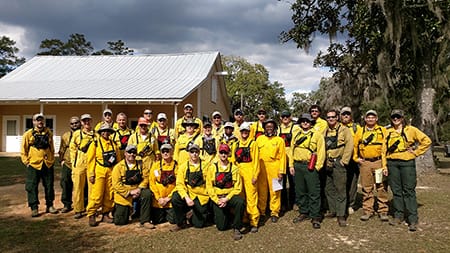
Today, Tall Timbers and a number of partners in the region are working to not only restore wild bobwhite populations but reintroduce a key part of managing bobwhite habitat, prescribed fire.
Kyle Magdziuk heads up Tall Timbers’ Delmarva Peninsula initiative, taking on a dual role as a game bird biologist and prescribed fire coordinator.
Delmarva is a unique location. The peninsula includes Delaware, parts of Maryland and Virginia and sits just to the east of Washington D.C.
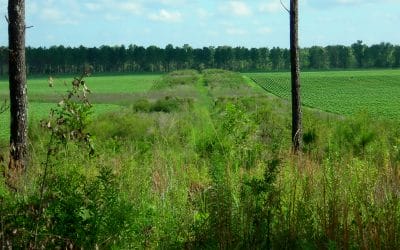
The landscape is mostly agricultural fields split by veins of hedgerows, pine stands, creeks and hardwood drains.
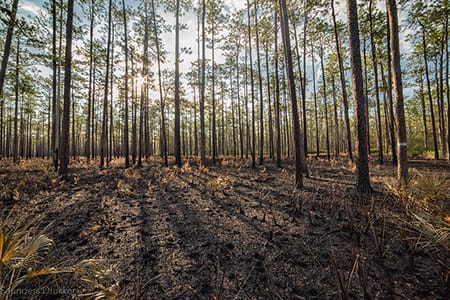
Typical bobwhite habitat for the Delmarva Peninsula includes open pine savannah, crop fields, and hedgerows of shrubs.
Magdziuk is engaged with a handful of private landowners who have put their trust in Tall Timbers and public land managers to work on habitat, to reverse fragmentation and habitat loss in an effort to bring back that familiar whistle.
“People have been missing that (whistle). The interest in that, coupled with the interest of using prescribed fire, has brought state agencies and a lot of partners together and created this upland habitat-early succession movement,” Magdziuk said.

Typical bobwhite habitat for the Delmarva Peninsula includes open pine savannah, crop fields, and hedgerows of shrubs.
It’s been a movement that has broader appeal and interests than just bobwhite.
“Even if people are not interested in bobwhite per se, they are interested in the what bobwhite management can do for pollinators, rare species and hunting opportunity,” he said.
Magdziuk is working to establish relationships, host workshops and connect landowners with the resources to do the habitat work to support wild bobwhite.
He’s working closely with the Natural Resources Conservation Service (NRCS) Working Lands for Wildlife program and the states of Maryland and Delaware.
Tall Timbers also has history working with several nonprofit organizations and private landowners on the Delmarva, which has helped curate the new position. One in particular, Turner’s Creek Farm, has entrusted Tall Timbers for well over a decade. We have been working with them to enhance the habitat, and bobwhite populations have been positively responding every year.
Magdziuk said working with state agencies like the Maryland Department of Natural Resources, Maryland Forest Service, Delaware Department of Agriculture, and Delaware Department of Fish and Wildlife helps to strategically connect land to try to expand quail populations on private and public lands that support high densities.
“It’s a unique landscape, but limited once the crops are harvested. During the summertime when corn and soybeans are growing, existing habitat is essentially connected,” Magdziuk said. “I’m excited about a number of different properties that have entrusted us and it’s exciting to see how quail respond to the management that we recommend.”
Bringing back fire
Fire was once a naturally occurring process in Delmarva but the use has dropped dramatically which has lead to the decline in many at-risk plants and animals. Magdziuk has been working to get more prescribed fire on the ground build on the interest in bobwhite habitat while also relaying the other benefits of using fire.

Kyle Magdziuk heads up Tall Timbers’ Delmarva Peninsula initiative, taking on a dual role as a game bird biologist and prescribed fire coordinator.
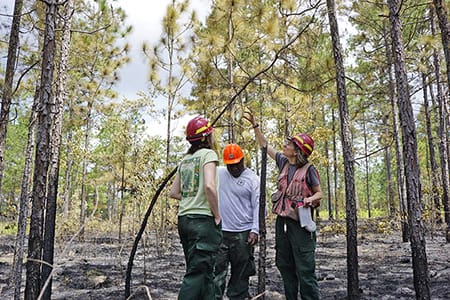
Magdziuk is working with the Maryland Forest Service to offer fire training for landowners that works in conjunction with the necessary experience to be a burn boss in Maryland.
He’s also been a player in working in the stand up of the Delaware Prescribed Fire Council, a state level collaboration of local and regional agencies, organizations, institutions and individuals who advocate for the use of prescribed fire. They help to address the challenges to implementing prescribed fire on the landscape.
Delmarva’s location and agriculturally focused landscape provide challenges to reintroducing fire. To the west is the nation’s capital, but throughout the region there are agriculture, poultry houses, senior living facilities, hospitals, major cities – like Philadelphia, Wilmington and Dover – and neighborhoods and highways that all pose challenges.
But there is growing interest and awareness about the benefits to wildlife and people that come with prescribed fire.
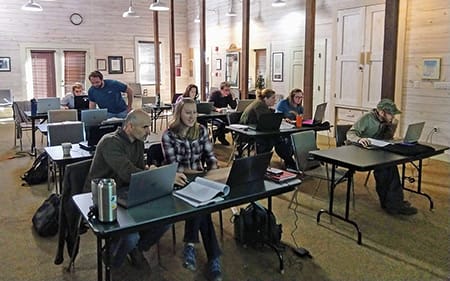
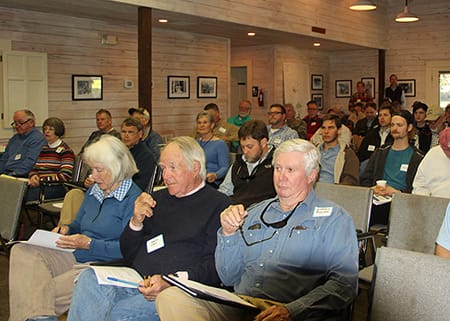
In January, more than 250 people attended a workshop hosted by a number of partners, a good indication that the use of prescribed fire has is gaining traction. A few years ago, just a few would have shown up.
“Fire has been suppressed across the region,” Magdziuk said. “We’re advocating bringing back prescribed fire for fuel reduction and letting the public know that this is a good thing. This is going to benefit a number of things.”
Have a question about wild bobwhite quail or prescribed fire in the Delmarva Peninsula area? Contact Kyle Magdziuk at (315) 532-2008 or kmagdziuk@talltimbers.org