Livingston Place

History of Livingston Place

The history of Livingston Place dates from the early nineteenth century. It was first settled as a cotton plantation in 1819-20 by General William Bailey and his family, and was named The Cedars. In 1919, it was purchased by a group of Macon, Georgia businessmen and renamed Georgia-Florida Farm still farming cotton. In 1926, a group from New York City, who planned to colonize the land with small farmers from Iowa, purchased the property. This plan proved unworkable, and by the late 1920s, one of the group, Gerald M. Livingston, bought out the others. He renamed the 7500-acre property Dixie Plantation.

In October 2020, the property was renamed Livingston Place to honor Geraldine Livingston and her family’s legacy in the Red Hills, as well as the Geraldine C.M. Livingston Foundation’s conservation efforts and donation to Tall Timbers.
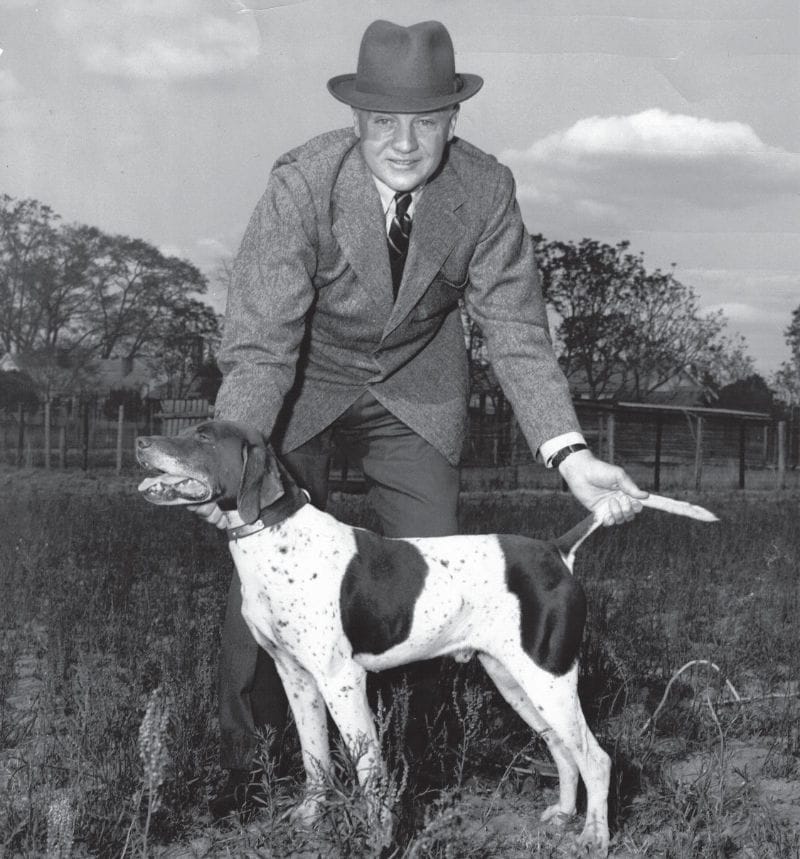
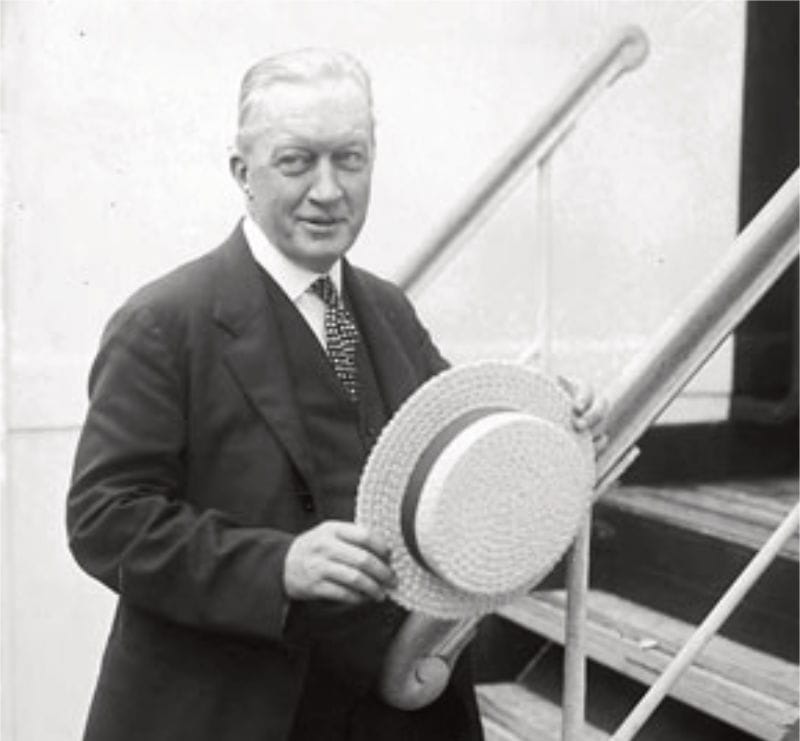
Gerald M. Livingston
Gerald M. Livingston with one of his champion pointers
Gerald Livingston continued to add acreage until his death in 1950, at which time his wife, Eleanor R. Livingston, took control of the approximately 18,000-acre property, almost evenly divided between Florida and Georgia, and continued to manage it as a quail hunting property for family and guests. An ardent outdoorsman, Livingston loved quail hunting with the finest pointing dogs available. His beloved dog Lucky Strike, posed on point, was on the cover of Life Magazine in 1946. With his wife Eleanor and daughters Eleanor, Mary, and Geraldine, the family bred show horses and dogs. A life-sized bronze statue of their World Grand Champion Tennessee Walking Horse Midnight Sun, by Florida sculptor Lee Burman, stands in the gardens near the house.

Upon the death of Eleanor in 1977, ownership of the Florida half of the property was passed to her daughter, Geraldine C.M. Livingston, and the Georgia portion was left to the rest of the family, including her daughter Mary Livingston Ripley and her four grandchildren.
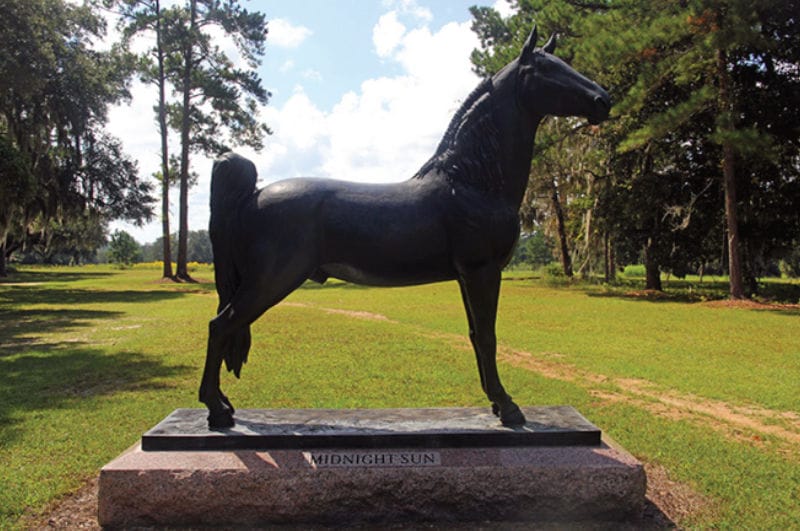
Statue of Midnight Sun
Geraldine lived on the property until her death in 1994, when the ownership was left to the Geraldine C. M. Livingston Foundation to be operated as a charitable organization, dedicated to wildlife management and stewardship. The trustees of the Livingston Foundation maintained the historical integrity of the main house and grounds, and annually hosted the Continental Field Trials and other public events. The Foundation Trustees placed almost the entire 9,100 acres in a conservation easement with the Suwannee River Water Management District, which ensures that Geraldine’s conservation interests will continue to be carried out in perpetuity.

The Continental Field Trial continues at Livingston Place, where it has been held since 1937, when it was moved there by Gerald Livingston, during his tenure as president of the Continental. This prestigious pointing dog field trial, which attracts participants from across the country, is significant because Livingston Place has wild bobwhites, providing a true opportunity for the field of derby and open dogs entered to demonstrate their drive and talents.
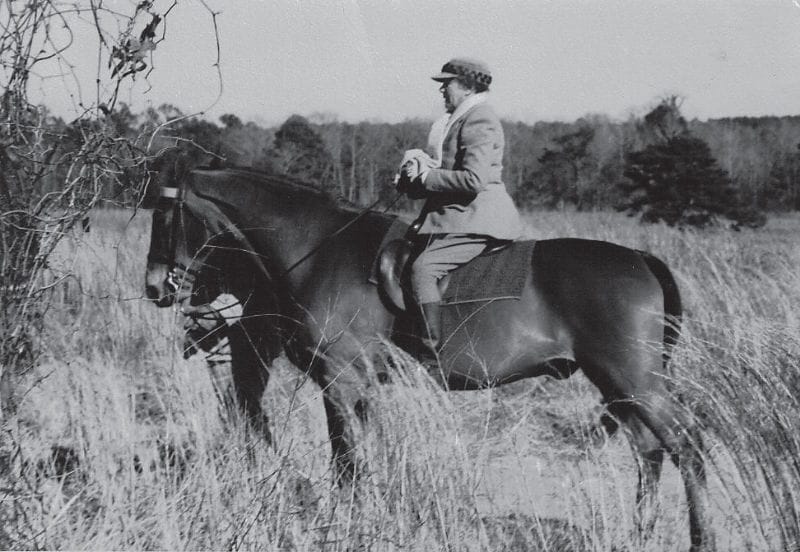
Eleanor Livingston
Eleanor Livingston
An important feature of Livingston Place is its historic home. Tired of living in the old quail lodge each winter, in 1936 the Livingston’s commissioned John Russell Pope, the foremost classical architect of the twentieth century, to build their three-story brick mansion deep in the interior of the property.

Mr. Pope designed the Jefferson Memorial, the National Archives and the National Gallery of Art.

The 14,000+ square foot Neo-Classical Revival style house was built between 1938 and 1940. The Livingston home was the last personal residence designed by Pope, who died prior to its completion.
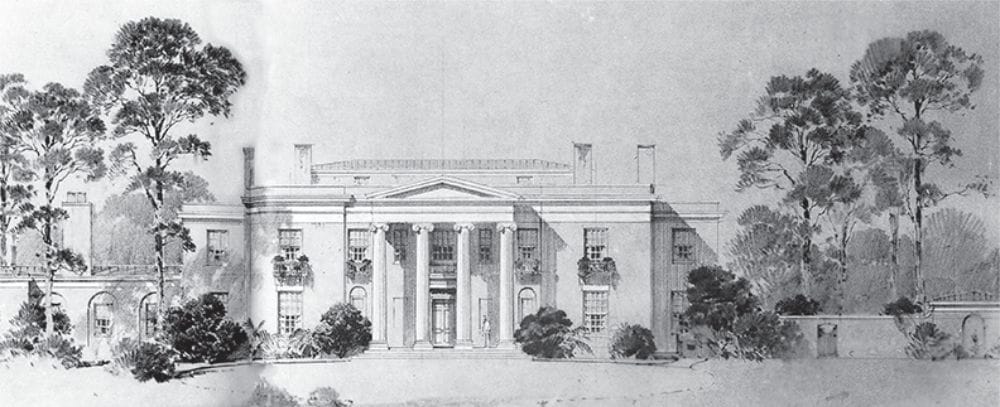
Architectural rendering of the Livingston’s house
Architectural rendering of the Livingston’s house drawn by John Russell Pope in 1936-37
Pope adorned the house with a two-story Ionic column portico, broad frieze band and horizontal cornice across the top of the building, uniting the symmetrical structure with its slightly recessed wings. The house sits on a promontory overlooking Lake Windom and is approached on a scenic dirt drive. Beyond the ornate entrance gate, a beautiful oak allee leads to the stunning main house.

The house is believed to have been completed by 1940. A large entry hall on the first floor leads to the south wing with a library, gun room, bar, and living room decorated in wood paneling and ornate moldings imported from an eighteenth century London house. A screened porch opens to a loggia overlooking the formal gardens designed by noted New York City landscape architect Robert Ludlow Fowler, Jr.

View of the John Russell Pope designed house from the northeast, before the land- scaping had matured.
View of the John Russell Pope designed house from the northeast, before the landscaping had matured.
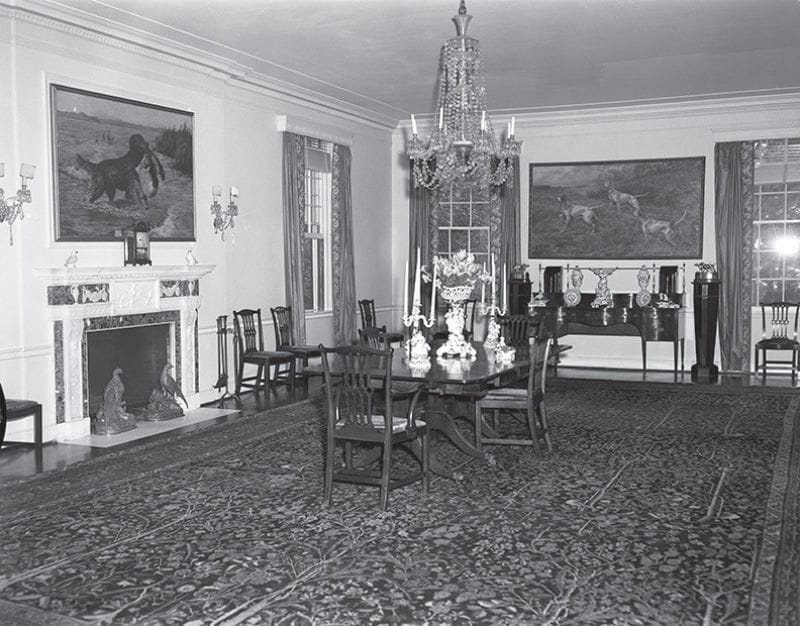
The east wing includes a formal dining room, breakfast room and kitchen. A wide, graceful staircase leads to the second floor with two master suites and five guest rooms, all with fireplaces. The “attic” housed the servants in five smaller bedrooms. There are 13 bathrooms in the house.
Gerald M. Livingston
Gerald M. Livingston with one of his champion pointers
Statue of Midnight Sun
Eleanor Livingston
Eleanor Livingston
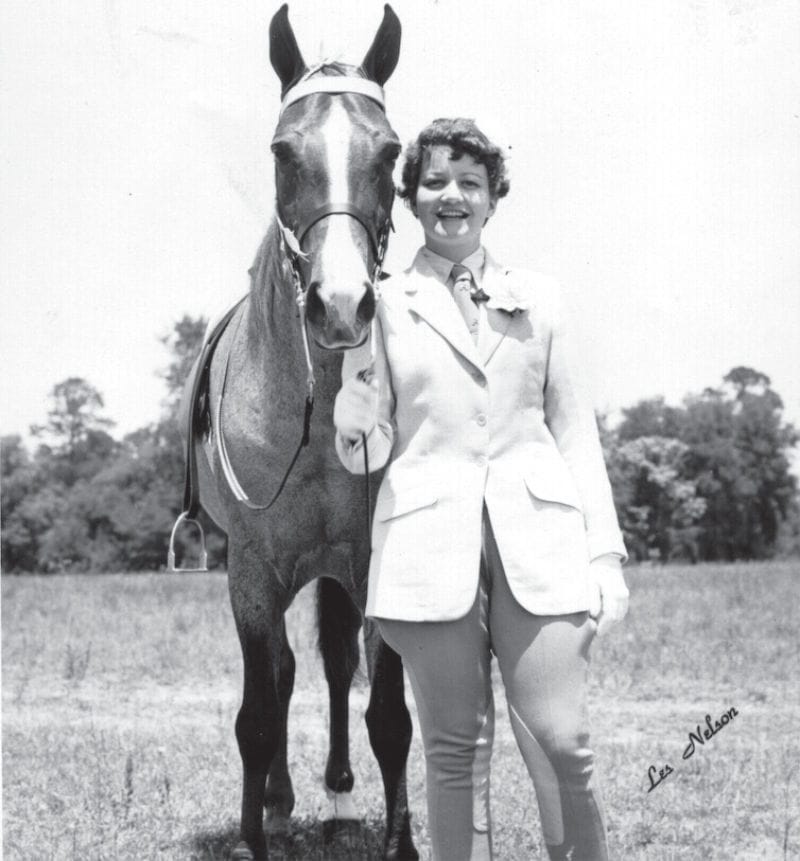
Geraldine Livingston
Eleanor Livingston
John Russell Pope
John Russell Pope
Dining Room
Dining Room
Livingston House Stairs