By Kevin Robertson, PhD and Cinnamon Dixon, Fire Ecology Lab, originally published in the Summer 2022 edition of Quail Call.
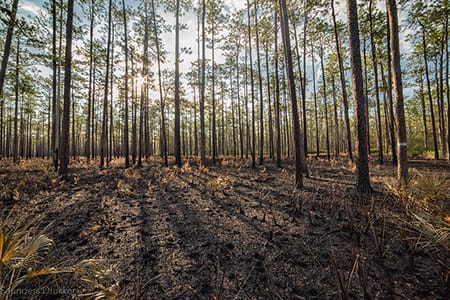
The term “ecosystem services” has gotten a lot of buzz in recent years. They are basically products or processes provided by natural lands that benefit humans. It follows that hunting itself is an ecosystem service. However, management for northern bobwhite, especially the use of frequent prescribed fire, can provide many more benefits than just good hunting, which is important for us and our community to appreciate. The Tall Timbers Fire Ecology Program recently published a paper measuring various ecosystem services provided by different land uses in the Red Hills Region.
Given that much of the region is covered with old-field pinelands managed for northern bobwhite, we were particularly interested in how time since abandonment of agriculture followed by application of frequent prescribed fire would influence various ecosystem services. We chose locations with different times since fields were abandoned and burning started using old aerial photographs and maps, categorizing locations into age groups ranging from 5-10 years up to 75-100 years post-agriculture, and then measured many aspects of the plants, soil, and soil fungi and bacteria. We were also interested in how these old-field pinelands compared to native longleaf pine-wiregrass communities as well as current row-crop agriculture, pine plantations, and unmanaged (long unburned) pine-hardwood forests.
We chose locations with different times since fields were abandoned and burning started using old aerial photographs and maps, categorizing locations into age groups ranging from 5-10 years up to 75-100 years post-agriculture, and then measured many aspects of the plants, soil, and soil fungi and bacteria.
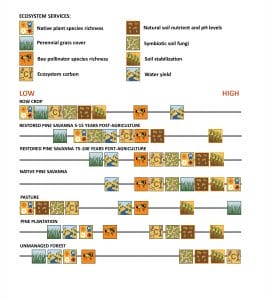
The study was replicated in four different areas — in and around Tall Timbers, Livingston Place, Pebble Hill Plantation, and Avalon Plantation — thanks to the hospitality of these and many other private landowners. Our results showed that with increasing time since agriculture there is an increase in perennial grass cover, native plant biodiversity, soil carbon, total ecosystem carbon, and mycorrhizal soil fungi, and a decrease in soil plant pathogens, water runoff, and soil erosion. Soil mineral nutrients including phosphorus, calcium, magnesium, and potassium also decreased toward levels closer to native pine communities, which is helpful for minimizing off-site and weedy plants and decreasing pollution from runoff. Frequently burned old-field and native pinelands also fared well compared to other common land uses.
Naturally, row-crop agriculture produces the most food and fodder, pasture produces the most forage, and pine plantations produce the most timber. However, frequently burned pinelands showed lower losses of water to transpiration, higher water infiltration, and higher bee pollinator diversity than pine plantations and unmanaged forests. They also had higher total ecosystem carbon and less runoff and sedimentation than pastures and row crops. Older old-fields and native pinelands had the overall highest native plant diversity which translates to diversity of insects and the vertebrate animals that depend on them.
They also had the healthiest soil in terms of C:N ratio, lowest bulk density, most natural levels of mineral nutrients and nitrogen, and symbiotic fungi that help plants grow. These results highlight the many benefits provided by quail management, especially use of frequent prescribed fire and timber management to maintain an open canopy, on mostly post-agricultural landscapes like the Red Hills. However, it also follows that many of the benefits accumulated over time are lost by intensive soil disturbance that more or less returns the soil and vegetation to agricultural conditions and resets the successional clock.
Given that native pine savannas generally had the highest levels of most ecosystem services, prioritizing them for protection from intensive soil disturbance is a good idea. In summary, frequent fire on oldfield and native pinelands provides a wide range of services helpful to both landowners and the broader community, although some diversity of land use is necessary for providing all the benefits we humans need to thrive.
By Justin Rectenwald | Project Collaborators: Albany Quail Project, Livingston Place, Central Florida Rangeland Quail Program, Tall Timbers, Ichauway, Rolling Plains Quail Research Ranch, University of Georgia–GAME Lab, originally published in the Summer 2022 edition of Quail Call.
Over the last several years, there have been many discussions between quail managers, property owners, and biologists about how harvest rates may affect wild quail populations. As wise stewards of the resource, our goal should be to maximize hunting opportunity, while minimizing any potential negative impacts on the population. Historically, the idea of over-hunting or pressuring bobwhites has not been an issue, because they have relatively high densities and low harvest pressure.
While populations on large private properties remain high and stable, ownership demographics and the economics of quail hunting have changed slightly in recent years. It has become more common for quail properties to have multiple owners that all want their fair share of hunting days, or they are looking for ways to offset the operating costs by leasing days to other hunters. Both of these situations can lead to an increase in the number of days hunting, which could equate to higher harvest pressure. Tall Timbers and others in the past have developed the industry standard for harvest rates, which sits at 15% of the fall population.
However, the kicker is that the recommendation of 15% is supposed to include birds that are crippled and not recovered as well. While it is easy to figure out how many birds you bring back to the wagon, we do not have a firm grasp on how many birds are actually crippled, and end up dying days or weeks later. Many believe, based on observations, that the current ratio of harvested to crippled birds could be anywhere from 3:1 to 1:1 depending on hunter experience and or a variety of other factors. While a higher than perceived harvest rate may not be a cause of concern on most properties, it may be a limiting factor on properties that are already pushing the 15% recommendation.
Many believe, based on observations, that the current ratio of harvested to crippled birds could be anywhere from 3:1 to 1:1 depending on hunter experience and or a variety of other factors. While a higher than perceived harvest rate may not be a cause of concern on most properties, it may be a limiting factor on properties that are already pushing the 15% recommendation.
To determine the true crippling loss rate, Tall Timbers and the GAME Lab at the University of Georgia began a collaborative study that takes place on our primary study site in Albany, the Jones Center at Ichauway, Livingston Place, Tall Timbers, Escape Ranch in Central Florida, and the Rolling Plains Quail Research Ranch in Texas. Our staff of biologists and technicians tracked radio-tagged coveys during the hunts throughout this past season and recorded data on which coveys were shot into, the number of shots fired at each covey rise, the number of birds that were shot down and recovered, the number wounded that kept flying, and the number shot down and not recovered.
On the day after the hunt and 3–5 days later, we rechecked those same coveys in hopes of recovering whole, un-scavenged birds that were initially wounded during the hunt and later died as a result of their injuries. Our staff recovered whole birds on multiple occasions following hunts, and these birds were x-rayed and sent to have official necropsies performed to determine their actual cause of death. Figure 1 depicts several of these birds that were confirmed to have had lead shot in them by x-ray.
We will continue this study for the next few hunting seasons in hopes of providing a true estimate of crippling loss. We expect to see variations in the crippling loss rate, but we should eventually be able to determine how many birds are recovered, wounded, and lost for every 10 shots fired at the end of this study. While it will take multiple years of data collection to complete the study, our preliminary results indicate that for about every 2 or 3 birds picked up, there is another 1 that is crippled and not recovered. We will continue this study for the next several hunting seasons and will expand on the results and conclusions once we have a full understanding of the true crippling loss rate.
Thank you for submitting a job post request
Say NO to a New Toll Road in Jefferson County
The M-CORES program, which includes the proposed Suncoast Connector Toll Road in Jefferson County, passed through the Florida Legislature at breakneck speed with little review or analysis. Tall Timbers has a number of concerns given the potential for significant and wide spread impacts. These include fragmenting public and private conservation lands, robbing business from Main Street Monticello, impacting our rivers and other water resources, and making prescribed fire more difficult and costly.
Join us in asking the Jefferson County Board of County Commissioners to OPPOSE the Suncoast Connector toll road and its path through Jefferson County.
Take action now with our easy email form.
Send an email to all five Jefferson County Board of County Commissioners with one click!
Burn prioritization modeling seminars and fire modeling tools are supported by Wildland Fire Science to train managers in the important planning stages of prescribed fires.
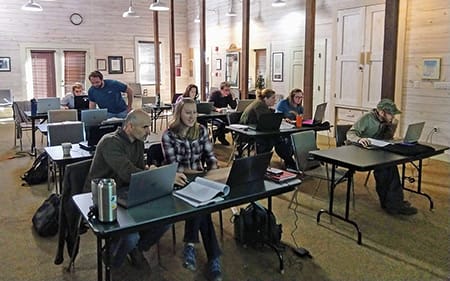
Educating and guiding the next generation of fire researchers and managers is a key goal of Wildland Fire Science and a resource for testing new ideas in fire research.
Tall Timbers hosts the premier fire technology transfer organization—the Southern Fire Exchange. This JFSP funded effort helps connect research to management through webinars, workshops, and support of the Prescribed Fire Science Consortium.
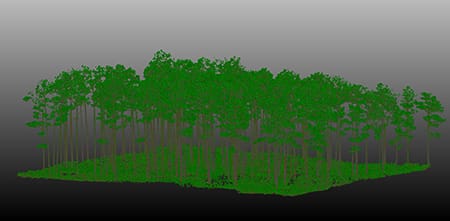
Working with partners in the Prescribed Fire Science Consortium, the program is building nexgen 3-D fuel beds using terrestrial LiDAR and novel sampling techniques to power new fire behavior models for prescribed fire managers. This work links to Tall Timbers work in wildlife habitat usage and ecological forestry.
The Longleaf Legacy landscape prescribed fire burn team arm of Wildland Fire Science works directly with landowners and partners to effectively put fire on the ground and promote prescribed fire throughout the region.
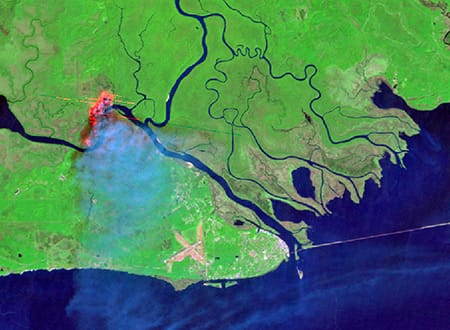
Tall Timbers is leading an effort to map fire regimes at the landscape scale. Staff work with numerous agencies to evaluate fire records and satellite imagery to build this critical conservation database. https://skfb.ly/6DqOY
Tall Timbers hosts the Prescribed Fire Science Consortium, a national network of researchers and managers who promote integrated research and management to advance next generation tools for fire practitioners. https://arcg.is/1DSjDT
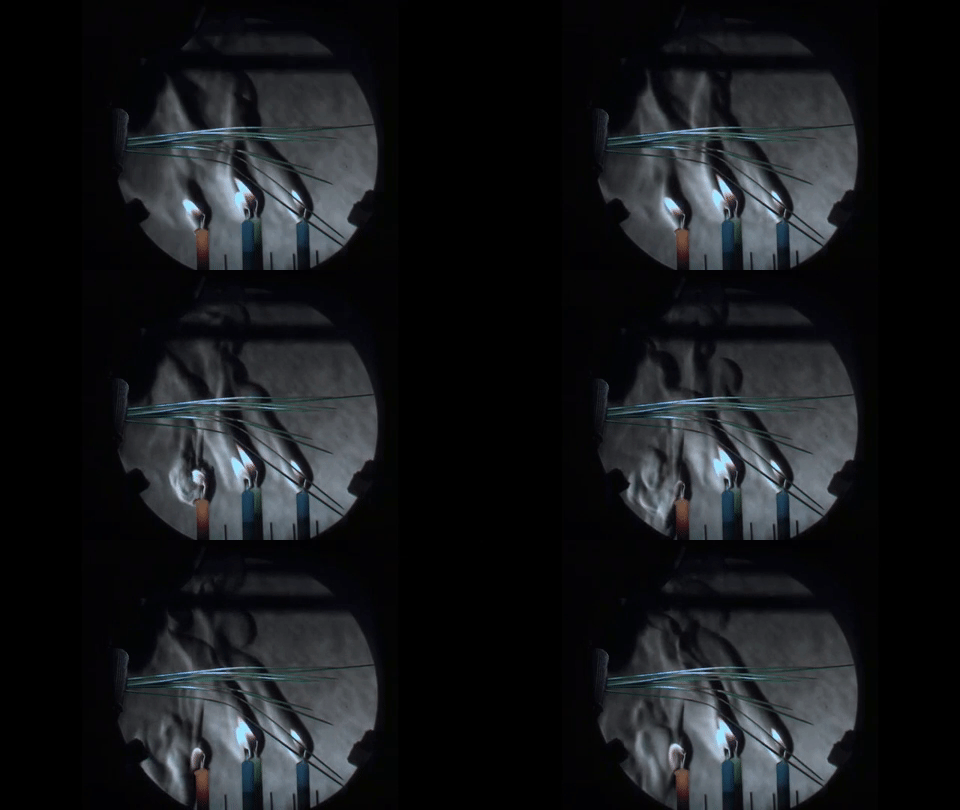
We are linking physics and field observations to understand the fluid dynamics of fire behavior surface fire regimes. Our work combines field observations using advanced thermal imaging techniques, laboratory studies, and coupled fire-atmospheric modeling to help managers improve outcomes of managed fire regimes.
Selected Publications authored by Wildland Fire Science staff.
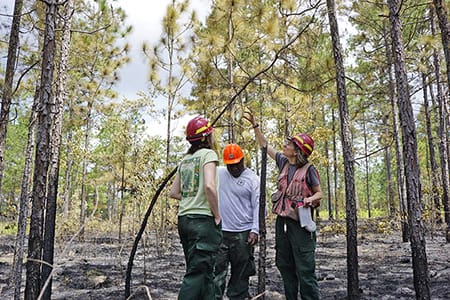
Staff and researchers support Federal fire training by serving as a cadre for NWCG training courses, ranging from basic wildland fire to advanced fire effects.
(PFTC) specializes in training fire fighters the principles and techniques of prescribed fire through practical hands-on experience. https://www.fws.gov/fire/pftc/
Private land owners are the largest source of prescribed fire in the country. These land owners and the culture of fire that was maintained by them during decades of suppression are a part of why Tall Timbers is a world-wide center for prescribed fire science. Workshops and fire training are a critical focus of the Longleaf Legacy Landscape Burn Team and our support of the Georgia Forestry Commission Prescribed Fire Center in Marion County.
The conserved lands of the Greater Red Hills region are found on working, income-producing properties that support agriculture, forestry, and recreational hunting. These properties contribute $272 million annually to local economies and support 2,300 jobs. [link to Planning & Advocacy section] The landowners’ strong stewardship ethic preserves their working lands while replenishing drinking water supplies, protecting water quality, and providing wildlife habitat for dozens of rare and endangered species. Tall Timbers’ conservation easements on these working properties encourage landowners to retain their traditional livelihood by keeping farms in family ownership.
Home to world-class wild quail populations, the Greater Red Hills region contains the largest concentration of gamebird preserves in the United States. These preserves also support the largest community of Red-cockaded woodpeckers on private lands. Indicators of high quality habitat found here include the gopher tortoise, Bachman’s sparrow, fox squirrel, and many amphibians. Tall Timbers’ conservation easements identify and protect the critical habitats of these species.
The region also boasts outstanding aquatic resources. Large river systems, like the Flint/Apalachicola, Ochlockonee, and Aucilla, flow from Georgia and feed into the Gulf of Mexico to support some of the world’s most productive estuaries. Large disappearing sinkhole lakes, like Iamonia, Miccosukee, and Jackson, provide habitat for an array of aquatic species and migratory birds. Tall Timbers’ conservation easements protect these vital watersheds and wetlands that are the lifeblood for the ecological health of the region.
Once dominated by longleaf pine, our pine woodlands support abundant wildlife and local economies. These forests need prescribed fire to stay healthy. Herbert L. Stoddard and his associates Ed and Roy Komarek were pioneers in this emerging scientific field during the mid-20th century. Tall Timbers continues that legacy with applied research on prescribed fire and land management. Today, there is a tremendous need to expand prescribed fire use beyond the Red Hills to ensure ecosystem health and reduce wildfire risk. Additionally, Tall Timbers uses conservation easements to permanently protect private woodlands while balancing the need for economic return from selective timbering.