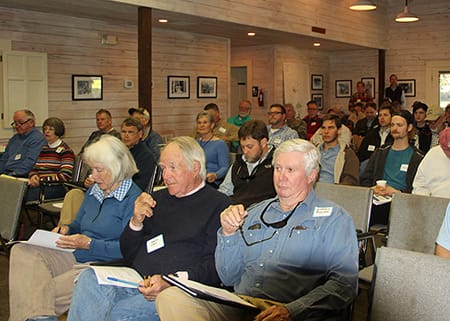
The Jubilee Festival will showcase the far-reaching impact land management practices like prescribed fire have on forest and water health and offer a fun, family-friendly day of hay and pony rides, music and more.
Being held at Jubilee Orchards in east Tallahassee, owned by Bud and Kitty Chiles, the festival is also a chance to build awareness for landowners, farmers, local policymakers and the community about what they can do to support work being done to restore soil health and conserve forestland.
The work being done at Jubilee Orchards not only provides world-class blueberries, a variety dubbed “The Best Blue Berries in the South,” but is integral to preserving the unique environment of the Red Hills region.
Jubilee Orchards not only provides world-class blueberries, a variety dubbed “The Best Blue Berries in the South,” but is integral to preserving the unique environment of the Red Hills Region.
“The festival is an opportunity for consumers and policymakers to become aware of these vital issues concerning the health of our local environs and of the foods their families eat,” said Jubilee Orchards owner Bud Chiles. “It is also an opportunity for farmers and landowners to connect to federal and state programs and resources to adopt these enhancements for their crops and forests that benefit our climate.”
The Jubilee Festival will take place on May 20 with activities from 10 a.m. to 5 p.m. at Jubilee Orchards, 12008 Miccosukee Road in Tallahassee. Weather permitting, a prescribed fire demonstration is planned.
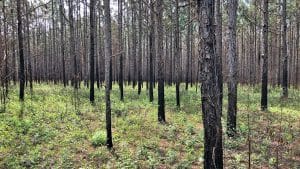
Jubilee Orchards has planted long leaf pine trees and focused on applying prescribed fire at regular intervals as part of its management plan. Expect to see interpretive tours that highlight those practices and the benefit to dozens of fire-dependent species like gopher tortoises, red-cockaded woodpeckers and native wildflowers.
The efforts at Jubilee Orchards are, in part, the result of the cost share initiative, Regional Conservation Partnership Program (RCPP) and Tall Timber’s “Red Hills to the Coast – Connecting Land and Water” project focusing on the St. Marks and Aucilla River watersheds.
The program helped get more than $7 million in funding from the U.S. Department of Agriculture’s Natural Resources Conservation Service (NRCS) in Florida as part of a 5-year effort to assist private landowners focused on bettering their landscapes and ultimately improving downstream health.
“This event at Jubilee Orchards will offer members of the public a chance to see land management in action,” said Tall Timbers Conservation Coordinator Peter Kleinhenz. “Thanks to the support of the NRCS-RCPP program, Mr. and Mrs. Chiles have been actively restoring the natural ecosystems on their property. You’ll be able to see this work firsthand, and will learn how to tap into resources that can help you do the same.”
Tall Timbers Enrolls 34 Landowners in the Regional Conservation Partnership Program During its First Year of Conservation Work Funded by NRCS
Flowing from Thomasville, Georgia south into Florida through the Red Hills, carving swaths through the Cody Scarp before falling into the Coastal Plain and eventually reaching Apalachee Bay, the St. Marks/Wakulla and Aucilla River watersheds contain some of the most unique water features on the planet. At points along their paths, these rivers and their tributaries drop underground into “swallet” holes joining with groundwater in the massive Floridan Aquifer, and re-emerge downgradient as springs that flow to tidewater, where an incredibly diverse coastal ecosystem has evolved in this mixture of fresh and salt water.
Tall Timbers has long had an interest in the northern reaches of these river basins and in the past few years has expanded its conservation efforts toward a more holistic watershed approach. Toward that end, funding opportunities were explored and, in 2020, the US Department of Agriculture’s Natural Resources Conservation Service (NRCS) awarded $7,066,083 to Tall Timbers to implement conservation work in the Aucilla and St. Marks River watersheds in Georgia and Florida. The work is funded through the Regional Conservation Partnership Program (RCPP), a five-year, partner-driven program that leverages funds to solve natural resource challenges on both natural and agricultural lands through the 2018 Farm Bill. This award was an outgrowth of Tall Timbers’ Strategic Plan priorities to pursue funding resources for strategic conservation transactions, conservation management, and land stewardship; emphasize prescribed fire as an essential land management tool; and increase community awareness about exemplary land stewardship.
The RCPP project seeks to improve water quality, wildlife habitat, and economic opportunities in the Aucilla and St. Marks River watersheds. The project will accomplish these goals by funding the purchase of conservation easements, cost-share for habitat management on private forest and agricultural lands, community events to raise awareness about the watershed, and even an experimental program in the Gulf of Mexico to benefit the oyster industry through improved water quality and new oyster reefs.
A volunteer with the Wakulla Environmental Institute raises an oyster dome out of Oyster Bay. The RCPP program will fund the installation of additional domes, to help restore the native oyster population. Photo by Tyler Macmillan
After working through the contracting process, the program kicked off in 2021 with Tall Timbers hiring two full-time program staff: Conservation Program Liaison, Tyler Macmillan, and RCPP Field Biologist, Rebecca Armstrong. The RCPP team immediately started working to enroll landowners in Florida and Georgia in the cost share programs for habitat management, while also identifying properties for the potential purchase of conservation easements. Coordination with various partners occurred as well as outreach efforts to explain the program and the benefits of exemplary land stewardship within these watersheds.
The initial sign-up for land management cost-share assistance resulted in the enrollment of 21 Florida properties in Leon, Wakulla, Jefferson and Madison Counties, and 13 Georgia properties in Grady, Thomas and Brooks Counties. These stewardship projects include:
3,252 acres of prescribed burning, including fireline installation;
156,122 longleaf pine trees being planted on 235 acres, including site preparation;
1,083 acres of forest stand improvement practices; and
152 acres of invasive exotic plant treatment.
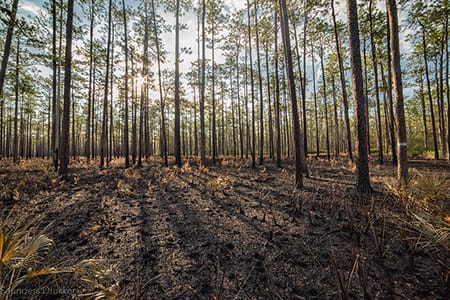
A stand of recently-burned longleaf pine. This stand, and many others like it, will benefit from additional prescribed burns funded through this project. Photo by Peter Kleinhenz.
In keeping with the objectives of the program, a number of the properties will implement practices that allow prescribed burning to be initially introduced or reintroduced in fire-dependent habitats. Many private landowners in the region are interested in prescribed burning, but their properties cannot be burned in their current condition due to fuels build-up, excessive hardwood intrusion, and other factors. The RCPP program provides cost-share and technical assistance opportunities to implement projects like brush control, firebreak installation, and various timber stand improvement practices that facilitate future prescribed burning.
The RCPP program has an emphasis on working with “historically underserved” landowners, which include any of the following categories of farmers or ranchers:
veteran farmers or ranchers,
socially disadvantaged farmers or ranchers,
limited resource farmers or ranchers,
beginning farmers or ranchers.
Ten of the 34 landowners enrolled in the RCPP land management program fall within one or more of the historically underserved categories.
An important component of RCPP programs nationwide is to measure environmental, social, and economic “outcomes” associated with the projects that are implemented. Environmental outcomes are monitored through pre and post-project biological assessments that are developed to measure the specific activity being implemented. Social and economic outcomes will be measured through pre- and post-project surveys that will be used to assess attitudes towards conservation, land management practices, and the relevant entities that landowners will be working with. Plans and protocols were developed for the biological monitoring, and pre-activity surveys were completed on a number of properties.
Many old growth bald cypress trees still exist along the Aucilla, thanks to conservation efforts along its banks. Photo by Tyler Macmillan.
RCPP staff have interacted with a variety of groups that are doing similar work with landowners in the area including the Suwannee River Partnership, the Florida Fish and Wildlife Conservation Commission’s Landowner Assistance Program, Golden Triangle Resource Conservation and Development Council, Florida Forest Service County Foresters, Northwest Florida Sentinel Landscape, Apalachicola Regional Stewardship Alliance, and a number of private contractors who provide forest management and prescribed burning services.
A group of landowners interested in the purchased conservation easement component of RCPP have been identified, with lands that run the spectrum of ecological offerings. A mature longleaf pine forest with intact groundcover in Wakulla County, portions of land along the Aucilla River, and sections of historic hunting plantations right on the outskirts of Tallahassee are just some of the exciting projects in the queue. RCPP funds have enabled Tall Timbers to reach new landowners interested in conserving their land in corners of these watersheds that the Tall Timbers Land Conservancy has rarely worked within prior to this project. These areas harbor incredible natural resources, but also face rapid development, so staff looks forward to achieving their goal of conserving at least 5,000 new acres through the lifespan of this project.
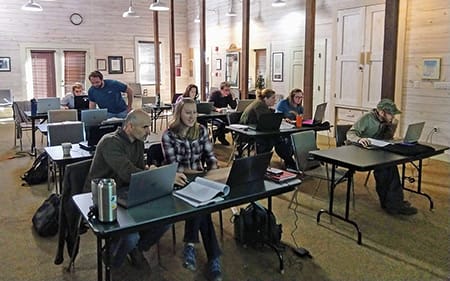
Outreach and educational activities include sponsorship and participation with the Aucilla Research Institute’s conference in March of this year; an agricultural/private landowner-focused event at the Florida Capitol; Tall Timbers feral hog program meetings; a Tall Timbers prescribed burn planning workshop; a prescribed fire workshop near Albany, Georgia; and field trips for Leadership Tallahassee, Leadership Thomasville, and Leadership Florida.
Applications to participate in the land management cost share program are accepted year-round, with cutoff dates usually in the late summer/fall timeframe. Landowners in the Aucilla and St. Marks River watersheds in Georgia and Florida can contact Tyler Macmillan for application information. Landowners interested in the purchased conservation easement component of the program should contact Peter Kleinhenz.
The M-CORES program, which includes the proposed Suncoast Connector Toll Road in Jefferson County, passed through the Florida Legislature at breakneck speed with little review or analysis. Tall Timbers has a number of concerns given the potential for significant and wide spread impacts. These include fragmenting public and private conservation lands, robbing business from Main Street Monticello, impacting our rivers and other water resources, and making prescribed fire more difficult and costly.
Join us in asking the Jefferson County Board of County Commissioners to OPPOSE the Suncoast Connector toll road and its path through Jefferson County.
Take action now with our easy email form.
Send an email to all five Jefferson County Board of County Commissioners with one click!
Burn prioritization modeling seminars and fire modeling tools are supported by Wildland Fire Science to train managers in the important planning stages of prescribed fires.
Educating and guiding the next generation of fire researchers and managers is a key goal of Wildland Fire Science and a resource for testing new ideas in fire research.
Tall Timbers hosts the premier fire technology transfer organization—the Southern Fire Exchange. This JFSP funded effort helps connect research to management through webinars, workshops, and support of the Prescribed Fire Science Consortium.
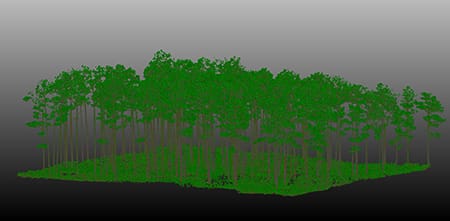
Working with partners in the Prescribed Fire Science Consortium, the program is building nexgen 3-D fuel beds using terrestrial LiDAR and novel sampling techniques to power new fire behavior models for prescribed fire managers. This work links to Tall Timbers work in wildlife habitat usage and ecological forestry.
The Longleaf Legacy landscape prescribed fire burn team arm of Wildland Fire Science works directly with landowners and partners to effectively put fire on the ground and promote prescribed fire throughout the region.
Tall Timbers is leading an effort to map fire regimes at the landscape scale. Staff work with numerous agencies to evaluate fire records and satellite imagery to build this critical conservation database. https://skfb.ly/6DqOY
Tall Timbers hosts the Prescribed Fire Science Consortium, a national network of researchers and managers who promote integrated research and management to advance next generation tools for fire practitioners. https://arcg.is/1DSjDT
We are linking physics and field observations to understand the fluid dynamics of fire behavior surface fire regimes. Our work combines field observations using advanced thermal imaging techniques, laboratory studies, and coupled fire-atmospheric modeling to help managers improve outcomes of managed fire regimes.
Selected Publications authored by Wildland Fire Science staff.
Staff and researchers support Federal fire training by serving as a cadre for NWCG training courses, ranging from basic wildland fire to advanced fire effects.
(PFTC) specializes in training fire fighters the principles and techniques of prescribed fire through practical hands-on experience. https://www.fws.gov/fire/pftc/
Private land owners are the largest source of prescribed fire in the country. These land owners and the culture of fire that was maintained by them during decades of suppression are a part of why Tall Timbers is a world-wide center for prescribed fire science. Workshops and fire training are a critical focus of the Longleaf Legacy Landscape Burn Team and our support of the Georgia Forestry Commission Prescribed Fire Center in Marion County.
The conserved lands of the Greater Red Hills region are found on working, income-producing properties that support agriculture, forestry, and recreational hunting. These properties contribute $272 million annually to local economies and support 2,300 jobs. [link to Planning & Advocacy section] The landowners’ strong stewardship ethic preserves their working lands while replenishing drinking water supplies, protecting water quality, and providing wildlife habitat for dozens of rare and endangered species. Tall Timbers’ conservation easements on these working properties encourage landowners to retain their traditional livelihood by keeping farms in family ownership.
Home to world-class wild quail populations, the Greater Red Hills region contains the largest concentration of gamebird preserves in the United States. These preserves also support the largest community of Red-cockaded woodpeckers on private lands. Indicators of high quality habitat found here include the gopher tortoise, Bachman’s sparrow, fox squirrel, and many amphibians. Tall Timbers’ conservation easements identify and protect the critical habitats of these species.
The region also boasts outstanding aquatic resources. Large river systems, like the Flint/Apalachicola, Ochlockonee, and Aucilla, flow from Georgia and feed into the Gulf of Mexico to support some of the world’s most productive estuaries. Large disappearing sinkhole lakes, like Iamonia, Miccosukee, and Jackson, provide habitat for an array of aquatic species and migratory birds. Tall Timbers’ conservation easements protect these vital watersheds and wetlands that are the lifeblood for the ecological health of the region.
Once dominated by longleaf pine, our pine woodlands support abundant wildlife and local economies. These forests need prescribed fire to stay healthy. Herbert L. Stoddard and his associates Ed and Roy Komarek were pioneers in this emerging scientific field during the mid-20th century. Tall Timbers continues that legacy with applied research on prescribed fire and land management. Today, there is a tremendous need to expand prescribed fire use beyond the Red Hills to ensure ecosystem health and reduce wildfire risk. Additionally, Tall Timbers uses conservation easements to permanently protect private woodlands while balancing the need for economic return from selective timbering.