Tall Timbers continues to provide input to Georgia forestry officials as they tweak prescribed fire permitting regulations to meet the needs of Albany area land managers and to work within new federal air quality standards that have the potential to restrict prescribed burning.
In January 2026, new rules went into effect that considered air quality at the U.S. Environmental Protection Agency’s Albany sensor at 6 a.m. rather than an accumulated 24-hour average that was one of the parameters of the 2024 launch of the Albany Pilot project, but caused prescribed fire practitioners to miss some ideal burn days.
But early successes in 2025 suggest the Albany Pilot project could become a national model for smoke and prescribed fire management. The Pilot program successfully improved the annual air quality measurement while the number of acres burned increased.
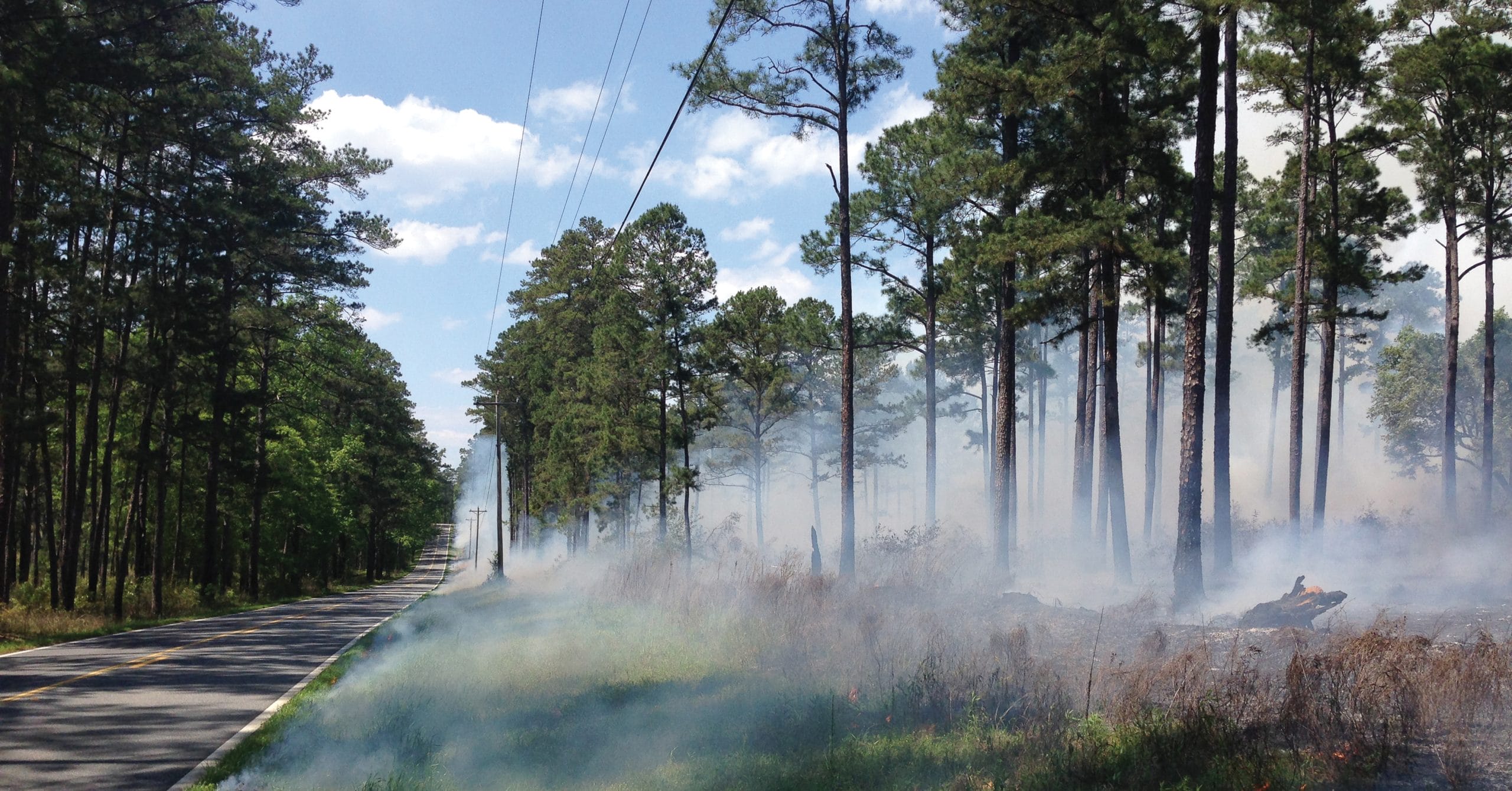
Prescribed fire smoke contributes to fine particulate matter air pollution, commonly called PM2.5, which is measured in micrograms per meter cubed (μg/m3). Based on PM2.5 levels monitored by the EPA, its increased presence in the airshed throughout the Southeast is especially evident during the traditional “burn season” of February through April. The revised federal standards of 2024 were designed to reduce PM2.5 levels in the airshed, which contributed to tighter burn restrictions in parts of the country where prescribed fire is a significant contributor at certain times of year.
Building on the initial launch of the Albany Pilot project, Tall Timbers and our Albany Quail Project, The Jones Center at Ichauway, Georgia Environmental Protection Division, Pineland Plantation, and other local landowners/practitioners all provided input to the Georgia Forestry Commission for Albany Pilot 2.0, featuring a more robust, science-based strategy for 2025.
Albany Pilot 2.0 included a daily cone that incorporates wind speed and direction as they relate to Albany to help determine where prescribed fires would be authorized, reducing the amount of smoke impacting the population center.
The updated approach improved air quality and resulted in no daily exceedances of PM2.5 during the peak burn season. The 2025 annual average remained well below EPA limits and historical levels while managers in the region increased the amount of burning by 5,000 acres.
Albany Quail Project Director Clay Sisson’s relationships with managers and landowners of quail properties in the Albany region were also a catalyst for shifting the fire communities’ practices to be more cognizant of smoke and to impart the idea that changing practices has a long-term benefit of a continued presence of prescribed fire on the landscape.
The main concern about Pilot 2.0 was the PM2.5 cutoff rule. If the previous day’s PM2.5 average reached 27 μg/m3 or higher, burning was banned upwind of Albany to prevent exceeding the 35 μg/m3 daily limit. This policy often prohibited fires on good burn days that didn’t actually exceed the PM2.5 daily cap.
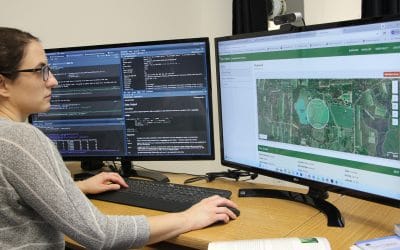
To fix this, Tall Timbers’ Smoke Science Program helped advise the Georgia Forestry Commission on creating a new rule based on a 6 a.m. PM2.5 reading of 55 μg/m3. Tall Timbers’ analysis indicates the new rule will be much more accurate, cutting false bans by 90% and doubling the correctly identified days that reach the limit. The new rule took effect January 1, 2026.
The Georgia Forestry Commission has a dedicated website that displays wind speed and smoke dispersion indices, along with any associated acreage limits and burn types for that day’s burn authorizations. In addition, they have created a decision matrix that helps burners understand why any restrictions are in place for a particular day.
With expertise in both smoke and prescribed burning, the group of partners involved in the Albany Pilot project is proactively managing smoke in an unprecedented way that is being observed across the region and nationally.
Tall Timbers also provided analysis and technical support during a period of limited agency staff and resources. We will continue to monitor the success of the Albany Pilot program and likely advise on further adjustments for 2027.
Helpful links from Georgia Forestry Commission (GFC)
GFC Smoke management program
https://gatrees.org/smoke-management-program-testing/
GFC Weather display
GFC Certified burner page