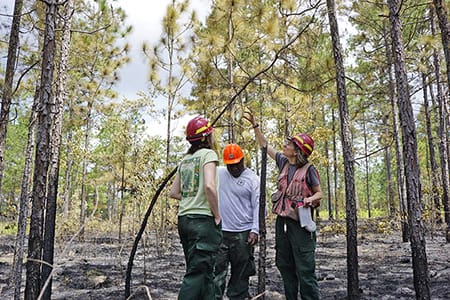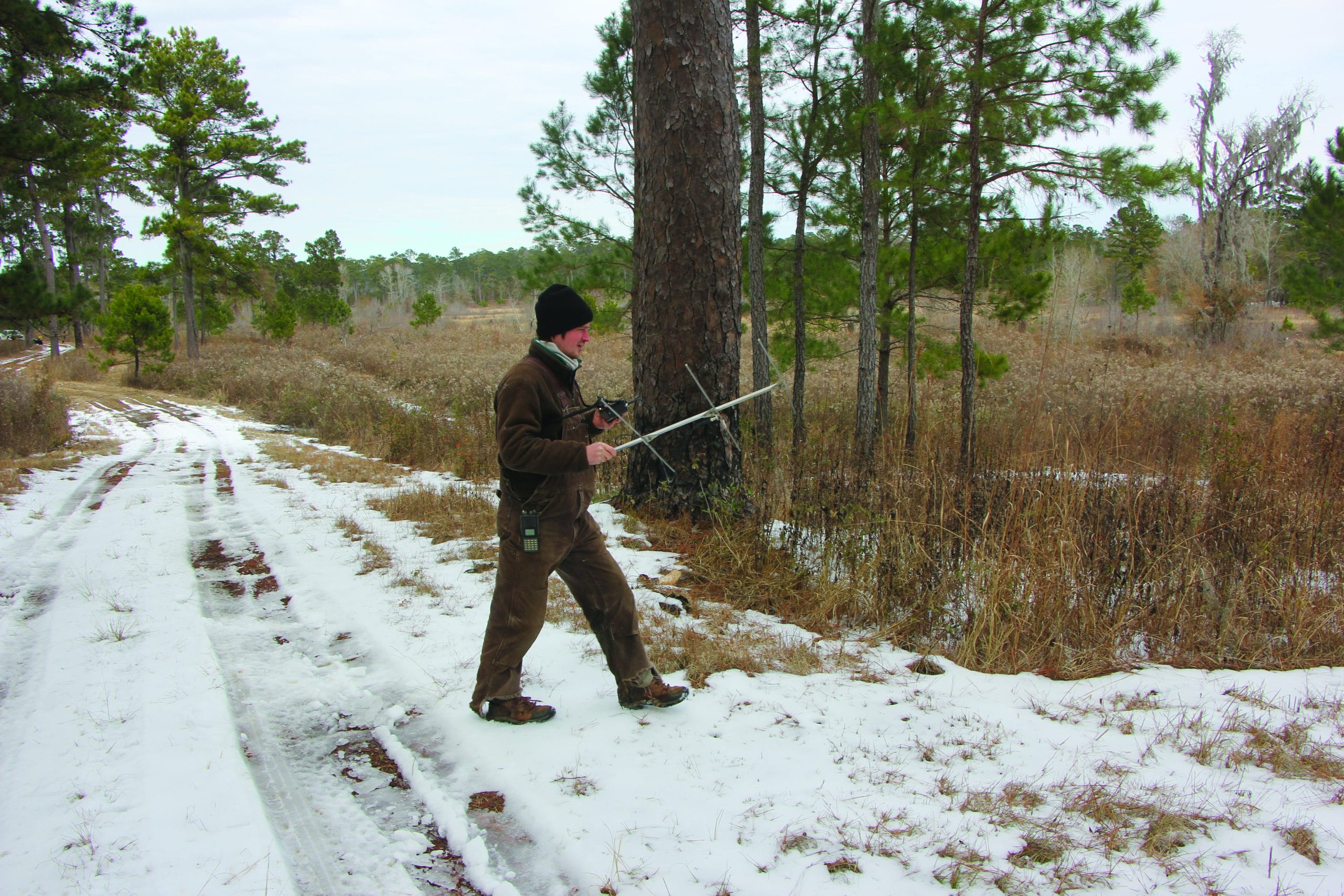
The Game Bird Program’s suite of long-term bobwhite monitoring allows us to go beyond regionally specific bobwhite forecasts and nimbly address questions as they arise. Biologists, technicians, graduate students and interns continuously monitor bobwhite demographics including adult survival, nesting effort, nest success, chick survival and habitat selection at multiple sites across the Southeast. The level of coordination and effort needed to carry out this monitoring cannot be overstated.
While the annual bobwhite forecast is helpful, it only provides a snapshot of the data we collect and its implications. Having a sustained monitoring program allows us to create a platform for addressing specific research questions that arise both internally and externally. For example, we recently completed a disease monitoring and a chick ecology project with the University of Georgia.
These projects integrated smoothly into our existing monitoring with minimal extra cost. If these projects had started from scratch, they would have been hard to justify individually. This means that important research questions could go unanswered due to the expense and difficulty of starting over each time.
Questions requiring long-term monitoring and large data sets, such as the effects of feeding and harvest on bobwhite populations, are seldom feasible with short-term projects.
However, Tall Timbers can leverage the unique aspects of our data collection to partner with others and secure additional resources to address both short-term and long-term questions. Moreover, unanticipated questions often emerge that concern our stakeholders. Recent examples include the Red Hills avian influenza outbreak of 2024, hurricanes in the fall of 2024, the record snowfall of early 2025 and the late summer and fall drought of 2025.
In every case, since we had data on hand, we quickly provided managers and state agencies with real-time feedback on how these discrete events affected bobwhite and other wildlife. No other entity in the region could fulfill that role. For all these reasons, we prioritize rigorous data collection, even though it comes at a cost. Much of this effort is donor-supported, and we are grateful for the support.
Continuing these efforts will require renewed and expanded support as costs continue to rise. But as always, we will persevere and remain the leader in providing relevant information for bobwhite management.