Bachman’s Sparrow research expands to East Texas

Aug 18, 2026

Tall Timbers’ Stoddard Bird Lab is launching a study of the Bachman’s sparrow in the National Forests of East Texas, the lab’s first foray into studying fire-dependent species outside of Florida and Georgia.

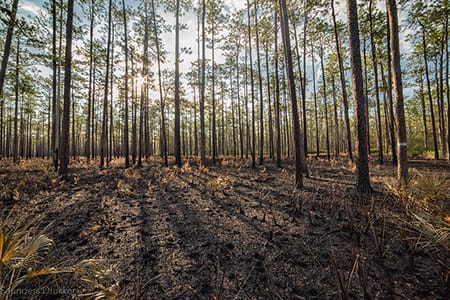
The region is already home to the Western Pineywoods Quail Program, but the study of sparrows there – supported by grant funding from the National Fish and Wildlife Foundation – will help assess the health of fire-adapted longleaf pine ecosystems. Expansion of the entire suite of Tall Timbers programs across the Southeast is an initiative from our recently completed 2026-2036 strategic plan.

Starting in Spring 2027, researchers will begin monitoring Sabine and Angelina National Forests for the presence of Bachman’s sparrows.

The Bachman’s Sparrow is a species of greatest conservation need in every southeastern state and considered an indicator of healthy longleaf ecosystems. This portion of its range is of conservation interest, as the current understanding of how many birds the forests support is limited.

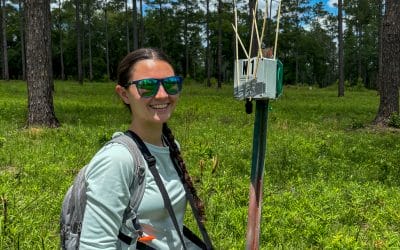
Stoddard Bird Lab researchers will couple autonomous acoustic monitoring and in-person species surveys with previously recorded sound files originating from a published Tall Timbers Northern Bobwhite Quail project study by the WPQP.

This monitoring effort complements the Apalachicola National Forest Bachman’s Sparrow monitoring the lab has conducted for the past few years and provides valuable data on a species that requires fire-maintained habitat.


About the Author
Kate Richardson
Kate (Gentry) Richardson leads research in the Stoddard Bird Lab of Tall Timbers with a focus on ecology, conservation, and management of species that benefit from fire. Kate previously served as Imperiled Species Biological Administrator and Gopher Tortoise Program Coordinator with the Florida Fish and Wildlife Conservation Commission. Before moving to Florida, she worked as a postdoctoral researcher at Purdue University studying mixed-species bird flocks across a gradient of foraging habitat. She earned her graduate degrees at George Mason University studying noise pollution impacts to songbirds in the San Francisco, CA and Washington, DC metropolitan areas.
  • Recent Articles
    About our new logo

    In conjunction with our new 2026–36 Strategic Plan, Tall Timbers is proud to introduce a refreshed logo that reflects our relevance and supports our growth. As we expand across the Southeast, this update ensures our visual identity communicates who we are to new...

    By the numbers: 5 Years of Growth on the Quail Lands Job Board

    In 2021, Tall Timbers launched a new service to help address a growing shortfall in qualified candidates for jobs on wild quail hunting properties. The Quail Lands Job Board has now grown into a popular site for employers and job seekers. As the service approaches its...

    Can acoustic monitoring predict bird diversity?

    We all listen for certain sounds in the woods. Turkeys gobbling, bobwhite whistles, the drumming of a red-cockaded woodpecker, the squeak of a brown-headed nuthatch, or perhaps the song of the Bachman’s sparrow. As public and private land managers work to restore the...

    Related Articles

    Can acoustic monitoring predict bird diversity?

    Can acoustic monitoring predict bird diversity?

    We all listen for certain sounds in the woods. Turkeys gobbling, bobwhite whistles, the drumming of a red-cockaded woodpecker, the squeak of a brown-headed nuthatch, or perhaps the song of the Bachman’s sparrow. As public and private land managers work to restore the...

    read more