Butterfly conservation initiatives flutter in with the New Year

Jan 9, 2025

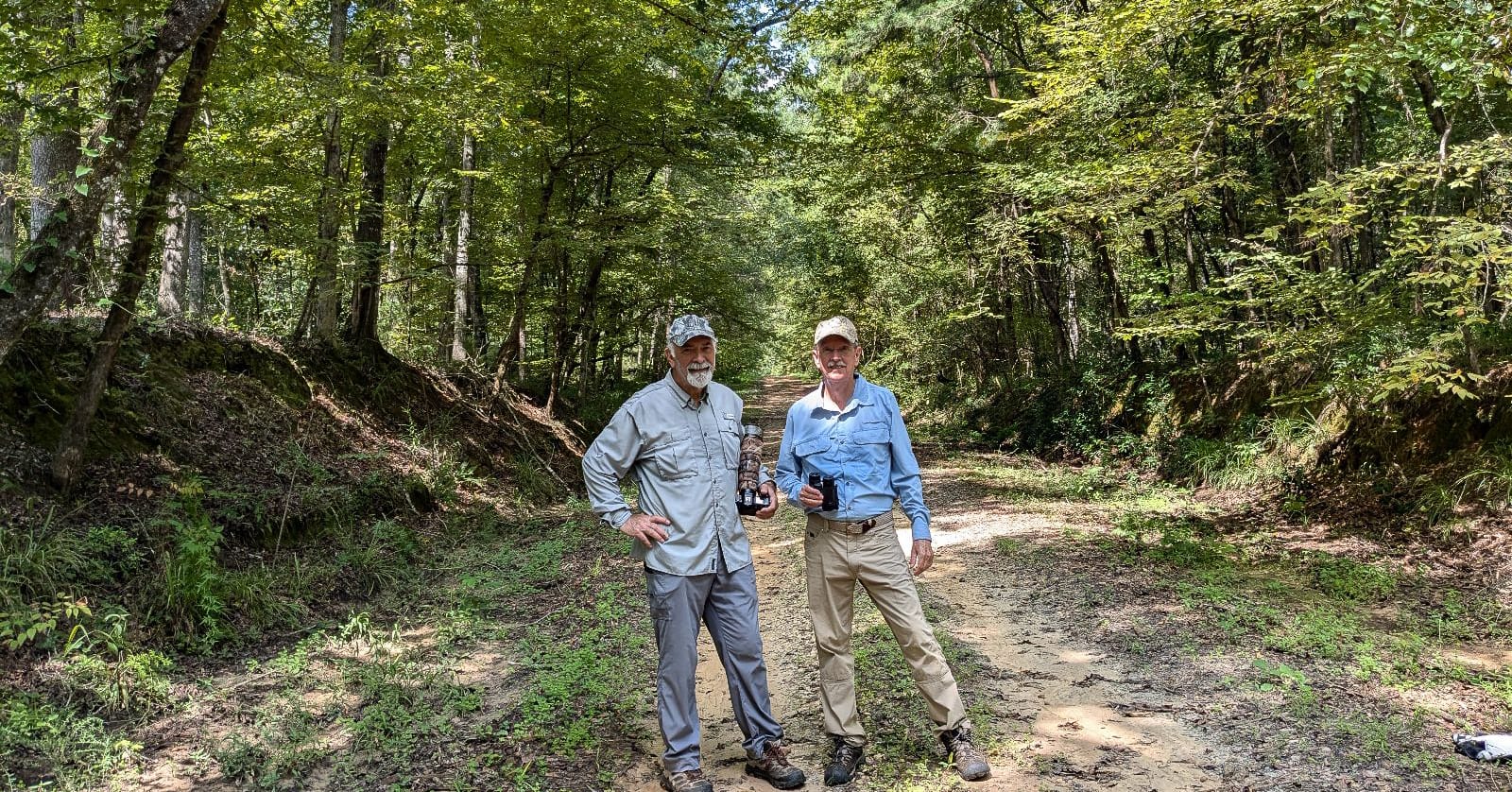
Brian Lloyd (left) and Dave McElveen (right) posing together during one of their long-term butterfly surveys on Tall Timbers. Photo by Lisa Mills. 

The new year is shaping up to be big for butterflies thanks in large part to the dedication and support of the Stoddard Bird Lab’s volunteer butterfly experts, Dave McElveen and Brian Lloyd.

Brian and Dave first applied their butterfly identification on Tall Timbers where they developed a butterfly species list for the property and initiated a long-term butterfly monitoring effort. Over the last 15 years, Dave and Brian have confirmed 74 species on Tall Timbers, many of which were beautifully photographed by Brian Lloyd and posted, along with other area butterflies, on his webpage.

A Gulf fritillary butterfly.

In coordination with Stoddard Bird Lab Director, Kate Richardson, the butterfly aficionados have set their sights on Livingston Place next and will conduct monthly surveys during 2025 to compile a species list for the longleaf stands of this Tall Timbers owned property. Understanding the species present at Tall Timbers and Livingston Place offers an additional measure of conservation value to these properties and provides a clearer path forward for conservation planning.

In fact, Dave McElveen has played a key role in helping the Stoddard Bird Lab contribute to conservation of the rare Frosted Elfin butterfly in Florida, most recently planning the establishment of its host plant, the sundial lupine (Lupinus perennis) at Livingston Place. If successful, the sundial lupine seeds will grow into plants and spread, setting the stage for possible Frosted Elfin introductions in years to come.

If you’re interested in being a part of the butterfly conservation story and want to learn from dedicated experts like Dave and Brian, check out the local Hairstreak Chapter of The North American Butterfly Association.


About the Author
Kate Richardson
Kate (Gentry) Richardson leads research in the Stoddard Bird Lab of Tall Timbers with a focus on ecology, conservation, and management of species that benefit from fire. Kate previously served as Imperiled Species Biological Administrator and Gopher Tortoise Program Coordinator with the Florida Fish and Wildlife Conservation Commission. Before moving to Florida, she worked as a postdoctoral researcher at Purdue University studying mixed-species bird flocks across a gradient of foraging habitat. She earned her graduate degrees at George Mason University studying noise pollution impacts to songbirds in the San Francisco, CA and Washington, DC metropolitan areas.
  • Recent Articles
    Turkey hunting for biodiversity data

    The Stoddard Bird Lab is pilot testing a new app that engages turkey hunters in collecting data on Chuck-will’s-widow, a declining species in the eastern United States.

    Tall Timbers’ historic Beadel House lost in fire

    The two-story house built in 1895 by Edward Beadel ignited after a lightning strike during a severe storm moving through the Red Hills. It housed numerous artifacts from our organization’s history and four staff offices.

    New online prescribed fire academy launched for private landowners

    Private landowners play a big role in the prescribed fire conducted annually in the Southeast. The Tall Timbers Prescribed Fire Academy was established to provide them with access to high-quality, continually improved training options. Thanks to funding from our state...

    Belowground biomass in pine savannas – more than meets the eye

    Most savannas and grasslands worldwide are sustained by frequent fires that kills the above-ground portion of long-lived plants that then resprout from belowground parts, including roots, rhizomes and other nutrient storage structures. However, very few studies have...

    Does growing season prescribed fire affect turkey nesting?

    Wild turkeys, like a host of other ground-nesting birds in the Southeast, need regular prescribed fire to maintain their habitat. As many land managers start to head into the woods to light off fires that will inevitably help turkeys, bobwhite, and a number of other...

    Related Articles