By Caitlin Jackson, Brian Shamblin, Dwayne Elmore, and James Martin
The use of DNA and related genetic analyses has been around for several decades to uncover crimes and human lineage – think CSI or Ancestry.com. But using these tools for understanding bobwhite chick ecology has not been attempted until recently.
Biologists have struggled to find methods to estimate chick survival that were both accurate and efficient. Past attempts used flush counts, wing tags and miniature radio transmitters sutured to the chick. While each provided insight, they often disturbed broods, missed chicks, or produced biased estimates, leaving gaps in our understanding. In 2024, we began testing a new, less invasive tool: using DNA from hatched eggshells and feathers to track chicks over time.
The first two weeks are the most critical stage of a chick’s life and is the life stage that we know the least about for bobwhite. Current wing tagging methods require us to wait until around 10 days after hatch to capture chicks and mark them. During this time, adults and chicks can die, radio collars can fail, or chicks may not be detected during routine flushes. Traditionally, we would have assumed those broods lost, leaving us unsure whether chicks actually died or simply went undetected.
DNA gives us a fuller, more accurate picture of chick survival without having to capture young chicks.
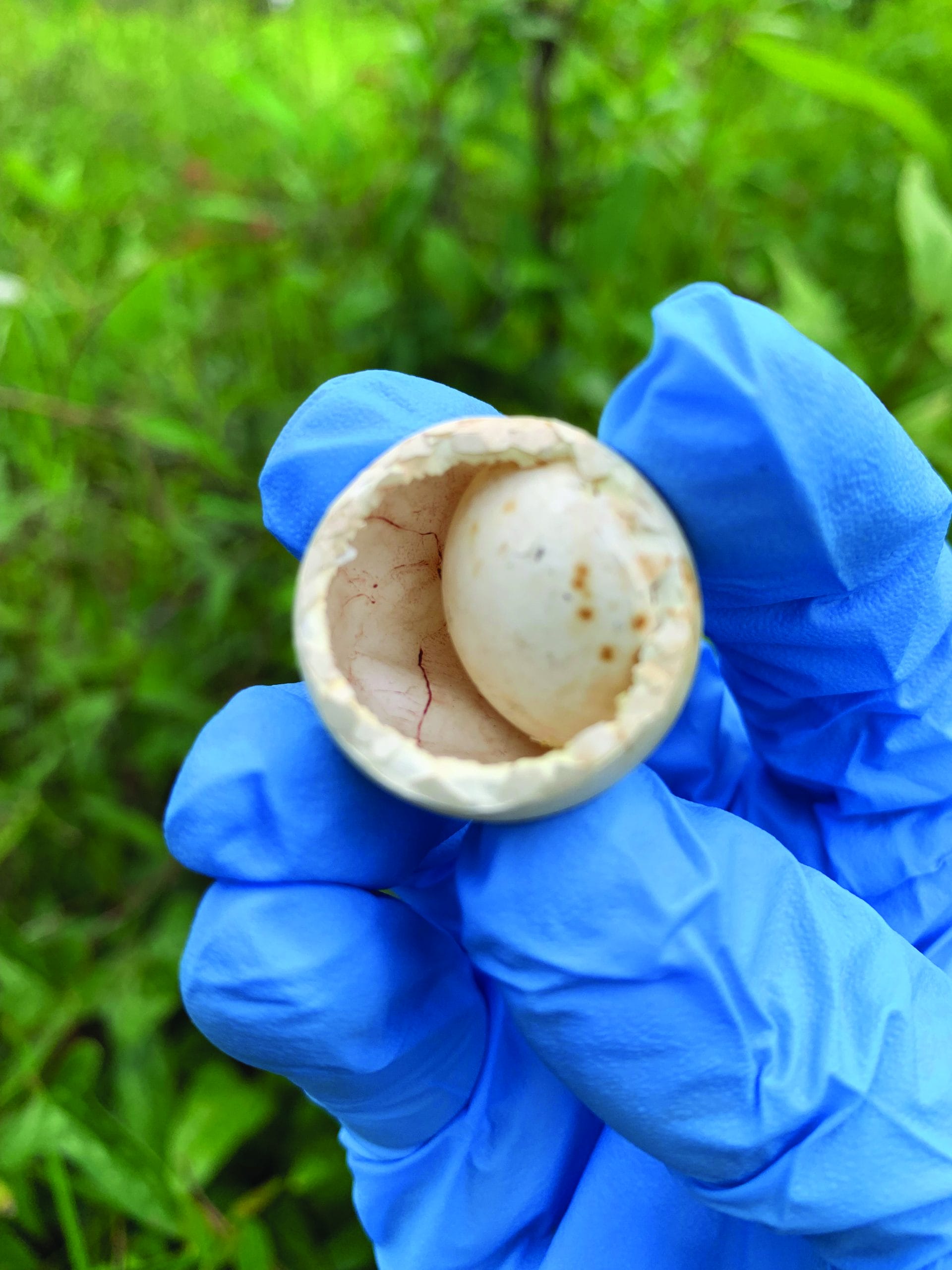
To address this, over the past two years, we collected 668 bobwhite eggshells. The newly hatched eggs of a bobwhite are rich in veins that allow us to extract DNA. We also collected 961 feathers from trapped and harvested juvenile bobwhite. This ‘recapture’ allowed us to evaluate survival over time.
Nearly all of our samples (99.1%) were successfully genotyped – meaning we could uniquely identify individual bobwhite, even full siblings within a brood. Our recapture of juvenile bobwhite produced 30 matches linking eggshells to feather samples recaptured later. Though the number may seem small, each match provides meaningful insight into chick survival. Of the 30 matches, 14 came from broods that we would have previously assumed had been lost.
In comparison, using our traditional wing tagging method, 186 chicks were wing tagged (requiring much more effort and stress to the chicks) with nine being recaptured during the same time period.
By tracking individual bobwhite directly from hatch, DNA gives us a fuller, more accurate picture of chick survival without having to capture young chicks. It gives a detailed picture of survival that other methods miss, especially during the first two weeks when chicks are most vulnerable.
With a more complete understanding of chick survival, we can better understand how to manage habitat for higher chick survival which is critical to setting the foundation for how many birds make it into the fall populations. After all, every covey flushed in the fall begins with chicks surviving those first few fragile weeks of life.

This work would not have been possible without the generous support of Chuck Ribelin, enabling us to explore chick survival to help guide bobwhite conservation for years to come.