This article appeared in the 2024 edition of Quail Call. Read the entire issue here or tune in to the audio version here
Wild quail hunting is an industry in the Red Hills and Albany areas of southwest Georgia and north Florida. It has an annual economic impact of $350 million and creates nearly 3,000 jobs.
The importance of prescribed burning to maintaining quail habitat is well understood. Florida and Georgia each routinely burn over 1 million acres each year. These acres are heavily concentrated in quail country and driven by quail management, but these fires also provide habitat for many of the region’s rare and endangered species and help reduce wildfire risks.
It is also well understood that prescribed fire smoke contributes to fine particulate matter air pollution, commonly called PM2.5. Based on PM2.5 levels monitored by the US Environmental Protection Agency (EPA), this is especially evident during the traditional “burn season” of February through April.
So, how do we maintain prescribed fire as an important ecological, economic, and public safety practice and have clean air in the population centers embedded in the region?
In the 2023 Quail Call, we highlighted the proposed EPA rule change to lower the National Ambient Air Quality Standards (NAAQS) for PM2.5 emissions. That rule change became final in February 2024, with the annual standard receiving a 25% reduction. The Albany, Georgia, monitor meets this new standard but is right on the bubble. Meeting the new standard is impressive considering the nearly 400,000 acres of prescribed fire applied annually in southwest Georgia alone, an amount that exceeds most states.
During the past two burn seasons, the Georgia Forestry Commission (GFC) launched a pilot prescribed burn permit program in the eight counties surrounding Albany to try and reduce the effects of prescribed fire smoke on air quality. The pilot program increased awareness of the issue and may have kept the PM2.5 levels from being higher than they were, but it did not reduce the levels to a point where we are comfortably below the new standard.
In response, the GFC involved other partners, including Tall Timbers’ research and Albany Quail Project staff, The Jones Center at Ichauway, Georgia Environmental Protection Division (EPD), and local private land managers to provide input on what is being called “Pilot 2.0.” This more sophisticated pilot effort seeks to further manage smoke and reduce PM2.5 in the least restrictive way possible for prescribed burning. The remarkable collaboration between state agencies, conservation groups, and private landowners is being watched at the state, regional, and national levels as a model for how high levels of prescribed burning can be maintained while also protecting air quality.
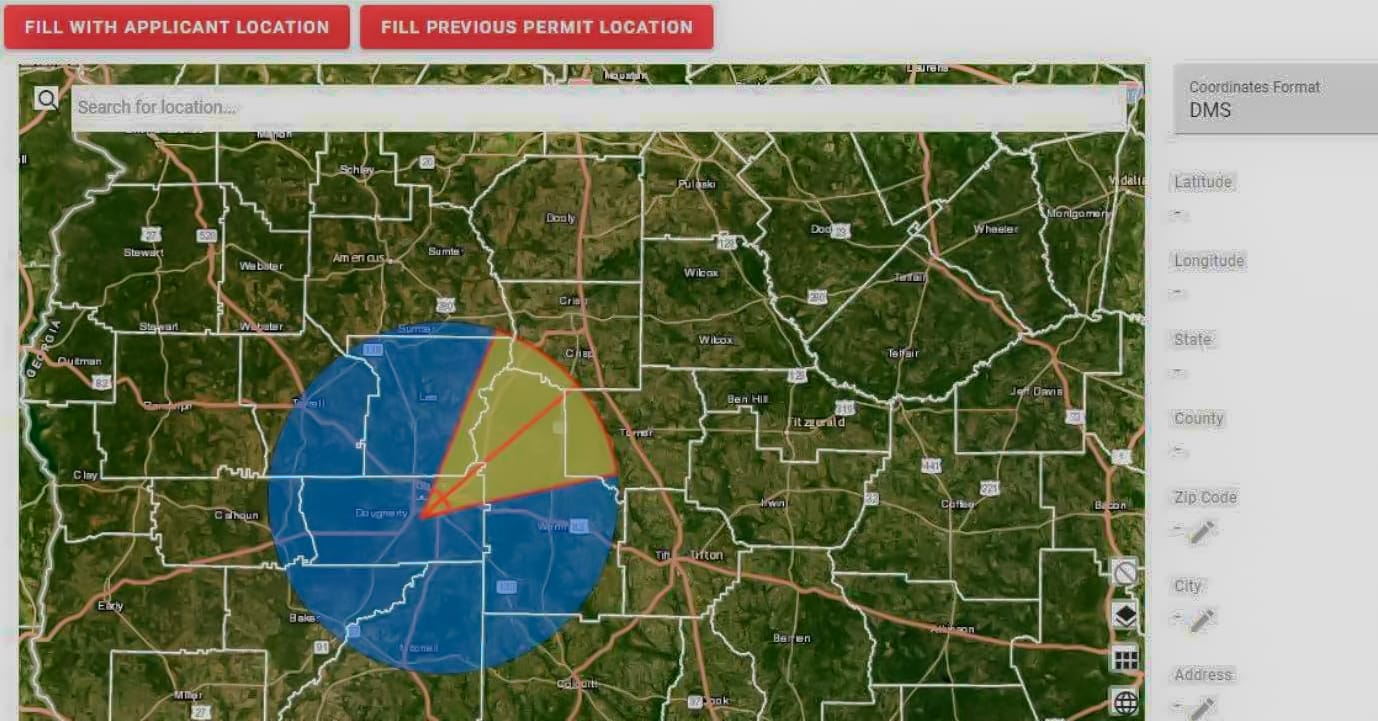
Pilot 2.0 will be implemented by GFC in 2025 for a 30-mile radius around Albany, with prescribed burning permits issued, restricted, or denied based on the current day’s air quality, fire weather forecast, and the property’s location in relation to town. Each day, a “cone” will be created for the upwind section within the 30-mile circle determined by the fire weather forecast for the day’s transport wind direction in Albany. If your planned burn is in the cone for that day, GFC restrictions on permits will be tighter than outside the cone. If the overnight air quality in Albany is compromised, no permits will be issued that day for the upwind cone. Otherwise, permits within the cone will be determined by transport wind speeds and smoke dispersion index on a sliding scale, with higher acreage burns permitted under better weather parameters. Permits outside the cone for that day will be much less restrictive and only denied or restricted under very poor smoke dispersal conditions.
Details for the Pilot 2.0 program and each day’s cone and burn restrictions will be available on the GFC website —www. gatrees.org. Fire weather forecast data for the program will be based on the 2:00 PM forecast for Albany and can be found at www.weather.gov. Georgia EPD posts hourly PM2.5 data at www.airgeorgia.org, and the Pilot 2.0 program will be based on levels at midnight the night before the burn. Learn more on the GFC Smoke Management Program Testing webpage.
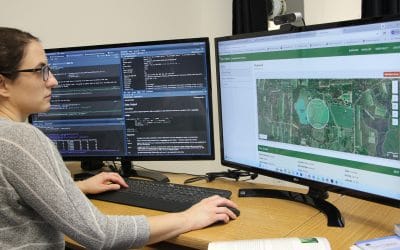
Tall Timbers’ role in this effort will be to continue providing input on the pilot program and analyzing its effectiveness. This effort will be led by Dr. Holly Nowell, who was recently hired as Tall Timbers’ new Smoke Scientist. Dr. Nowell will evaluate previous years’ PM2.5 levels and monitor the 2025 season in real time to help determine the effectiveness of the Pilot 2.0 program. Additionally, Tall Timbers will provide training and outreach on best smoke management practices and lobby at state and national levels for policies on prescribed fire and air quality. The Game Bird Program, led by Albany Quail Project staff, will continue to be the liaison with our partners and supporters in the Alb