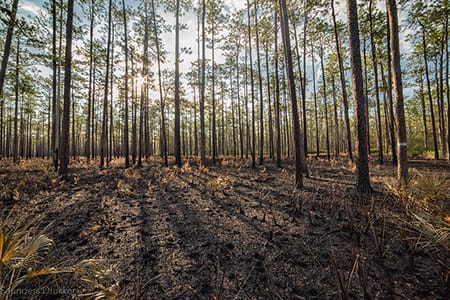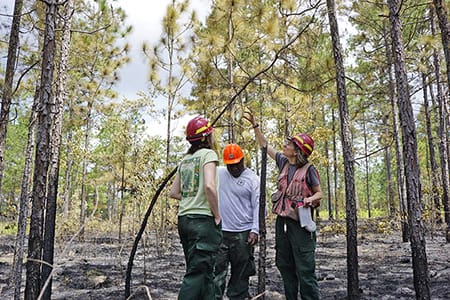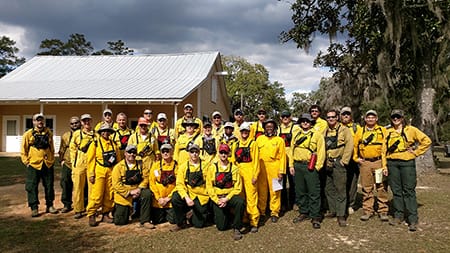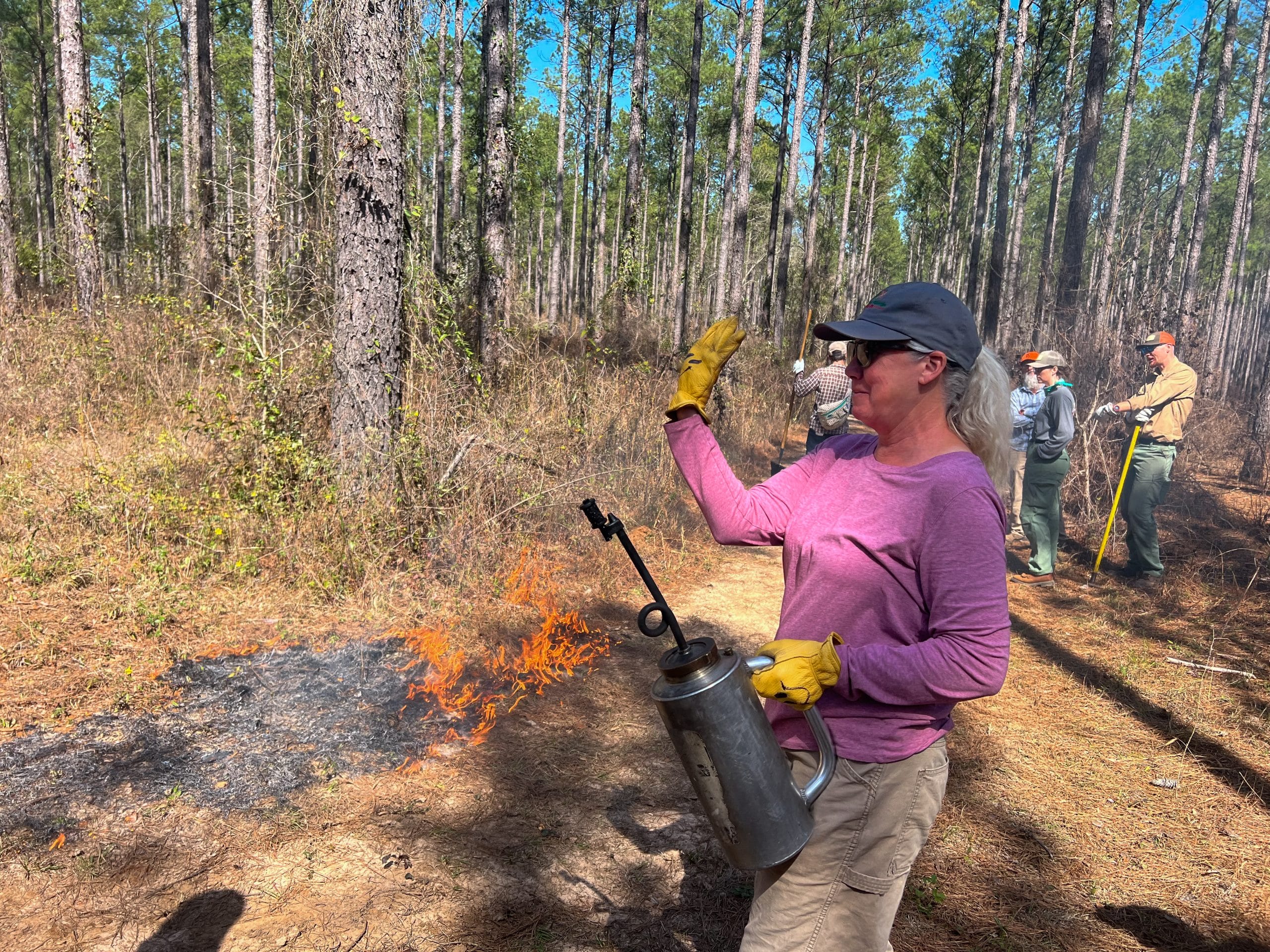
Above: Members of the Southwest Georgia Prescribed Burn Association conduct a burn in Grady, County, Georgia
Tall Timbers is directing an innovative private market solution to deliver insurance to prescribed burners.
Led by the Private Lands Prescribed Fire Initiative, the project which launched in late 2024 creates a risk pool insurance policy for Georgia prescribed burn association members that can help waylay fears of burning and create an affordable economy of scale.
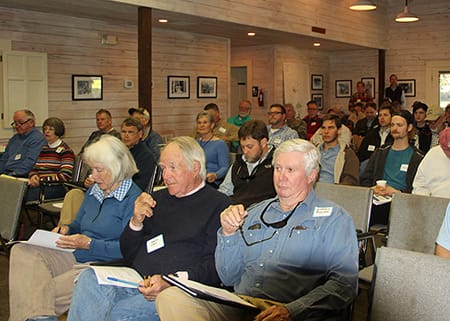
The 1,600 members of three Georgia prescribed burn associations — the West Central GA Forest Landowner Association, Southwest GA PBA, and Savannah River PBA — will have access to insurance for burns conducted through these groups.

The 1,600 members of three Georgia prescribed burn associations — the West Central GA Forest Landowner Association, Southwest GA PBA, and Savannah River PBA — will have access to insurance for burns conducted through these groups.
This unique model in Georgia builds on early success in the Central Alabama PBA, which started a smaller-scale risk pool insurance program last year.
The Georgia project is supported by the Georgia Department of Natural Resources (DNR). DNR is funding the establishment of the policy, which takes a tiered approach to transferring annual costs to the members of the PBAs over the next three years.
The value of the project is collaboration among partners who see the need to find solutions to complex problems in natural resource management.
“This liability insurance product for burn associations/cooperatives is an example of one potential solution,” said Private Lands Prescribed Fire Initiative Director John McGuire. “Insurance rates across the board have been largely volatile and mostly trending upwards in cost whether its home, auto or prescribed burning.”
Tall Timbers is a pass-through for the funding from the Georgia DNR and provides guidance, training and outreach to the PBAs.
DNR Private Lands Program Manager Brad Alexander said the insurance model was an encouraging step toward maintaining and increasing the use of prescribed fire on the ground in Georgia.
“Georgia Department of Natural Resources recognizes that prescribed fire is critical to improve and maintain habitat for Northern Bobwhite and many other priority species. Since so much of Georgia is privately owned, it is critical that we give landowners the tools and support they need to improve habitat for the critters that make Georgia special” Alexander said. “We hope this insurance program, funded by the GA DNR Bobwhite Quail Initiative through the sale of the Bobwhite Quail Restoration license plates, will reduce barriers and increase the use of prescribed fire to ensure future generations can continue to hear the bobwhite’s whistle each spring.”
Because the insurance policy is being administered by the PBAs, there is an added layer of oversight from certified prescribed burn managers working with landowners to ensure that site preparation, burn planning and burns are being done responsibly and in a way that reduces risk. Annual meetings by the PBAs will give a general scope of the level of burning planned for the year and open opportunities for mentoring.
This private market solution helps address burner liability in fiscally conservative states that are hesitant to establish publicly funded liability funds for prescribed fire.
“With many fiscally conservative states shying away from tax-payer underwritten liability funds, this private market opportunity might provide another alternative solution to prescribed burning insurance costs and availability through creating an economy of scale,” McGuire continued. “Our plan is once we work out the logistical challenges in Georgia is to expand our partnership with Forestry Speciality Underwriters in other states such as Maryland, Colorado and even California.”
Tall Timbers intends to show that the private insurance model is one option for addressing burner liability while, where appropriate, continuing to advocate for publicly funded liability solutions that recognize the public benefits of prescribed fire.