The State of Georgia is one of the three most active states in the nation in the use of prescribed fire, along with its neighbor, Florida.
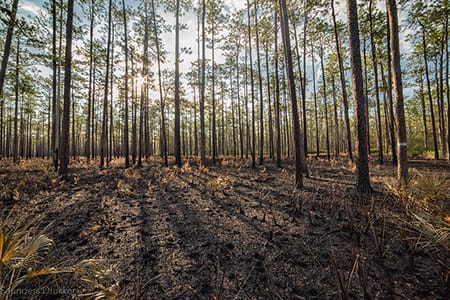
In 2025, prescribed fire was used on nearly 1.5 million acres in Georgia. The benefits of prescribed fire are well known and include managing wildlife habitat for fire-dependent species like Bobwhite quail, Red-cockaded Woodpeckers and gopher tortoises; managing forest stands; and reducing wildfire risk.
Representative Chas Cannon, who represents District 172, which includes Colquitt and portions of Thomas and Cook Counties, is well aware of the importance of keeping good fire on the landscape.
Representative Cannon, along with Representatives Leesa Hagan (District 156), Steven Meeks (District 178) and James Burchett (District 176), sponsored House Bill (HB) 983, which clarifies the role of local government public notice and permitting requirements related to burning.
The bill states that while any county or municipality in Georgia can provide additional notice or permit requirements for burning, no additional local regulations can restrict “prescribed burning,” which is specifically defined in GA Code Section 12-6-147. Prescribed burning in Georgia is primarily regulated by the Georgia Forestry Commission.
Prescribed fire is integral to the state of Georgia and protecting its use through policy will ensure good fire remains on the landscape, Cannon said.
“We need to do all we can as a policy making body to make sure our landowners in this state have the ability to conduct prescribed fire with a simple and efficient permitting process,” Cannon said. “In Georgia, we have a great record of managing our forests and our habitat with prescribed fire because we have good coordination and cooperation with our local and state government agencies. We need to do anything we can to strengthen that so that conducting and executing prescribed burns remains a simple and efficient permitting process. That’s a win-win for everyone.”
In February, the Georgia House unanimously passed HB 983, which will now move to the state Senate.
Tall Timbers, the birthplace of modern prescribed fire science, has a long history of working on and supporting state and federal policy guiding the use of prescribed fire on private and public lands. We greatly appreciate the hard work of Representatives Cannon, Hagan, Meeks and Burchett on this bill as well as that of the Georgia Forestry Commission and its Director, Johnny Sabo.
If you have any questions about this or other legislative issues affecting working rural lands in the Red Hills, contact Tall Timbers Advocacy Coordinator Neil Fleckenstein at neil@talltimbers.org.