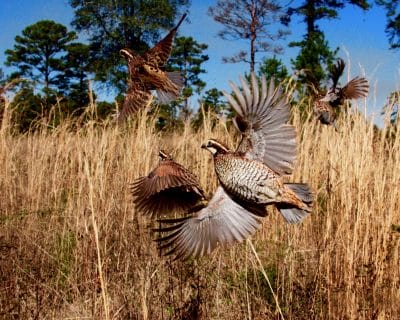
Wild bobwhite quail translocation to four states could help to rebound populations that have shrunk over the last century because of habitat loss.
This spring, Tall Timbers’ Game Bird Program moved 320 birds from the Red Hills and Albany regions to properties in Alabama, Georgia, Texas and Virginia where researchers have been working closely with landowners to reestablish nearly 15,000 acres of quality quail habitat and rebuild populations across the birds’ historic range.
The project in Virginia was the first time Tall Timbers translocated birds there, and the move of 120 birds to East Texas is part of the Western Pineywoods Quail Program launched just two years ago.
“Here in the Red Hills and Albany, wild quail are thriving due to the dedicated land owners and managers who work to ensure that quality habitat exists year after year. However, across the rest of their historic range, wild quail haven’t been as fortunate,” said Tall Timbers Red Hills Game Bird Research and Extension Biologist Alex Jackson.
There are a number of reasons quail numbers have dwindled: habitat loss, focus on agriculture and silviculture, increase in predators and the abandonment of prescribed fire as a management tool.
Researchers work with landowners interested in seeing more quail to improve their habitat. Only those that are conducive to supporting a long-term, healthy population are considered for translocation.
Participating landowners agree to follow a Tall Timbers management plan and researchers work closely with state game agencies over the course of the translocation project.
The hope is that in five years, areas where quail once lived will again have a thriving, huntable population, roughly one bird per acre.
Quail were relocated from the Red Hills and Albany to properties in Alabama, Georgia, Texas and Virginia.
“Translocation is not a panacea,” Jackson said. “The only time we’ll consider a translocation is if landowners have done the work and the habitat is right. Wild quail are a delicate resource, so we want to make sure when we move them they’re going to be taken care of.”
Jackson said building a healthy quail population where they’ve all but vanished can build buzz around translocation and spark the use of beneficial land management practices in surrounding areas.
Tall Timbers is developing a full-time quail expansion biologist position with a focus on working with landowners outside the Red Hills and Albany with tools like translocation to jumpstart quail population restoration efforts. The Game Bird Program has regional quail programs in the Carolinas, Central Florida, Alabama and now the Pineywoods of East Texas, southern Arkansas and western Louisiana.
In East Texas, the ecosystem is similar to the Red Hills and Albany with clay soils and open pine savannahs, but the region has pretty much lost all of its wild quail population, said Brad Kubecka, Tall Timbers’ Western Game Bird Program Director.
The East Texas property where quail were translocated this year had previously lost all of its birds, but in 2020 Tall Timbers started working with the landowner on improving habitat.
The landowner reintroduced fire, began mulching and creating brood fields, all practices that are effective in the Southeast, and researchers began monitoring it as a possible site to move birds.
“Simply restoring habitat does not mean a population will respond if there is no population there to begin with. This is why translocation is important after habitat restoration in these regions that have lost their birds,” Kubecka said. “We’re using the data from these translocated birds to tell us whether our blueprint from the Red Hills and Albany can work here.”
The Texas translocation included 60 birds in January and another 60 in March. Kubecka said there is research to determine if moving birds a few months before the spring breeding season gives them a leg up when it’s time to start nesting.
The question is if slightly longer acclimation to the release site could in turn improve reproduction with earlier nesting and higher nesting rates. If comparable to March releases, this gives researchers more flexibility in translocating logistics. Researchers have already found quail nest bowls and are monitoring nine pairs that appear to be preparing to breed.
“The first three months after release are the hardest on quail,” Kubecka said. “In the first three months this year, we’ve had exceptional survival; 90% of our birds were alive. They were doing as well or better than our resident populations. That’s very encouraging.”
By Jim Cox, originally published in the Summer 2022 edition of Quail Call.
It’s not much of a stretch to suggest that the Quail Call and all the other great information that Tall Timbers provides on quail management, has strong links to another bird that is as plump and fast flying as quail, and also fares well on quail-managed properties. Herbert Stoddard, the founder of Tall Timbers and the wildlife management profession, arrived in Florida in the 1890s with a family hoping to improve their condition by making a living on their farm growing citrus.
The project is spearheaded by Destinee Story, who got her start through a quail internship at Tall Timbers in 2019, and is now enrolled as a graduate student at the University of Georgia.
Then just six years old, Stoddard spent countless hours exploring the lakes and pine forests surrounding his home just east of Orlando. He describes the surroundings in idyllic terms, but one of the most memorable moments he recounted in his memoirs is the discovery of the nest of a Common Ground-dove.
“The discovery launched me on my career as a student of birds,” he says. “How that little creature ever managed to hatch her eggs and rear her young is a mystery to me, for I made many visits to the spot, each time disturbing her in her duties.” Now more than 100 years after the spark that grounddove ignited, we are still working on the many questions that Stoddard had, most of which led to the establishment of Tall Timbers Research Station in 1958.
The Common Ground-dove is the smallest dove in North America and weighs in at about ¼ the weight of a typical bobwhite quail. Its repetitive “woot, woot” calls are a common feature on quail properties and evoke the colloquial names of “moaning dove” or “tobacco dove” given the bird’s habit of occurring near agricultural fields. Althought the Common Ground-dove thrives in the presence of quail management, this little bird has not been faring well across most of its range.
Annual roadside bird counts conducted in May and June suggest we have about a quarter of the ground-doves we had 50 years ago. Losses are especially high in Florida, which, along with Texas, supports some of the largest populations anywhere. Although still common, there are many questions about why the losses have occurred and whether the populations that remain are stable. A recent comprehensive evaluation concluded that major studies of the dove are few and incomplete.
Given the many unknowns, Tall Timbers began banding the scores of ground-doves that are incidentally captured each year as part of quail research. Between Tall Timbers and Livingston Place, over 370 individuals have been banded since the Fall of 2020. By simply banding the doves captured and logging individuals when they are recaptured, we are starting to put together some of the first information available on survival, movements, and population stability for this species.
The project is spearheaded by Destinee Story, who got her start through a quail internship at Tall Timbers in 2019, and is now enrolled as a graduate student at the University of Georgia. “I went into the ground-dove project only expecting the unexpected,” she says, “and that is exactly what we’ve been learning.” Destinee has led the banding initiative from the start and has also been tracking a handful of ground-doves on Livingston Place using radio telemetry.
“We’ve recorded huge movements for tagged doves,” she notes, “including one individual that moved about a mile over an 8-hour period. All the published information says doves are sedentary, but we’re find many inconsistencies.”
“They also use bottomland areas quite often, such as wetlands and drains, even though they are believed to be an upland obligate species,” she adds.
Ground doves and quail have subtly different needs, but the area of overlap is much greater than the differences and helps to support large dove populations on quail-managed properties. Quail management often has the misguided reputation as “single-species” management. The reality is, bobwhite management is conducive to many other game and non-game species, including the Common Ground-dove. Ensuring this message is spread far and wide is critically important to the future of the bobwhite, as well as the many others species that thrive alongside.
Thanks to quail management, the future looks safe for the dove. We are grateful to the landowners and land managers who have helped to secure this future and, much like Stoddard, look forward to continued “ground-breaking” research.
By Kevin Robertson, PhD and Cinnamon Dixon, Fire Ecology Lab, originally published in the Summer 2022 edition of Quail Call.
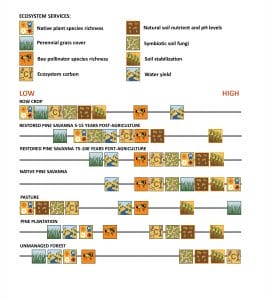
The term “ecosystem services” has gotten a lot of buzz in recent years. They are basically products or processes provided by natural lands that benefit humans. It follows that hunting itself is an ecosystem service. However, management for northern bobwhite, especially the use of frequent prescribed fire, can provide many more benefits than just good hunting, which is important for us and our community to appreciate. The Tall Timbers Fire Ecology Program recently published a paper measuring various ecosystem services provided by different land uses in the Red Hills Region.
Given that much of the region is covered with old-field pinelands managed for northern bobwhite, we were particularly interested in how time since abandonment of agriculture followed by application of frequent prescribed fire would influence various ecosystem services. We chose locations with different times since fields were abandoned and burning started using old aerial photographs and maps, categorizing locations into age groups ranging from 5-10 years up to 75-100 years post-agriculture, and then measured many aspects of the plants, soil, and soil fungi and bacteria. We were also interested in how these old-field pinelands compared to native longleaf pine-wiregrass communities as well as current row-crop agriculture, pine plantations, and unmanaged (long unburned) pine-hardwood forests.
We chose locations with different times since fields were abandoned and burning started using old aerial photographs and maps, categorizing locations into age groups ranging from 5-10 years up to 75-100 years post-agriculture, and then measured many aspects of the plants, soil, and soil fungi and bacteria.
The study was replicated in four different areas — in and around Tall Timbers, Livingston Place, Pebble Hill Plantation, and Avalon Plantation — thanks to the hospitality of these and many other private landowners. Our results showed that with increasing time since agriculture there is an increase in perennial grass cover, native plant biodiversity, soil carbon, total ecosystem carbon, and mycorrhizal soil fungi, and a decrease in soil plant pathogens, water runoff, and soil erosion. Soil mineral nutrients including phosphorus, calcium, magnesium, and potassium also decreased toward levels closer to native pine communities, which is helpful for minimizing off-site and weedy plants and decreasing pollution from runoff. Frequently burned old-field and native pinelands also fared well compared to other common land uses.
Naturally, row-crop agriculture produces the most food and fodder, pasture produces the most forage, and pine plantations produce the most timber. However, frequently burned pinelands showed lower losses of water to transpiration, higher water infiltration, and higher bee pollinator diversity than pine plantations and unmanaged forests. They also had higher total ecosystem carbon and less runoff and sedimentation than pastures and row crops. Older old-fields and native pinelands had the overall highest native plant diversity which translates to diversity of insects and the vertebrate animals that depend on them.
They also had the healthiest soil in terms of C:N ratio, lowest bulk density, most natural levels of mineral nutrients and nitrogen, and symbiotic fungi that help plants grow. These results highlight the many benefits provided by quail management, especially use of frequent prescribed fire and timber management to maintain an open canopy, on mostly post-agricultural landscapes like the Red Hills. However, it also follows that many of the benefits accumulated over time are lost by intensive soil disturbance that more or less returns the soil and vegetation to agricultural conditions and resets the successional clock.
Given that native pine savannas generally had the highest levels of most ecosystem services, prioritizing them for protection from intensive soil disturbance is a good idea. In summary, frequent fire on oldfield and native pinelands provides a wide range of services helpful to both landowners and the broader community, although some diversity of land use is necessary for providing all the benefits we humans need to thrive.
Thank you for submitting a job post request
Say NO to a New Toll Road in Jefferson County
The M-CORES program, which includes the proposed Suncoast Connector Toll Road in Jefferson County, passed through the Florida Legislature at breakneck speed with little review or analysis. Tall Timbers has a number of concerns given the potential for significant and wide spread impacts. These include fragmenting public and private conservation lands, robbing business from Main Street Monticello, impacting our rivers and other water resources, and making prescribed fire more difficult and costly.
Join us in asking the Jefferson County Board of County Commissioners to OPPOSE the Suncoast Connector toll road and its path through Jefferson County.
Take action now with our easy email form.
Send an email to all five Jefferson County Board of County Commissioners with one click!
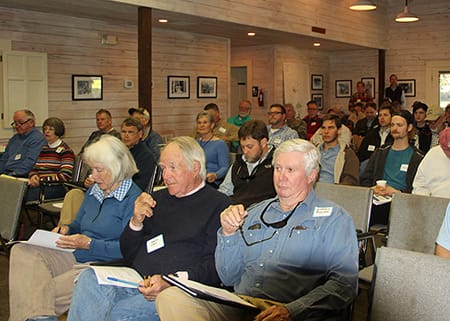
Burn prioritization modeling seminars and fire modeling tools are supported by Wildland Fire Science to train managers in the important planning stages of prescribed fires.
Educating and guiding the next generation of fire researchers and managers is a key goal of Wildland Fire Science and a resource for testing new ideas in fire research.
Tall Timbers hosts the premier fire technology transfer organization—the Southern Fire Exchange. This JFSP funded effort helps connect research to management through webinars, workshops, and support of the Prescribed Fire Science Consortium.
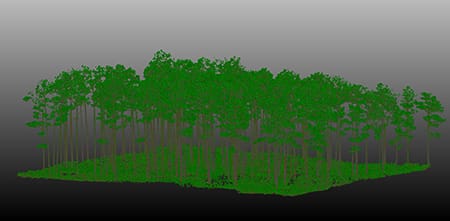
Working with partners in the Prescribed Fire Science Consortium, the program is building nexgen 3-D fuel beds using terrestrial LiDAR and novel sampling techniques to power new fire behavior models for prescribed fire managers. This work links to Tall Timbers work in wildlife habitat usage and ecological forestry.
The Longleaf Legacy landscape prescribed fire burn team arm of Wildland Fire Science works directly with landowners and partners to effectively put fire on the ground and promote prescribed fire throughout the region.
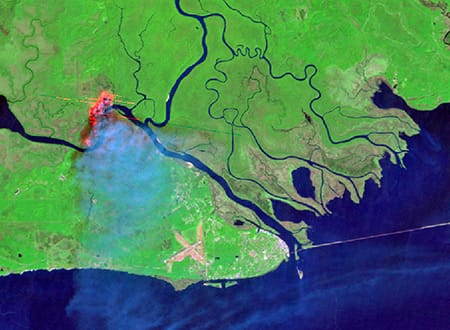
Tall Timbers is leading an effort to map fire regimes at the landscape scale. Staff work with numerous agencies to evaluate fire records and satellite imagery to build this critical conservation database. https://skfb.ly/6DqOY
Tall Timbers hosts the Prescribed Fire Science Consortium, a national network of researchers and managers who promote integrated research and management to advance next generation tools for fire practitioners. https://arcg.is/1DSjDT
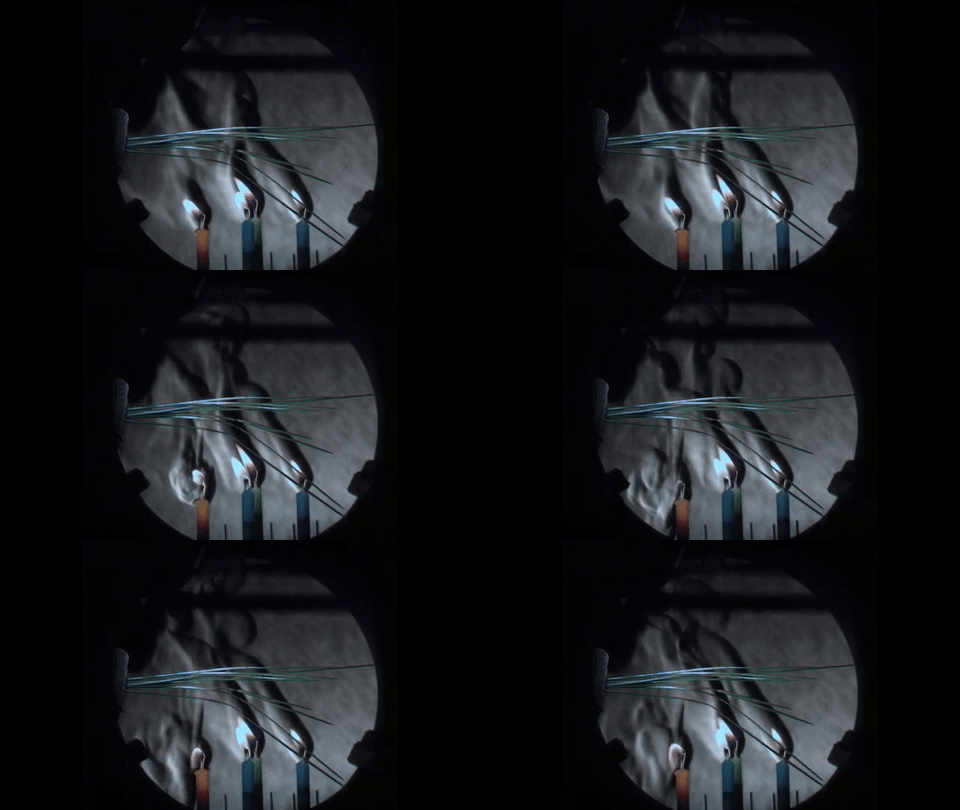
We are linking physics and field observations to understand the fluid dynamics of fire behavior surface fire regimes. Our work combines field observations using advanced thermal imaging techniques, laboratory studies, and coupled fire-atmospheric modeling to help managers improve outcomes of managed fire regimes.
Selected Publications authored by Wildland Fire Science staff.
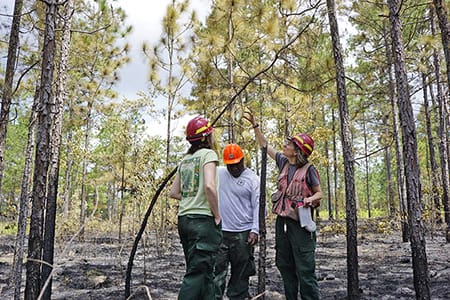
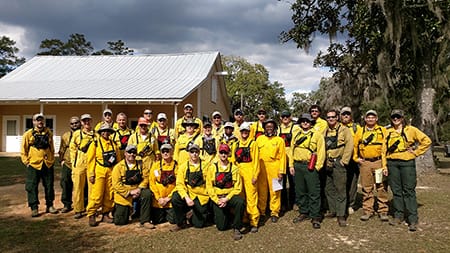
Staff and researchers support Federal fire training by serving as a cadre for NWCG training courses, ranging from basic wildland fire to advanced fire effects.
(PFTC) specializes in training fire fighters the principles and techniques of prescribed fire through practical hands-on experience. https://www.fws.gov/fire/pftc/
Private land owners are the largest source of prescribed fire in the country. These land owners and the culture of fire that was maintained by them during decades of suppression are a part of why Tall Timbers is a world-wide center for prescribed fire science. Workshops and fire training are a critical focus of the Longleaf Legacy Landscape Burn Team and our support of the Georgia Forestry Commission Prescribed Fire Center in Marion County.
The conserved lands of the Greater Red Hills region are found on working, income-producing properties that support agriculture, forestry, and recreational hunting. These properties contribute $272 million annually to local economies and support 2,300 jobs. [link to Planning & Advocacy section] The landowners’ strong stewardship ethic preserves their working lands while replenishing drinking water supplies, protecting water quality, and providing wildlife habitat for dozens of rare and endangered species. Tall Timbers’ conservation easements on these working properties encourage landowners to retain their traditional livelihood by keeping farms in family ownership.
Home to world-class wild quail populations, the Greater Red Hills region contains the largest concentration of gamebird preserves in the United States. These preserves also support the largest community of Red-cockaded woodpeckers on private lands. Indicators of high quality habitat found here include the gopher tortoise, Bachman’s sparrow, fox squirrel, and many amphibians. Tall Timbers’ conservation easements identify and protect the critical habitats of these species.
The region also boasts outstanding aquatic resources. Large river systems, like the Flint/Apalachicola, Ochlockonee, and Aucilla, flow from Georgia and feed into the Gulf of Mexico to support some of the world’s most productive estuaries. Large disappearing sinkhole lakes, like Iamonia, Miccosukee, and Jackson, provide habitat for an array of aquatic species and migratory birds. Tall Timbers’ conservation easements protect these vital watersheds and wetlands that are the lifeblood for the ecological health of the region.
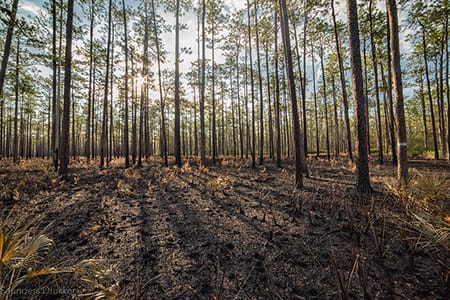
Once dominated by longleaf pine, our pine woodlands support abundant wildlife and local economies. These forests need prescribed fire to stay healthy. Herbert L. Stoddard and his associates Ed and Roy Komarek were pioneers in this emerging scientific field during the mid-20th century. Tall Timbers continues that legacy with applied research on prescribed fire and land management. Today, there is a tremendous need to expand prescribed fire use beyond the Red Hills to ensure ecosystem health and reduce wildfire risk. Additionally, Tall Timbers uses conservation easements to permanently protect private woodlands while balancing the need for economic return from selective timbering.