Livingston Place Earns Listing on National Register of Historic Places
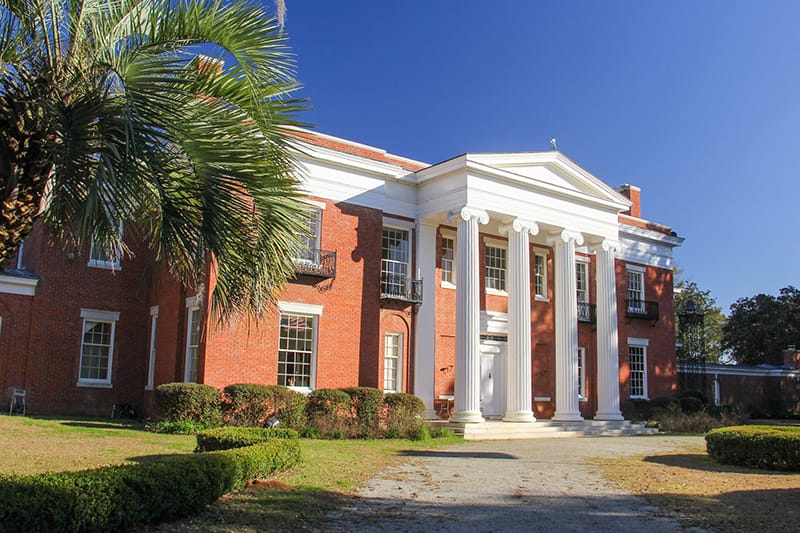
In January 2022, the National Park Service added the 9,125-acre Livingston Place property in Greenville, Florida, to the National Register of Historic Places, making it one of the largest designated sites in the state. National Register designation recognizes this distinct cultural landscape, along with its architectural significance, while also helping protect and preserve it for the future.
Tall Timbers has owned Livingston Place — known as Dixie Plantation from 1926-2020 — since 2013, when the Geraldine C.M. Livingston Foundation gifted the historic quail hunting property to our organization.
As current steward of the property, Tall Timbers has expanded wildlife research and made land management improvements, in addition to completing a multi-phase restoration and rehabilitation project of the 1938 Livingston Place Main House — with financial support from members of Tall Timbers’ Board of Trustees, the Red Hills community, and three Florida Department of State Special Category grants.
Master architect John Russell Pope designed the Main House; it is the only one of his designs in Florida. Pope is known for designing several prominent Washington, DC buildings, including the Jefferson Memorial and the National Gallery of Art.
“Restoring the Livingston Place Main House brings life back to this historic structure and allows Tall Timbers to utilize it for guests, science and conservation gatherings, and community events. We are excited about this first step as we evaluate a course of action based on usage and demand,” commented Dr. Bill Palmer, President and CEO of Tall Timbers.
The National Register designation is also very much about this distinct American landscape of large quail hunting preserves, rich in natural and cultural resources, explained Kevin McGorty, Tall Timbers Land Conservancy Director and nomination co-author. “This is one of the largest properties listed in the National Register from Florida, reflecting a distinct cultural landscape that was shaped by both the Livingston family and their sporting interests, and the African American tenant farmers who lived and labored on the land.”
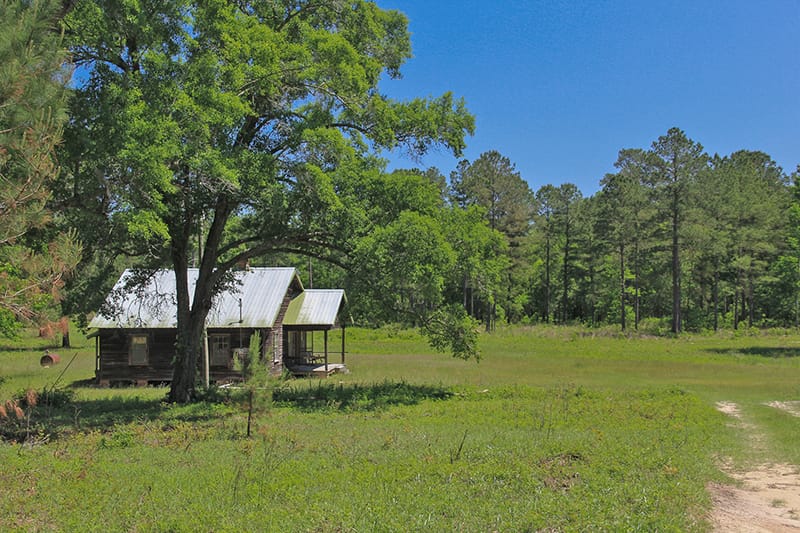
Tenant House at Livingston Place
The Legacy of the Livingston Family
The Livingston family left a rich legacy by making the property a nationally recognized field trial venue, showcasing competition among some of the nation’s top bird dogs and their handlers. The prestigious Continental Field Trial has been hosted annually at the site since 1937, and is one of few remaining field trail events with wild bobwhite quail, thanks to science-driven land management practices that include the traditional use of prescribed fire.
The Livingstons’ implementation of land stewardship practices, as promoted in the Red Hills region by early conservationist Herbert L. Stoddard, improved not only the property’s wild quail populations, but also conserved other wildlife and restored habitats, including longleaf pine forests.
Intertwined with conservation, Livingston Place is significant for its direct association with Black tenant farmers and sharecroppers and their important role in the Red Hills’ economic, recreational, and environmental development. African Americans, freed from slave labor on large-scale agricultural plantations, adopted small-scale patch farming and cultural burning that favored quail populations and played a pivotal part in the success of hunting preserves in the Red Hills region after the Reconstruction era. Black employees at these properties also ensured smooth running of the preserve operation as skilled dog handlers, horse trainers, and house and grounds workers.
Interpretive Exhibit for the Main House Being Developed
Three tenant farmer cabins, a commissary, two workers’ cottages, three cemeteries, and a dog cemetery remain as surviving features to tell the story of this working landscape. Tall Timbers is also developing an interpretive exhibit for the main house, to share with visitors the history of the Livingston family and the role of African American farmers in shaping this revered American landscape known as the Red Hills.
BirdQuest, which Supports the Stoddard Bird Lab, Returns April 8
By Jim Cox, Stoddard Bird Lab Director
The boisterous sounds of spring are everywhere as nature shifts from winter survival mode to the procreative rites of spring. Two eaglets are about to fledge on Tall Timbers, while many nuthatches are incubating brown, mottled eggs.
All the activity has the Stoddard Bird Lab anxious to stretch our wings in a manner that has not been easy to do during the pandemic. With life on the mend, we are resurrecting BirdQuest, our annual fundraiser that supports the important work we do with rare birds and the role that prescribed fire plays in maintaining southern pinelands, coastal marshes, and other ecosystems.
BirdQuest 2022 is designed to reflect the breadth of our work. Rather than focus on the birds found on a single Red Hills’ property, we’ll seek out birds on public lands that straddle the Ochlockonee River. We’ll launch before dawn on April 8, listening for birds along the eastern edge of the watershed near Tall Timbers. We’ll then head south looking for migratory warblers along the river’s edge in the Apalachicola National Forest, stop by the old-growth pine forest at Ochlockonee River State Park, before continuing south to end the day on public lands around Ochlockonee Bay, where some of our work with Black Rails is taking place (Mashes Sands and Alligator Point State Park). At day’s end, we hope to have 150 species on our list.
You can keep the enthusiasm running high on April 8, by making a tax deductible contribution to BirdQuest 2022. The goal this year is to secure radio transmitters and a summer internship to assist grad student Destinee Story in her work with the Common Ground-dove. Destinee has marked over 120 individuals on Tall Timbers and Livingston Place, and has her hands full trying to keep up with their movements. The generous support provided by you and others will keep all this hard work going. You can make your pledge on line here. Contributors receive a special account of the daylong event, and your contributions will continue the great legacy of important bird research at Tall Timbers.
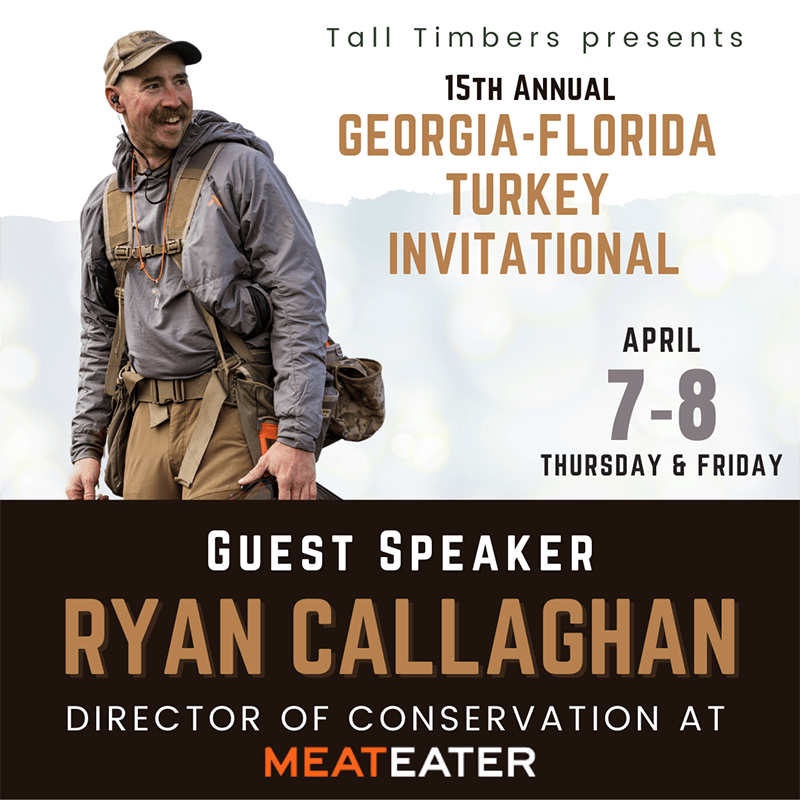
Please join us on April 7-8 for the 15th Annual Georgia-Florida Turkey Invitational benefiting the Tall Timbers Game Bird Program. Our speaker this year will be Ryan “Cal” Callaghan, Director of Conservation at MeatEater, Inc. and host of Cal’s Week in Review podcast. Become a Sponsor or register your team by completing the online registration form. For more information, please refer to the event brochure or contact the Development Office at 850-893-4153 ext. 343.
By Juanita Whiddon, Historic Resources Coordinator
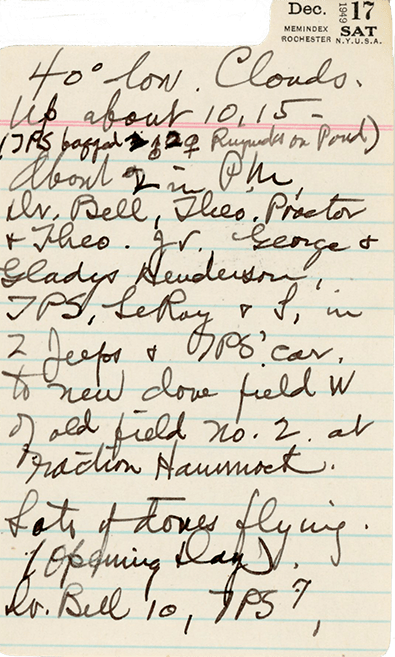
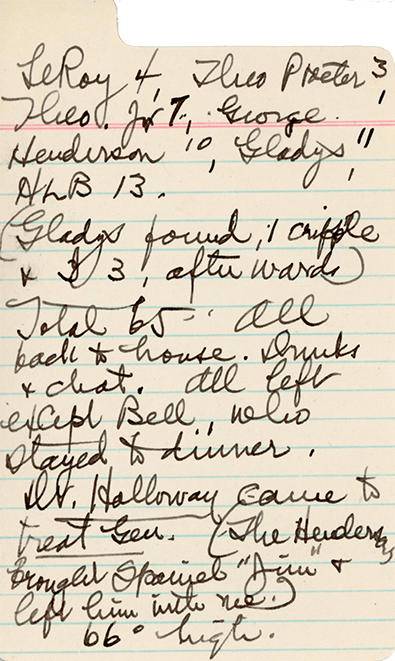
Henry Beadel’s diaries from the 1930s and ‘40s note that frequent guests for dove hunting on Tall Timbers were Tallahassee businessman, Theo Proctor and his young son, Theo, Jr. Theo Proctor, Jr. loved to reminisce about visits to Tall Timbers, and how he entertained himself when his father and Henry Beadel were enjoying their “after hunt” discussions and libations. When Beadel died in 1963, he willed two of his favorite guns to the Proctor father and son: a Greener shotgun (according to serial number/date Beadel most likely purchased this piece in London at the end of a 4-year European honeymoon), and a Charles Daly trap shooter.
Front of Beadel diary card, Dec. 17, 1949, shows Henry Beadel and his friends, including Theo Proctor Sr. and Jr., driving to the new dove field at Tall Timbers.
Back of Dec. 17, 1949 diary card, which lists how many doves were harvested and by whom.
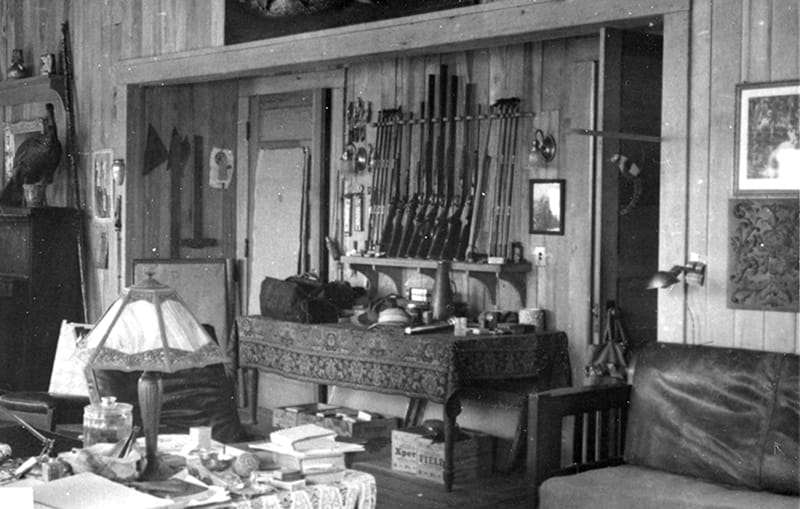
Beadel Living in 1937, with guns displayed on the gun rack.
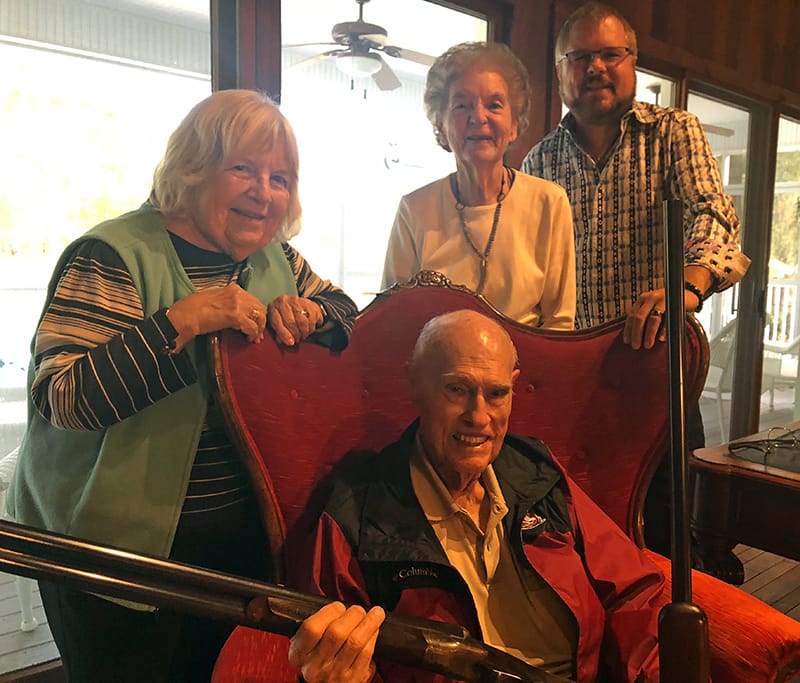
For many years the guns were treasured by the Proctor family, but about two years prior to his death in 2020, Theo, Jr., along with members of his family, decided that if Tall Timbers would agree to exhibit the guns he would deed them back to Tall Timbers. Our historic preservation program was thrilled to add these pieces of Beadel family history to our collection. We were fortunate to have pictures of the gun rack from 1937, and with the design assistance of preservation architect, Charles Olson and master metal craftsman, Fred Eubanks, the guns have been returned to the gun rack, which has been made secure without changing the overall character of the room.
Photo taken in December 2018. Seated: Theo Proctor, Jr. Standing L-R: Juanita Whiddon, Martha Anne Proctor, and Theo Proctor III.
Delays due to the Covid-19 quarantine have pushed back the formal dedication of the gun rack exhibit, but we are back on track for a dedication in early 2022. We appreciate this generous gift from the Proctor family.
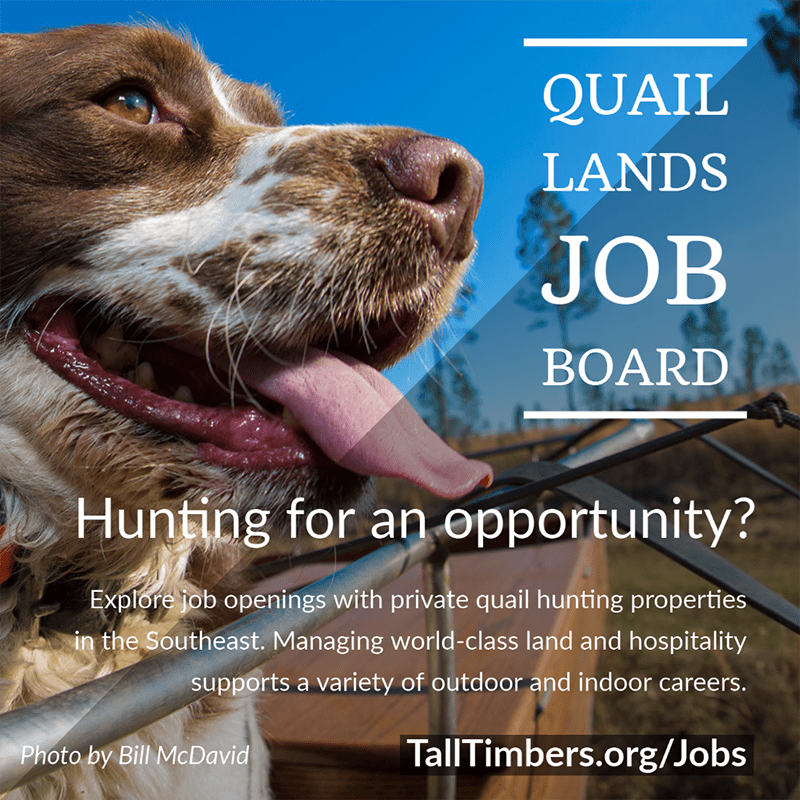
This fall Tall Timbers launched a new job board to help job-seekers connect with the variety of unique job opportunities generated by wild quail hunting properties. The new job board, hosted at www.TallTimbers.org/Jobs, was developed in cooperation with landowners and managers, along with the Technical College System of Georgia.
“It’s really part of a larger look at the workforce development needs for the land management, hunting, and hospitality jobs that keep these large private quail lands running,” explained Clay Sisson, the Albany Quail Project & Livingston Place Director for Tall Timbers. “Landowners and managers have recognized the need to treat this as an industry. The job board is just a part that Tall Timbers was in a position to set up and help out.”
In addition to making job opportunities more visible and centrally located for job-seekers, the job board is also collecting data on the types of jobs offered and qualifications needed. This data will be shared with technical colleges as they continuously evaluate and update their programs to make sure students are ready for the jobs that are available.
Southern Regional Technical College, Albany Tech, and Ogeechee Technical College have all participated in the efforts to address workforce development needs, and are helping to promote the job board.
We hope that providing a dedicated location for these unique job openings, will help attract qualified candidates and further highlight the opportunities wild quail lands create. Past economic studies by Tall Timbers show that quail lands generate nearly $340 million in economic impact across the Albany and Red Hills regions, including over 2,600 direct jobs.
The job board posting service is available to all wild quail properties throughout the range of our Regional Quail Programs from the Carolinas down to Central Florida and over to East Texas. To post a job, simply use the “Post a Job” button to complete a short form that is sent to Tall Timbers staff for a quick review and posting. The “Close a Job” button is used remove a job from the board, and includes a few short questions to help us evaluate the program. No passwords or account numbers are needed.
In the first two months of the project, we posted seventeen job openings, and by early November we received our first request to close a job because the position was filled!
Please consider sharing the job board with anyone you know who may be interested in land management, hunting, or hospitality jobs. If you have questions, please contact Clay Sisson.
The M-CORES program, which includes the proposed Suncoast Connector Toll Road in Jefferson County, passed through the Florida Legislature at breakneck speed with little review or analysis. Tall Timbers has a number of concerns given the potential for significant and wide spread impacts. These include fragmenting public and private conservation lands, robbing business from Main Street Monticello, impacting our rivers and other water resources, and making prescribed fire more difficult and costly.
Join us in asking the Jefferson County Board of County Commissioners to OPPOSE the Suncoast Connector toll road and its path through Jefferson County.
Take action now with our easy email form.
Send an email to all five Jefferson County Board of County Commissioners with one click!
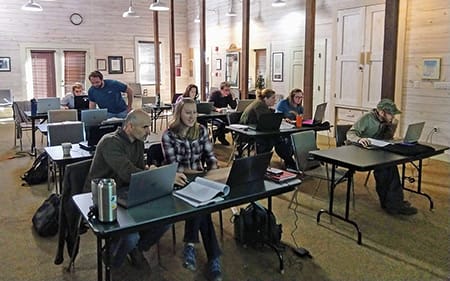
Burn prioritization modeling seminars and fire modeling tools are supported by Wildland Fire Science to train managers in the important planning stages of prescribed fires.
Educating and guiding the next generation of fire researchers and managers is a key goal of Wildland Fire Science and a resource for testing new ideas in fire research.
Tall Timbers hosts the premier fire technology transfer organization—the Southern Fire Exchange. This JFSP funded effort helps connect research to management through webinars, workshops, and support of the Prescribed Fire Science Consortium.
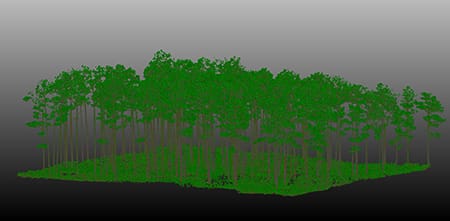
Working with partners in the Prescribed Fire Science Consortium, the program is building nexgen 3-D fuel beds using terrestrial LiDAR and novel sampling techniques to power new fire behavior models for prescribed fire managers. This work links to Tall Timbers work in wildlife habitat usage and ecological forestry.
The Longleaf Legacy landscape prescribed fire burn team arm of Wildland Fire Science works directly with landowners and partners to effectively put fire on the ground and promote prescribed fire throughout the region.
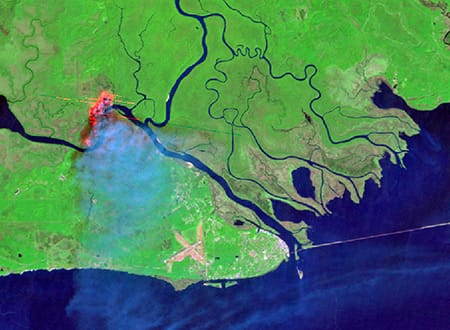
Tall Timbers is leading an effort to map fire regimes at the landscape scale. Staff work with numerous agencies to evaluate fire records and satellite imagery to build this critical conservation database. https://skfb.ly/6DqOY
Tall Timbers hosts the Prescribed Fire Science Consortium, a national network of researchers and managers who promote integrated research and management to advance next generation tools for fire practitioners. https://arcg.is/1DSjDT
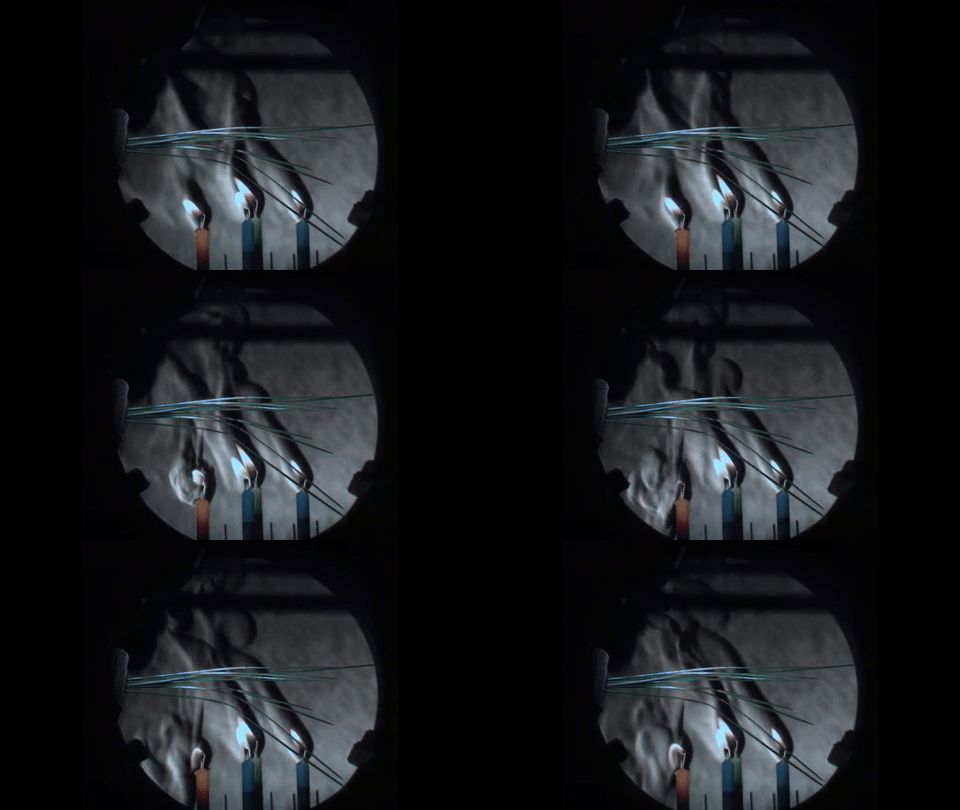
We are linking physics and field observations to understand the fluid dynamics of fire behavior surface fire regimes. Our work combines field observations using advanced thermal imaging techniques, laboratory studies, and coupled fire-atmospheric modeling to help managers improve outcomes of managed fire regimes.
Selected Publications authored by Wildland Fire Science staff.
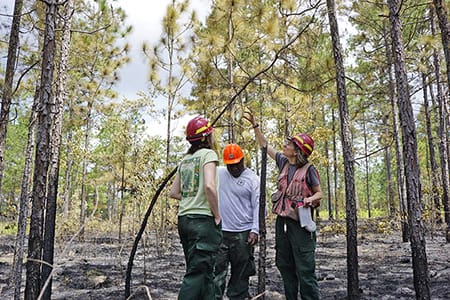
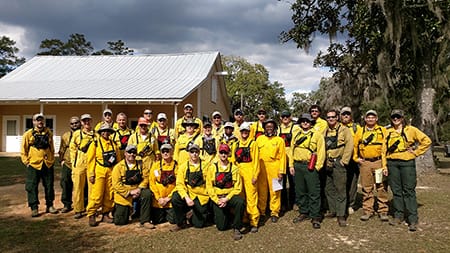
Staff and researchers support Federal fire training by serving as a cadre for NWCG training courses, ranging from basic wildland fire to advanced fire effects.
(PFTC) specializes in training fire fighters the principles and techniques of prescribed fire through practical hands-on experience. https://www.fws.gov/fire/pftc/
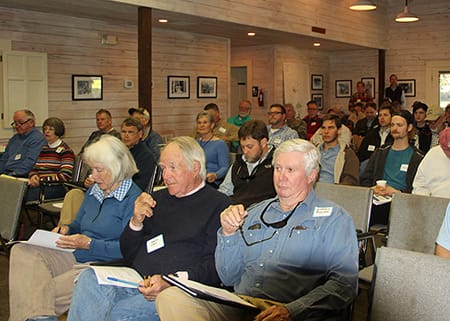
Private land owners are the largest source of prescribed fire in the country. These land owners and the culture of fire that was maintained by them during decades of suppression are a part of why Tall Timbers is a world-wide center for prescribed fire science. Workshops and fire training are a critical focus of the Longleaf Legacy Landscape Burn Team and our support of the Georgia Forestry Commission Prescribed Fire Center in Marion County.
The conserved lands of the Greater Red Hills region are found on working, income-producing properties that support agriculture, forestry, and recreational hunting. These properties contribute $272 million annually to local economies and support 2,300 jobs. [link to Planning & Advocacy section] The landowners’ strong stewardship ethic preserves their working lands while replenishing drinking water supplies, protecting water quality, and providing wildlife habitat for dozens of rare and endangered species. Tall Timbers’ conservation easements on these working properties encourage landowners to retain their traditional livelihood by keeping farms in family ownership.
Home to world-class wild quail populations, the Greater Red Hills region contains the largest concentration of gamebird preserves in the United States. These preserves also support the largest community of Red-cockaded woodpeckers on private lands. Indicators of high quality habitat found here include the gopher tortoise, Bachman’s sparrow, fox squirrel, and many amphibians. Tall Timbers’ conservation easements identify and protect the critical habitats of these species.
The region also boasts outstanding aquatic resources. Large river systems, like the Flint/Apalachicola, Ochlockonee, and Aucilla, flow from Georgia and feed into the Gulf of Mexico to support some of the world’s most productive estuaries. Large disappearing sinkhole lakes, like Iamonia, Miccosukee, and Jackson, provide habitat for an array of aquatic species and migratory birds. Tall Timbers’ conservation easements protect these vital watersheds and wetlands that are the lifeblood for the ecological health of the region.
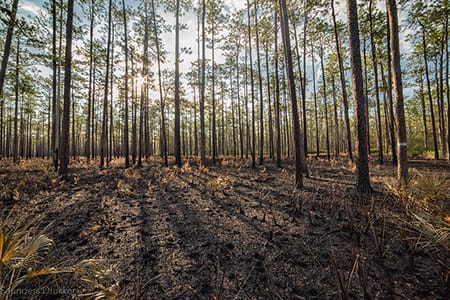
Once dominated by longleaf pine, our pine woodlands support abundant wildlife and local economies. These forests need prescribed fire to stay healthy. Herbert L. Stoddard and his associates Ed and Roy Komarek were pioneers in this emerging scientific field during the mid-20th century. Tall Timbers continues that legacy with applied research on prescribed fire and land management. Today, there is a tremendous need to expand prescribed fire use beyond the Red Hills to ensure ecosystem health and reduce wildfire risk. Additionally, Tall Timbers uses conservation easements to permanently protect private woodlands while balancing the need for economic return from selective timbering.



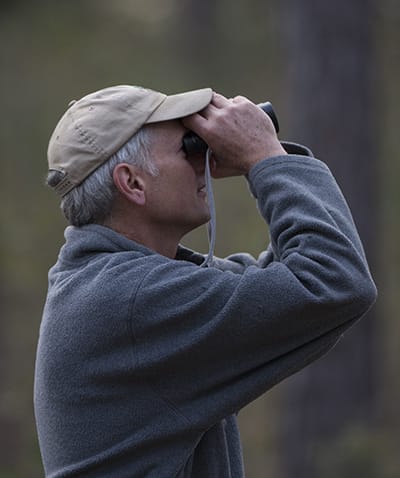 BirdQuest 2022 is designed to reflect the breadth of our work. Rather than focus on the birds found on a single Red Hills’ property, we’ll seek out birds on public lands that straddle the Ochlockonee River. We’ll launch before dawn on April 8, listening for birds along the eastern edge of the watershed near Tall Timbers. We’ll then head south looking for migratory warblers along the river’s edge in the Apalachicola National Forest, stop by the old-growth pine forest at Ochlockonee River State Park, before continuing south to end the day on public lands around Ochlockonee Bay, where some of our work with Black Rails is taking place (Mashes Sands and Alligator Point State Park). At day’s end, we hope to have 150 species on our list.