Auction and Golf Tournament another successful event for Tall Timbers Foundation
By Vann Middleton, Director of Operations & Support
On the evening of September 22, over 200 Tall Timbers supporters packed the main dining room at Glen Arven Country Club in Thomasville to raise some fun and a lot of much needed funds in support of the Tall Timbers Foundation. In what has become an annual tradition, the Kate Ireland Memorial Auction serves as a critical component of our annual fundraising needs. With plenty of great items to bid on in both the silent and live auction, the evening’s patrons were treated to a wonderful evening of delicious food, drink and lively bidding.
When the dust finally settled and the final gavel struck the block, the evening’s net proceeds generated over $130,000 for the Foundation, far surpassing our budgeted goal. By far our largest annual fundraiser, the Auction provides critical financial support that help supplement the operating needs of the research, conservation and education programs of Tall Timbers. A gracious thank you to all who donated items, provided financial support or participated in the evening’s festivities. Your support is greatly appreciated!
The following morning, eighteen golf teams hit the links at historic Glen Arven in pursuit of the coveted Kate Ireland Cup and bragging rights as champions of the Tall Timbers Invitational Golf Tournament. A crisp autumn day greeted the golfers at Glen Arven. As usual, the scores were low and the competition fierce. Roars reverberating on the back nine when Todd Mills struck a perfect 6 iron on the 13th hole for a hole in one – the first ever recorded in the 17 year history of the tournament. Congratulations Todd! At the end of the day, the team of David Cochran, Michael Douglas, Chris Newman and Corey Butler took home first place honors with a blazing net score of 52.
L-R: Micharel Douglas, David Cochran, Corey Butler (not pictured: Chris Newman)
Thanks to all who participated and as always, we are grateful for your support of Tall Timbers. See you next year!
Auction Photo Album
At left, Bernie Lanigan and Daphne Wood; at right, George Simmons, Chip and Sheila Melton
At left, checking out the auction items; at right, Kevin and Kathleen Kelly.
At left, Danny and Kathy MacQuirter; at right auction items donated by Tall Timbers supporters.
At left, Vann Middleton, Tall Timbers Director of Operations & Support, who organizes the auction & Golf Tournament each year, encourages the guest to bid; at right, Gates & Brandy Kirkham.
By Theron Terhune, Outreach & Education Coorinator
I have to say that fall is by far my favorite time of year! I love most everything about this time of year: the cooler mornings; the brilliance and varied fall colored leaves; the welcoming “koi-lee” sound of the distinct bobwhite covey call; and, of course, the anticipation of the next “big” hunt. I haven’t, however, figured out who enjoys hunting season more me or my bird dog, Gerti!
Gerti ready for the next duck to drop and, now, anxiously anticipating the next hunt. Are you ready?
For many though, this time of year is the busiest and most challenging. An ongoing challenge of many wild quail managers is not only adequately managing habitat to ensure quality hunting but also tracking bobwhite populations, harvest rates, evaluating hunting success and dog performance, and coordinating hunts, feeding schedules and predation management program.
As such, to aid land managers and land owners, Tall Timbers has partnered with CoveyIQ to help address these challenges and to bring you the latest and greatest technology, affording wild quail plantations a valuable way to collect and archive relevant quail hunting information, such as coveys found, dogs pointed, and number of birds harvested. During September, we hosted our second land managers luncheon where more than 25 folks learned about CoveyIQ. Luncheon attendees discovered that CoveyIQ provides a nice, user-friendly platform for entering data and evaluating hunting success and even allows you to customize year-end reports. The CoveyIQ system is accessible by computers (at the office) and mobile (in the field) devices, where users just need internet access to get started and log hunting data. In addition to quail hunting information, CoveyIQ users can plan where and where to hunt or when/where to feed, as well as collect predation management information. For more information about CoveyIQ, visit their website at http://www.coveyiq.com/ or email Theron.
In the near future, we hope to incorporate CoveyIQ into land management tools being developed at Tall Timbers such as web mapping applications, population monitoring tools and other management decision tools. This integration and accumulation of data over time will help Tall Timbers game bird scientists to advance quail research by studying anonymous hunting data at regional scales with the intent to better inform quail conservation landscape-wide.
This past luncheon on CoveyIQ was a great one, but there are many more to come! Many thanks to those sending in comments and suggestions for future land managers luncheons. Here are the topics and tentative time periods for Next Year’s (2013) Luncheons:
Jan/Feb – Best Management Practice in Prescribed Fire
Apr/May – Use and Application of Herbicides
July – Utilizing Conservation Incentive Programs to your Advantage (e.g. FB and Safe Harbor)
Sept/Oct – Evaluating your Wildlife Population (predators, quail, songbirds, etc.)
We need your vote today, and every day until November 30 for Operation Outdoors
For their Future Forward Grant Contest,SportDOG Brand® has chosen the conservation project that Tall Timbers Outreach & Education Coordinator, Dr. Theron Terhune proposed, along with Dr. James Martin at Mississippi State University. Tall Timbers’ project,Operation Outdoors, was nominated as 1 of 7 projects to choose from to receive a $25,000 grant. The project receiving the most votes will be awarded the grant. To win the grant contest, we need your vote today, and every day until November 30.
About Operation Outdoors
The Operation Outdoors grant request is for developing and planning an intensive semester of outdoor education for young adults at the college/university level. Grant funds, if awarded, will go towards paying for travel of project planning partners (i.e., from Clemson University, Mississippi State University, Washington College, etc.), for course development, and to undergraduate students and young adults to offset costs incurred for university classes, such as Upland Avian Ecology, when visiting the field site. Project Outdoors allow students to visit field research stations, participate in research and learn about practical habitat management without paying the out-of-pocket expenses associated with field site visits.
You can start voting today and can vote once every day until November 30. You can also vote at the SportDOG™ contest page on their website: www.sportdog.com/FFF.
Voting for Operation Outdoors enhances conservation and natural resource education for young adults by bringing them into the outdoors for a practical, hands-on research and education experience at Tall Timbers. The intent of the project is to foster the integration of hunting and game management into education. The ultimate goal of this project is to conserve and protect upland and grassland ecosystems, the species inhabiting them, and retaining the hunting legacy. Students will leave the program as effective upland bird biologists, well-versed in habitat management, and the ability to educate others on these topics. We believe this will have a cascading effect such that our culture of upland hunting will be preserved for future generations. PLEASE vote for Operation Outdoors!
Why did SportDOG™ have a contest?
SportDOG™ and their families enjoy many of the same hunting opportunities and outdoor activities as their customers. As a result, they recognize the importance of wise conservation and habitat-enhancement initiatives. SportDOG supports conservation efforts by contributing time and funding to projects that ensure hunters will have wild places to hunt wild game for generations to come. From habitat-enhancement projects at the local level to partnerships with some of the most proactive and respected national conservation organizations, SportDOG is proud to contribute.
The Tall Timbers Land Conservancy educates about conserving the region at several events
While the focus of our work at the Tall Timbers Land Conservancy (TTLC) is on land conservation, land use planning, and advocacy, we are also involved in efforts to educate the public about the importance of the Red Hills region and why it is deserving of protection. Usually these opportunities are spread throughout the year. This year however, staff were involved in several high profile events in just one week.
On October 13, the 5th annual Pine Run 20K took place at Tall Timbers. More than 200 runners set out on the challenging 12.4 mile course with 192 eventually finishing the event. This race provided a rare opportunity for a small segment of the public to see Tall Timbers in a way that few people do. Both Tall Timbers and the Gulf Winds Track Club, the race sponsor, benefit from the relationship we have developed. The Pine Run 20K has become one of the most popular long distance trail races sponsored by Gulf Winds. Tall Timbers meanwhile has benefitted from excellent media attention and networking opportunities, gained additional members, and received annual financial contributions from Gulf Winds Track Club.
October 14, the day after the Pine Run 20K, was the biennial Tall Timbers Open House. TTLC Planning Coordinator Neil Fleckenstein served as wagon tour wrangler, coordinating 21 wagon tours of Tall Timbers for more than 400 people. Wagon tour interpreters extraordinaire included Shane Wellendorf, Eric Staller, Kim Sash, Bud Bostick and Dr. Christine Ambrose discussing the history of Tall Timbers and explaining why the Red Hills is such a unique landscape. The Open House was a great opportunity to educate the public about the importance of conserving the Red Hills.
On October 18, the LeRoy Collins Library in downtown Tallahassee was the scene for a completely different kind of educational event. Planning Coordinator Neil Fleckenstein coordinated a candidates’ forum attended by nearly all local and state candidates running for office in Leon County. The forum was co-sponsored by the League of Women Voters of Tallahassee and the Big Bend Environmental Forum, a volunteer organization consisting of 17 environmental and conservation organizations in the Florida Big Bend.
More than 255 people attended the October 18 forum and an earlier event held in July. These events provided a great opportunity for Tall Timbers staff to interact with all of the candidates seeking local and state office and a venue to ask the candidates tough questions about the environment and growth management, two issues that are often overlooked in other candidate’ events. Given our advocacy work on behalf of the Red Hills region, our efforts coordinating these two candidates’ forums was time well invested.
The final event of the week was the Ochlockonee River Clean-up, which has been coordinated by TTLC planning staff for the past 8 years. This annual event is one of the largest volunteer opportunities in Thomas County. More than 70 volunteers helped this year providing us with a great chance to talk about the importance of protecting water quality in the Red Hills. Volunteers over the years in this event have helped remove more than 40,000 pounds of trash from the Ochlockonee River floodplain, a key natural resource in the Red Hills and a designated Outstanding Florida Waterbody.
At left, recyclables collected at the Ochlockonee River Clean-up; at right, Tall Timbers Conservation Coordinator Shane Wellendorf with the biggest catch of the day, a 16-foot boat.
Over the past week, all members of the Tall Timbers Land Conservancy played a vital role in sharing with the public our passion for protecting the Red Hills. These efforts, while secondary to our focus on conserving and protecting the Red Hills, are critical for educating the public and gaining their support for the important work we do every day.
By Kevin Robertson, PhD, Fire Ecology Program Director
Federal and state air quality agencies, which indirectly regulate prescribed burning, model the amount of aerial emissions from wildland fires by multiplying estimates of the area burned, fuel consumed per unit area, and the amount of emission per unit fuel consumed, called the "emission factor". This estimate is particularly important for particulate matter smaller than 2.5 microns (PM2.5), which is a health risk regulated by the Environmental Protection Agency.
At present, most models for predicting emissions use a fixed emission factor for PM2.5 for widely varying fuel conditions over large areas. However, there are many factors that can affect the emission factor, including how the fuel burns (flaming versus smoldering combustion), fuel type, fuel arrangement, fuel moisture, and weather conditions, which in part reflect season of year and time since the last burn. We measured burns under many different conditions to determine what factors have the strongest effect on PM2.5 emission factors.
Results showed that fuel moisture had a strong effect on PM2.5 emission factors for both flaming and smoldering combustion, with greater moisture resulting in a higher emission factor. That means that the proportion of fuel composed of green vegetation, which has many times the water content of dead vegetation and leaf litter, has a strong effect, such that emission factors are much higher during growing season than dormant season burns (see figure). Also, burns at longer times since the last fire have lower emission factors because they are composed of a smaller fraction of live fuel. These results should help models more accurately predict PM2.5 emissions from wildland fire, which is important for avoiding overly conservative restriction of prescribed burning.
The M-CORES program, which includes the proposed Suncoast Connector Toll Road in Jefferson County, passed through the Florida Legislature at breakneck speed with little review or analysis. Tall Timbers has a number of concerns given the potential for significant and wide spread impacts. These include fragmenting public and private conservation lands, robbing business from Main Street Monticello, impacting our rivers and other water resources, and making prescribed fire more difficult and costly.
Join us in asking the Jefferson County Board of County Commissioners to OPPOSE the Suncoast Connector toll road and its path through Jefferson County.
Take action now with our easy email form.
Send an email to all five Jefferson County Board of County Commissioners with one click!
Burn prioritization modeling seminars and fire modeling tools are supported by Wildland Fire Science to train managers in the important planning stages of prescribed fires.
Educating and guiding the next generation of fire researchers and managers is a key goal of Wildland Fire Science and a resource for testing new ideas in fire research.
Tall Timbers hosts the premier fire technology transfer organization—the Southern Fire Exchange. This JFSP funded effort helps connect research to management through webinars, workshops, and support of the Prescribed Fire Science Consortium.
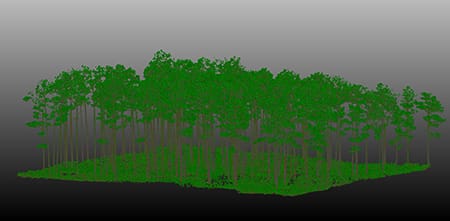
Working with partners in the Prescribed Fire Science Consortium, the program is building nexgen 3-D fuel beds using terrestrial LiDAR and novel sampling techniques to power new fire behavior models for prescribed fire managers. This work links to Tall Timbers work in wildlife habitat usage and ecological forestry.
The Longleaf Legacy landscape prescribed fire burn team arm of Wildland Fire Science works directly with landowners and partners to effectively put fire on the ground and promote prescribed fire throughout the region.
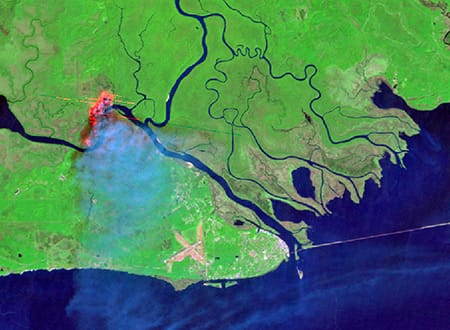
Tall Timbers is leading an effort to map fire regimes at the landscape scale. Staff work with numerous agencies to evaluate fire records and satellite imagery to build this critical conservation database. https://skfb.ly/6DqOY
Tall Timbers hosts the Prescribed Fire Science Consortium, a national network of researchers and managers who promote integrated research and management to advance next generation tools for fire practitioners. https://arcg.is/1DSjDT
We are linking physics and field observations to understand the fluid dynamics of fire behavior surface fire regimes. Our work combines field observations using advanced thermal imaging techniques, laboratory studies, and coupled fire-atmospheric modeling to help managers improve outcomes of managed fire regimes.
Selected Publications authored by Wildland Fire Science staff.
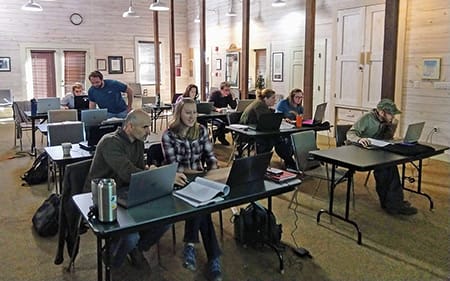
Staff and researchers support Federal fire training by serving as a cadre for NWCG training courses, ranging from basic wildland fire to advanced fire effects.
(PFTC) specializes in training fire fighters the principles and techniques of prescribed fire through practical hands-on experience. https://www.fws.gov/fire/pftc/
Private land owners are the largest source of prescribed fire in the country. These land owners and the culture of fire that was maintained by them during decades of suppression are a part of why Tall Timbers is a world-wide center for prescribed fire science. Workshops and fire training are a critical focus of the Longleaf Legacy Landscape Burn Team and our support of the Georgia Forestry Commission Prescribed Fire Center in Marion County.
The conserved lands of the Greater Red Hills region are found on working, income-producing properties that support agriculture, forestry, and recreational hunting. These properties contribute $272 million annually to local economies and support 2,300 jobs. [link to Planning & Advocacy section] The landowners’ strong stewardship ethic preserves their working lands while replenishing drinking water supplies, protecting water quality, and providing wildlife habitat for dozens of rare and endangered species. Tall Timbers’ conservation easements on these working properties encourage landowners to retain their traditional livelihood by keeping farms in family ownership.
Home to world-class wild quail populations, the Greater Red Hills region contains the largest concentration of gamebird preserves in the United States. These preserves also support the largest community of Red-cockaded woodpeckers on private lands. Indicators of high quality habitat found here include the gopher tortoise, Bachman’s sparrow, fox squirrel, and many amphibians. Tall Timbers’ conservation easements identify and protect the critical habitats of these species.
The region also boasts outstanding aquatic resources. Large river systems, like the Flint/Apalachicola, Ochlockonee, and Aucilla, flow from Georgia and feed into the Gulf of Mexico to support some of the world’s most productive estuaries. Large disappearing sinkhole lakes, like Iamonia, Miccosukee, and Jackson, provide habitat for an array of aquatic species and migratory birds. Tall Timbers’ conservation easements protect these vital watersheds and wetlands that are the lifeblood for the ecological health of the region.
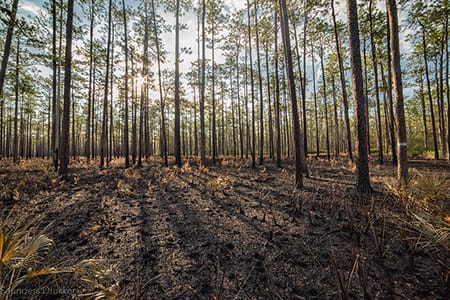
Once dominated by longleaf pine, our pine woodlands support abundant wildlife and local economies. These forests need prescribed fire to stay healthy. Herbert L. Stoddard and his associates Ed and Roy Komarek were pioneers in this emerging scientific field during the mid-20th century. Tall Timbers continues that legacy with applied research on prescribed fire and land management. Today, there is a tremendous need to expand prescribed fire use beyond the Red Hills to ensure ecosystem health and reduce wildfire risk. Additionally, Tall Timbers uses conservation easements to permanently protect private woodlands while balancing the need for economic return from selective timbering.



.jpg?strip=all&w=1)