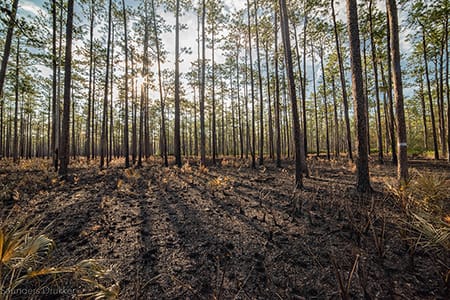
When I was hired by the Tall Timbers Research Department in 2003, I was the first employee given the title "Fire Ecologist" and was instructed to develop a program focused on prescribed fire. Those were the orders of our then Chairman of the Board of Trustees, Miss Kate Ireland. She rightly recognized that the founders of Tall Timbers in 1958 sought first and foremost to objectively study fire’s effects, natural history, and appropriate application for the benefit of wildlife, natural communities, and public safety. As Miss Kate both led and generously supported Tall Timbers, she was vigilant in focusing the priorities of the organization, and the newly formed Fire Ecology Program in particular, on its original cause.
Responding to her vision, the Fire Ecology Program has worked to strengthen Tall Timbers’ leadership role in the science of fire ecology. Our areas of interest include the effects of fire regime on natural communities and ecosystems, improved measurement of fire behavior and effects, monitoring burned area and fire severity using remote sensing and other approaches, understanding the historic extent of fire-dependent natural communities, and measuring prescribed fire effects on air quality. It is a tribute to Miss Kate that "fire" is the common component in all we do.
Some of the accomplishments stemming from her renewed emphasis on fire ecology include our national-level leadership in federal initiatives to monitor fire using remote sensing, new and surprising perspectives in the role of fire in promoting carbon sequestration, greater understanding of what defines fire-dependent natural communities and their place on the landscape, and cutting-edge methods for quantifying the impact of prescribed fire on air quality. These advances help secure a brighter future for prescribed fire and its many benefits, as sought through the vision of Tall Timbers’ founders and the leadership of Miss Kate Ireland.
Burning during this month appears to be an effective means of reducing vigor of re-sprouting woody stems, especially on old-field lands.
Because it is a dry year, use ignition patterns that result in less intense burns and minimize crown scorch, e.g. spot ignition, lighting flanks into the wind, and using backing fire, instead of strip head fires.
Fire weather forecasters are predicting dry conditions through spring so get your burning done early.
Minimize the distance burned along major highway and county road edges in one day, and mop up aggressively.
Be aware of your smoke!!
Burning during the growing season promotes native seed production.
Forestry
Protect regeneration areas with new seedlings. Put off burning for 1 year where regeneration is needed.
Continue timber stand improvement thinning, hardwood removal and other cultural treatments in forest stands.
Conduct timber harvests
Game Bird
Supplemental feed at 2 bu/ac/yr in unburned cover to reduce predation and prepare birds for nesting
If changing feeding trail, establish summer feed trail
Focus on nest predator management as needed (See TTRS web site)
April is an excellent month for burning both old field and native ground cover habitats to prepare areas for summer brooding habitats
Burn such that burned and unburned areas exist within quail home ranges(about 50 acres)
Land Management
Check, freshen-up, or put in fire breaks as needed.
Conduct post-burn mowing of targeted problem hardwood areas to encourage grasses.
Apply Velparâ to control hardwoods after April 15.
Make plans for herbicide control of domestic grasses
Conduct soil tests to determine lime and fertilizer rates for summer food plots and dove fields.
Plant dove fields
Plant duck ponds
Begin post burn evaluations
Vertebrate Ecology
Monitor gopher tortoise burrows in burned areas.
Monitor bluebird boxes.
Monitor wood duck boxes.
May Management Recommendations
Fire Ecology
Continue to conduct prescribed burns as needed.
Burning during the growing season promotes native seed production.
Choose appropriate conditions and extinguish by sunset to keep smoke off of major roads.
Forestry
Conduct longleaf cone and flower crop counts.
Where adequate longleaf cone crops are available begin conducting burns to capture seed fall that will occur later in the year. Some regrowth of understory vegetation will lower seed predation.
Continue timber stand improvement thinning, hardwood removal and other cultural treatments in forest stands.
Conduct timber harvests in suitable areas. Avoid harvesting timber in active Red-cockaded woodpecker nesting areas
Retain a few large upland hardwoods in the uplands (5-10 square feet basal area) for Sherman’s fox squirrel.
Game Bird
Complete burning of native ground cover areas where quail management is the focus.
In areas with few fields on old field land conduct some burns to provide late season brood habitat or to achieve hardwood re-sprout control.
Finish post-burn mowing and chopping by 1 June, mowing in areas needing hardwood re-sprout control.
Supplemental Feed at 2 bu/ac/yr.
Nest predator management if needed, especially important if avian predation has been higher than normal.
Complete timbering and clean-up activities on quail management areas.
Land Management
After May 15, begin treating cogongrass infestations as weather permits. Can be identified by its inflorescence (white seed heads).
Begin planting summer food such as corn, peas and grain sorghum.
Apply lime according to soil test results.
Begin early herbicide applications.
Begin to mow roads.
Check water control structures and dikes on managed wetland areas for needed maintenance.
Plant dove fields.
Plant duck ponds.
Plant Chufa fields.
Vertebrate Ecology
The Red-cockaded Woodpecker nesting season gets underway in late April in the Red Hills region. Clear fuels away from cavity trees that have heavy sap build-up before you burn. Clearing fuels helps to minimize damage to the tree and the nesting site.
Installing inserts into pine trees provides valuable nesting habitat for the red-cockaded woodpecker.
Sherman’s fox squirrels can be seen digging in the dirt this time of year sniffing around for subterranean fungi (truffles). The tasty morsels keep squirrels going, but the process also helps the forest by dispersing nitrogen-fixing bacteria over large areas. Home range estimates for fox squirrels range from 10 to 40 acres, so these squirrels can distribute the fungus over very large areas.
Monitor gopher tortoise burrows in burned areas.
Monitor bluebird boxes.
Monitor wood duck boxes.
June Management Recommendations
Fire Ecology
Continue to conduct prescribed burns as needed.
Burning during this month appears to be an effective means of reducing vigor of re-sprouting woody stems on sites with native ground cover, less so on old-field lands.
Own your smoke! Be aware that smoke can settle in drainages and mix with early morning or evening fog to form a dense “fog” that creates traffic safety issues.
Conduct post-burn evaluations to determine success of woody control
Forestry
Finish timber harvests and clean up operations by mid to end of June.
Avoid having heavy equipment in the woods when soils are wet.
Where adequate longleaf cone crops are present continue conducting burns to capture seed fall that will occur later in the year. Some regrowth of understory vegetation will lower seed predation by providing some cover for seed.
Game Bird
Continue to supplemental feed at 1 to 2 bu/ac/yr. Adjust as necessary given weather conditions.
Nest predator management if needed.
Begin to mow roads as needed.
Begin herbicide applications for bicolor and bahia grass control.
Land Management
Continue treating cogongrass infestations as weather permits.
Disk strips to encourage the production of Florida pussley, a highly preferred deer forage.
Get soil tests for fall food plots at least once every two years.
Continue planting summer food plots.
Apply lime according to soil test results.
In most parts of Florida, June is usually the last month to plant aeschynomene (joint vetch), to achieve adequate reseeding in November.
Vertebrate Ecology
Leaving dead trees or snags provides valuable habitat for cavity nesters.
One of the loudest songsters in our Pinewoods this time of year is the elusive Bachman’s Sparrow. This endemic sparrow is abundant on sites burned within the past 12 months, but its numbers can be almost halved on sites coming into a 2-year rough. Bachman’s Sparrow is often thought to have one of the prettiest songs of any songbird, and to hear an example, simply follow this link: http://www.flmnh.ufl.edu/natsci/ornithology/sounds.htm
Lots of fledgling birds wandering the woods. Many use small brushy thickets, so hold off on mowing until late August if possible. Also a good time to keep cats in doors.
Gopher tortoise nesting reaches a peak in early June. Watch for females laying eggs and consider nest protection and predator-proof fencing.
Female free-tailed bats give birth to a single pup from May to June.
Pine snakes lay 5–12 large eggs in a burrow during June or July. The young hatch a couple of months later and start to look for mice and other rodents. Tall Timbers research suggests pine snakes are closely associated with longleaf pine/wiregrass sites.
Kate Ireland was a staunch advocate of hunting and luckily for Tall Timbers an even more enthusiastic advocate of quail. Through her steadfast support of the Game Bird Program she helped to strengthen Tall Timbers and bring together the quail plantation community in the Red Hills, Albany and beyond.
I first got to know Miss Kate during my job interview in 1996. At that time the Albany Quail Program was highly respected by the plantation community, but Tall Timbers was viewed with skepticism by many, and had only a few financial supporters. Miss Kate made clear to me that one of her goals was to bring together the entire quail plantation community, and she believed that to achieve this goal would require improving the status of the game bird research and outreach programs. Thankfully, she put her wits, time, and financial support (along with many others) to this end. Nine years later we held the 2005 Fall Field Day at Wildfair plantation near Albany where “under the tent” Clay Sisson (Director of the Albany Quail Program) announced that the Albany Quail Program, formerly with Auburn University, was joining forces with Tall Timbers. Of course, Miss Kate wanted to say a few words. She lightheartedly told the crowd that Clay Sisson and I once reminded her of two male pointers lifting their leg on each other! On a serious note, she added how pleased she was to see the Field Day back in Albany and to have these programs working so closely together again. Now 15 years later, the Game Bird Program works across GA, FL, SC, and AL and as well as many other states, in essence recreating the Quail Research Cooperative begun by Herbert Stoddard decades before. None of this would have been possible without Miss Kate.
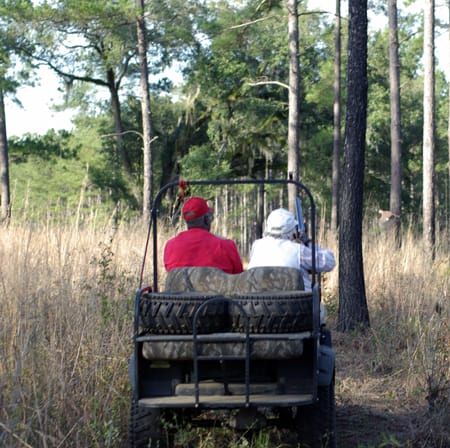
I have many awesome memories of hunting with Miss Kate at Foshalee, but one that stands out was an end of the season hunt on a warm, muggy March day. Thunder and lightning were imminent as we headed out on her Kawasaki Mule with manager Joe Harvey. I was amazed that even in her 70s, the owner of one of the premier plantations in the Red Hills, who could hunt on any day of the week, would not yield to the weather, but rather loved every minute of it! Her determination to succeed proved priceless for Tall Timbers and especially the Game Bird Program. All of my staff and I are indebted to her unwavering support and leadership!
Miss Kate Ireland successfully shooting quail from her Bad Boy Buggy on Foshalee in March 2008 at age 77; one of the last quail she harvested on Foshalee after a lifetime of shooting. Photo by Shane Welledorf.
Over the past 14 years we have witnessed 3 quail population “peaks” in the Red Hills, one in 1996-97, one in 2001-02 and most recently last year during the 2010-11 season. If the 2010-11 hunting season was the actual peak of populations remains unknown at this time. However, in between these peaks there must be a valley! We witnessed a short period of increased avian predation during March, but survival has been relatively good since that time. Carry-over of birds from the previous season is good, leaving ample birds for breeding. At this point, indicators suggest that the 2011-2012 hunting season will be a good one, but the prediction of drought is of concern.
Our long-term research paints a clear picture that during post-peak years, and drought years, nest predation management and supplemental feeding are more important than during the increasing phases of the quail populations. In fact, during years with drought, or below average rainfall, supplemental feeding increases chick production by as much as double, which is what we saw in 1998 and 2007. So, maintaining a well-designed feeding program is a wise investment in your quail population this year.
Supplemental feeding ensures constant food supplies during late winter and helps increase early nesting by quail. The dissected quail , at left , shows the higher fat content of a bird captured on a fed area, than a bird from an unfed area, at right.
The large drops in bobwhite populations in the Red Hills have primarily been a result of lower adult and chick survival, which is a function of many factors, such as buffer prey (songbirds, cotton rats, mice and other rodents), burning practices, and weather conditions. When survival rates of quail are normal or above normal, nesting success is not all that important a demographic variable (within reason); even if a nest fails, and most hens are still alive and able to re-nest, they can ultimately bring off a brood. When adult survival is lowered due to increased predation, for instance, each nest becomes more important to fall population density because, on average, hens may not survive long enough to re-nest. We are anticipating a decline in adult survival either this year or next and will continue to report on that in future E-News issues. However to be safe, spending some effort to reduce the number of nest predators is likely to be important this year. On Tall Timbers, where we have not trapped predators since 2006, our predator index was at an all time high, suggesting that regional populations of nest predators are on the upswing.
So, while timber management and burning frequency and pattern remain the most important aspects of bobwhite management, supplemental feeding and nest predator management help to increase populations over time. While they may not forestall a decline, they do help keep the ebbs in quail populations higher than they would be. Reducing the rate of decline not only maintains higher fall populations, but helps recover quail numbers more quickly on the upswings. If you would like us to review your feeding program or your nest predator management program, or any other management aspect please give us a call: 850.893.4153, x226.
By Vann Middleton, Director of Operations & Support
Tall Timbers lost an iconic figure with the recent passing of Kate Ireland. Perhaps no one figure has cast a longer shadow on the organization in our fifty-two year history than “Miss Kate”. Her tenacious spirit and dedicated leadership ushered Tall Timbers into a new era with a global reputation for exemplary science based research and a national model for land conservation.
Under her watchful eye and headstrong spirit, Tall Timbers grew exponentially in both size and stature. During her tenure as Chairman of the Board of Trustees, Tall Timbers more than tripled the amount of money raised annually to support our research and conservation programs. Her once-fledgling Red Hills Conservation Association (now known as the Tall Timbers Land Conservancy) is currently the largest regional land trust in both Georgia and Florida with over 114,000 acres under conservation easement – a tremendous accomplishment! She worked tirelessly to promote prescribed burning as a necessary land management tool for healthy forests and abundant wildlife. Furthermore, she twisted every arm, bent every ear and looked in every nook and cranny to find additional support for the research, conservation and education programs at Tall Timbers.
Kate left her mark on so many people and programs at Tall Timbers. She was the consummate fundraising professional and she had a unique way of “convincing” others to include Tall Timbers in their charitable giving plans. She always put her money where her mouth was, giving generously to every aspect of Tall Timbers. Giving back to her community was in her blood. It was a part of her DNA and it was infectious! Personally, she was always there for the Development Office, always signing personal letters asking for support, making personal calls and visits with prospective donors and lending her expertise and experience in Fundraising 101. I spent countless hours with her on the sun porch at her beloved Foshalee Plantation, listening to her advice and absorbing her counsel.
She was personally responsible for the first $1 million gift to The Tall Timbers Foundation, endowing a portion of the Game Bird Program through her gift from the Parker Poe Trust. The Kate Ireland Auction and Golf Tournament annually raises over $125,000 for the research and conservation programs of Tall Timbers. The Kate Ireland Quail and Conservation Area on Tall Timbers was named in her honor in 2007. She and her sister Louise Humphrey also gave the money to name the Ireland Wing of the Wade Research Center in 2000. The list of her direct impact on Tall Timbers goes on and on…
It comes as no surprise that Tall Timbers has received numerous memorial contributions over the past few weeks in tribute to Kate. I thought I would share with each of you what Tall Timbers plans to do with these gifts.
In her honor, Tall Timbers has planted a majestic longleaf pine on the Beadel Lawn overlooking Lake Iamonia. A plaque in her memory will be place at the foot of the tree for visitors to admire.
Given her love of quail hunting and the longterm research efforts of the Game Bird Program, Tall Timbers has created the Kate Ireland Bobwhite Research Internship. This competitive internship will be annually awarded to a qualified graduate student candidate in wildlife science whose work will directly benefit the Game Bird Program at Tall Timbers.
Furthermore some of these contributions will be used towards a new museum exhibit being planned for the gun cabinet in the Historic Beadel House. This exhibit will showcase the artifacts of the hunting culture of the early quail hunting plantations in the Red Hills region.
We hope that you will agree that these memorial projects are a fitting tribute to one who meant so much to Tall Timbers. If you would like to make a contribution in memory of Kate, please send your gift to:
Tall Timbers
c/o Kate Ireland Memorial
13093 Henry Beadel Drive
Tallahassee, FL 32311
We will miss Kate Ireland’s tireless dedication and support of Tall Timbers. She has left all of us a legacy of good stewardship of our precious natural resources and the importance of protecting them for future generations to enjoy.
The M-CORES program, which includes the proposed Suncoast Connector Toll Road in Jefferson County, passed through the Florida Legislature at breakneck speed with little review or analysis. Tall Timbers has a number of concerns given the potential for significant and wide spread impacts. These include fragmenting public and private conservation lands, robbing business from Main Street Monticello, impacting our rivers and other water resources, and making prescribed fire more difficult and costly.
Join us in asking the Jefferson County Board of County Commissioners to OPPOSE the Suncoast Connector toll road and its path through Jefferson County.
Take action now with our easy email form.
Send an email to all five Jefferson County Board of County Commissioners with one click!
Selected Publications authored by Wildland Fire Science staff.
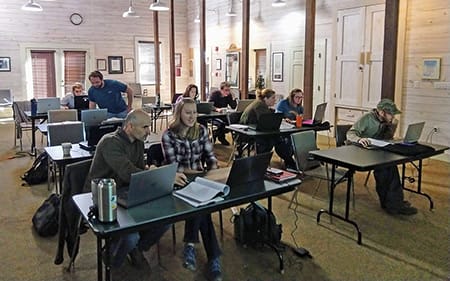
Educating and guiding the next generation of fire researchers and managers is a key goal of Wildland Fire Science and a resource for testing new ideas in fire research.
Tall Timbers hosts the Prescribed Fire Science Consortium, a national network of researchers and managers who promote integrated research and management to advance next generation tools for fire practitioners. https://arcg.is/1DSjDT
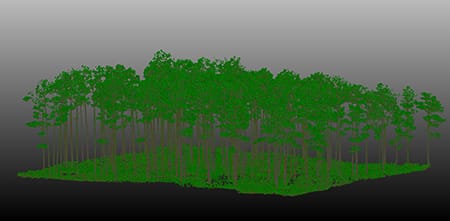
Working with partners in the Prescribed Fire Science Consortium, the program is building nexgen 3-D fuel beds using terrestrial LiDAR and novel sampling techniques to power new fire behavior models for prescribed fire managers. This work links to Tall Timbers work in wildlife habitat usage and ecological forestry.
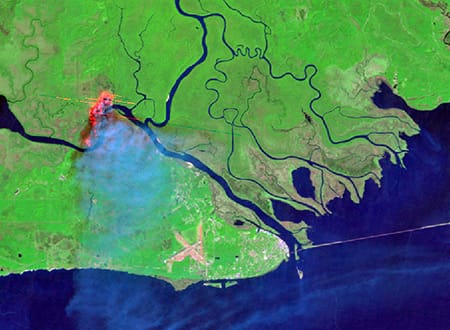
Tall Timbers is leading an effort to map fire regimes at the landscape scale. Staff work with numerous agencies to evaluate fire records and satellite imagery to build this critical conservation database. https://skfb.ly/6DqOY
We are linking physics and field observations to understand the fluid dynamics of fire behavior surface fire regimes. Our work combines field observations using advanced thermal imaging techniques, laboratory studies, and coupled fire-atmospheric modeling to help managers improve outcomes of managed fire regimes.
Burn prioritization modeling seminars and fire modeling tools are supported by Wildland Fire Science to train managers in the important planning stages of prescribed fires.
The conserved lands of the Greater Red Hills region are found on working, income-producing properties that support agriculture, forestry, and recreational hunting. These properties contribute $272 million annually to local economies and support 2,300 jobs. [link to Planning & Advocacy section] The landowners’ strong stewardship ethic preserves their working lands while replenishing drinking water supplies, protecting water quality, and providing wildlife habitat for dozens of rare and endangered species. Tall Timbers’ conservation easements on these working properties encourage landowners to retain their traditional livelihood by keeping farms in family ownership.
Home to world-class wild quail populations, the Greater Red Hills region contains the largest concentration of gamebird preserves in the United States. These preserves also support the largest community of Red-cockaded woodpeckers on private lands. Indicators of high quality habitat found here include the gopher tortoise, Bachman’s sparrow, fox squirrel, and many amphibians. Tall Timbers’ conservation easements identify and protect the critical habitats of these species.
The region also boasts outstanding aquatic resources. Large river systems, like the Flint/Apalachicola, Ochlockonee, and Aucilla, flow from Georgia and feed into the Gulf of Mexico to support some of the world’s most productive estuaries. Large disappearing sinkhole lakes, like Iamonia, Miccosukee, and Jackson, provide habitat for an array of aquatic species and migratory birds. Tall Timbers’ conservation easements protect these vital watersheds and wetlands that are the lifeblood for the ecological health of the region.
Once dominated by longleaf pine, our pine woodlands support abundant wildlife and local economies. These forests need prescribed fire to stay healthy. Herbert L. Stoddard and his associates Ed and Roy Komarek were pioneers in this emerging scientific field during the mid-20th century. Tall Timbers continues that legacy with applied research on prescribed fire and land management. Today, there is a tremendous need to expand prescribed fire use beyond the Red Hills to ensure ecosystem health and reduce wildfire risk. Additionally, Tall Timbers uses conservation easements to permanently protect private woodlands while balancing the need for economic return from selective timbering.
Tall Timbers hosts the premier fire technology transfer organization—the Southern Fire Exchange. This JFSP funded effort helps connect research to management through webinars, workshops, and support of the Prescribed Fire Science Consortium.
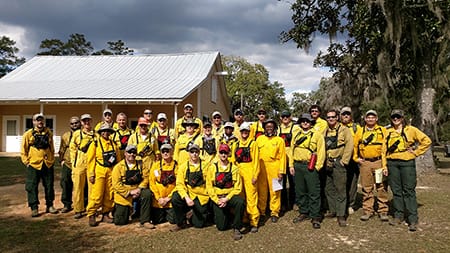
The Longleaf Legacy landscape prescribed fire burn team arm of Wildland Fire Science works directly with landowners and partners to effectively put fire on the ground and promote prescribed fire throughout the region.
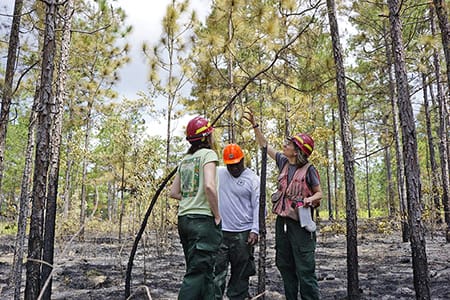
Staff and researchers support Federal fire training by serving as a cadre for NWCG training courses, ranging from basic wildland fire to advanced fire effects.
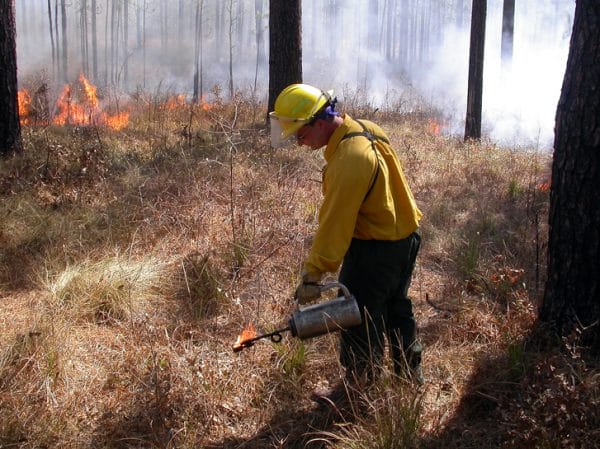
(PFTC) specializes in training fire fighters the principles and techniques of prescribed fire through practical hands-on experience. https://www.fws.gov/fire/pftc/
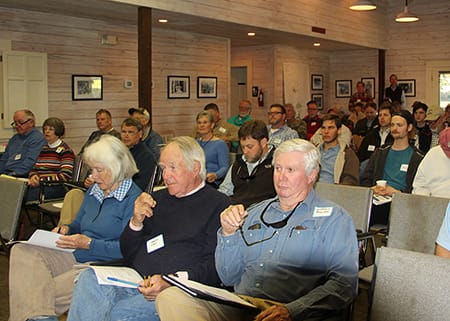
Private land owners are the largest source of prescribed fire in the country. These land owners and the culture of fire that was maintained by them during decades of suppression are a part of why Tall Timbers is a world-wide center for prescribed fire science. Workshops and fire training are a critical focus of the Longleaf Legacy Landscape Burn Team and our support of the Georgia Forestry Commission Prescribed Fire Center in Marion County.



 Tall Timbers lost an iconic figure with the recent passing of Kate Ireland. Perhaps no one figure has cast a longer shadow on the organization in our fifty-two year history than “Miss Kate”. Her tenacious spirit and dedicated leadership ushered Tall Timbers into a new era with a global reputation for exemplary science based research and a national model for land conservation.