A Reflection on the 2021-2022 Quail Hunting Seasonin the Red Hills and Albany Regions
By Alex Jackson, Game Bird Biologist
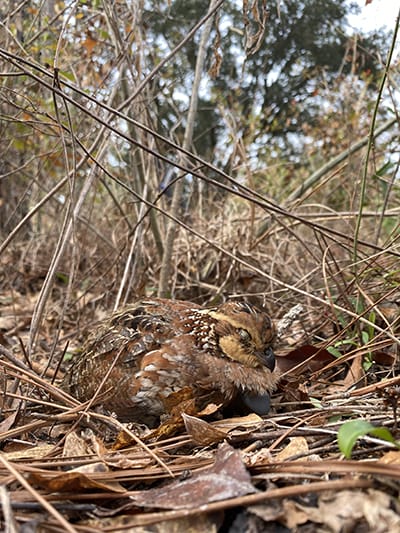
RED HILLS As smoke begins to fill the skies of quail country, bobwhites are gearing up to bring next year’s crop of birds into the world. For quail hunters and quail managers alike, it is a time to reflect on the highs and lows of the season, while trying to develop rational and biological reasons for why things went the way they did.
We typically see a trend in hunt quality across our region, but this year seemed to have a mind of its own. We’ve heard reports of seasons ranging from record status to as much as 40% below average. General consensus is that the Red Hills took a hit last summer due to heavy rainfall; local populations were ultimately affected. However, the degree to which populations were affected seemed to vary by location within the region. Properties on the western and eastern periphery were seemingly less affected than those centrally located within the region, minus a few exceptions. This particular trend seemed to coincide with our pre-season predictions, derived from radio-collar birds last summer on Tall Timbers (i.e., western Red Hills) and Livingston Place (i.e., eastern Red Hills).
Bobwhite density on both sites was slightly above average, which had us optimistic for the hunt season. That being said, neither Tall Timbers nor Livingston Place were immune to the difficult hunt conditions that plagued both early and late seasons in the Red Hills. While we had a comparable season to last year in terms of average coveys seen per half day, the hot and dry weather seemed to make it difficult to string a series of quality hunts together, which is a theme we heard from multiple properties throughout the region.
While natural predation is a constant threat, one upside to challenging hunt conditions is that more birds likely have a chance to survive the quail season. At the end of this year’s season, radio-birds on Tall Timbers and Livingston place demonstrated 55% and 64% survival, respectively. This is average to above average for this time of the year, and hopefully is an indicator of being in a good position heading into the breeding season.
Tall Timbers’ biologist tracking quail during crippling loss study on Livingston Place. Photo by Kim Sash
ALBANY The 2021-2022 hunting season in the Albany region was another good one for the majority of properties. Many of these places were coming off of a string of years with high adult survival, good rainfall, high brood survival, and high cotton rat numbers. All of these factors combined resulted in some places having near-record fall densities coming into the season. While the bird numbers were looking promising, mother nature did not provide much help, as January was the only month with any amount of cooler weather. Despite tough conditions for most of the season, it always helps the hunting when you have plenty of birds, even when the weather doesn’t cooperate. Most properties around the region reported covey finds comparable to last year’s high numbers, and several properties marked this season as their best ever.
We have been hearing for several years now about how wild the coveys have become, in both Albany and the Red Hills, with this year setting a new standard. Similar to what we discussed in last year’s Spring eNews (Vol 14, No. 1), we believe this is due to behaviors associated with high density populations, as well as an old age structure. Much of this can be attributed to record high adult survival coming into the hunting season. Adult percentage on our primary Albany study area was 33% compared to the long term average of 20%. This results in a 16-bird covey having 4 birds in their second hunting season, and at least 1 in its third. These veteran birds have gotten accustomed to the sound of an approaching hunt party; it only takes 1 bird in a covey to make them all fly out ahead of you. While there is no such thing as too many quail, it can result in a lower shot into percentage.
Our radio sample of quail on our primary study area in Albany is faring well so far this winter. Our survival through the end of February was at 61%, which is about average for this time of year. We are in a good position with current bird densities and are hopeful these high survival trends continue. As many of you know, one of our favorite sayings is that “dead hens don’t nest;” keeping them alive this spring is the number one priority to maximize your carryover into the breeding season. That being said, we caution about burning too much, and urge continual feeding throughout the spring, as the current seasonal outlooks predict below average rainfall and above average temperatures for the next few months.
Research Update This year we initiated a few new projects in the Game Bird Program. As many of you are aware, one of these projects is a wide-spread crippling loss study in collaboration with the University of Georgia and the Jones Center at Ichauway. The study spans our Livingston Place and Tall Timbers properties in the Red Hills, as well as the Tall Timbers regional quail programs in Albany, Central Florida, and the Western Pineywoods.
Crippled bird found during study. Photo by Justin Rectenwald
Additionally, many of you participated in a post-season dog training survey last year. We greatly appreciate your responses to the questions in this survey and have initiated the graduate student project based on this survey. This study aims to evaluate bobwhite stress levels and subsequent breeding season demographic responses to various rates of post-season encounters during spring dog training. We are excited about both of these projects and look forward to presenting additional information in the coming months.
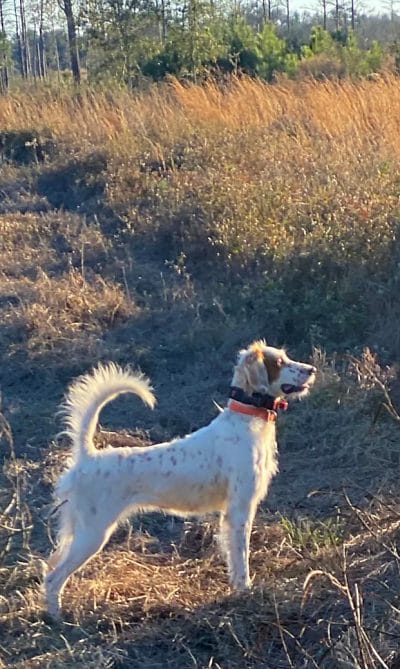
Setter on point during spring dog work. Photo by Clay Sisson
Expediting experience for the next generation of burn practitioners
By John McGuire, Director, Private Lands Fire Initiative
The art of prescribed fire is a trade honed through years of apprenticeship, trial, error, and restless nights. Appreciating the way fire behaves when titi is blooming, seeing the peril of a puff of smoke in the late afternoon after firing is complete, and recognizing the increased risk of people getting hurt when the sun goes down, all come from years of experience. I am fortunate to be surrounded by many skilled burn practitioners who, because of their experience, are considered “fire artisans.” However, as I look around, I also see gray hair, creased skin around eyes, and a few extra pounds here and there. Multiple days of burning now require multiple days of physical recovery. The cruel irony of prescribed fire implementation is that you need an older person’s experience in a younger person’s body.
In order to expedite expertise of the next cohort of prescribed burners, Tall Timbers Private Lands Fire Initiative, with the guidance of the Tall Timbers Fire Science and Applications training cadre, has launched two pilot projects.
Bringing Prescribed Fire Training to Alabama Universities
Funded through both Natural Resources Conservation Service and National Fish and Wildlife Foundation grants, Dr. John Kush, retired Forestry faculty from Auburn University, was hired in 2020 by Tall Timbers to oversee an innovative, collaborative project. This project brings together faculty and students to expand the discussion of prescribed burning in central Alabama to include historically black colleges and universities. He has assisted in injecting more discussion of prescribed fire into the classroom at colleges including the University of West Alabama and Auburn University–Montgomery.
Central Alabama University Students practice getting into fire shelters at Auburn University-Montgomery Training. Photo by John McGuire
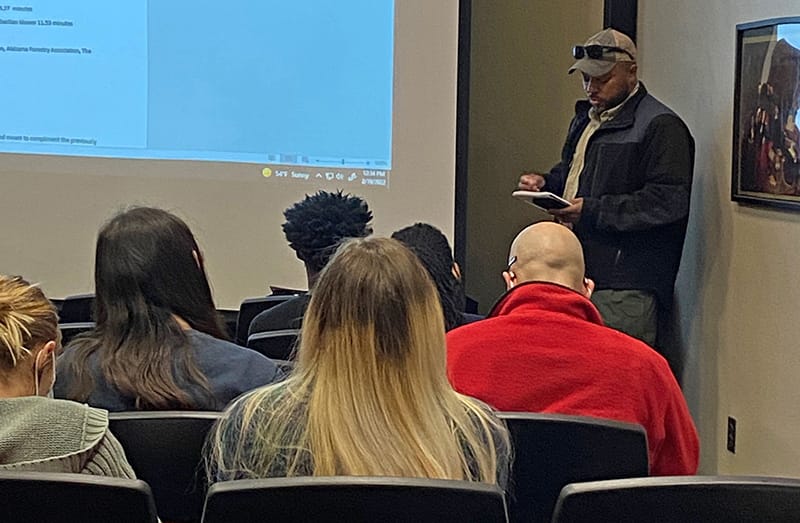
Balsie Butler with the Alabama Forestry Commission, explaining work force opportunities for the State with undergraduates from Central Alabama Universities during a training session at Auburn University-Montgomery. Photo by John McGuire
In this short time, nearly 200 students attended lectures and discussions in fall 2021, involving the role of fire in our native ecosystems. With the assistance of Zach Prusak, Tall Timbers Wildland Fire Training Specialist, and Kevin Carter from Attack-One Fire Management, Dr. Kush has also helped over 30 students from six universities achieve the training necessary to allow them to volunteer and apprentice with organizations such as The Nature Conservancy, Georgia Department of Natural Resources, and Alabama Forestry Commission. Several students will also volunteer with the Tall Timbers Private Lands Burn Team managed by Jeremiah Cates. Future work will include more integration of fire lectures in the classroom, and more coordination and collaboration between colleges and universities in the Longleaf Legacy Landscape.
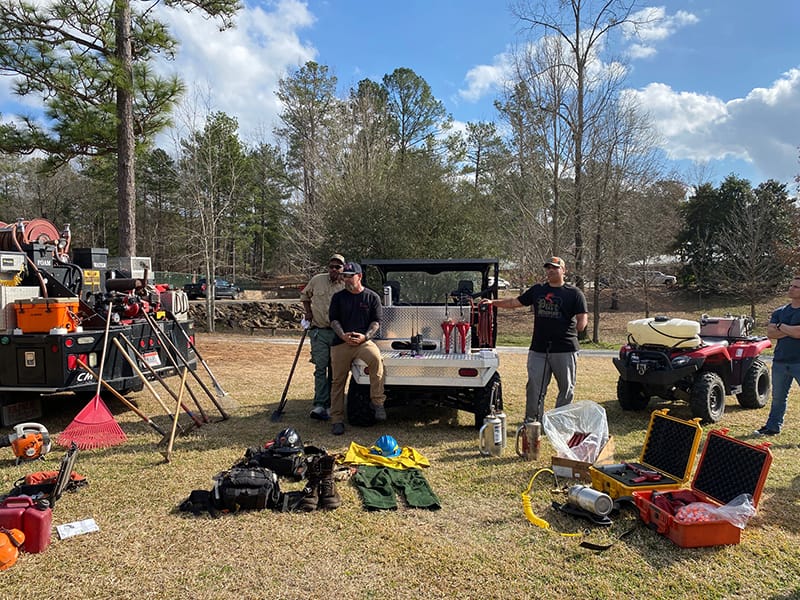
Tall Timbers Burn Team Coordinator Jeremiah Cates, instructs military and first responder veterans on fire gear at Camp ASCCA, Jackon’s Gap, Alabama. Photo by John McGuire
Engaging Veterans in Prescribed Fire Workforce Development
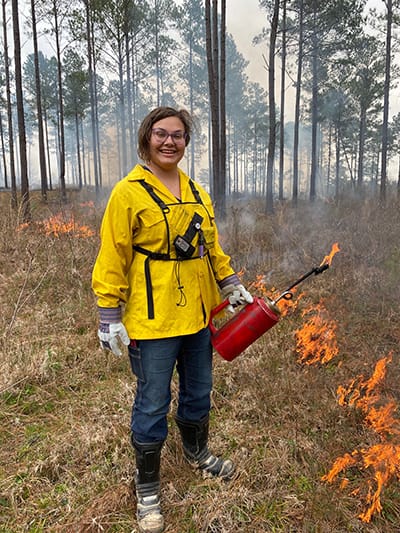
U.S. Army Veteran, shadowed the Tall Timbers Burn Team for two days following her training to become a certified burn manager in Alabama. Photo by John McGuire
The second project involves training our nation’s warriors as they transition from active duty to civilian life. In February 2022, Major Lee Stuckey, USMC retired and Tall Timbers’ coordinator for the new Central Alabama Prescribed Burn Association, facilitated training for over 35 veterans and first responders in Jackson’s Gap, Alabama, along with the support of several key partners including the Alabama Association of RC&D Councils, Alabama Extension, AHERO, Attack-One Fire Management, The Wildlife Group, and Working Lands for Wildlife. Not only did this training create a solid group of certified burn managers (25 from Alabama), it brought together a cohort who will continue to work together on natural resource management in the future.
Multiple trainees mentioned that the style of interaction Major Stuckey facilitated was both emotionally transformative and eye opening about fields of fire and land management. One trainee worked with Jeremiah Cates for two days following the training; she will now return to Tennessee as a force to be reckoned with. Like the university students previously mentioned, several participants from the veteran training will volunteer with the Tall Timbers Private Lands Burn Team.
Old burners may fade away, but by implementing this aggressive education/apprenticeship program, a new cohort of future burn managers will be available to help tackle the demand for prescribed fire on private lands and fulfill Tall Timbers’ mission across the Longleaf Legacy Landscape and more broadly.
Supporting Status Change for Red-cockaded Woodpecker
Tall Timbers supports the U.S. Fish and Wildlife Service proposed change in status of the Red-cockaded Woodpecker from endangered to threatened under the Endangered Species Act (ESA). The proposal has garnered a good bit of media coverage, so we wanted to share our thoughts on both the good reasons for the change, as well as the need to keep the woodpecker on the ESA as threatened for the decades needed to achieve recovery.
Understanding Endangered Species Act status
The status as endangered vs. threatened under the ESA is central to the proposed change. Endangered species are plants and animals that face an imminent threat of extinction. Threatened species receive generally the same level of protection as endangered species, and are defined as species that could be endangered in the near future.
Many biologists believed the Red-cockaded Woodpecker was heading toward extinction about 30 years ago. Now populations are improving throughout the bird’s range, increasing from about 10,000 individuals in the early 1980s to over 15,000 individuals today.
This trend away from an imminent threat of extinction is great news and fits with the proposed change in status, but it also doesn’t mean the many other important conditions needed to recover the species and remove it from the ESA have occurred.
A change in status from endangered to threatened may also provide a small amount of flexibility to develop new management tools for the woodpecker. Many current approaches were created with great caution and concern for ‘imminent threat of extinction’ and have very proscriptive language. The status change may provide opportunities to test alternative management tools to help expand and support woodpecker populations. For example, translocating nestling woodpeckers could help to alleviate inbreeding in small populations and be more efficient than current approaches based on translocated juveniles.
Maintaining ESA protection as threatened for several decades will still provide the larger conservation planning needed for landscape-scale recovery. It’s good to remember that ESA protections for the woodpecker have been helpful in avoiding placement of incompatible land uses such as pipelines, toll roads and new residential development in areas like the Red Hills region and Department of Defense properties with substantial woodpecker populations.
Recovering the ecosystem, not just keeping a species
A key goal of the ESA is to recover the ecosystems upon which threatened and endangered species depend, rather than just keeping a few around, collecting them in zoos, or as DNA samples.
Pine tree with artificial cavity insert circled in red.
For the Red-cockaded Woodpecker, this means managing pine forests for the old-growth conditions that once typified the longleaf pine ecosystem. One estimate places the original acreage of old-growth longleaf pine at more than 60 million acres. Today that remnant area is around 12,000 acres, or about 0.004% of the original extent. In human terms, that is akin to the world population shrinking down to just those currently living in the Red Hills region.
The Red-cockaded Woodpecker needs old-growth conditions because it is the only woodpecker in North America that excavates its nest and roost cavities exclusively in living pine trees, old ones. A potential cavity tree needs to be 70-90 years old just to have the right conditions for excavation, but many select even older trees around 150-200 years of age.
The positive trend in recent years for the woodpecker is not from the sudden appearance of old-growth conditions. It’s thanks to the installation of artificial woodpecker cavities. A biologist with a chainsaw can install an artificial cavity in about 45 minutes in trees only 60-70 years old. Today, artificial cavities make up the majority of cavity trees available to woodpeckers on many sites. The subsidized housing has helped to keep woodpeckers on the landscape, but reestablishing old-growth conditions is ultimately needed for the woodpecker to survive on its own and be removed from the ESA.
Planning for old-growth and recovery
Tall Timbers is working with several state agencies to plan for achieving old-growth conditions on state forests, wildlife management areas, and parks. The work is in a very early stage with Tall Timbers gathering background information on previous programs and hosting a meeting in April 2022 to start the process rolling. Our hope is that this type of planning for old-growth can eventually serve as a model for bringing back old-growth conditions throughout the former range of the longleaf pine ecosystem. Restoring old-growth conditions won’t happen quickly, but there are areas where they might be reached within 50 years.
This work furthers Tall Timbers’ larger goal of sustaining rare wildlife and biodiversity associated with fire-maintained ecosystems in the Southeast.
Ecosystem services and their benefits vary with land use
By Cinnamon Dixon, Fire Ecologist
Ecosystem services are any ecological product or process that benefits humans. They can range from the provision of food and water, pollination, carbon storage, nutrient cycling, recreation, and aesthetics. With such a wide array of services, different land uses provide different levels and types of services based upon their composition and management.
The Tall Timbers’ Fire Ecology Program recently published a paper measuring various ecosystem services provided by land uses common throughout the Red Hills region. We were particularly interested in how levels of ecosystem services changed over time with the restoration of pine savanna on former agricultural land. Thanks to several private landowners in the region, we were able to sample vegetation, soil, and bees on the following land uses: row-crop agriculture, restored pine savanna 5-100 years since the abandonment of agriculture, native pine savanna (i.e., never plowed), pastures, pine plantations, and unmanaged (fire-excluded) forest.
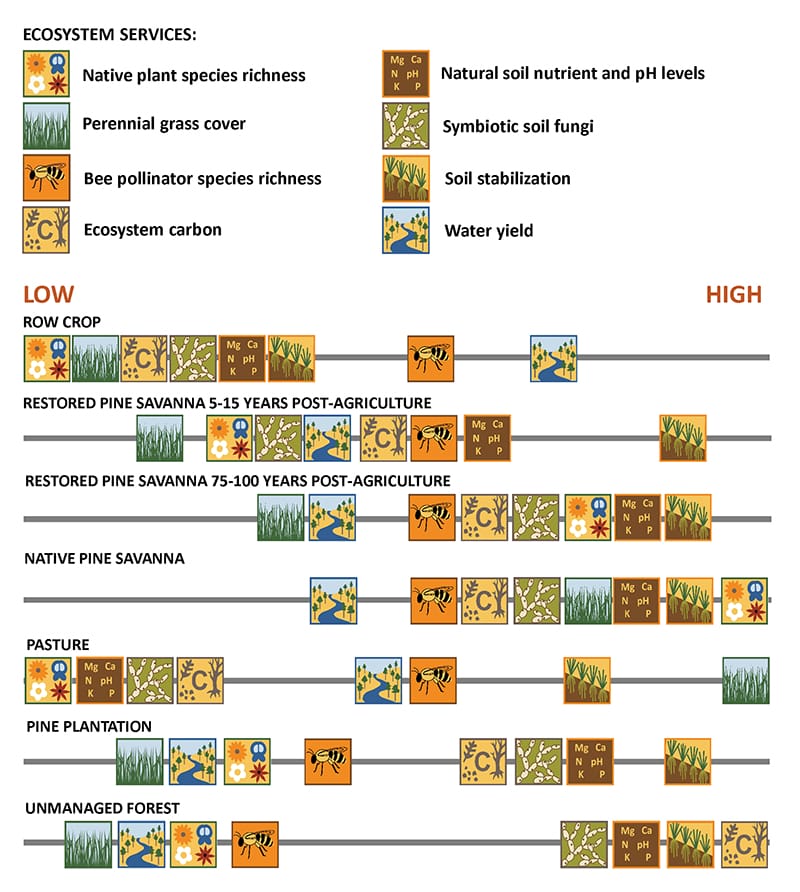
Our results showed that ecosystem services increased over time in restored pine savannas. We recorded increases in native plant biodiversity, total ecosystem carbon, and decreases in soil plant pathogens, water runoff, and soil erosion. As seen in the figure, most services measured surpassed levels seen in row crops within 5-15 years, but required 75-100 years to reach levels equal to native pine savanna. However, it is important to note that not all services were restored to the same level provided by native pine savanna. Row-crop agriculture, pastures, and pine plantations naturally had the highest levels of services for their target products (e.g. food, fodder, timber, etc.), but provided lower levels of many other ecosystem services compared to pine savannas (e.g. plant biodiversity, ecosystem carbon, symbiotic soil fungi). Closed-canopy forested lands, whether planted pine or unmanaged, had lower water yield (water that is returned to lakes, streams, and groundwater reservoirs) than other land uses, as well as lower bee pollinator abundance. While these sites do have greater ecosystem carbon levels, it comes at the expense of herbaceous plant diversity and their associated insects, e.g., bees.
These results highlight the promise of pine savanna restoration for providing ecosystem services. However, many of these services were not provided until decades after restoration began, thus calling into question the benefit of short-term government incentives programs and underscoring the importance of long-term or permanent investments in restoration and conservation. The tradeoffs in ecosystem services seen among pine savannas and alternative land uses suggests that a multiple land use or mosaic approach that includes restored and native pine savanna is a balanced approach for provision of ecosystem services and economic viability.
Figure 1. Ecosystem services provided by different land uses. Symbols indicate different ecosystem services along a slider bar for each land use. As symbols move toward the right, higher levels of service are provided by that land use.
UAS Academy held at Tall Timbers trained participants in aerial ignition operations
By Greg Seamon, Fire Training Specialist, Prescribed Fire Training Center
Tall Timbers hosted the first-ever National UAS (Unmanned Aerial System/drones) Ignition Academy, sponsored by the National Interagency Prescribed Fire Training Center (PFTC), and the National UAS Program February 28-March 4, 2022. The training is designed to instruct UAS operators in aerial ignition operations. The Southeast US is an ideal site for this academy due to the year-round burning programs of multiple agencies, complex airspace, broad prescription windows, and the high level of interagency cooperation.
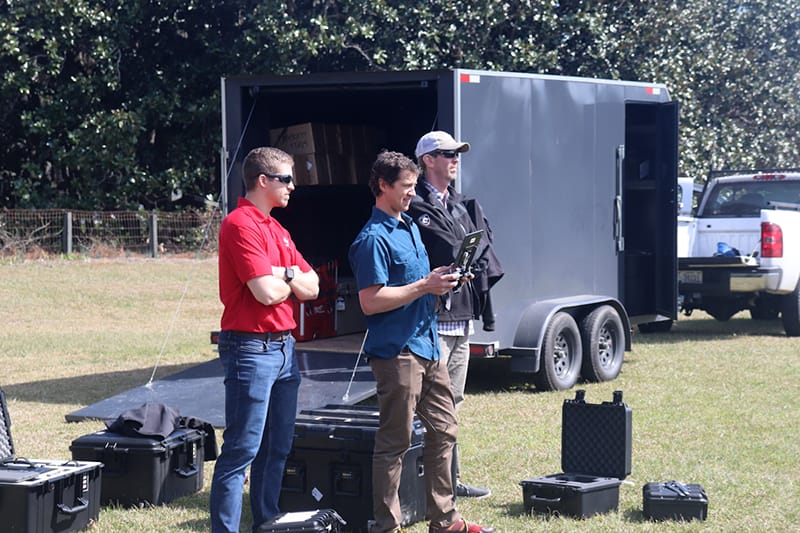
Students during classroom portion of the Academy.
Tall Timbers an ideal location for Ignition Academy
Tall Timbers was the perfect site to offer a variety of field experiences with prescription, planning procedures, diverse landscape and room to maneuver, allowing for an accelerated learning opportunity for participants. Following the week at Tall Timbers, the students, with mentor cadre, split into four modules and dispersed across the Southeast to federally managed sites to practice the skills gained.
Kelly Boyd, National UAS Ignition Specialist for the US Forest Service and course coordinator for this academy, stated that Tall Timbers was “an ideal location for immersive learning. It offers opportunities to teach students, then show students, then have them train to it.” He also commented that this location was the first that he had worked with that allowed classroom to flight area within walking distance. The plan for the future is to hold this academy annually at Tall Timbers for students from the southeast. He said, “I now have what right looks like (in referencing Tall Timbers), and I’ll be looking for something similar in western states.”
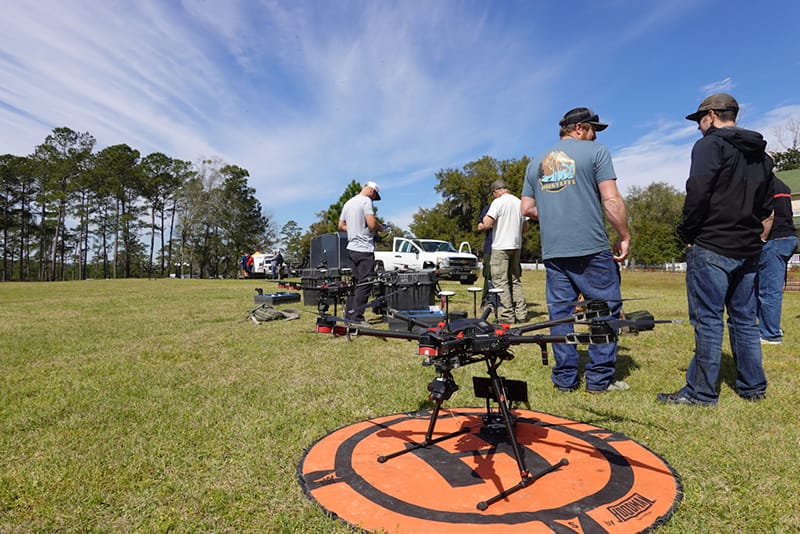
Drone on pad with students.
Participants in the academy were occupied using a number of different drones with the Ignis system for dropping fire. Tall Timbers’ staff worked with the academy to delineate flight areas on the Station as well as presented on ignition strategies to meet resource objectives. The ultimate outcome is to give UAS aerial ignition trainees the foundation for qualification as an Aerial Ignition Pilot.
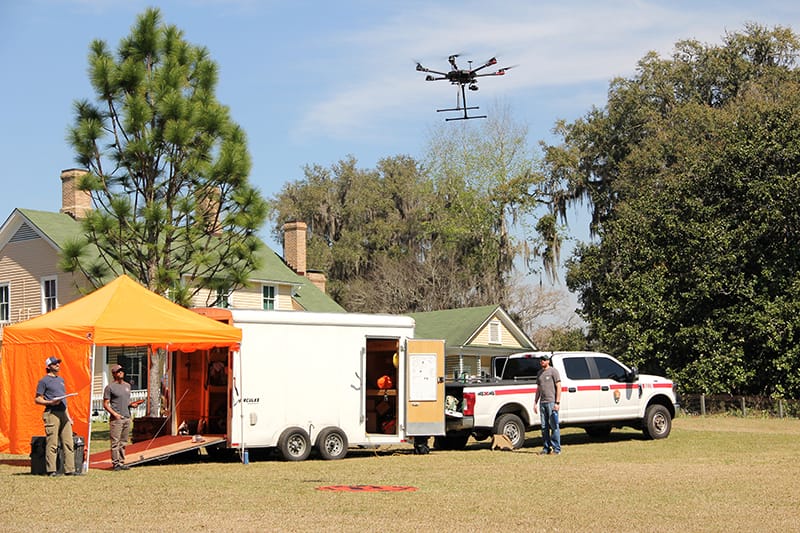
Steering the drone during an afternoon exercise.
Drone being flown in for a landing.
Over the course of the three-week academy, candidates will gain confidence to conduct aerial ignition missions and become subject matter experts benefitting their local, regional, and national programs. They will experience multiple days of hands-on UAS Aerial Ignition burning in the wildland-urban-interface (WUI), in a variety of diverse fuels, supporting different agencies with unique management objectives under the guidance of coaching and mentorship from qualified UAS Aerial Ignition pilots.
As the modules left to practice the skills learned, a number of the participants commented on how perfect Tall Timbers had been for this academy. PFTC and Tall Timbers look forward to the next opportunity to share this fire-maintained landscape for training.
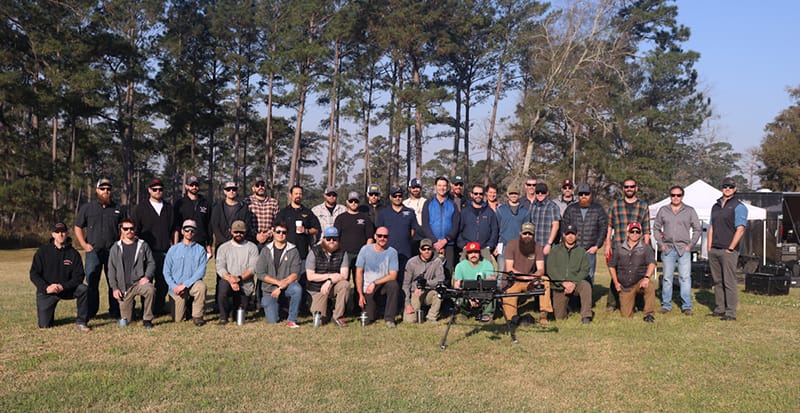
The Academy participants on the final day of training at Tall Timbers.
The M-CORES program, which includes the proposed Suncoast Connector Toll Road in Jefferson County, passed through the Florida Legislature at breakneck speed with little review or analysis. Tall Timbers has a number of concerns given the potential for significant and wide spread impacts. These include fragmenting public and private conservation lands, robbing business from Main Street Monticello, impacting our rivers and other water resources, and making prescribed fire more difficult and costly.
Join us in asking the Jefferson County Board of County Commissioners to OPPOSE the Suncoast Connector toll road and its path through Jefferson County.
Take action now with our easy email form.
Send an email to all five Jefferson County Board of County Commissioners with one click!
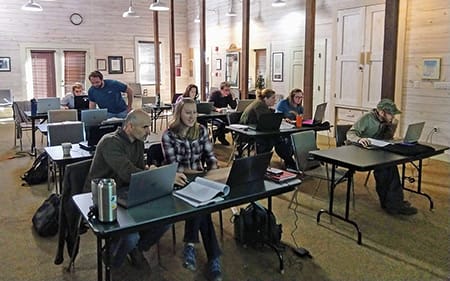
Burn prioritization modeling seminars and fire modeling tools are supported by Wildland Fire Science to train managers in the important planning stages of prescribed fires.
Educating and guiding the next generation of fire researchers and managers is a key goal of Wildland Fire Science and a resource for testing new ideas in fire research.
Tall Timbers hosts the premier fire technology transfer organization—the Southern Fire Exchange. This JFSP funded effort helps connect research to management through webinars, workshops, and support of the Prescribed Fire Science Consortium.
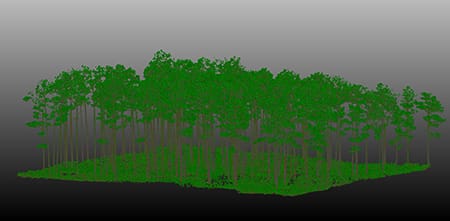
Working with partners in the Prescribed Fire Science Consortium, the program is building nexgen 3-D fuel beds using terrestrial LiDAR and novel sampling techniques to power new fire behavior models for prescribed fire managers. This work links to Tall Timbers work in wildlife habitat usage and ecological forestry.
The Longleaf Legacy landscape prescribed fire burn team arm of Wildland Fire Science works directly with landowners and partners to effectively put fire on the ground and promote prescribed fire throughout the region.
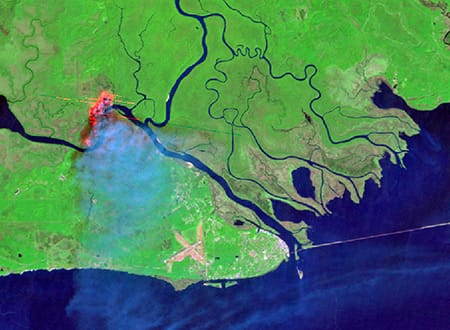
Tall Timbers is leading an effort to map fire regimes at the landscape scale. Staff work with numerous agencies to evaluate fire records and satellite imagery to build this critical conservation database. https://skfb.ly/6DqOY
Tall Timbers hosts the Prescribed Fire Science Consortium, a national network of researchers and managers who promote integrated research and management to advance next generation tools for fire practitioners. https://arcg.is/1DSjDT
We are linking physics and field observations to understand the fluid dynamics of fire behavior surface fire regimes. Our work combines field observations using advanced thermal imaging techniques, laboratory studies, and coupled fire-atmospheric modeling to help managers improve outcomes of managed fire regimes.
Selected Publications authored by Wildland Fire Science staff.
Staff and researchers support Federal fire training by serving as a cadre for NWCG training courses, ranging from basic wildland fire to advanced fire effects.
(PFTC) specializes in training fire fighters the principles and techniques of prescribed fire through practical hands-on experience. https://www.fws.gov/fire/pftc/
Private land owners are the largest source of prescribed fire in the country. These land owners and the culture of fire that was maintained by them during decades of suppression are a part of why Tall Timbers is a world-wide center for prescribed fire science. Workshops and fire training are a critical focus of the Longleaf Legacy Landscape Burn Team and our support of the Georgia Forestry Commission Prescribed Fire Center in Marion County.
The conserved lands of the Greater Red Hills region are found on working, income-producing properties that support agriculture, forestry, and recreational hunting. These properties contribute $272 million annually to local economies and support 2,300 jobs. [link to Planning & Advocacy section] The landowners’ strong stewardship ethic preserves their working lands while replenishing drinking water supplies, protecting water quality, and providing wildlife habitat for dozens of rare and endangered species. Tall Timbers’ conservation easements on these working properties encourage landowners to retain their traditional livelihood by keeping farms in family ownership.
Home to world-class wild quail populations, the Greater Red Hills region contains the largest concentration of gamebird preserves in the United States. These preserves also support the largest community of Red-cockaded woodpeckers on private lands. Indicators of high quality habitat found here include the gopher tortoise, Bachman’s sparrow, fox squirrel, and many amphibians. Tall Timbers’ conservation easements identify and protect the critical habitats of these species.
The region also boasts outstanding aquatic resources. Large river systems, like the Flint/Apalachicola, Ochlockonee, and Aucilla, flow from Georgia and feed into the Gulf of Mexico to support some of the world’s most productive estuaries. Large disappearing sinkhole lakes, like Iamonia, Miccosukee, and Jackson, provide habitat for an array of aquatic species and migratory birds. Tall Timbers’ conservation easements protect these vital watersheds and wetlands that are the lifeblood for the ecological health of the region.
Once dominated by longleaf pine, our pine woodlands support abundant wildlife and local economies. These forests need prescribed fire to stay healthy. Herbert L. Stoddard and his associates Ed and Roy Komarek were pioneers in this emerging scientific field during the mid-20th century. Tall Timbers continues that legacy with applied research on prescribed fire and land management. Today, there is a tremendous need to expand prescribed fire use beyond the Red Hills to ensure ecosystem health and reduce wildfire risk. Additionally, Tall Timbers uses conservation easements to permanently protect private woodlands while balancing the need for economic return from selective timbering.





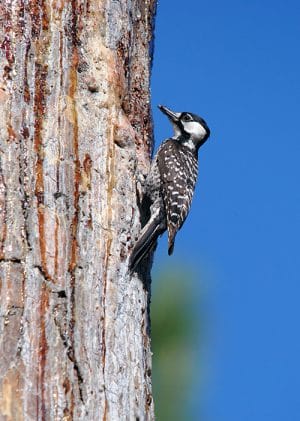 Tall Timbers supports the U.S. Fish and Wildlife Service proposed change in status of the Red-cockaded Woodpecker from endangered to threatened under the Endangered Species Act (ESA). The proposal has garnered a good bit of media coverage, so we wanted to share our thoughts on both the good reasons for the change, as well as the need to keep the woodpecker on the ESA as threatened for the decades needed to achieve recovery.


 Tall Timbers hosted the first-ever National UAS (Unmanned Aerial System/drones) Ignition Academy, sponsored by the National Interagency Prescribed Fire Training Center (PFTC), and the National UAS Program February 28-March 4, 2022. The training is designed to instruct UAS operators in aerial ignition operations. The Southeast US is an ideal site for this academy due to the year-round burning programs of multiple agencies, complex airspace, broad prescription windows, and the high level of interagency cooperation.