On April 17, Netflix released the new docuseries Our Living World. Cate Blanchett narrates the series, which explores the intelligence, resourcefulness, and interconnectedness of life on our planet.
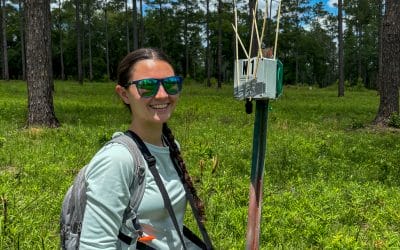
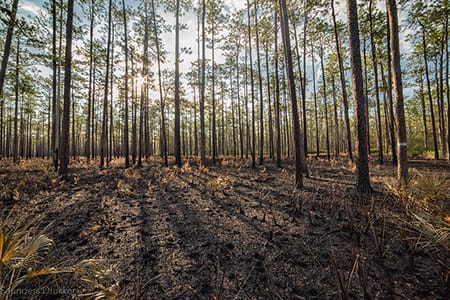
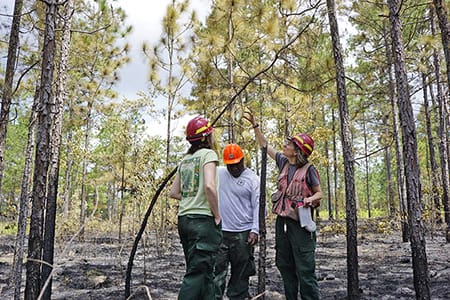
Tall Timbers lent its expertise to the production team in a segment about gopher tortoises and the role of fire in healthy ecosystems. Kim Sash, Coordinator of Biological Monitoring, served as a key consultant on tortoise biology, Morgan Varner, Director of Research, contributed as a fire expert, and Eric Staller, Natural Resources Coordinator, led prescribed fires for the crew.
 “I jumped at the opportunity to help with this film because I thought it would be a great way to share the gopher tortoise’s story with a global audience,” explained Sash. “The more people know about these unique fire-dependent species, the more likely they are to support prescribed fire, land management research, and land conservation.”
Episode four, Road to Recovery, includes the gopher tortoise segment. The six-minute section is youth-friendly and features impressive camera work and a message that tortoises and their burrows are important parts of the longleaf ecosystem.
Our Living World was produced by Wild Space and Freeborne Media, with James Honeyborne as executive director. Honeyborne is the executive director behind Our Great National Parks, Blue Planet II, and other high-profile nature documentaries.
Cate Blanchett, the series narrator, is one of the most accomplished actors of her generation, with more than 70 films, 20-plus theater productions, and multiple Golden Globe and Academy Awards. Blanchett also has a long history of supporting conservation and is the ambassador for the Australian Conservation Foundation.
Our Living World is only available through a Netflix subscription. View series information and trailer.