Brian Lloyd (left) and Dave McElveen (right) posing together during one of their long-term butterfly surveys on Tall Timbers. Photo by Lisa Mills.
The new year is shaping up to be big for butterflies thanks in large part to the dedication and support of the Stoddard Bird Lab’s volunteer butterfly experts, Dave McElveen and Brian Lloyd.
Brian and Dave first applied their butterfly identification on Tall Timbers where they developed a butterfly species list for the property and initiated a long-term butterfly monitoring effort. Over the last 15 years, Dave and Brian have confirmed 74 species on Tall Timbers, many of which were beautifully photographed by Brian Lloyd and posted, along with other area butterflies, on his webpage.
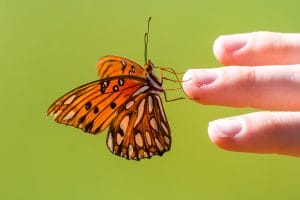
A Gulf fritillary butterfly.
In coordination with Stoddard Bird Lab Director, Kate Richardson, the butterfly aficionados have set their sights on Livingston Place next and will conduct monthly surveys during 2025 to compile a species list for the longleaf stands of this Tall Timbers owned property. Understanding the species present at Tall Timbers and Livingston Place offers an additional measure of conservation value to these properties and provides a clearer path forward for conservation planning.
In fact, Dave McElveen has played a key role in helping the Stoddard Bird Lab contribute to conservation of the rare Frosted Elfin butterfly in Florida, most recently planning the establishment of its host plant, the sundial lupine (Lupinus perennis) at Livingston Place. If successful, the sundial lupine seeds will grow into plants and spread, setting the stage for possible Frosted Elfin introductions in years to come.
If you’re interested in being a part of the butterfly conservation story and want to learn from dedicated experts like Dave and Brian, check out the local Hairstreak Chapter of The North American Butterfly Association.