Drones Taking Flight for Fire and Research

Oct 4, 2022

Drones, or Unmanned Aircraft Systems, continue to shine as unique and cost effective tools in natural resource management. These precise flyers can carry a wide variety of payloads to support both research and prescribed fire operations.

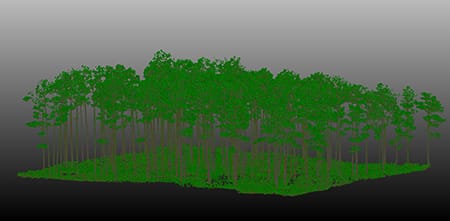
Within the next year, Tall Timbers hopes to have the capacity to further support its staff with high-resolution aerial LiDAR vegetation and terrain mapping, a cutting-edge development in drone technology.

Over the summer, the Tall Timbers Geospatial Center received several drones from various projects that no longer needed them. The acquisition of these out-of-use aircraft allows the Center an additional cost-effective method to expand its research, outreach, and land monitoring capabilities, forming a newly reorganized drone program.

This program looks to overhaul these drones and combine them with new products to better implement projects from a bird’s eye view.

So far, the drone program has made over $40,000 of drone equipment airworthy again. With every successful drone refurbish, the Tall Timbers Geospatial Center gains the capacity to provide services to our staff and partners. These services include capturing DSLR quality pictures from the air, supporting fire staff with aerial thermal video, and assisting research with infrared and multispectral imagery—often used to identify differences in plant species, type, and stress.

Comparison of a true color (left) and thermal photograph (right) captured by a Zenmuse XT2 thermal camera

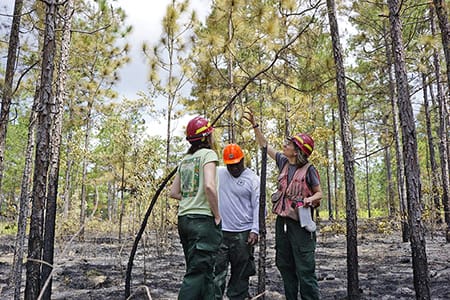
While the program is just getting off the ground, these upcycled drones have already been used on various Tall Timbers projects, including extension forestry events and prescribed fire. We look forward to seeing how this new program takes flight.


About the Author
George Jensen
George Jensen, originally from Savannah, Georgia, lived most of his life in Wisconsin. George attended the University of Wisconsin, Stevens Point, where he studied Wildland Fire Science and Conservation Biology under Dr Ron Masters. During this time, George had heavy involvement in the UWSP interagency fire crew, where he was an officer for two years; George burned with the crew in Wisconsin, Oklahoma, Chicago, Florida, Georgia, and, South Carolina. George also worked for the federal government on a fuels module and helitack crew. Upon graduation, George took a job as a Conservation Biologist for the Endangered Resources section of the WNDR and as a Private lands biologist for the private sector. He was also on the state burn team. George attended graduate school at Mizzou under Dr. Ben Knapp. George worked his master's tenure at the Jones Center at Ichauway, where he researched how Resistance, Resilience, and Transition treatments affect fire behavior and effects in longleaf pine ecosystems during atypically hotter and drier days. He also studied fine-scale fire effects in patches of longleaf pine. Currently, George works for Tall Timbers as the Southwest Georgia Prescribed Burn Association Coordinator and is an Adjunct professor of ecology at Thomas University.
  • Recent Articles
    Wild quail hunting safety video

    If you are a landowner looking for a simple hunting safety orientation for your guests, or if you have been invited to participate in a southern quail hunt, this video is available to meet your needs. In under eight minutes, we cover the safety basics and common...

    2025 Tall Timbers Regional Hatch Report

    At Tall Timbers, we documented the highest nest production in the last fifteen years and above average brood production. The outstanding reproduction was partly due to cooperative
    weather resulting in ample cover.

    Related Articles