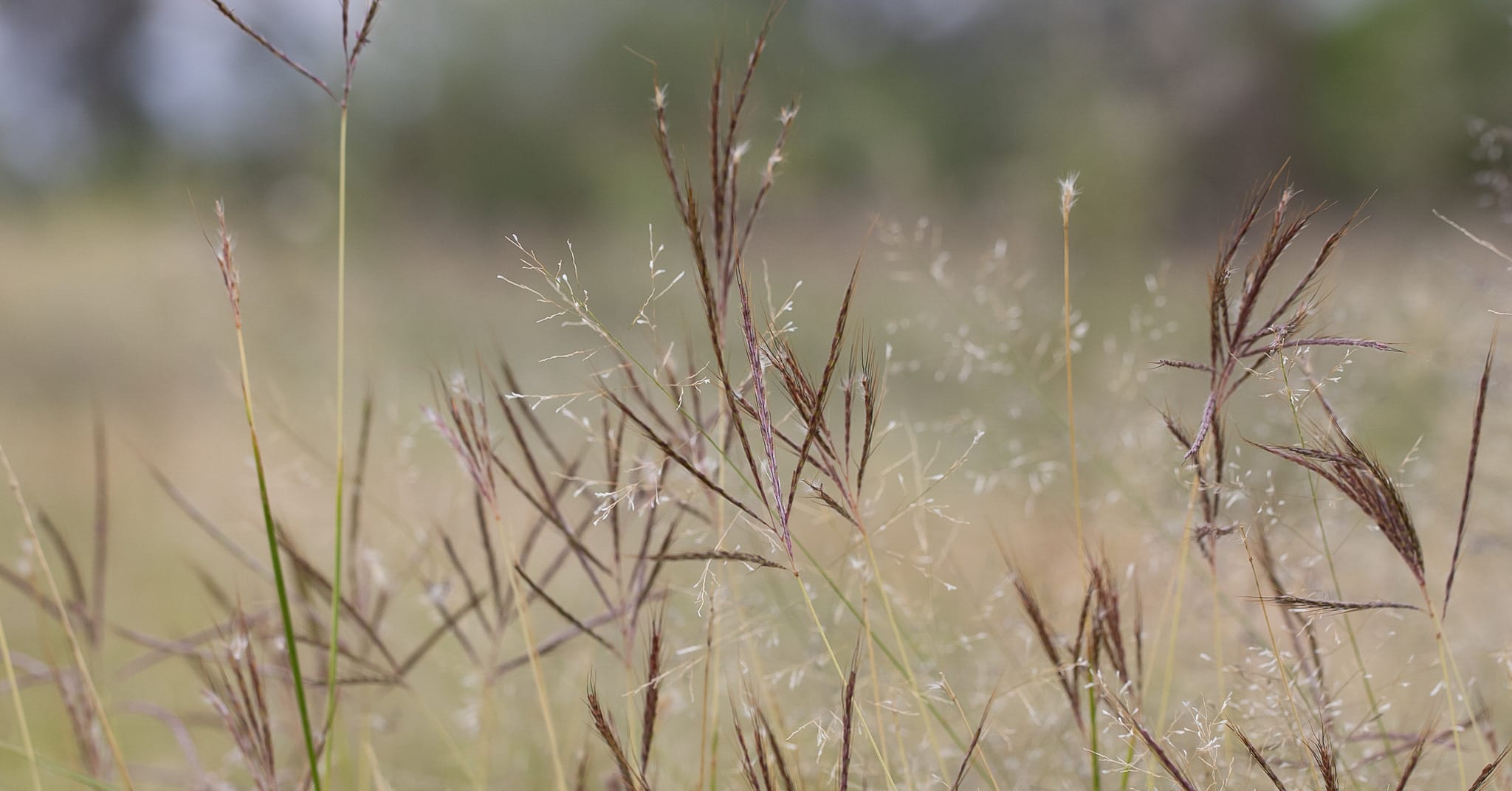
There is an emerging issue in the Red Hills of an invasive grass, pitted bluestem (Bothriochloa pertusa), that is being noticed by land managers more regularly.
As with any invasive species, early detection and eradication is key to avoid monoculture-forming grasses from taking hold over an area.
Pitted bluestem has been present in South Florida, parts of the western Gulf Coast and is among a class of closely related grasses that have been a management concern in the Great Plains and Midwest regions as well. Managers there have spent a considerable amount of resources trying to eradicate Caucasian bluestem (Bothriochloa bladhii) and yellow bluestem (Bothriochloa ischaemum).
If left undetected, pitted bluestem can take over native ground cover and become hard to eradicate without killing off other beneficial plants.
Tall Timbers Game Bird Director Dwayne Elmore said the grass is visible along the Highway 319 corridor between Tallahassee and Thomasville and is being noticed by managers in the region who are concerned about its spread.
The key is to monitor areas where vehicles are traveling in and out as well as anywhere heavy equipment has been in the woods. That includes logging decks, ingress roads and anywhere where storm debris cleanup has occurred.
“If you find it quick and put your thumb on it, then it’s kind of a non-issue before it has chance to put a bunch of seed in the seed bank and spread,” Elmore said. “This one in particular is much more evasive as it does not stand out until it covers a large area.”
Click here to see more photos of pitted bluestem
Pitted bluestem is relatively easy to identify in the growth and blooming stages, with unique seed head structure and colors that differ from other native grasses.
Local managers have found that mowing roadways seems to be the main way it spread throughout their properties. It’s important to inspect roads before mowing to ensure seeds are not being spread.
The good news is, it can be managed with herbicides and prescribed fire. However, there is no selective herbicide so identifying and controlling the grass early can help avoid use of herbicides that can also kill beneficial understory plants.
Elmore suggested a 3% solution of Glyphosate sprayed directly into the clump as well as a broad circle about 10 feet outside of the visible patch to get coverage of any new sprouts that are emerging that are difficult to see.
Other closely related Bothriochloa grasses are very vulnerable to growing season fire and the same may be true for pitted bluestem but this is currently poorly understood. Burns need to be high intensity and can be done anytime between May and October to have an effect. Dormant season fires, in late winter or early spring, seem to encourage the growth of grasses in the genus.
Prescribed fire may not be a tool that works in all situations or goals, particularly when it coincides with quail nesting season, but for isolated patches, it could help eradicate it in conjunction with the use of herbicides.
Plants in the Bothriochloa genus are very competitive and tend to form monocultures, so it is important to address them early to cut down on time and resources battling the non-native grasses or hurting your property’s management goals longterm.
“Don’t let it simmer for years and years,” Elmore said. “Or you’re going to have a major expense and really have an impact on your plant community.”