It takes dedicated effort to restore wild bobwhite to huntable numbers, and people around Camden, South Carolina, are all in. Regional partners have hosted two successful fundraising events since 2025, and thanks to their generosity, Tall Timbers was able to hire a biologist focused exclusively on accelerating wild quail recovery in South Carolina’s most promising landscapes.
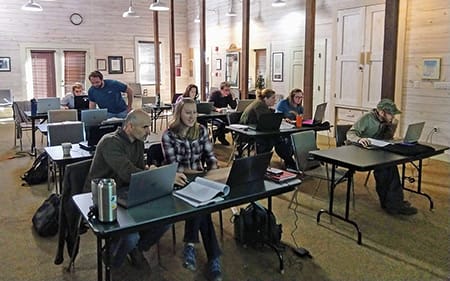
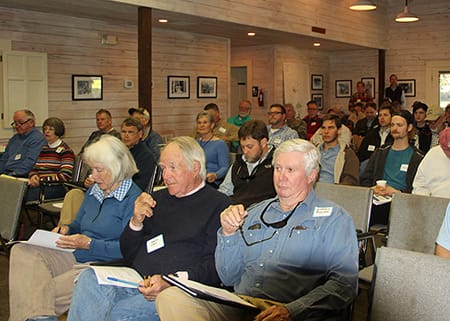
The 2nd Annual Camden Reception and Auction at Knights Hill in February was attended by more than 350 people where a record breaking amount of proceeds were raised to support wild quail restoration work in South Carolina. Tom Ewing, David Gantt, Elizabeth Griffin, Scott Griffin, Charlotte Hodge, Toddy Smith, and Lewis Thompson provided leadership on the host committee for this exciting night.
The first two Camden events were a declaration of the region’s support for wild bobwhite. The support from the local community advanced Tall Timbers’ efforts in South Carolina and led to the September 2025 hiring of a new South Carolina Game Bird Biologist.
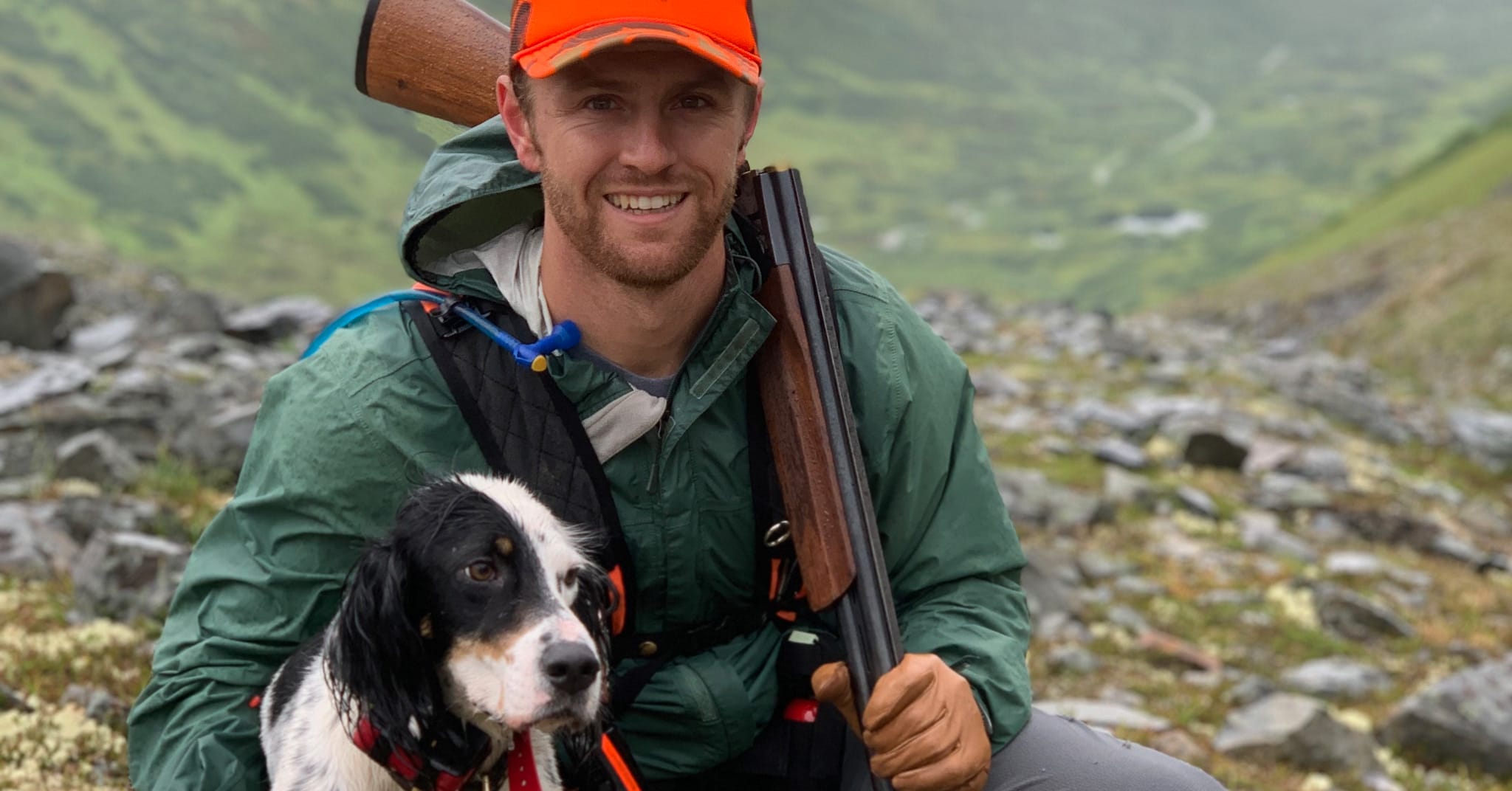
Trey Johnson, New South Carolina Game Bird Biologist
Trey Johnson has extensive experience working with upland game birds across the country — from the Chihuahuan Desert to the pine forests of the South. Holding a master’s degree from Sul Ross State University and a Ph.D. from Texas Tech, Trey combines strong scientific knowledge with a lifelong passion for bird hunting and conservation.
As Tall Timbers’ South Carolina Game Bird Biologist, Trey works closely with Paul Grimes, Director of the Carolina Regional Quail Program, to boost wild quail restoration efforts across the state. Together, they assist landowners and partners in creating and expanding high-potential landscapes for wild quail populations.
Growing up in a rural Texas town, Trey was introduced to the outdoors, wildlife, and hunting at an early age. These experiences ultimately led him to a career in wildlife management when he transferred to the Wildlife and Fisheries Sciences major at Texas A&M University. Since starting his work in wildlife management in 2016, he has collaborated on upland game bird projects across various ecosystems—Gulf Coast Prairie, Great Plains, Rolling Plains of Texas, Wyoming Sagebrush Steppe, Chihuahuan Desert, South Texas Plains, and Pineywoods. This work included his master’s degree research on parasite communities of scaled, Gambel’s, and Montezuma quail, and more recently, his Ph.D. research on bobwhite translocation to a Tall Timbers project site in the Texas Pineywoods after habitat restoration and management.
In his new role with Tall Timbers, Trey aims to contribute meaningfully to the conservation of upland game birds in South Carolina by offering landowners and managers the guidance and support they need. From a biologist’s perspective, he believes it’s important to conserve game birds both for their intrinsic value and because he recognizes that bird hunting holds cultural and economic significance in many parts of the country. As an avid upland bird hunter, Trey has a personal stake in the well-being of these game birds.
As Aldo Leopold stated, “the autumn landscape in the north woods is the land, plus a red maple, plus a ruffed grouse. In terms of conventional physics, the grouse represents only a millionth of either the mass or the energy of an acre. Yet subtract the grouse and the whole thing is dead.” Trey explained, “The same can be said for northern bobwhite in our southern pine forests—a 6-ounce bird whose reverberating whistle breathes life into the springtime woods and whose heart-stopping flush commands respect from those who pursue them in the fall.”
Welcome, Trey.