A longstanding drought throughout the Southeast has impacted the seed production of several key bobwhite forage plants, an effect that may increase the importance of supplemental feeding during the winter.
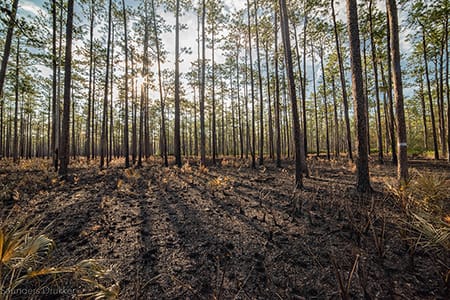
However, providing the full suite of habitat requirements for bobwhite should be the goal of every quail manager. The cornerstone of management with bobwhite as the objective is prescribed fire.
This includes small burn units that are in a mosaic pattern across the property and burned on a frequent interval. In forested landscapes, management will also require maintaining a lower basal area/canopy cover of trees to allow sunlight to reach the forest floor.
Generally, this type of management provides the necessary cover and food resources that bobwhite need. Without these basic vegetation characteristics in place, any additional management practices are moot.
Once foundational conditions are in place, supplemental practices can increase bobwhite numbers by reducing limiting factors and therefore increasing the carrying capacity of the property.
Managers have long recognized that providing supplemental feed throughout the year along well distributed feed lines can boost bobwhite survival.

These four opened partridge pea pods contained only a few small desiccated seeds. Drought in the Southeast hit seed production hard in many areas in 2025.
Research at Tall Timbers confirms this. While there is year to year variation, we have documented nearly 2x higher spring density of bobwhite in fed areas as compared to unfed areas with otherwise similar habitat and management. This is related to higher overwinter survival (approximately 15% higher) of bobwhite in fed areas.
While the mechanism driving this is complicated, predation appears to be at least part of the reason. When bobwhite have abundant food that is readily available across an area, they can meet their daily energetic requirements in less time which exposes them to less predation risk. Therefore, providing good cover and food that is well distributed and interspersed is predator management.
As mentioned above, the effects of supplemental feeding vary from year to year.
One potential cause of this variation is drought. The Southeast has been plagued by drought in 2025.
In some areas this started early in the summer which likely affected chick production. In other areas, including South Georgia and North Florida, this occurred late in the breeding season. Here, bobwhite chick production was not significantly affected, but seed production of important food producing plants was impacted.
This includes plants such as ragweed (Ambrosia spp), partridge pea (Chamaecrista spp), and ticktrefoil (Desmodium spp). We have observed few seeds from these plants which means bobwhite will have to work harder to find food overwinter. The seeds that were produced are generally small and underdeveloped, providing fewer calories and nutrients per seed.

Supplemental feeding can help quail survival through the winter as part of a suite of management practices.
Due to the suppressed food availability in many areas of the Southeast, providing supplemental feed will be of increased importance this winter. This not only will help keep bobwhite fat reserves high, but will decrease exposure time to predation.
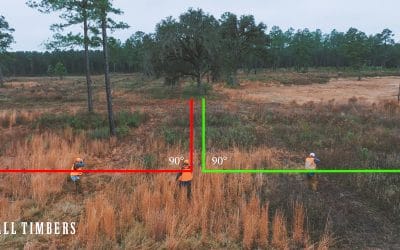
Getting a high percentage of bobwhite through the winter will set the stage for next year’s breeding season. For those managers that have an established feeding program, we encourage them to stay on a regular feeding schedule of every two weeks along established feed lines that are well distributed throughout good cover. Depending on the amount of feed a manager is already putting out, increasing the amount of feed applied by about 25% each feeding interval could be considered.
For those that do not feed already, avoid using stationary feeders as there is no data supporting this practice for bobwhite. At best stationary feeders are a neutral practice, but may be negative if they concentrate bobwhite and predators. Also, if you do not have adequate cover and other bobwhite habitat requirements, feeding will be irrelevant. If you would like to establish an effective feeding program that is supported by data, contact a Tall Timbers biologist to discuss what this would entail for your specific property.