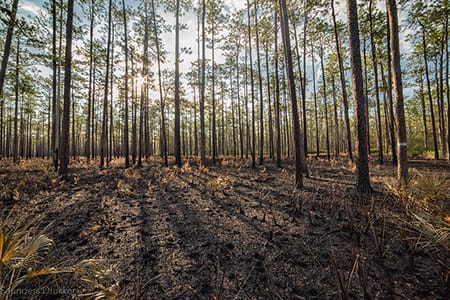
The Red Hills region has long served as a model for conserving rare wildlife on private lands in the United States.
Turns out the Red Hills’ model has also garnered international attention as biologists and landowners in other countries try to balance ecological values and economic utility within a framework of long-term conservation.
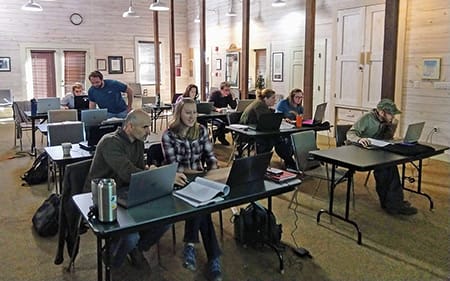
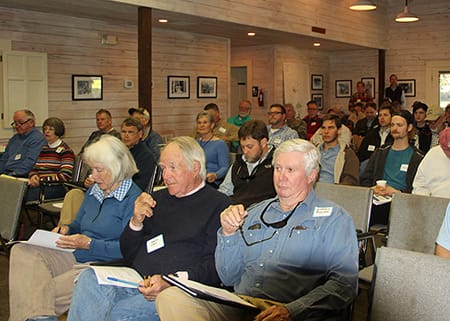
Jim Cox with the Stoddard Bird Lab was invited to Estonia recently to serve as the keynote speaker at a Nature Conservation Conference sponsored by the Private Forestry Association of Estonia (EESTI ERAMETSALIIT).
Jim described how the Safe Harbor Program has helped to grow the population of Red-cockaded Woodpeckers in the Red Hills region without threatening private property rights.

Jim Cox with the Stoddard Bird Lab was invited to Estonia recently to serve as the keynote speaker at a Nature Conservation Conference sponsored by the Private Forestry Association of Estonia. Cox detailed how the Safe Harbor Program has helped restore the population of red-Cockaded Woodpeckers in the Red Hills and how a similar model can help with rare species in Europe.
The Red Hills’ woodpecker population has grown by approximately 45% over the past 15 years thanks to Safe Harbor Agreements that allow private landowners to increase woodpecker numbers on their properties without incurring permanent restrictions on forest management.
Similar to the Red Hills region, private forestry lands in Estonia support several rare species, including the Siberian Flying Squirrel, which is listed as a species of conservation concern throughout Europe.
The range of squirrels has retreated markedly over the past century to the point that it occurs only in Estonia, Latvia, and Finland within the European part of its range.
Much like the Red-cockaded Woodpecker, the flying squirrel occurs primarily in old-growth forests where hollow aspen trees are preferred nesting and roosting structures.
The overarching goal of the conference was to develop a legal framework in Estonia similar to the Safe Harbor Program that enables private forests to contribute to conservation of the squirrel and other old-growth species without permanent restrictions placed on future timber management.
Details will likely take months to work out, but here’s to hoping the Red Hills’ model can help landowners and rare species elsewhere on planet Earth.