The Florida Department of Transportation announced big news on August 5, saying it completed a study of the Northern Turnpike Extension without recommending a specific corridor to connect to U.S. 19, and that it would not move forward until options could be reassessed to address significant community concerns; this isbig news. Some context on this complicated issue might be helpful.
For more than two years, Tall Timbers, conservation organizations around Florida, and residents statewide raised concerns and objections over Senate bill 7068 from 2019 (known as M-CORES), which called for the construction of three toll roads spanning over 330 miles throughout the state. From 2019 to 2020, steering committees evaluated each of these three proposed toll roads, ultimately producing final reports containing numerous recommendations and concluding that they could not agree that there was “a specific need for a completely new greenfield corridor or modifications of existing facilities through the study area to achieve the stated purpose.”
Subsequently, in 2021, the Florida Legislature passed SB 100, which repealed M-CORES and removed the requirement for a toll road through Jefferson County and the Red Hills. SB 100 instead called for DOT to include in their work program, “the construction of controlled access facilities as necessary to achieve the free flow of traffic on U.S. 19, beginning at the terminus of Suncoast Parkway 2 Phase 3 [Citrus County], north predominantly along U.S. 19 to a logical terminus on Interstate 10 in Madison County.”
Proposed Northern Turnpike Extension corridors
SB 100 also called for DOT to begin working on a study to extend the Florida Turnpike from its current terminus in Wildwood (Sumter County), to a new terminus determined by DOT (somewhere on U.S. 19 in the Florida Big Bend). This is the Northern Turnpike Extension that DOT just shelved in the face of widespread citizen opposition and “No build” resolutions from Citrus and Levy Counties and the towns of Dunnellon, Inglis, and Yankeetown.
Questions we’re asking:
Does this mean the Northern Turnpike Extension to U.S. 19 in Citrus or Levy County will not be built? That’s hard to say. DOT’s statement notes that while the controversial project is sidelined, the door is still open to evaluating corridor concepts that respect environmental and community concerns. In the near-term, DOT will focus on improvements in the I-75 corridor, as suggested by many conservation groups, residents, and toll road steering committee members.
How does this decision affect the Florida Big Bend and the Red Hills? At this point, DOT will continue following the legislative directive in SB 100 to study improvements to achieve the “free flow of traffic” on U.S. 19 from Red Level in Citrus County to Madison County. Critics have noted that the perceived need for improvements to the underutilized U.S. 19 was based in part on connecting U.S. 19 with the Florida Turnpike, resulting in increased traffic from Central Florida through the Big Bend. Absent that interconnection, it appears to raise the bar for justifying significant enhancements to U.S. 19, which Florida TaxWatch noted in 2020 was a project with “little demonstrated transportation need.”
Before the end of 2022, DOT is scheduled to hold additional public outreach opportunities to receive input on potential improvement to U.S. 19. Communities throughout the Florida Big Bend—which includes one of the longest stretches of undeveloped coastline in the continental United States—will need to fully participate to ensure DOT hears concerns about impacts to natural resources, working rural lands, and rural community character in a state that has already lost many of those amenities.
By John Palarski, WPQP Biologist and Brad Kubečka, PhD, WPQP Director, originally published in the Summer 2022 edition of Quail Call.
Thanks to collaboration between Tall Timbers and Texas Parks and Wildlife Department, the Western Pineywoods Quail Program (WPQP) was able to add a new biologist to the team. John Palarski joined WPQP in January 2022 to help provide additional support throughout the region for landowners interested in quail management. John, who is originally from Wisconsin, completed his Bachelor’s degree in Fisheries and Wildlife Biology at the University of North Dakota before moving to Texas to complete his Master’s degree at Tarleton State University.
John Palarski joined WPQP in January 2022 to help provide additional support throughout the region for landowners interested in quail management.
At Tarleton, John studied the effects of source populations on bobwhite translocation. John’s unique background and experience with bobwhite management and translocation is a great asset to WPQP and Tall Timbers, especially for upcoming projects.
WPQP’s inaugural project in Polk County, Texas is moving forward as extensive habitat management has been implemented. The property has undergone timber thinning on well over 3,000 acres, with more slated for summer and fall of 2022. Additionally, prescribed fire and hardwood removal are being implemented to promote a diverse understory and mitigate predator habitat. Call counts (spring whistle and fall covey) have been conducted on the site and indicate there is no resident bobwhite population. As expected, the lack of a resident population in the area has stifled any natural recolonization that may have occurred from habitat restoration.
As a result, translocation of wild bobwhite is planned for the site in 2023, marking the first east Texas bobwhite research project in three decades. Tall Timbers’ WPQP PhD student, Trey Johnson, is currently collecting data to study the effects of habitat restoration and translocation on the Polk County property. We are looking forward to sharing the results of this project in the near future. In addition to research and restoration efforts in Polk County, WPQP has expanded across east Texas and southwest Arkansas to meet with private and public stakeholders interested in bobwhite management. WPQP staff have met with numerous landowners and provided management plans and recommendations designed to increase bobwhite populations. Since last year, WPQP personnel have visited and written management plans for 23,000 acres of private lands. East Texas is home to over half a million acres of forest managed by the United States Forest Service (USFS).
These forests provide some of the only public land hunting opportunities in Texas and have tremendous opportunity to support robust populations of game species, like bobwhite. WPQP recognizes the opportunity that exists on these public lands and hopes to collaborate with USFS to implement more intensive management for bobwhite. Current discussions are underway to identify opportunities for quail management on public lands, which would be a massive gain for the quail hunting community in the region. Current and future programmatic efforts conducted by WPQP will continue to promote bobwhite management on both public and private lands throughout the “Western Pineywoods.”
For more information about the Western Pineywoods Quail Program and our efforts, or to support the WPQP endowment campaign, please contact Dr. Brad Kubečka at bkubecka@talltimbers.org.
By Justin Rectenwald | Project Collaborators: Albany Quail Project, Livingston Place, Central Florida Rangeland Quail Program, Tall Timbers, Ichauway, Rolling Plains Quail Research Ranch, originally published in the Summer 2022 edition of Quail Call.
In 1931, Herbert Stoddard posed the question, “Are bobwhites becoming more wary?” in his classic book The Bobwhite Quail. He described how veteran quail hunters of that era with 30 or 40 years’ experience agreed that birds were getting more educated and more difficult to kill. He expounded on the fact that the birds had become quite unruly as they were becoming hard to mark down and shoot singles after the initial covey rise.
Stoddard further explained that on grounds that were becoming “heavily stocked” (at >1 bird per acre), that it was a new experience “to see the majority of coveys habitually flush out of shooting distance.” Even then, Stoddard asked, “How far will the process of education be carried?” The words written by Stoddard nearly 100 years ago sound eerily similar those we hear today. Unfortunately, this process of education has not seemed to slow down.
To address this question, the Albany Quail Project began a study nearly 30 years ago on several Albany area plantations that lasted for eight hunting seasons, and was aimed at understanding how radio-tagged coveys were interacting with the hunting party. The general consensus was that the hunting party only saw about half of the coveys that were available (most of which were pointed), and the other half that were not seen mostly held tight to avoid being detected.
Since the early 1990s, bird densities have at least doubled on many places and we have recently seen a string of years with above average adult survival that have resulted in an older and perhaps wiser age structure along with high fall densities. Both of these factors have likely played a large part in explaining why the birds have been much wilder and harder to get shots at. Because of this unruly behavior that has been observed over the last few years, there is a renewed interest in revisiting this study from the 1990s, to determine if birds are becoming even warier than they were in the past.
We restarted our covey-hunter interaction study this past season on several sites across the bobwhite range, including the primary study site of the Albany Quail Project, Livingston Place, Escape Ranch, Tall Timbers, Ichauway, and the Rolling Plains Quail Research Ranch in Texas. Our aim is to see how bobwhite behave compared to the original study in the 1990s, and to see how this varies between study sites.
We believe that the way coveys interact with hunters will vary between sites based on a variety of factors: bird density, age structure, cover conditions, and hunting style. We expect that on sites with higher densities and age structures that favor older, wiser birds, that the hunting party will see a higher percentage of coveys flushing wild, and fewer that are holding tight.
Beginning last fall, our staff of biologists and technicians rode along with the hunting parties on these six properties and tracked radio-tagged coveys to record what percentage are seen and how they are evading detection. After over 500 encounters in the first hunting season, preliminary results indicate that modern coveys seem much less likely to “hold” to avoid detection and are flushing wild about 30% more often than they did in the 1990s. It is unclear how much of these behaviors is being learned and how much is the result of being in a high-density population with high adult survival. We will continue this study for several more years to fully understand how far this process of education can be carried, and how much warier the birds have become.
By Justin Rectenwald | Project Collaborators: Albany Quail Project, Livingston Place, Central Florida Rangeland Quail Program, Tall Timbers, Ichauway, Rolling Plains Quail Research Ranch, University of Georgia–GAME Lab, originally published in the Summer 2022 edition of Quail Call.
Over the last several years, there have been many discussions between quail managers, property owners, and biologists about how harvest rates may affect wild quail populations. As wise stewards of the resource, our goal should be to maximize hunting opportunity, while minimizing any potential negative impacts on the population. Historically, the idea of over-hunting or pressuring bobwhites has not been an issue, because they have relatively high densities and low harvest pressure.
While populations on large private properties remain high and stable, ownership demographics and the economics of quail hunting have changed slightly in recent years. It has become more common for quail properties to have multiple owners that all want their fair share of hunting days, or they are looking for ways to offset the operating costs by leasing days to other hunters. Both of these situations can lead to an increase in the number of days hunting, which could equate to higher harvest pressure. Tall Timbers and others in the past have developed the industry standard for harvest rates, which sits at 15% of the fall population.
However, the kicker is that the recommendation of 15% is supposed to include birds that are crippled and not recovered as well. While it is easy to figure out how many birds you bring back to the wagon, we do not have a firm grasp on how many birds are actually crippled, and end up dying days or weeks later. Many believe, based on observations, that the current ratio of harvested to crippled birds could be anywhere from 3:1 to 1:1 depending on hunter experience and or a variety of other factors. While a higher than perceived harvest rate may not be a cause of concern on most properties, it may be a limiting factor on properties that are already pushing the 15% recommendation.
Many believe, based on observations, that the current ratio of harvested to crippled birds could be anywhere from 3:1 to 1:1 depending on hunter experience and or a variety of other factors. While a higher than perceived harvest rate may not be a cause of concern on most properties, it may be a limiting factor on properties that are already pushing the 15% recommendation.
To determine the true crippling loss rate, Tall Timbers and the GAME Lab at the University of Georgia began a collaborative study that takes place on our primary study site in Albany, the Jones Center at Ichauway, Livingston Place, Tall Timbers, Escape Ranch in Central Florida, and the Rolling Plains Quail Research Ranch in Texas. Our staff of biologists and technicians tracked radio-tagged coveys during the hunts throughout this past season and recorded data on which coveys were shot into, the number of shots fired at each covey rise, the number of birds that were shot down and recovered, the number wounded that kept flying, and the number shot down and not recovered.
On the day after the hunt and 3–5 days later, we rechecked those same coveys in hopes of recovering whole, un-scavenged birds that were initially wounded during the hunt and later died as a result of their injuries. Our staff recovered whole birds on multiple occasions following hunts, and these birds were x-rayed and sent to have official necropsies performed to determine their actual cause of death. Figure 1 depicts several of these birds that were confirmed to have had lead shot in them by x-ray.
We will continue this study for the next few hunting seasons in hopes of providing a true estimate of crippling loss. We expect to see variations in the crippling loss rate, but we should eventually be able to determine how many birds are recovered, wounded, and lost for every 10 shots fired at the end of this study. While it will take multiple years of data collection to complete the study, our preliminary results indicate that for about every 2 or 3 birds picked up, there is another 1 that is crippled and not recovered. We will continue this study for the next several hunting seasons and will expand on the results and conclusions once we have a full understanding of the true crippling loss rate.
The M-CORES program, which includes the proposed Suncoast Connector Toll Road in Jefferson County, passed through the Florida Legislature at breakneck speed with little review or analysis. Tall Timbers has a number of concerns given the potential for significant and wide spread impacts. These include fragmenting public and private conservation lands, robbing business from Main Street Monticello, impacting our rivers and other water resources, and making prescribed fire more difficult and costly.
Join us in asking the Jefferson County Board of County Commissioners to OPPOSE the Suncoast Connector toll road and its path through Jefferson County.
Take action now with our easy email form.
Send an email to all five Jefferson County Board of County Commissioners with one click!
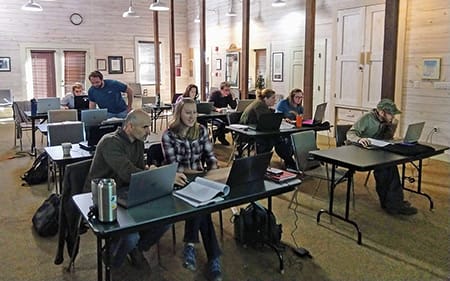
Burn prioritization modeling seminars and fire modeling tools are supported by Wildland Fire Science to train managers in the important planning stages of prescribed fires.
Educating and guiding the next generation of fire researchers and managers is a key goal of Wildland Fire Science and a resource for testing new ideas in fire research.
Tall Timbers hosts the premier fire technology transfer organization—the Southern Fire Exchange. This JFSP funded effort helps connect research to management through webinars, workshops, and support of the Prescribed Fire Science Consortium.
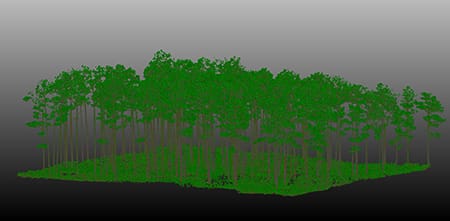
Working with partners in the Prescribed Fire Science Consortium, the program is building nexgen 3-D fuel beds using terrestrial LiDAR and novel sampling techniques to power new fire behavior models for prescribed fire managers. This work links to Tall Timbers work in wildlife habitat usage and ecological forestry.
The Longleaf Legacy landscape prescribed fire burn team arm of Wildland Fire Science works directly with landowners and partners to effectively put fire on the ground and promote prescribed fire throughout the region.
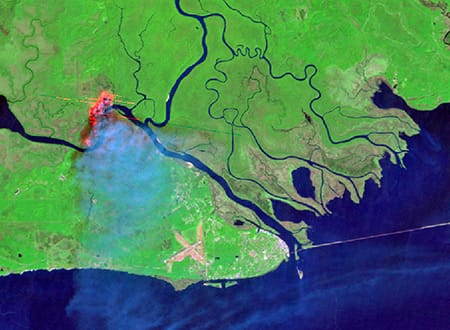
Tall Timbers is leading an effort to map fire regimes at the landscape scale. Staff work with numerous agencies to evaluate fire records and satellite imagery to build this critical conservation database. https://skfb.ly/6DqOY
Tall Timbers hosts the Prescribed Fire Science Consortium, a national network of researchers and managers who promote integrated research and management to advance next generation tools for fire practitioners. https://arcg.is/1DSjDT
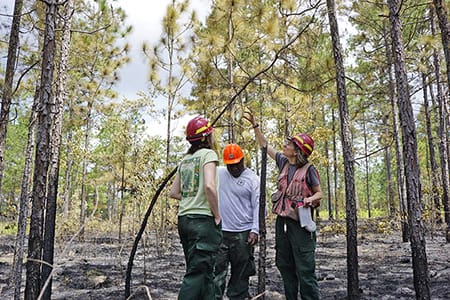
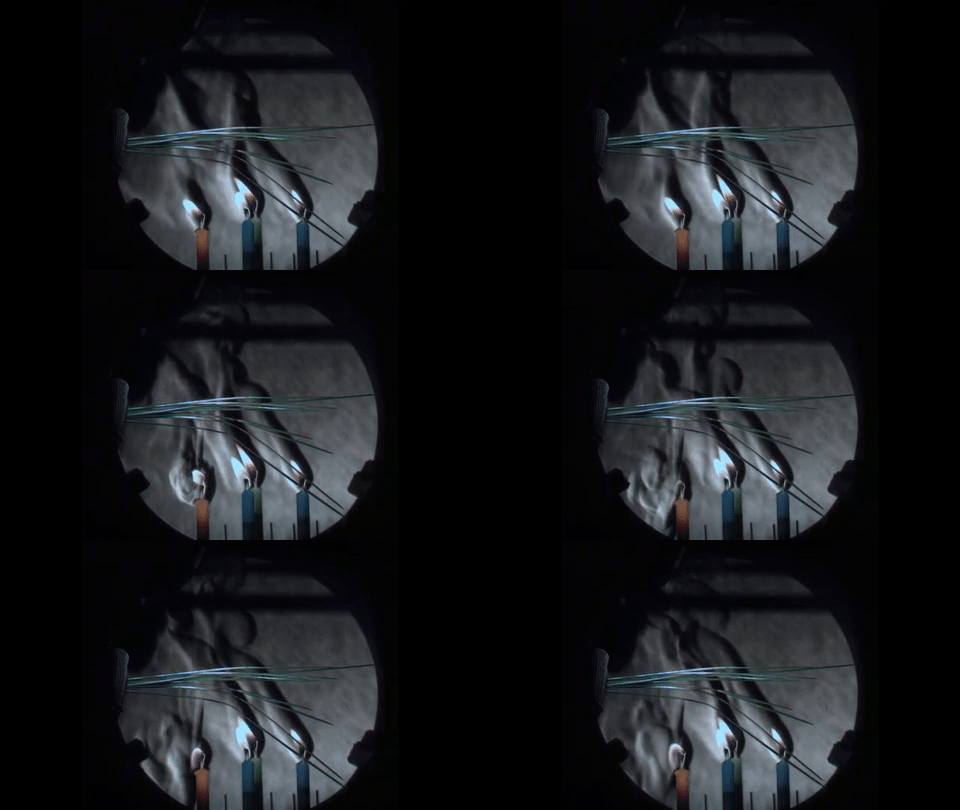
We are linking physics and field observations to understand the fluid dynamics of fire behavior surface fire regimes. Our work combines field observations using advanced thermal imaging techniques, laboratory studies, and coupled fire-atmospheric modeling to help managers improve outcomes of managed fire regimes.
Selected Publications authored by Wildland Fire Science staff.
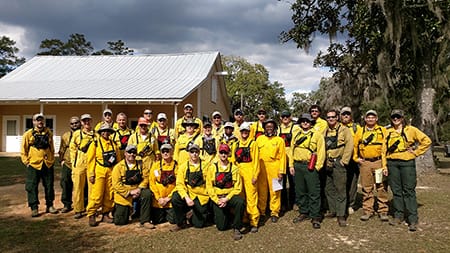
Staff and researchers support Federal fire training by serving as a cadre for NWCG training courses, ranging from basic wildland fire to advanced fire effects.
(PFTC) specializes in training fire fighters the principles and techniques of prescribed fire through practical hands-on experience. https://www.fws.gov/fire/pftc/
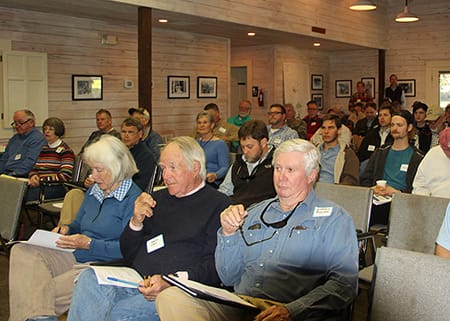
Private land owners are the largest source of prescribed fire in the country. These land owners and the culture of fire that was maintained by them during decades of suppression are a part of why Tall Timbers is a world-wide center for prescribed fire science. Workshops and fire training are a critical focus of the Longleaf Legacy Landscape Burn Team and our support of the Georgia Forestry Commission Prescribed Fire Center in Marion County.
The conserved lands of the Greater Red Hills region are found on working, income-producing properties that support agriculture, forestry, and recreational hunting. These properties contribute $272 million annually to local economies and support 2,300 jobs. [link to Planning & Advocacy section] The landowners’ strong stewardship ethic preserves their working lands while replenishing drinking water supplies, protecting water quality, and providing wildlife habitat for dozens of rare and endangered species. Tall Timbers’ conservation easements on these working properties encourage landowners to retain their traditional livelihood by keeping farms in family ownership.
Home to world-class wild quail populations, the Greater Red Hills region contains the largest concentration of gamebird preserves in the United States. These preserves also support the largest community of Red-cockaded woodpeckers on private lands. Indicators of high quality habitat found here include the gopher tortoise, Bachman’s sparrow, fox squirrel, and many amphibians. Tall Timbers’ conservation easements identify and protect the critical habitats of these species.
The region also boasts outstanding aquatic resources. Large river systems, like the Flint/Apalachicola, Ochlockonee, and Aucilla, flow from Georgia and feed into the Gulf of Mexico to support some of the world’s most productive estuaries. Large disappearing sinkhole lakes, like Iamonia, Miccosukee, and Jackson, provide habitat for an array of aquatic species and migratory birds. Tall Timbers’ conservation easements protect these vital watersheds and wetlands that are the lifeblood for the ecological health of the region.
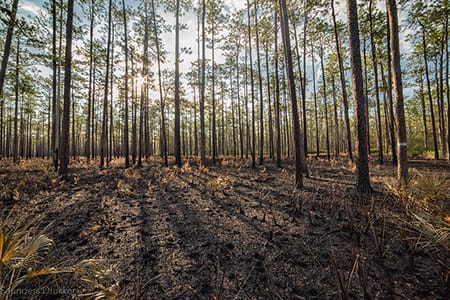
Once dominated by longleaf pine, our pine woodlands support abundant wildlife and local economies. These forests need prescribed fire to stay healthy. Herbert L. Stoddard and his associates Ed and Roy Komarek were pioneers in this emerging scientific field during the mid-20th century. Tall Timbers continues that legacy with applied research on prescribed fire and land management. Today, there is a tremendous need to expand prescribed fire use beyond the Red Hills to ensure ecosystem health and reduce wildfire risk. Additionally, Tall Timbers uses conservation easements to permanently protect private woodlands while balancing the need for economic return from selective timbering.