Cherokee Plantation will host the 2012 Tall Timbers Field Day
SAVE THE DATE: Friday, October 26
Cherokee Plantation will host the 2012 Fall Field Day on Friday, October 26. The outlook for the 2012/2013 quail hunting season will be discussed as well as other land management topics and the results from our recent quail research. A field tour of the property will be followed by lunch. Check-in and late registration begin at 7:30 AM. The field day adjourns at 1 PM.
Cherokee Plantation is located in north Leon County, FL off U.S. HWY 319, just a few miles south of the Florida/Georgia state line. Registration information will be mailed at the end of September and will also be available on our Web site at that time.
Join us at Tall Timbers for a wagon tour through the pine forest, visit historic buildings and enjoy music to benefit an ancient forest. Visit our Web site for more information: www.talltimbers.org.
Music – Pickin' in the Pines with Knotty Pine Band, Velma Frye, The Hot Tamale Duo, Fermentation Lounge Session Band and more.
Bird watching – *at 9 AM early birds can join Jim Cox , who will be looking for fall migrants
Wagon Tours of Tall Timbers
Dedication of the Betty Komarek Bird Window
Hiking on the Henry Stevenson Bird Trail to the Betty Komarek Bird Window
Beadel House and Tenant Farm Tours
Prescribed Burn Demonstration
Natural History Exhibits
Children's activities
Book signing – The Legacy of a Red Hills Hunting Plantation: Tall Timbers Research Station & Land Conservancy
Festival Fee: $5 per adult or $20 per vehicle. Children 12 and under are free. Proceeds to benefit the Wade Tract Preserve and programs at Tall Timbers.
Picnic in the Pines: Prizes given to best picnic and best table.
Short course for prescribed burn certification in Florida offered
A prescribed burn certification course is being offered, August 27-29, as a 3-day classroom version of the correspondence course. The course is limited to experienced burners and students must have at least three broadcast (acreage) burns in their name to qualify for the class.
Tall Timbers to host FWC Hunter's Clinic and Safety Course
The Florida Fish and Wildlife Conservation Commission (FWC) will be giving an exclusive Hunter's Clinic and Safety Course at Tall Timbers on Saturday, September 8 from 8 AM – 3 PM.
Those who wish to attend must first complete one of the three online hunter safety course options found at http://myfwc.com/hunting/safety-education/ prior to attending.
Attendees are to choose one of the following classes offered:
Deer Hunting
Waterfowl Hunting
Upland Game Bird Hunting
Archery
There is a $10 Rregistration Fee, which includes the hunter safety course, a catered lunch, 1-on-1 training with hunting experts, advice from biologists, and door prizes.
To register or for more information, call 850-413-0085.
The following is a report by Angie Reid, Tall Timbers Fire Ecology Research Biologist, on her recent trip to Washington, DC to meet with members of Congress. She was part of a delegation from the Society for Range Management (SRM) that discussed policy issues affecting rangelands. Angie has been a Tall Timbers research staff member since 2010, and is the Treasurer of the Florida Section of the SRM.
Tall Timbers Fire Ecology Research Biologist, Angie Reid, represents SRM in Washington
By Angie Reid, Fire Ecology Research Biologist II
I have been involved with the Society for Range Management (SRM) since my freshman year at Texas Tech University in 2002. I was a past President of the Texas Tech Section of the SRM, and am now President of the national Young Professionals Conclave (YPC) of the SRM and the Treasurer of the Florida Section of the SRM. As the leader of the YPC and an active and committed member of the SRM, I was invited this year to accompany the SRM Board of Directors to Washington, DC for the annual DC Fly-in. The Florida SRM is mostly active in the central and southern parts of the state where large cattle ranches still exist. Although the Red Hills region is no longer a large cattle producing region, it was once the home of cracker cowboys and cattle operations. Like Tall Timbers, the SRM supports many conservation programs in the Farm Bill that are also used in the Red Hills region for habitat improvement.
In preparation for the trip, I studied policy issues relevant to both our region (the southeast) and out west. I must admit I’m not much of a policy buff but I learned a lot in the weeks leading up to the Fly-in. My role was to be a representative for the young professionals in the SRM, and more importantly to observe and learn how the SRM functions in Washington to accomplish the society’s goals and improve the position of its members in governmental positions and non-governmental organizations (NGOs) alike.
I worked with a high caliber team of individuals representing the SRM: Gary Frasier-current President of the SRM, who is retired from USDA-Agricultural Research Service; Jenny Pluhar-Second Vice President and a private consultant; Wally Butler – First Vice President and a Range and Livestock Specialist for the Idaho Farm Bureau Federation; Keith Klement – SRM Director 2010-2012 and professor at Sheridan College. Guiding us during the Fly-in were Jess Peterson, Executive Vice President of the SRM, and Kelly Fogarty, SRM’s DC liaison.
Angie Reid, third from left, with Society of Rangeland Management representatives.
This year’s Fly-in took a different approach than in past years. We sought to make SRM the experts and go-to group for all information regarding rangelands for congressional members, their staff and agency personnel we met. Many groups meeting with high-level agency officials and members of congress ask solely for funding; the SRM group focused on how we could help them by providing rapid response, science-based information on rangeland issues. By establishing the SRM as rangeland experts and creating a good rapport with officials in Washington, the SRM will have a larger voice in policy issues concerning our rangelands.
We also discussed the importance of continued levels of funding for Farm Bill programs, explaining that lowered levels will only lead to increased expenses later, in order to restore the habitats that were underfunded this time around. Also discussed at each meeting was maintaining current levels of funding for agencies to ensure that field staff is able to focus on management rather than litigation. Additionally we discussed SRM’s collaboration with the Natural Resource Conservation Service (NRCS) and Bureau of Land Management (BLM) to conduct money-saving interagency training for Ecological Site Descriptions, while urging the US Forest Service (USFS) to get more involved in the collaboration. Other important issues we focused on were: specific budget constraints within the BLM, NRCS, and USF; support from agency staff for the Job Fair held at the annual SRM meetings; and funding for sage grouse conservation programs. I also had several opportunities to talk about the new Working Lands for Wildlife initiative involving NRCS and the US Fish and Wildlife Service (USFWS), and the need for appropriate requirements for fire return intervals associated with conservation program contracts (e.g. WHIP).
These messages were carried by the SRM representatives to a diverse group in Washington, DC. We met with senior agency staff of NRCS, USFS, and the BLM, including NRCS Chief Dave White, acting BLM Range Division Chief Mike DeArmond, USDA Under-Secretary and Deputy Under-Secretary of Natural Resources and Environment, and Executive Director of the Public Lands Council and that was just the first day! On day two we headed to Capitol Hill for a Wyoming Senate Delegation “meet and greet” where Keith Klement spoke with Senators Enzi and Barasso about the Grazing Improvement Act and had meetings with a staff member of Senator Reed who is on the Senate Appropriations Committee, and Congressman Mike Simpson and Congresswoman Cynthia Lummis who both sit on the House Appropriations Committee. We also managed to squeeze in meetings with representatives from The Wildlife Society and the American Seed Trade Association.
After an impressive two days of meetings, I think the group was able to successfully establish the SRM as an authority on natural resource management on rangelands, and show that the SRM was an organization worthy of support with regard to the workshops, interagency collaborations, and certifications the SRM provides to agencies and private range managers alike. Members of Congress and agency officials we met with received a SRM statement paper on sage grouse, as an example of the expertise that can be provided. Since arriving back from the trip, the group has agreed on report language to be used by the Senate Appropriations Committee in support of Ecological Site Description development and application. This trip created lasting relationships and a shining reputation for SRM in Washington, DC. I was glad to be a part of it.
The M-CORES program, which includes the proposed Suncoast Connector Toll Road in Jefferson County, passed through the Florida Legislature at breakneck speed with little review or analysis. Tall Timbers has a number of concerns given the potential for significant and wide spread impacts. These include fragmenting public and private conservation lands, robbing business from Main Street Monticello, impacting our rivers and other water resources, and making prescribed fire more difficult and costly.
Join us in asking the Jefferson County Board of County Commissioners to OPPOSE the Suncoast Connector toll road and its path through Jefferson County.
Take action now with our easy email form.
Send an email to all five Jefferson County Board of County Commissioners with one click!
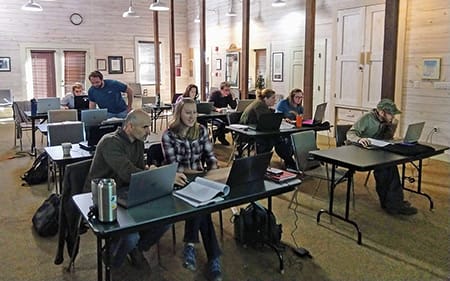
Burn prioritization modeling seminars and fire modeling tools are supported by Wildland Fire Science to train managers in the important planning stages of prescribed fires.
Educating and guiding the next generation of fire researchers and managers is a key goal of Wildland Fire Science and a resource for testing new ideas in fire research.
Tall Timbers hosts the premier fire technology transfer organization—the Southern Fire Exchange. This JFSP funded effort helps connect research to management through webinars, workshops, and support of the Prescribed Fire Science Consortium.
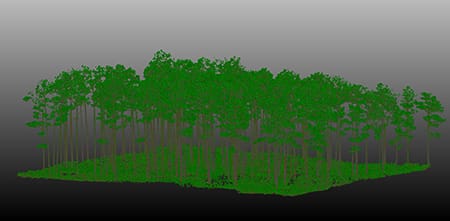
Working with partners in the Prescribed Fire Science Consortium, the program is building nexgen 3-D fuel beds using terrestrial LiDAR and novel sampling techniques to power new fire behavior models for prescribed fire managers. This work links to Tall Timbers work in wildlife habitat usage and ecological forestry.
The Longleaf Legacy landscape prescribed fire burn team arm of Wildland Fire Science works directly with landowners and partners to effectively put fire on the ground and promote prescribed fire throughout the region.
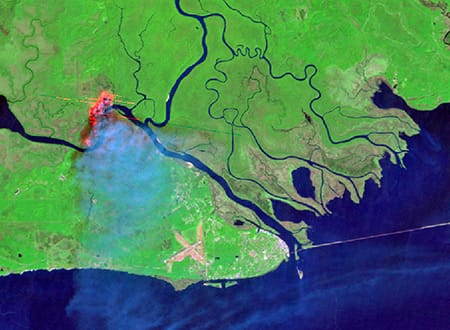
Tall Timbers is leading an effort to map fire regimes at the landscape scale. Staff work with numerous agencies to evaluate fire records and satellite imagery to build this critical conservation database. https://skfb.ly/6DqOY
Tall Timbers hosts the Prescribed Fire Science Consortium, a national network of researchers and managers who promote integrated research and management to advance next generation tools for fire practitioners. https://arcg.is/1DSjDT
We are linking physics and field observations to understand the fluid dynamics of fire behavior surface fire regimes. Our work combines field observations using advanced thermal imaging techniques, laboratory studies, and coupled fire-atmospheric modeling to help managers improve outcomes of managed fire regimes.
Selected Publications authored by Wildland Fire Science staff.
Staff and researchers support Federal fire training by serving as a cadre for NWCG training courses, ranging from basic wildland fire to advanced fire effects.
(PFTC) specializes in training fire fighters the principles and techniques of prescribed fire through practical hands-on experience. https://www.fws.gov/fire/pftc/
Private land owners are the largest source of prescribed fire in the country. These land owners and the culture of fire that was maintained by them during decades of suppression are a part of why Tall Timbers is a world-wide center for prescribed fire science. Workshops and fire training are a critical focus of the Longleaf Legacy Landscape Burn Team and our support of the Georgia Forestry Commission Prescribed Fire Center in Marion County.
The conserved lands of the Greater Red Hills region are found on working, income-producing properties that support agriculture, forestry, and recreational hunting. These properties contribute $272 million annually to local economies and support 2,300 jobs. [link to Planning & Advocacy section] The landowners’ strong stewardship ethic preserves their working lands while replenishing drinking water supplies, protecting water quality, and providing wildlife habitat for dozens of rare and endangered species. Tall Timbers’ conservation easements on these working properties encourage landowners to retain their traditional livelihood by keeping farms in family ownership.
Home to world-class wild quail populations, the Greater Red Hills region contains the largest concentration of gamebird preserves in the United States. These preserves also support the largest community of Red-cockaded woodpeckers on private lands. Indicators of high quality habitat found here include the gopher tortoise, Bachman’s sparrow, fox squirrel, and many amphibians. Tall Timbers’ conservation easements identify and protect the critical habitats of these species.
The region also boasts outstanding aquatic resources. Large river systems, like the Flint/Apalachicola, Ochlockonee, and Aucilla, flow from Georgia and feed into the Gulf of Mexico to support some of the world’s most productive estuaries. Large disappearing sinkhole lakes, like Iamonia, Miccosukee, and Jackson, provide habitat for an array of aquatic species and migratory birds. Tall Timbers’ conservation easements protect these vital watersheds and wetlands that are the lifeblood for the ecological health of the region.
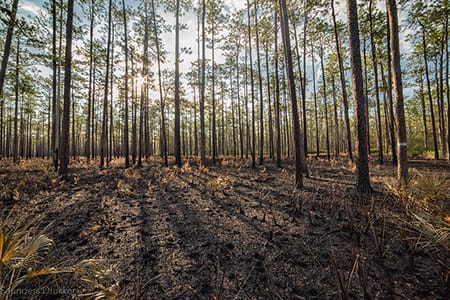
Once dominated by longleaf pine, our pine woodlands support abundant wildlife and local economies. These forests need prescribed fire to stay healthy. Herbert L. Stoddard and his associates Ed and Roy Komarek were pioneers in this emerging scientific field during the mid-20th century. Tall Timbers continues that legacy with applied research on prescribed fire and land management. Today, there is a tremendous need to expand prescribed fire use beyond the Red Hills to ensure ecosystem health and reduce wildfire risk. Additionally, Tall Timbers uses conservation easements to permanently protect private woodlands while balancing the need for economic return from selective timbering.


 A prescribed burn certification course is being offered, August 27-29, as a 3-day classroom version of the correspondence course. The course is limited to experienced burners and students must have at least three broadcast (acreage) burns in their name to qualify for the class.
 The Florida Fish and Wildlife Conservation Commission (FWC) will be giving an exclusive Hunter's Clinic and Safety Course at Tall Timbers on Saturday, September 8 from 8 AM – 3 PM.
 Deer Hunting
 I have been involved with the Society for Range Management (SRM) since my freshman year at Texas Tech University in 2002. I was a past President of the Texas Tech Section of the SRM, and am now President of the national Young Professionals Conclave (YPC) of the SRM and the Treasurer of the Florida Section of the SRM. As the leader of the YPC and an active and committed member of the SRM, I was invited this year to accompany the SRM Board of Directors to Washington, DC for the annual DC Fly-in. The Florida SRM is mostly active in the central and southern parts of the state where large cattle ranches still exist. Although the Red Hills region is no longer a large cattle producing region, it was once the home of cracker cowboys and cattle operations. Like Tall Timbers, the SRM supports many conservation programs in the Farm Bill that are also used in the Red Hills region for habitat improvement.
.jpg?strip=all&w=890 "Angie Reid, third from left, with Society of Rangeland Management representatives")