Tall Timbers Scientists Keynote Two Regional Fire Science Workshops
David Godwin, PhD, Southern Fire Exchange Coordinator
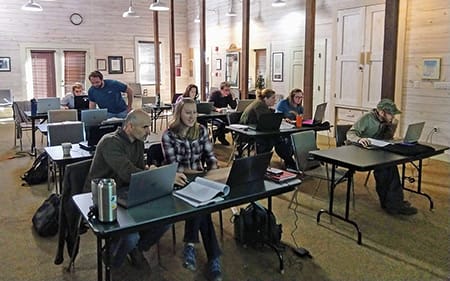
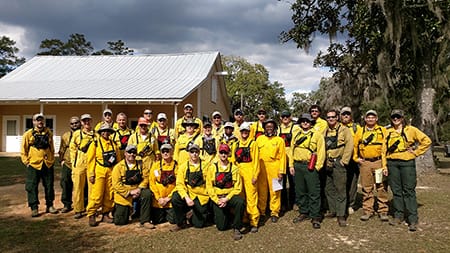
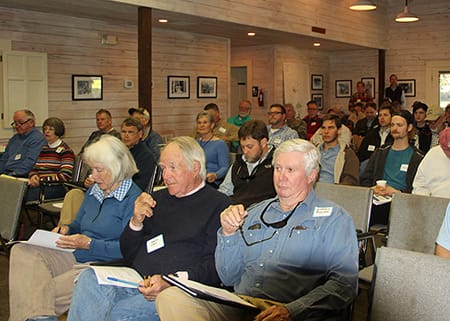
Dr. Monica Rother and Kevin Hiers shared their expertise in keynote presentations at two Southern Fire Exchange (SFE) fire science and management workshops this past October. A packed SFE workshop held October 19, at the FSU Coastal and Marine Lab near Carrabelle, Fla., assembled over 30 scientists and managers to learn about the latest research findings and management practices related to duff fire management in upland ecosystems. Kevin Hiers joined Dr. Morgan Varner (U.S. Forest Service) and Bryn Pipes (Georgia Department of Natural Resources) as they gave engaging presentations that summarized decades of scientific research and lessons from managing longleaf ecosystems that have heavy duff accumulations. After a catered lunch overlooking the beautiful Apalachee Bay, workshop participants gathered in a nearby long-unburned longleaf pine stand to test out a moisture meter, examine duff loads, learn about fine roots, and discuss management options for the interesting tract. Workshop partners included the Southern Fire Exchange, Tall Timbers, US Forest Service, Georgia Department of Natural Resources, FSU Coastal and Marine Lab, Joint Fire Science Program, and the Apalachicola Regional Stewardship Alliance.
On October 31, Dr. Monica Rother gave a presentation on groundcover composition susceptibility to disturbance and subsequent impacts on natural fuel characteristics, at the Upland Groundcover Restoration Symposium hosted by The Nature Conservancy (TNC) at the Apalachicola Bluffs and Ravines Preserve (ABRP) and led by the SFE and the Apalachicola Regional Stewardship Alliance. Along with Dr. Rother, Dr. Joan Walker (U.S Forest Service), Brian Pelc (TNC), and Mike Jenkins (Florida Forest Service) gave presentations on cutting-edge research and management related to groundcover restoration in upland pine ecosystems. After a barbeque lunch, Chaz Oliver (TNC) led workshop participants on a hands-on tour of native groundcover seed collection and sowing equipment used by the TNC and partners at the ABRP on the nearby Torreya State Park. The event wrapped up with a tour of several nearby restoration projects, with examples of various longleaf planting densities and native seed planting rates.
Look for recordings of these workshop presentations and copies of select materials on the SFE website and YouTube channel soon.
Participants at the Duff Fire Science and Management Workshop had the opportunity to test out a Delmhorst moisture meter in a site with heavy duff accumulation.
Kevin Hiers, 2nd from left, talks about management options for stands with heavy duff accumulations during the field component of the Duff Fire Science and Management Workshop.
Chaz Oliver, 2nd from left, talks about wiregrass planting rates on a longleaf pine restoration site within Torreya State Park as part of the Groundcover Restoration Symposium.
Top right, participants at the Groundcover Restoration Symposium examine conditions at a longleaf pine restoration site that was previously a high-density sand pine plantation. All photos by David Godwin
By Dr. Casey Teske, Spatial Fire Ecologist and Kevin Hiers, Wildland Fire Scientist
An interdisciplinary team of 19 fire managers, researchers and ecologists from Sweden visited the United States to gain exposure to fire planning, policy and ecology of the Southwestern and Southeastern US. The group was funded by the European Union (EU) LIFE Taiga Project (www.lifetaiga.se), and in Sweden conducts about 16,000 acres of prescribed fire each year in Scot’s pine habitat. This trip to the US was a part of the project’s efforts to provide Swedish fire managers and conservationists access to prescribed fire planning and programs that could help them grow their burn capacity for restoration of fire dependent habitats. The group included experienced burn bosses from Sweden as well as apprentice burners and biologists charged with restoring the Taiga ecosystems with fire.
During the trip, they visited the Grand Canyon National Park and the Kaibab National Forest in Arizona for 4 days, the Georgia Chapter of The Nature Conservancy for a day, and finished at Tall Timbers for 4 days. While staying at Tall Timbers, the group conducted prescribed fire on 3 days, including a longleaf restoration project on Aucilla Pines Plantation in Thomas County, Georgia. The team toured longleaf pine ecosystems in the region, received presentations on Tall Timbers research in prescribed fire science and conservation, and presented to Tall Timbers staff on prescribed fire conservation efforts in Sweden’s Taiga forests.
LIFE Taiga, financed by the EU and the Swedish Environmental Protection Agency, is one of the largest projects of its kind and has a budget of ~$12 million over five years. It is a part of the EU’s and the County Administrative Board’s work to help protect threatened species and their essential habitats. LIFE Taiga and burning for nature conservation involves restoring and conserving unique nature for coming generations. The objective for burning is to increase and conserve the biodiversity of arthropods and fungi in the most common habitat type across much of Sweden: Western Taiga Fire sustains the Scot’s pine habitat by eliminating spruce regeneration. While this habitat is diverse, reindeer moss is a dominant fuel carrying fire in many of these forests. Between 2015 and 2019, some 120 controlled burning events will be undertaken within the project.
Fire Festival is your chance to get outside and experience, enjoy, and learn about the natural role of fire in the Red Hills Region. It’s a free festival! It’s a good time with live music, prescribed fire demos, live wildlife, wagon ride tours of healthy forests, hands-on fire equipment, kids’ activities, and food vendors.
Fire Festival is Saturday January 27th from 11 AM- 3 PM with a rain date of Saturday, February 3rd. In case of inclement weather, notification will be posted on Facebook, the TallTimbers.org website, and the Tall Timbers e-mail list. Free parking available at the event.
Please join us for this free celebration of prescribed fire as a safe way to apply a natural process, ensure ecosystem health, and reduce wildfire risk. Thanks to the great partners who make Fire Festival possible and who work so hard to keep using and furthering the use of prescribed fire.
When: Saturday, January 27, 2018 | 11:00 AM-3:00 PM | Rain Date – Feb 3
Where: Tall Timbers 13093 Henry Beadel Drive, Tallahassee, Florida
For More Information Contact:Brian Wiebler Tall Timbers Red Hills Outreach & Education Coordinator
850-363-1079 bwiebler@talltimbers.org
The M-CORES program, which includes the proposed Suncoast Connector Toll Road in Jefferson County, passed through the Florida Legislature at breakneck speed with little review or analysis. Tall Timbers has a number of concerns given the potential for significant and wide spread impacts. These include fragmenting public and private conservation lands, robbing business from Main Street Monticello, impacting our rivers and other water resources, and making prescribed fire more difficult and costly.
Join us in asking the Jefferson County Board of County Commissioners to OPPOSE the Suncoast Connector toll road and its path through Jefferson County.
Take action now with our easy email form.
Send an email to all five Jefferson County Board of County Commissioners with one click!
Burn prioritization modeling seminars and fire modeling tools are supported by Wildland Fire Science to train managers in the important planning stages of prescribed fires.
Educating and guiding the next generation of fire researchers and managers is a key goal of Wildland Fire Science and a resource for testing new ideas in fire research.
Tall Timbers hosts the premier fire technology transfer organization—the Southern Fire Exchange. This JFSP funded effort helps connect research to management through webinars, workshops, and support of the Prescribed Fire Science Consortium.
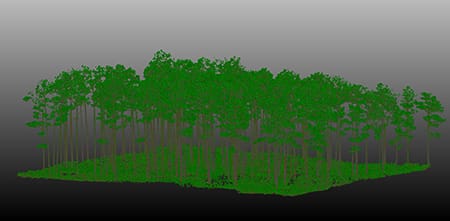
Working with partners in the Prescribed Fire Science Consortium, the program is building nexgen 3-D fuel beds using terrestrial LiDAR and novel sampling techniques to power new fire behavior models for prescribed fire managers. This work links to Tall Timbers work in wildlife habitat usage and ecological forestry.
The Longleaf Legacy landscape prescribed fire burn team arm of Wildland Fire Science works directly with landowners and partners to effectively put fire on the ground and promote prescribed fire throughout the region.
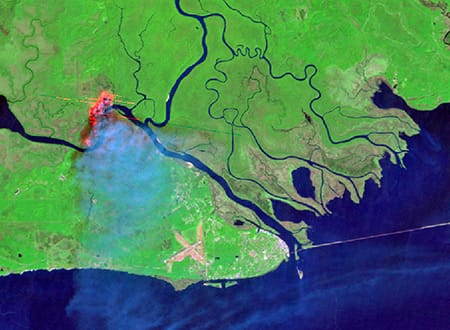
Tall Timbers is leading an effort to map fire regimes at the landscape scale. Staff work with numerous agencies to evaluate fire records and satellite imagery to build this critical conservation database. https://skfb.ly/6DqOY
Tall Timbers hosts the Prescribed Fire Science Consortium, a national network of researchers and managers who promote integrated research and management to advance next generation tools for fire practitioners. https://arcg.is/1DSjDT
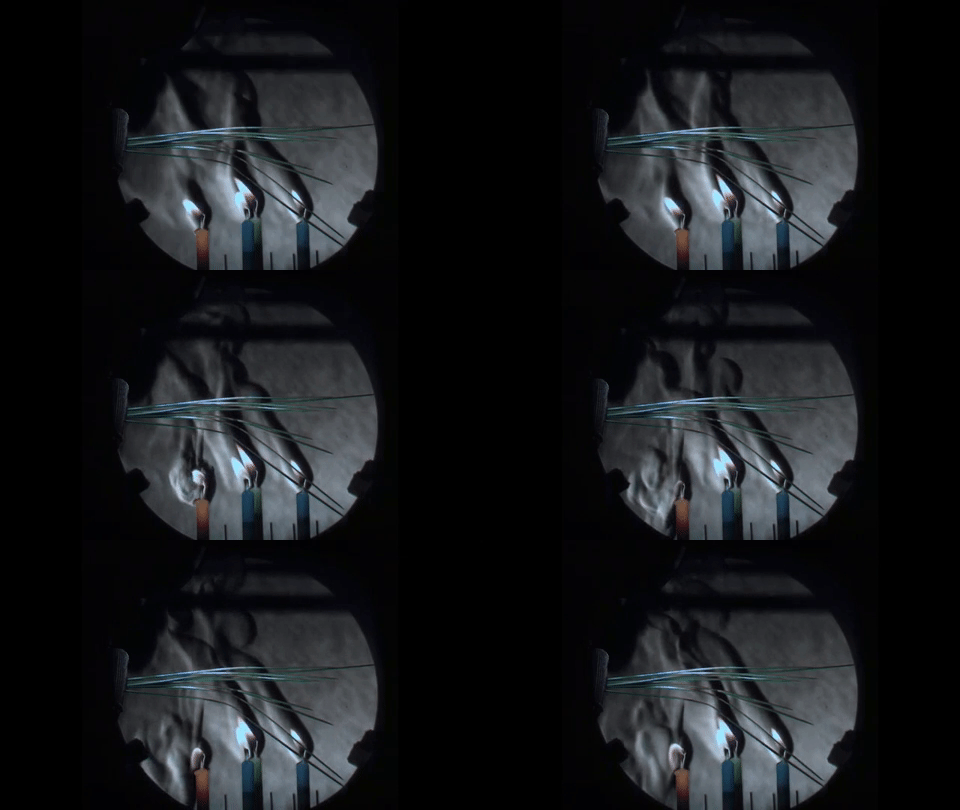
We are linking physics and field observations to understand the fluid dynamics of fire behavior surface fire regimes. Our work combines field observations using advanced thermal imaging techniques, laboratory studies, and coupled fire-atmospheric modeling to help managers improve outcomes of managed fire regimes.
Selected Publications authored by Wildland Fire Science staff.
Staff and researchers support Federal fire training by serving as a cadre for NWCG training courses, ranging from basic wildland fire to advanced fire effects.
(PFTC) specializes in training fire fighters the principles and techniques of prescribed fire through practical hands-on experience. https://www.fws.gov/fire/pftc/
Private land owners are the largest source of prescribed fire in the country. These land owners and the culture of fire that was maintained by them during decades of suppression are a part of why Tall Timbers is a world-wide center for prescribed fire science. Workshops and fire training are a critical focus of the Longleaf Legacy Landscape Burn Team and our support of the Georgia Forestry Commission Prescribed Fire Center in Marion County.
The conserved lands of the Greater Red Hills region are found on working, income-producing properties that support agriculture, forestry, and recreational hunting. These properties contribute $272 million annually to local economies and support 2,300 jobs. [link to Planning & Advocacy section] The landowners’ strong stewardship ethic preserves their working lands while replenishing drinking water supplies, protecting water quality, and providing wildlife habitat for dozens of rare and endangered species. Tall Timbers’ conservation easements on these working properties encourage landowners to retain their traditional livelihood by keeping farms in family ownership.
Home to world-class wild quail populations, the Greater Red Hills region contains the largest concentration of gamebird preserves in the United States. These preserves also support the largest community of Red-cockaded woodpeckers on private lands. Indicators of high quality habitat found here include the gopher tortoise, Bachman’s sparrow, fox squirrel, and many amphibians. Tall Timbers’ conservation easements identify and protect the critical habitats of these species.
The region also boasts outstanding aquatic resources. Large river systems, like the Flint/Apalachicola, Ochlockonee, and Aucilla, flow from Georgia and feed into the Gulf of Mexico to support some of the world’s most productive estuaries. Large disappearing sinkhole lakes, like Iamonia, Miccosukee, and Jackson, provide habitat for an array of aquatic species and migratory birds. Tall Timbers’ conservation easements protect these vital watersheds and wetlands that are the lifeblood for the ecological health of the region.
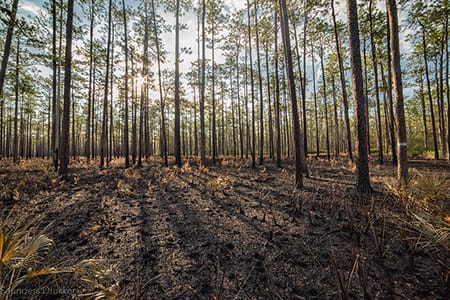
Once dominated by longleaf pine, our pine woodlands support abundant wildlife and local economies. These forests need prescribed fire to stay healthy. Herbert L. Stoddard and his associates Ed and Roy Komarek were pioneers in this emerging scientific field during the mid-20th century. Tall Timbers continues that legacy with applied research on prescribed fire and land management. Today, there is a tremendous need to expand prescribed fire use beyond the Red Hills to ensure ecosystem health and reduce wildfire risk. Additionally, Tall Timbers uses conservation easements to permanently protect private woodlands while balancing the need for economic return from selective timbering.