Nature has a way of tossing some nasty things at you once in a while.
Spring 2013 was one of the least productive years on record for the Brown-headed Nuthatches on Tall Timbers. The exceptional warm weather we had in January and February quickly gave way to the wet and cold of March as frontal system after frontal system came through the Red Hills.
Nuthatch responded by initiating nests earlier than ever – a nest found with five eggs on February 21 beat the previous record for an early nest by a full week. Great start, seemingly, but then the birds shut down as the onslaught of rain and cold mounted from late Feb through the middle of March. Very few nests were initiated during this period of time when typically more than 50% of the nests are initiated each year. Many birds that had initiated in late February simply gave up on the effort – including at least four cases where the young were simply abandoned.
Surely one of the most unusual casualties was a female nuthatch that died in attempt to give life to a clutch of five eggs. The nest was initiated after the cold and rain on March 19, but the inclement weather can take a lot out of these birds, especially when they are nesting. The five eggs represented about half of the total body mass of the female. It’s well known that the health of females coming into the breeding season can be diminished when birds have difficulty finding food and temperatures consistently dip into the low 30s.
Fortunately, nuthatches have very high annual survivorship, and low recruitment for a single year can be offset quickly. Those that abandoned nests may have averted the fate of the unfortunate female pictured above.
Rare and Getting Rarer
The Stoddard Bird Lab also has been working on a bird that is quickly becoming one of the rarest in North America – the Florida Grasshopper Sparrow. This resident of open prairies in Central Florida used to occur in the hundreds on three different public landholdings. At present, only one of the sites still has a significant population, estimated to be about 100 total birds, while the other sites have gone from supporting hundreds to almost none during the past 5-10 years. The Stoddard Bird Lab helped develop a project looking at the effects of prescribed fire on the site that still has a sizeable population and is quickly trying to train a dog, Lily, to help find nests. Knowing how nesting success varies in relation to winter, spring, and summer burning is critically needed information, but finding a nest often takes hours or days for a well-trained biologist.
Our approach has been to try to locate nests of the Northern Grasshopper Sparrows that occur in our region, where it is not endangered, and then train the dog on these. A site near Bainbridge, GA, holds a fairly large breeding population that we are working regularly, and we hope to have Lily ready for the 2014 nesting season. Dr. James Tucker has returned to the Lab to head up this project with support from the U.S. Fish and Wildlife Service.
Tall Timbers is collaborating with the Yale University School of Forestry and Environmental Studies to host a workshop titled, “Fire Ecology of the Northeast: Restoring Native and Cultural Ecosystems” to be held on the Yale campus in New Haven, Connecticut, February 20-22, 2014.
The meeting will focus on northeastern states from the Appalachian Mountains to the Atlantic coast as well as southeastern Canada; it will address the following regional topics: 1) cultural and historic use of fire, 2) natural fire regimes of novel and unique ecosystems, 3) fire management in upland deciduous forests, savannas, and meadows, 4) fire ecology of pine barrens, scrub oak, and pitch pine, and 5) social implications of prescribed burning in an urbanized and changing landscape. The meeting will include oral presentations, posters, panel discussions, and a social. There will also be field trips to the pine barrens and fire research plots of Cape Cod National Seashore, and to fire research sites on the Yale Myers Forest and other locations in Connecticut.
The Journal of Sustainable Forestry has agreed to publish a special issue based on the meeting theme, to provide a current, peer-reviewed body of knowledge on fire ecology of the northeastern region. Also, a document summarizing the discussions and presentations from the meeting will be produced with the help of Yale School of Forestry graduate students and the Global Institute of Sustainable Forestry.
Soon after it was decided to cancel the 25th Tall Timbers Fire Ecology Conference that was to be held in Massachusetts, Tall Timbers board member Redmond Ingalls arranged for Kevin Robertson to visit the Yale School of Forestry & Environmental Studies in April. During Kevin’s visit, plans were made to schedule a new meeting with the similar topic of fire ecology in northeastern North America. With a common interest in using prescribed fire to restore natural and historic landscapes for wildlife habitat, biodiversity, and fuels management, the School of Forestry and its Global Institute for Sustainable Forestry offered to host the meeting with help from Tall Timbers.
Nonami Plantation will host the 2013 Fall Field Day
Save the date: Friday, October 25
Nonami Plantation will host the 2013 Fall Field Day on Friday, October 25. Nonami is a 9,000-acres quail hunting plantation on the Flint River, just south of Albany. GA. The property is owned by Ted Turner and managed by Ray Pearce. It has a high Intensity quail management program and is one of the premier places in the Albany area.
At Fall Field Day, the outlook for the 2013/2014 quail hunting season will be discussed as well as other land management topics and the results from our recent quail research. A field tour of the property will be followed by lunch. Check-in and late registration begin at 7:30 AM. The field day adjourns at 1 PM.
Registration information will be mailed at the end of September and will also be available on our website at that time.
Prescribed Fire Training Center offers first June training session
By Greg Seamon, Fire Training Specialist
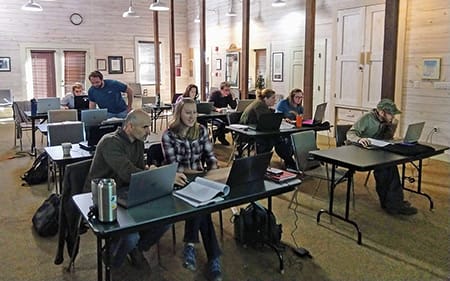
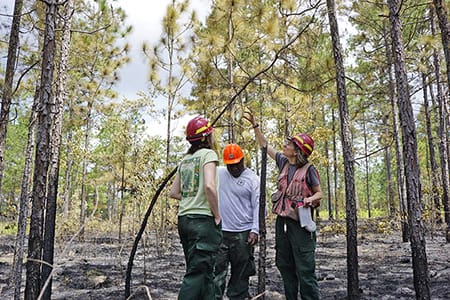
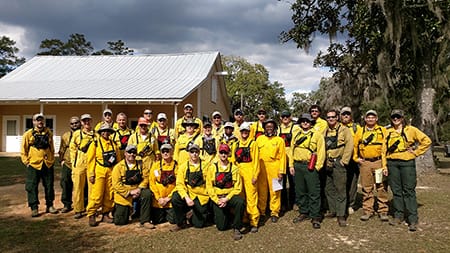
The Prescribed Fire Training Center (PFTC) held its inaugural June session this year. In order to train participants in the ecological use of growing season fire, the Center developed this session in conjunction with a number of its cooperators, including Tall Timbers Research Station & Land Conservancy. The members of this initial module spent a day at Tall Timbers touring the Stoddard Fire Plots, visiting the Wade Tract, and discussing the use of fire for land management to maintain healthy quail populations, sustain wetland ecotones, and protect the red-cockaded woodpecker. In addition, the module visited Apalachicola National Forest to look at fuels and learn about a multi-discipline fire program. Following their orientation to growing season fire in the southeast, the module participated in burns at the University of Florida’s Ordway-Swisher Biological Station, St. Marks National Wildlife Refuge, and Ocala National Forest.
During their time with PFTC, the students worked on task books to show proficiency in different fireline positions leading to certification in the position. Two of the students worked on the burn boss task book, while three worked on firing boss. Additionally one of the students worked on fire effects monitor and incident commander type 4.
PFTC held five 20-day sessions with 98 students and 17 field coordinators attending this year. During those five sessions, the modules conducted 173 prescribed burns, totaling 70,279 acres. Burns were accomplished for nine different agencies and organizations, totaling 34 different sites. Trainees worked on ten different task books, completing 470 assignments, and 41 trainees were recommended back to their home units for certification in the position they worked on while attending PFTC. Participants came from 20 different states representing 12 different agencies (federal, state, and local).In addition we had 2 Canadians, 1 Spaniard, and 2 students from the Commonwealth of the Northern Mariana Islands (Saipan).
Attendees burned across the southeastern US, primarily in Florida and Georgia. They were given a good indoctrination into the southeastern fire culture and took home powerful messages about the ability to use fire for multiple objectives.
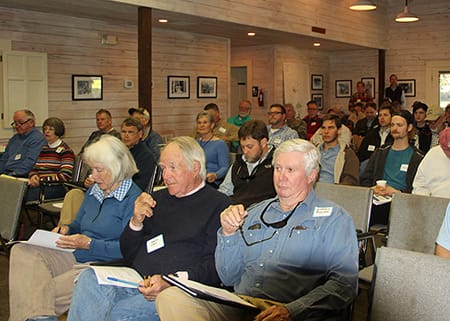
Application of Herbicides for Vegetation Management is the topic of Tall Timbers third Land Managers Luncheon. The discussion will begin at 9:00 a.m. in the Komarek Science Education Center (the Barn), Friday, August 23.
Mark Atwater with Weed Control Unlimited, Inc., will lead the discussion on herbicide applications and their integration into wildlife habitat management. To be discussed before lunch:
Differences in herbicide types and treatments;
Types and uses of various application techniques;
Combatting unwanted noxious weeds with chemical and mechanical management;
Important considerations when using herbicides for vegetation management;
Objective-based vegetation management;
Best practices for groundcover restoration start-finish.
A short field tour will follow lunch.
Space is limited. To reserved your seat, contact Lisa Baggett at 850.893.4153, x241 or email: lisa@ttrs.org. The event is free for Tall Timbers members; cost for non-members is $25.
The M-CORES program, which includes the proposed Suncoast Connector Toll Road in Jefferson County, passed through the Florida Legislature at breakneck speed with little review or analysis. Tall Timbers has a number of concerns given the potential for significant and wide spread impacts. These include fragmenting public and private conservation lands, robbing business from Main Street Monticello, impacting our rivers and other water resources, and making prescribed fire more difficult and costly.
Join us in asking the Jefferson County Board of County Commissioners to OPPOSE the Suncoast Connector toll road and its path through Jefferson County.
Take action now with our easy email form.
Send an email to all five Jefferson County Board of County Commissioners with one click!
Burn prioritization modeling seminars and fire modeling tools are supported by Wildland Fire Science to train managers in the important planning stages of prescribed fires.
Educating and guiding the next generation of fire researchers and managers is a key goal of Wildland Fire Science and a resource for testing new ideas in fire research.
Tall Timbers hosts the premier fire technology transfer organization—the Southern Fire Exchange. This JFSP funded effort helps connect research to management through webinars, workshops, and support of the Prescribed Fire Science Consortium.
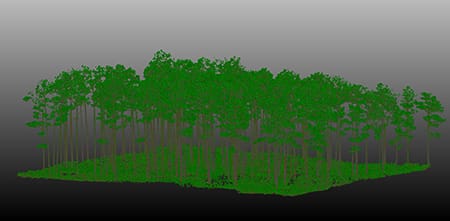
Working with partners in the Prescribed Fire Science Consortium, the program is building nexgen 3-D fuel beds using terrestrial LiDAR and novel sampling techniques to power new fire behavior models for prescribed fire managers. This work links to Tall Timbers work in wildlife habitat usage and ecological forestry.
The Longleaf Legacy landscape prescribed fire burn team arm of Wildland Fire Science works directly with landowners and partners to effectively put fire on the ground and promote prescribed fire throughout the region.
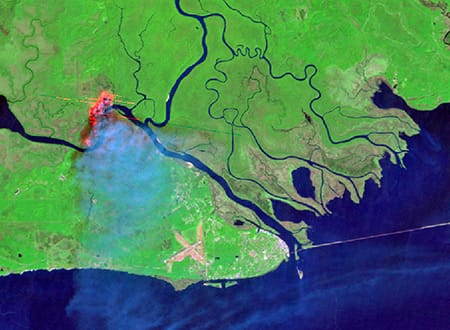
Tall Timbers is leading an effort to map fire regimes at the landscape scale. Staff work with numerous agencies to evaluate fire records and satellite imagery to build this critical conservation database. https://skfb.ly/6DqOY
Tall Timbers hosts the Prescribed Fire Science Consortium, a national network of researchers and managers who promote integrated research and management to advance next generation tools for fire practitioners. https://arcg.is/1DSjDT
We are linking physics and field observations to understand the fluid dynamics of fire behavior surface fire regimes. Our work combines field observations using advanced thermal imaging techniques, laboratory studies, and coupled fire-atmospheric modeling to help managers improve outcomes of managed fire regimes.
Selected Publications authored by Wildland Fire Science staff.
Staff and researchers support Federal fire training by serving as a cadre for NWCG training courses, ranging from basic wildland fire to advanced fire effects.
(PFTC) specializes in training fire fighters the principles and techniques of prescribed fire through practical hands-on experience. https://www.fws.gov/fire/pftc/
Private land owners are the largest source of prescribed fire in the country. These land owners and the culture of fire that was maintained by them during decades of suppression are a part of why Tall Timbers is a world-wide center for prescribed fire science. Workshops and fire training are a critical focus of the Longleaf Legacy Landscape Burn Team and our support of the Georgia Forestry Commission Prescribed Fire Center in Marion County.
The conserved lands of the Greater Red Hills region are found on working, income-producing properties that support agriculture, forestry, and recreational hunting. These properties contribute $272 million annually to local economies and support 2,300 jobs. [link to Planning & Advocacy section] The landowners’ strong stewardship ethic preserves their working lands while replenishing drinking water supplies, protecting water quality, and providing wildlife habitat for dozens of rare and endangered species. Tall Timbers’ conservation easements on these working properties encourage landowners to retain their traditional livelihood by keeping farms in family ownership.
Home to world-class wild quail populations, the Greater Red Hills region contains the largest concentration of gamebird preserves in the United States. These preserves also support the largest community of Red-cockaded woodpeckers on private lands. Indicators of high quality habitat found here include the gopher tortoise, Bachman’s sparrow, fox squirrel, and many amphibians. Tall Timbers’ conservation easements identify and protect the critical habitats of these species.
The region also boasts outstanding aquatic resources. Large river systems, like the Flint/Apalachicola, Ochlockonee, and Aucilla, flow from Georgia and feed into the Gulf of Mexico to support some of the world’s most productive estuaries. Large disappearing sinkhole lakes, like Iamonia, Miccosukee, and Jackson, provide habitat for an array of aquatic species and migratory birds. Tall Timbers’ conservation easements protect these vital watersheds and wetlands that are the lifeblood for the ecological health of the region.
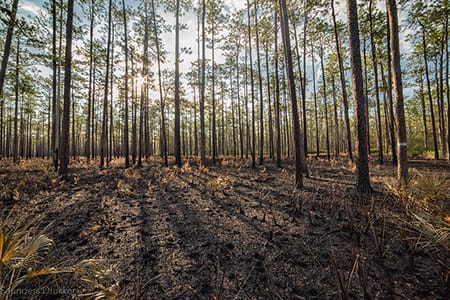
Once dominated by longleaf pine, our pine woodlands support abundant wildlife and local economies. These forests need prescribed fire to stay healthy. Herbert L. Stoddard and his associates Ed and Roy Komarek were pioneers in this emerging scientific field during the mid-20th century. Tall Timbers continues that legacy with applied research on prescribed fire and land management. Today, there is a tremendous need to expand prescribed fire use beyond the Red Hills to ensure ecosystem health and reduce wildfire risk. Additionally, Tall Timbers uses conservation easements to permanently protect private woodlands while balancing the need for economic return from selective timbering.