Staff changes at the Tall Timbers Land Conservancy
The Tall Timbers Land Conservancy (TTLC) will kick off the fall easement season with two new staff members. Shane Wellendorf was hired as the new Conservation Coordinator. Shane has been with the Game Bird Program at Tall Timbers for over eleven years and brings with him a great deal of field experience and familiarity with easement lands. Kim Sash was hired as Conservation Biologist, replacing Chris Borg who recently left to be closer to family in New England. Kim is a former Tall Timbers employee who worked as Assistant Land Manager at Pebble Hill Plantation. She has been working as a biologist with the Florida Fish and Wildlife Conservation Commission in Gulf County, Florida.
Shane and Kim will hit the ground running as there are now several excellent conservation easement projects in the pipeline for the summer/fall of 2011. We welcome these new staff members to the TTLC!
Prescribe burn logging slash or build brush piles.
Finish growing season burns in native ground cover before arrival of fall.
Establish fire breaks for next year’s spring burns.
Forestry
Plan for regeneration by conducting a visual survey of mature longleaf pine trees for cone production.
Order seedlings early if regeneration is planned and cone crop is poor. Planting containerized seedlings in the fall can achieve better survival than waiting until later in the year.
If adequate cone crop, plan for site preparation burn to capture regeneration.
Mow between alternate rows within pine plantations to eliminate competition and create different heights of vegetation.
Game Bird
Supplemental feed at 1-2 bu/ac/yr
Nest predator management if needed
Land Management
Good month to spray herbicides, girdle or fell hardwoods.
Plant second round of millet in dove fields, for those who want grain available for the second phase of dove season.
Wetter dove fields should be planted with Japanese millet during this wetter month.
Plan deer survey route for spotlight counts (Florida only)
Mow roads and repair woods roads
Vertebrate Ecology
Lake and pond draw-downs at this time of year can provide benefits for migrating shorebirds and wading birds.
Chimney Swifts begin to stage for migration and may use novel roosting sites, including the chimneys of abandoned tenant homes.
Swallow-tailed and Mississippi Kites gather in large migratory flocks and may forage over open fields.
Early songbird migrants appear; look for Yellow Warblers & Louisiana Water Thrushes along brushy wetland edges.
Hummingbirds that venture from breeding habitats may show up at feeders almost anywhere; maintain feeding stations.
Gopher Tortoise nests start hatching; keep heavy equipment away from tortoise burrows.
Allow some lightning-struck trees to die and decay naturally for the benefit of snag-nesting wildlife.
September Management Recommendations
Fire Ecology
Execute late growing season prescribed burns for native ground cover.
Establish fire breaks for next year’s spring burns.
Forestry
Apply fall herbicides for control of hardwoods.
Conduct site-preparation burns to capture longleaf regeneration.
Game Bird
Begin to mow or chop hunting lanes in late September.
Mow thickets, and areas that were too wet to mow in the spring
Begin dog training.
Begin conditioning of horses and mules.
Continue supplemental Feeding at 1-2 bu/ac/yr.
Discontinue Predation Management.
Land Management
Plant fall food plots, if rainfall is sufficient.
Begin mowing or harvesting dove fields.
For those who want grain available for the third phase of dove season, plant second round of millet in dove fields,
Implement deer surveys to determine harvest strategy.
Apply herbicide for exotic grasses.
Apply herbicide for hardwood control.
Vertebrate Ecology
Fall songbird migration begins in earnest; watch for colorful birds along streamside zones and in hardwood forests.
Early Bald Eagles start to return to stake out territories and begin courtships.
Red-cockaded Woodpecker translocations begin; trucks in the woods at night may be helping this endangered species.
If you want to check the pulse of a Bachman’s Sparrow population to determine its health, two measurements are extremely important: (1) adult survivorship and (2) annual productivity. Taken together, these variables provide about 80% of the push behind annual growth in this species and collectively produce the best assessment of population health.
Vertebrate Ecology has developed robust methods for assessing adult survivorship over the past five years and has turned its attention the past two summers to looking at methods for measuring annual productivity. Simply counting the number of adults in an area may not provide a good snapshot because about half the adults may not be breeding. It’s also very difficult to find nests for this species.
Meanwhile, netting and banding young also is ineffective. In 2008, we spent 10 mornings monitoring 10 nets and captured only 3 juveniles. Based on the average number of juveniles netted per net hour, about 75 total days of operation would be needed to net just 30 juveniles.
Our latest attempts focuses on assessing productivity by looking for recently fledged young and also monitoring behavioral cues among adults. We have established 16, 2.5-acre plots on the Wade Tract and slowly walk each plot weekly in a systematic manner. Within each plot, we look for paired adults, adults carrying food and nesting material, and bob-tailed young that are only 4-5 days out of the nest. Adults also give a distinctive alarm note when biologists get close to a nest with young, and this too can be used as an indication of nesting activity.
By tallying these observations throughout the summer months, an index to productivity can be calculated and used to rank each plot from low to high. On the Wade Tract, the west side has had lower productivity in both years of study (see accompanying figure). We are quantifying vegetation characteristics associated with each plot in hopes of finding correlations between vegetation and productivity. As important, our index to productivity also seems to have a connection with adult behavior as well. Color banded males on the west side of the Wade Tract show less site fidelity than males on the east side of the tract, a result that makes some sense if you’re a male trying to pass along your genes. The west side may have lower habitat quality, so you would want to move into a higher quality setting if you had a chance.
In July, the VE program also made two presentations at the American Ornithologists’ Union Meeting in Jacksonville and led a pine-grassland field trip for those attending the conference. Professional birders from England, Oregon, and other distant lands had a chance to see field procedures used to monitor Bachman’s Sparrows, Red-cockaded Woodpeckers, and Brown-headed Nuthatches.
For additional information and how to register for the Hunter Safety Course, contact LuAnn Stiles or Renee Hays: 850-413-0084 or 850-413-0085 at the Florida Fish & Wildlife Conservation Commission.
The 2011 Fall Field Day will be held at Pineland Plantation, November 4
The 2011 Fall Field Day will be held on Friday, November 4 at Pineland Plantation, which is located near Newton, Georgia. The outlook for the 2011/2012 quail hunting season will be discussed as well as other land management topics and the results from our recent quail research. A field tour of the property will be followed by lunch. Check-in and late registration begin at 7:30 AM. The field day adjourns at 1 PM.
Look for a registration brochure to be mailed by the end of September. The brochure will also be available to download from our web site.
The M-CORES program, which includes the proposed Suncoast Connector Toll Road in Jefferson County, passed through the Florida Legislature at breakneck speed with little review or analysis. Tall Timbers has a number of concerns given the potential for significant and wide spread impacts. These include fragmenting public and private conservation lands, robbing business from Main Street Monticello, impacting our rivers and other water resources, and making prescribed fire more difficult and costly.
Join us in asking the Jefferson County Board of County Commissioners to OPPOSE the Suncoast Connector toll road and its path through Jefferson County.
Take action now with our easy email form.
Send an email to all five Jefferson County Board of County Commissioners with one click!
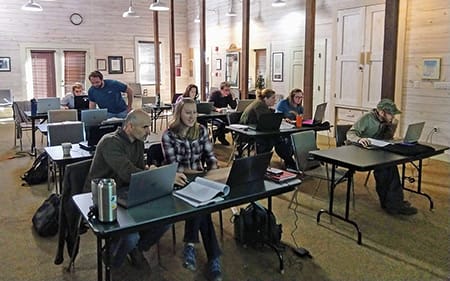
Burn prioritization modeling seminars and fire modeling tools are supported by Wildland Fire Science to train managers in the important planning stages of prescribed fires.
Educating and guiding the next generation of fire researchers and managers is a key goal of Wildland Fire Science and a resource for testing new ideas in fire research.
Tall Timbers hosts the premier fire technology transfer organization—the Southern Fire Exchange. This JFSP funded effort helps connect research to management through webinars, workshops, and support of the Prescribed Fire Science Consortium.
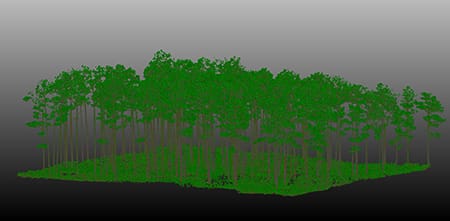
Working with partners in the Prescribed Fire Science Consortium, the program is building nexgen 3-D fuel beds using terrestrial LiDAR and novel sampling techniques to power new fire behavior models for prescribed fire managers. This work links to Tall Timbers work in wildlife habitat usage and ecological forestry.
The Longleaf Legacy landscape prescribed fire burn team arm of Wildland Fire Science works directly with landowners and partners to effectively put fire on the ground and promote prescribed fire throughout the region.
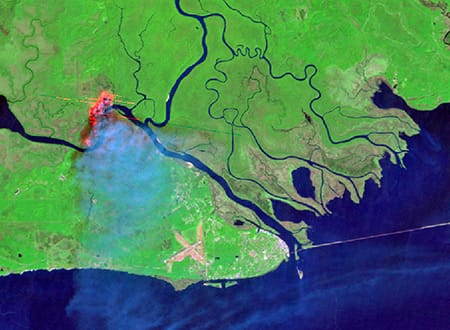
Tall Timbers is leading an effort to map fire regimes at the landscape scale. Staff work with numerous agencies to evaluate fire records and satellite imagery to build this critical conservation database. https://skfb.ly/6DqOY
Tall Timbers hosts the Prescribed Fire Science Consortium, a national network of researchers and managers who promote integrated research and management to advance next generation tools for fire practitioners. https://arcg.is/1DSjDT
We are linking physics and field observations to understand the fluid dynamics of fire behavior surface fire regimes. Our work combines field observations using advanced thermal imaging techniques, laboratory studies, and coupled fire-atmospheric modeling to help managers improve outcomes of managed fire regimes.
Selected Publications authored by Wildland Fire Science staff.
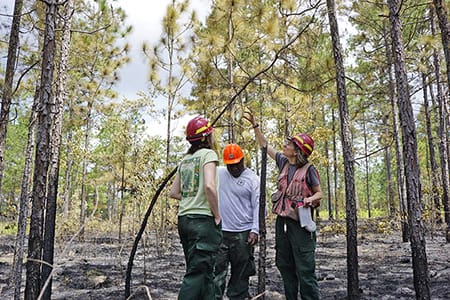
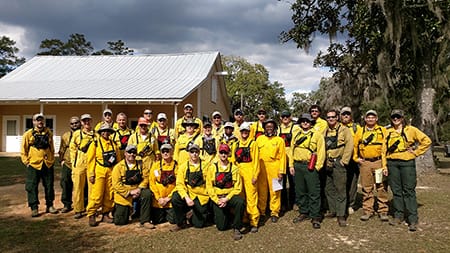
Staff and researchers support Federal fire training by serving as a cadre for NWCG training courses, ranging from basic wildland fire to advanced fire effects.
(PFTC) specializes in training fire fighters the principles and techniques of prescribed fire through practical hands-on experience. https://www.fws.gov/fire/pftc/
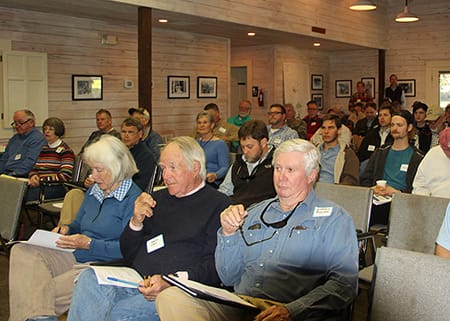
Private land owners are the largest source of prescribed fire in the country. These land owners and the culture of fire that was maintained by them during decades of suppression are a part of why Tall Timbers is a world-wide center for prescribed fire science. Workshops and fire training are a critical focus of the Longleaf Legacy Landscape Burn Team and our support of the Georgia Forestry Commission Prescribed Fire Center in Marion County.
The conserved lands of the Greater Red Hills region are found on working, income-producing properties that support agriculture, forestry, and recreational hunting. These properties contribute $272 million annually to local economies and support 2,300 jobs. [link to Planning & Advocacy section] The landowners’ strong stewardship ethic preserves their working lands while replenishing drinking water supplies, protecting water quality, and providing wildlife habitat for dozens of rare and endangered species. Tall Timbers’ conservation easements on these working properties encourage landowners to retain their traditional livelihood by keeping farms in family ownership.
Home to world-class wild quail populations, the Greater Red Hills region contains the largest concentration of gamebird preserves in the United States. These preserves also support the largest community of Red-cockaded woodpeckers on private lands. Indicators of high quality habitat found here include the gopher tortoise, Bachman’s sparrow, fox squirrel, and many amphibians. Tall Timbers’ conservation easements identify and protect the critical habitats of these species.
The region also boasts outstanding aquatic resources. Large river systems, like the Flint/Apalachicola, Ochlockonee, and Aucilla, flow from Georgia and feed into the Gulf of Mexico to support some of the world’s most productive estuaries. Large disappearing sinkhole lakes, like Iamonia, Miccosukee, and Jackson, provide habitat for an array of aquatic species and migratory birds. Tall Timbers’ conservation easements protect these vital watersheds and wetlands that are the lifeblood for the ecological health of the region.
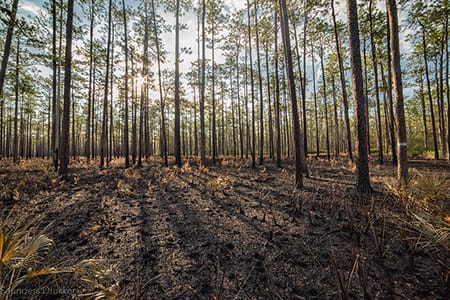
Once dominated by longleaf pine, our pine woodlands support abundant wildlife and local economies. These forests need prescribed fire to stay healthy. Herbert L. Stoddard and his associates Ed and Roy Komarek were pioneers in this emerging scientific field during the mid-20th century. Tall Timbers continues that legacy with applied research on prescribed fire and land management. Today, there is a tremendous need to expand prescribed fire use beyond the Red Hills to ensure ecosystem health and reduce wildfire risk. Additionally, Tall Timbers uses conservation easements to permanently protect private woodlands while balancing the need for economic return from selective timbering.

 The Tall Timbers Land Conservancy (TTLC) will kick off the fall easement season with two new staff members. Shane Wellendorf was hired as the new Conservation Coordinator. Shane has been with the Game Bird Program at Tall Timbers for over eleven years and brings with him a great deal of field experience and familiarity with easement lands. Kim Sash was hired as Conservation Biologist, replacing Chris Borg who recently left to be closer to family in New England. Kim is a former Tall Timbers employee who worked as Assistant Land Manager at Pebble Hill Plantation. She has been working as a biologist with the Florida Fish and Wildlife Conservation Commission in Gulf County, Florida.
 Vertebrate Ecology has developed robust methods for assessing adult survivorship over the past five years and has turned its attention the past two summers to looking at methods for measuring annual productivity. Simply counting the number of adults in an area may not provide a good snapshot because about half the adults may not be breeding. It’s also very difficult to find nests for this species.