Although we tend to think of a certain habitats as having a certain amount of annual plant productivity, that productivity can vary a great deal from year to year in response to preceding rainfall. For example, in the long-term study of the longleaf pine/wiregrass community at the Pebble Hill fire plots (near Thomasville, Georgia), biomasses of live herbs and woody plant re-sprouts measured in May, one year after burning, correspond to the amount of rain during the previous year (Fig. 1A). During the past five years, herbaceous and woody biomasses have varied by almost a factor of two between certain years in response to rainfall (Fig. 1B).
The link between precipitation and surface vegetation biomass is important in that plant productivity translates to food for wildlife through production of forage, seeds, and insects and corresponds to cover from predators. Plant productivity also predicts available fuel for the next burning season. This year’s drought and low plant productivity suggest there will be low fuel loads in the spring and the need to burn under drier conditions in areas where pine basal area is low, and fuels are mostly grass and forbs. However, for some areas slated for an annual burn, it might be best to allow a year without applying fire, to provide a better fuel bed and compensate for low plant cover.
Figure 1. A. Above-ground plant biomasses for herbs and woody surface vegetation sampled in May and the previous year’s precipitation showing A. relationship between biomass and precipitation and B. variation in biomass and precipitation from 2007-2011.
The prolonged drought could rob us of one of our most colorful winter visitors this year. Henslow’s Sparrows can usually be found in the moist pine flats of our region in areas with an open structure and ground cover species such as warty panic grass, toothache grass, and other plants associated with intermediate soil moisture. From 2006 to 2009, we banded and average of just over 3 individuals per day in areas with suitable habitat, but the drought of 2010 rendered these areas uninhabitable last year. Extensive efforts to locate sparrows kept coming up empty, and we netted about 25% of the total numbers banded in previous years. We expect to see much the same this year unless the rains start to come soon.
Prospects elsewhere in the wintering range are much better this year. Central Florida, where some of the largest wintering populations of Henslow’s Sparrows can be found, has received a fair amount of rain in recent weeks. It’s conceivable that some of our Red Hill’s birds might bypass us this year and head for areas where drought conditions are less severe. If so, our banding efforts could help yield some important information about how this migratory species finds areas with preferred combination of soil moisture and vegetation structure. With a global population less than 100,000 individuals, we hope this is the strategy that the birds we can’t find any more are using.
In other Vertebrate Ecology news, staff put together a short video segment that shows how artificial cavities for the endangered Red-cockaded Woodpecker are constructed. The video involved Tall Timbers Research Station volunteers Mike Keys and Tara Tanaka and can be found on-line. Construction of artificial cavities has helped to brighten the future for this species, and Mike Keys is one of the best practitioners anywhere.
If moisture is sufficient, begin planting containerized pine seedlings.
Game Bird
Supplemental Feed at 1-2 bu/ac/yr
Plant longleaf or other pines where needed
Develop Burn Plans customized for weather, population size and predation risks
Land Management
Consider collecting seed from native warm season grasses to reseed other areas of your property.
Finish mowing hunting lanes
Flood moist soil management ponds for arrival of fall bird migration in November
Disk weed fields for brood habitat
Vertebrate Ecology
Wintering sparrows arrive in early November and will spend the winter in well burned pine woods. Look for rarities such as Henslow’s and Grasshopper Sparrows causing dogs to go into a point.
Bald eagles begin their nesting season in earnest over the next several weeks. Look for spectacular aerial courtship displays.
December Management Recommendations
Fire Ecology
Develop burn plans with specific objectives for Rx burns.
Evaluate last year’s burns on grass flowering and seeding.
Forestry
Plan timber harvest schedule for spring. If it will not create problems with other land use priorities this can be a good month to thin pines if needed.
Thinning your woods promotes valuable groundcover for wildlife.
Continue planting longleaf or other site-specific pine trees as needed.
This is a good month to plant native mast-producing trees for attracting wildlife.
Include snag retention in forestry harvest operations planning.
Game Bird
Supplemental Feed at 1- 2 bu/ac/yr
Develop burn plans: high quail numbers this fall indicate need for burn plans that help to maximize quail survival rates. This includes patch burning and stretching burning out from March through April.
Land Management
Mow dense hardwood encroachment areas to enhance groundcover.
Fertilize fall food plots.
Good time to work roads.
Disk weed fields for brood habitat now through February.
Vertebrate Ecology
Be on the lookout and record nesting locations for birds of prey, such as the bald eagle. Look for nestlings starting to hatch in mid to late December. Take efforts to protect nesting areas from disturbance.
Chorus Frogs, Spring Peepers, and other winter-breeding frogs may start to call as early as mid December and reach higher levels of activity in January.
Christmas bird counts are underway in mid December. The counts have provided invaluable trend information that date back to the early 1900s.
Sapsuckers arrive in big numbers and start etching away at their sap wells. Individuals can be highly territorial, and wells are passed along from generation to generation.
Clean out nest boxes in preparation for spring.
January Management Recommendations
Fire Ecology
Develop burn plans with specific objectives for Rx burns.
Evaluate fuel loads for burning.
Contact local Division of Forestry for proper burn authorizations.
Disk fire lanes and prepare all fire breaks for prescribed burning program and to protect against wildfire.
Forestry
Check timber harvest schedule for spring. Meet with consultant forester.
Include snag retention in forestry harvest operations planning.
Continue planting longleaf or other site-specific pine trees as needed.
Plant native soft and hard mast-producing trees/shrubs for attracting wildlife.
Order pine seedlings for planting next winter.
Game Bird
Supplemental Feed at 1- 2 bu/ac/yr
Prepare fire breaks to burn 50-75% of area in 25-100 acre patches, depending on weather, populations, and predation. If drought conditions persist carefully check cover conditions. If cover is sparse burn less.
Mow low areas.
Complete mowing of hunting lanes.
Land Management
Mow dense hardwood encroachment areas to enhance groundcover.
Single-drum roller-chop areas to control woody vegetation and improve herbaceous groundcover.
Take soil samples in dove fields.
Lime or bottom plow old fields as needed.
Install wood duck boxes.
Strip disk (harrow) weed fields for brood habitat now through February.
Disking now promotes legume production such as partridge pea that are valuable to many wildlife species.
This is the peak of wild hog farrowing season.
Vertebrate Ecology
Put old Christmas trees to good use by starting a brush pile near a bird feeder.
Chorus Frogs, Spring Peepers, and other winter-breeding frogs reach higher levels of activity in January.
Put out suet feeders for birds.
Clean and erect Purple Martin houses as birds send out scouts as early as January.
One of the best insurance policies ever developed for landowners in the Red Hills region has two new agents at the helm. Joe Burnam (Georgia Department of Natural Resources) and Caly Murphy (Florida Fish and Wildlife Conservation Commission) were hired last summer by their respective agencies to help promote the Safe Harbor Program and guide private landowners in understanding how the program might work on their properties.
Maintenance of mature pine forests and use of frequent fire are hallmarks of quail management in our region. The wonderful pinewoods make the hunt all the more enjoyable, but the stewardship also creates conditions attractive to the endangered Red-cockaded Woodpecker. Lest the woodpecker’s endangered status cause any heartburn, The Safe Harbor Program is designed to ease fears by limiting the regulations that might be applied if the species takes up residence.
“One of the biggest misunderstandings about Safe Harbor Program is that the program is designed for properties that have woodpeckers,” Burnam notes. “The Safe Harbor Program is a good fit for anyone who either burns their property regularly or maintains mature timber stands.” “In fact,” Burnam stresses, “a great time to sign up is when no woodpeckers occur on the property. In that situation, the landowner has guaranteed assurance as far as the woodpecker goes.”
Another reason to consider Safe Harbor is linked to the land-owner assistance programs that often come with the agreements. Over the past six years, over $500,000 has been provided to help local landowners conduct prescribed burns, manage hardwoods using chopping and herbicides, plant native warm-season grasses, and excavate artificial cavities (where desired).
Burnam and Murphy also have deep roots to the region and understand the special nature of Red Hills’ properties. Burnam’s grandfather was the superintendent at Mistletoe Plantation, and he worked on Pebble Hill Plantation for the Game Bird Program as part of his graduate studies at University of Georgia. Murphy graduated from Thomas University and did her senior internship with the Fire Ecology Program at Tall Timbers.
As always, Tall Timbers staff is ready to help answer any questions about the program, but consider giving Caly Murphy or Joe Burnam a direct call to make get this New Year off to a good start.
Winter disking is a land management tool used to disturb the soil, set back plant succession, and maintain a mix of annual and perennial plants, mainly forbs (weedy plants). Research on the Whitcomb plots at Tall Timbers has shown that disking between October and January produced higher percent cover of important bobwhite foods such as ragweed (Ambrosia artemisiifolia) and partridge pea (Cassia fasciculata), as well as a higher percent and higher diversity of phytophagus insects (the insects that quail eat such as ants, spiders, and other predaceous arthropods). Disked fields can be good brood habitat for foraging bird species; they are rich with insects; the bare ground allows for easy movement by the young birds; and the plant structure allows for protection from avian predators. These forb dominated fields provide diversity to a forested landscape and can be essential habitat for cottontail rabbits, deer, bobwhite, turkey, and other songbirds. Depending on the management objectives, soil type, and vegetation type, fields can be entirely disked or partially disked (strip disking). By disking the entire field annually, the manager is maximizing brood habitat, by disking 1/3 – 1/2 of each field every year. A manager can increase brood habitat, while maintaining year around cover and food resources.
Winter disking also has many positive attributes compared to planting food plots. First of all there is the economic aspect; winter disking, where the seed bank is intact, has minimal cost (fuel and tractor maintenance). In areas without an adequate seed bank, (such as abandoned agricultural fields, also referred to as old fields), a winter disked field typically can be perpetuated from one year of planting the desired old field plant species versus planting annual food plots such as sorghum, millets, or sunflower, which require an additional annual cost of seed and fertilizer. Secondly, the old field vegetation has evolved with drought conditions, so in those years that the food plots don’t produce due to lack of rainfall, old field vegetation will still grow and provide wildlife benefits.
Past land use and soil type considerations determine the benefits of winter disked fields. When reclaiming a fallow pasture field, exotic grass control is a necessary first step; fescue, Bermuda, and Bahia grasses are often present and are an impediment to wildlife and old field vegetation. They must be controlled for successful field management to occur. Soil type will determine the amount of brood use. In loamy or clay soils, such as much of the Red Hills region of north Florida and south Georgia, frequently burned upland pine forests with adequate sunlight for groundcover will actually be the preferred quail brood habitat, and winter disked fields will be used the least. In these areas, strip disking may be more beneficial for meeting other habitat needs such as year-round cover and nesting habitat.
Conversely, on sandy, dry soils, such as in the greater Albany area of Georgia, and portions of the Red Hills area where groundcover in the uplands can be sparse, winter disked fields will be the preferred brood habitat and will be highly used. In these areas, disking the entire field annually will improve brood habitat while the native or old field groundcover will provide the nesting and year around cover. Similarly, native wiregrass and longleaf sites, (typically sandy soil and low fertility) the native ground cover will provide excellent nesting and year around high quality habitat, while existing winter disked fields can provide high quality brood habitat. Disking of intact native groundcover is not recommended; these areas have not been disked before, and do not have the appropriate seed bank to respond positively to winter disking. In this situation, brood use in newly disturbed native groundcover will be much less than in recently burned intact native groundcover.
Forbs such as partridge pea, ragweed, mint blue curl, and blackberry (to name a few) can be an important food resource for many birds and mammals. Timing of winter disking will determine what plants will be prevalent. In a study conducted on the Whitcomb plots at Tall Timbers, annual percent plant coverage of ragweed in the Oct/Nov plot was 52%, but was 86% in the Dec/Jan disked plot. Partridge pea had 32% cover in the Oct/Nov disked plot and 12% in the Dec/Jan disked plot. Blackberry was 11% cover in the Oct/Nov disked plot and 43% in the Dec/Jan disked plot. The key to determine when to disk is to watch for when the desired plant species’ seeds mature. However, timing and the amount of rainfall in a given year will also have an effect on the plant community response as seen through sampling of the Whitcomb plots during various years.
Research has shown that size of fields is also an important consideration. Fields smaller than an acre will receive little use by broods; if possible, 2-4 acre fields are preferred. On high quality soils (loamy or clay), one field per 20 acres (10-20%) is a good rule of thumb. On low quality, sandy soils, up to 40% of the landscape kept in fields is beneficial. Field management is just one component of wildlife management. Managing the forest with frequent fire, and thinning to get adequate sunlight to the ground are the most important factors in creating and maintaining high quality, early succession habitat.
The M-CORES program, which includes the proposed Suncoast Connector Toll Road in Jefferson County, passed through the Florida Legislature at breakneck speed with little review or analysis. Tall Timbers has a number of concerns given the potential for significant and wide spread impacts. These include fragmenting public and private conservation lands, robbing business from Main Street Monticello, impacting our rivers and other water resources, and making prescribed fire more difficult and costly.
Join us in asking the Jefferson County Board of County Commissioners to OPPOSE the Suncoast Connector toll road and its path through Jefferson County.
Take action now with our easy email form.
Send an email to all five Jefferson County Board of County Commissioners with one click!
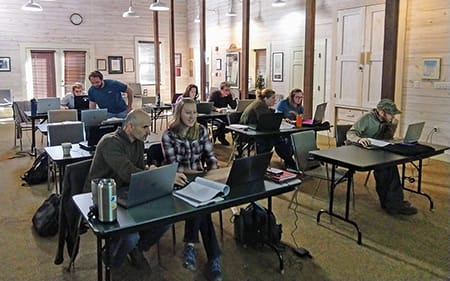
Burn prioritization modeling seminars and fire modeling tools are supported by Wildland Fire Science to train managers in the important planning stages of prescribed fires.
Educating and guiding the next generation of fire researchers and managers is a key goal of Wildland Fire Science and a resource for testing new ideas in fire research.
Tall Timbers hosts the premier fire technology transfer organization—the Southern Fire Exchange. This JFSP funded effort helps connect research to management through webinars, workshops, and support of the Prescribed Fire Science Consortium.
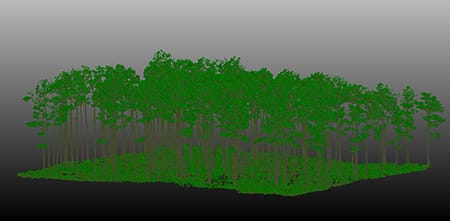
Working with partners in the Prescribed Fire Science Consortium, the program is building nexgen 3-D fuel beds using terrestrial LiDAR and novel sampling techniques to power new fire behavior models for prescribed fire managers. This work links to Tall Timbers work in wildlife habitat usage and ecological forestry.
The Longleaf Legacy landscape prescribed fire burn team arm of Wildland Fire Science works directly with landowners and partners to effectively put fire on the ground and promote prescribed fire throughout the region.
Tall Timbers is leading an effort to map fire regimes at the landscape scale. Staff work with numerous agencies to evaluate fire records and satellite imagery to build this critical conservation database. https://skfb.ly/6DqOY
Tall Timbers hosts the Prescribed Fire Science Consortium, a national network of researchers and managers who promote integrated research and management to advance next generation tools for fire practitioners. https://arcg.is/1DSjDT
We are linking physics and field observations to understand the fluid dynamics of fire behavior surface fire regimes. Our work combines field observations using advanced thermal imaging techniques, laboratory studies, and coupled fire-atmospheric modeling to help managers improve outcomes of managed fire regimes.
Selected Publications authored by Wildland Fire Science staff.
Staff and researchers support Federal fire training by serving as a cadre for NWCG training courses, ranging from basic wildland fire to advanced fire effects.
(PFTC) specializes in training fire fighters the principles and techniques of prescribed fire through practical hands-on experience. https://www.fws.gov/fire/pftc/
Private land owners are the largest source of prescribed fire in the country. These land owners and the culture of fire that was maintained by them during decades of suppression are a part of why Tall Timbers is a world-wide center for prescribed fire science. Workshops and fire training are a critical focus of the Longleaf Legacy Landscape Burn Team and our support of the Georgia Forestry Commission Prescribed Fire Center in Marion County.
The conserved lands of the Greater Red Hills region are found on working, income-producing properties that support agriculture, forestry, and recreational hunting. These properties contribute $272 million annually to local economies and support 2,300 jobs. [link to Planning & Advocacy section] The landowners’ strong stewardship ethic preserves their working lands while replenishing drinking water supplies, protecting water quality, and providing wildlife habitat for dozens of rare and endangered species. Tall Timbers’ conservation easements on these working properties encourage landowners to retain their traditional livelihood by keeping farms in family ownership.
Home to world-class wild quail populations, the Greater Red Hills region contains the largest concentration of gamebird preserves in the United States. These preserves also support the largest community of Red-cockaded woodpeckers on private lands. Indicators of high quality habitat found here include the gopher tortoise, Bachman’s sparrow, fox squirrel, and many amphibians. Tall Timbers’ conservation easements identify and protect the critical habitats of these species.
The region also boasts outstanding aquatic resources. Large river systems, like the Flint/Apalachicola, Ochlockonee, and Aucilla, flow from Georgia and feed into the Gulf of Mexico to support some of the world’s most productive estuaries. Large disappearing sinkhole lakes, like Iamonia, Miccosukee, and Jackson, provide habitat for an array of aquatic species and migratory birds. Tall Timbers’ conservation easements protect these vital watersheds and wetlands that are the lifeblood for the ecological health of the region.
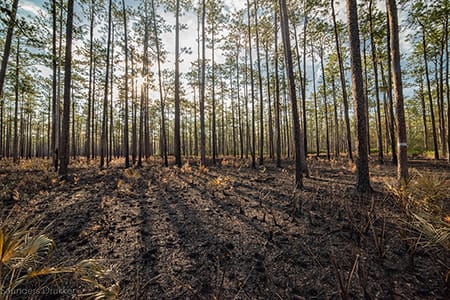
Once dominated by longleaf pine, our pine woodlands support abundant wildlife and local economies. These forests need prescribed fire to stay healthy. Herbert L. Stoddard and his associates Ed and Roy Komarek were pioneers in this emerging scientific field during the mid-20th century. Tall Timbers continues that legacy with applied research on prescribed fire and land management. Today, there is a tremendous need to expand prescribed fire use beyond the Red Hills to ensure ecosystem health and reduce wildfire risk. Additionally, Tall Timbers uses conservation easements to permanently protect private woodlands while balancing the need for economic return from selective timbering.


 The prolonged drought could rob us of one of our most colorful winter visitors this year. Henslow’s Sparrows can usually be found in the moist pine flats of our region in areas with an open structure and ground cover species such as warty panic grass, toothache grass, and other plants associated with intermediate soil moisture. From 2006 to 2009, we banded and average of just over 3 individuals per day in areas with suitable habitat, but the drought of 2010 rendered these areas uninhabitable last year. Extensive efforts to locate sparrows kept coming up empty, and we netted about 25% of the total numbers banded in previous years. We expect to see much the same this year unless the rains start to come soon.