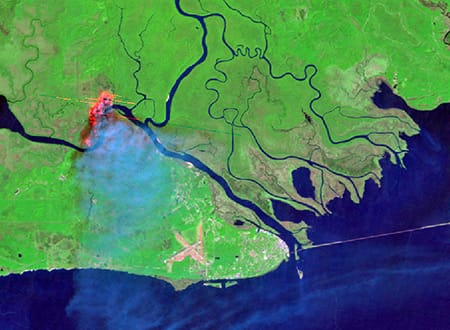
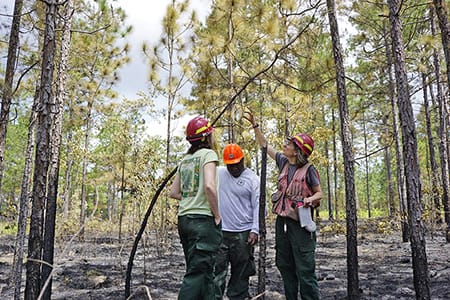
During Prescribe Fire Awareness Week (January 22-28 in Florida and February 5-11 in Georgia) and indeed throughout the year, Tall Timbers, the prescribed fire councils in Florida and Georgia, the Florida Forest Service and the Georgia Forestry Commission promote the use of prescribed fire as a safe way to apply a natural process, ensure ecosystem health and reduce wildfire risk. But there is no question, that where there is fire, there is smoke. As we are in a region with large tracts of plantation lands and state and federal forest lands, where prescribed burns are regularly conducted, the resultant smoke and air quality is of concern to many.
Needless to say, breathing smoke is not good for you. However, one of the important goals of prescribed burning is to reduce fuel loads on the landscape so we do not experience large and difficult to control wildfires; these usually produce many times the smoke of a prescribed burn and can have very serious health impacts on the community. In contrast, prescribed burns are generally frequent enough to produce relatively small amounts of smoke, and we choose the conditions, including wind directions away from roads and highly populated areas, and atmospheric stability conditions in which smoke rises quickly and is readily dispersed.
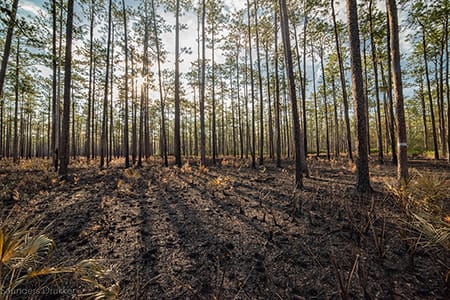
Prescribed burn conducted on the Kate Ireland Parkway in Leon County, FL during Prescribed Fire Awareness Week in 2011.
Although we cannot promise that everyone out there is doing everything just as they should, prescribed fire education and training is always making headway, and prescribed burners continue to get better skilled at reducing impacts to the community. In any case, although we might smell a strong whiff of smoke when someone is burning nearby, the fact is, only a very small percentage (<1%) of the particulate matter (small particles that impact our lungs) in the air that we breath over the course of the year comes from smoke from burning, the great majority of it coming from coal power plants and cars, especially in urban areas.
The amount of smoke in the air is also monitored and regulated. To conduct a prescribed burn, an authorization has to be obtained from the Florida Forest Service (previously Division of Forestry) or the Georgia Forestry Commission, usually the morning of the burn. It is their job to determine whether or not there is already too much burning (or wildfire) going on in a certain area to authorize additional burns. Also, prescribed fires are typically required to be extinguished and mopped up by 5:00 PM to avoid that night time smoke. Again, that does not mean that everyone out there always follows the rules, but they risk stiff penalties if they break them. Finally, there are federal Environmental Protection Agency (EPA) regulations for levels of particulate matter that are allowable in the air on a daily and yearly basis. The state air quality agency has to monitor and make sure that all parts of Florida are "in attainment" of the regulations, and otherwise some sources of pollution have to be shut down, and prescribed fire is the easiest target. The state forestry agency has stay within requirements of the air quality agencies by limiting the amount of smoke released by burning through the burn authorization system. The EPA regulations are actually pretty strict and getting stricter, but Florida’s air quality has continued to improve over time to stay in attainment, with very rare exceptions, and those usually attributable to wildfires.
Unfortunately, sometimes smoke is incorrectly attributed to prescribed fires, when in fact it is from a nearby wildfire. Several times last year I heard on the local radio that smoke in Tallahassee was from a prescribed burn, right in the middle of a burn ban when no one was allowed to burn, and when I called the Florida Forest Service they confirmed it was from a wildfire.
Prescribed burning brings back to our landscape only a fraction of the fire that occurred historically. Some people wonder if lightning strikes were really common enough to maintain frequent fires. In fact, lightning struck and started fires often enough to start fires usually every 1-3 years. However, now with roads, development, and land uses that are not as flammable as the pine grasslands that once covered the area, not as many lightning strikes start fires and those fires are usually easy to contain and put out quickly. However, lightning strikes are still responsible for upwards of half the wildfires in Florida, which is one of the reasons prescribed fire is so important.
By Dr. Kevin Robertson, Fire Ecology Program Director
On February 7, the Fire Ecology Program, along with Florida A&M University, hosted a workshop called the "Wildland Fire Particulate Matter Emission Factor Workshop" in Atlanta to bring together many of the best and brightest air quality experts from around the country to discuss how well we measure our emissions from prescribed burns and wildfires. There were 34 participants at the workshop and another 30 participated by webinar.
The focus of the workshop was on "emission factors", which are little known but very important numbers that tell us how much pollution (such as particulate matter in smoke) is created per fuel consumed during fires. They are used by air quality agencies to develop emissions inventories, which have a big influence on air quality policy as it relates to prescribed burning. Also presented and discussed were a wide range of related topics, including estimating area burned, fuel loads, and fuel consumption at state and national levels, which are also important to developing emissions inventories.
Glynnis Bugna (Florida A & M University) at left and Kevin Robertson (Tall Timbers), at right, measuring fire emissions on Tall Timbers Research Station. Photo by Timothy Molo.
One of the salient themes arising from the presentations and discussion was our relative lack of knowledge about how much organic soil (peat, muck) is consumed during fires, and how much particulate matter it produces. Fuel load maps have so far focused on surface fuels, such as vegetation and litter, and have largely neglected organic soil, which has to be monitored or modeled for water table fluctuation to know how much of it is available for consumption. Methods of estimating emission factors to date have also focused on surface fuel flaming combustion, while possibly missing the emissions that result from smoldering of organic soil and duff long after the flames have passed. Residual particulate matter from smoldering may also cause emission factors to be over-estimated using surface measurements because of accumulation of particulates close to the ground following fire.
It seems we have a lot to figure out, but the meeting and its upcoming summary document will steer us in the right direction for getting the right numbers on smoke produced from our fires.
The well managed pinewoods of our region serve as the winter homes of nearly 14 different species of sparrows. Much like many landowners of the region, these sparrows conduct their breeding season activities all across North America but then head our way starting in late October. The winter of 2011-12 will have to go down as one of the most unusual on several fronts.
Last winter was absolutely phenomenal for one of the rarest wintering sparrows we have. Henslow’s Sparrows have undergone tremendous declines in recent decades and are estimated to number as few as 100,000 total individuals. Using mark-recapture survey procedures on Arcadia, Elsoma, and Beechwood plantations, we typically find a density of 0.4 Henslow’s Sparrow per acre. This past year, we document a density of 8.5 individuals per acre on two of the study areas. We banded over 50 new individuals and recaptured 5 individuals banded in previous years on this sites. Late April burns coupled with drought conditions last year appeared to create very good conditions – tall flowering stalks with lots of seeds but with very little vegetation at ground level. One sparrow caught us by surprise when we realized it had lost the use of one of its eyes (photo below). Life can be rough, but animals also have methods for dealing with adversity.
Henslow's Sparrow pictures by Tara Tanaka
We also had some special sparrow stars make an appearance on Tall Timbers. Elliot Schunke and Matt Klostermann spotted a Green-tailed Towhee and Lark Bunting on the property one morning when they were out doing some nuthatch work. Both species occur out west and rarely show up this far east. A number of Green-tailed Towhees have been seen outside their normal wintering range this year, but the bunting drew crowds of birders to the property on a couple of special field trips that were organized (some driving over 300 miles in hopes of seeing the bird).
Lark Bunting photo by Elliot Schunke; Green-tailed Towhee photo by Matt Klostermann
With the extraordinarily warm winter, early spring bobwhites have begun pairing and nest building nearly a month earlier than usual. While the warm weather was not ideal for hunting, it did help with overwinter survival of quail. Our hawk counts over a 10-mile survey route were low this entire winter, and have remained about 20% of last year’s counts over the past several months. With low cotton rat numbers this year, few red-tailed hawks were in the region. The warm weather and few cold fronts appeared to keep migratory Cooper’s hawk numbers relatively low as well. Low disturbance and predation by hawks and owls reduces stress on the birds caused by predation and harassment from hawks. In addition, the recent rainfall has helped habitat recover quickly following early burning, and ragweed fields are growing rapidly providing early habitat. When overwinter survival is high, habitat is good, and densities are relatively low, quail tend to nest vigorously. Over the past 15 years, we have had very few nests incubated during April, but this March, we have already flushed pairs from perfectly formed nest bowls. Our hatch is off to a good start.
Endowment Support
The Game Bird Program is thrilled about the generous support our program has received through the Tall Timbers Endowment Campaign to reach its goal of six million dollars! This unprecedented level of funding will allow our program to continue to focus on long-term quail research in the Red Hills and Albany Areas and to tackle some of the most challenging issues in bobwhite ecology and management. Frankly, the cost of doing research over the past 15 years had escalated to the point that it threatened our capacity to do research. Not now! The stable funding provided by our endowment provides for research staff to radio-tag and track large samples of bobwhites every year, and to invest in the latest research innovations (such as micro transmitters for chicks) solidifies our ability to find limiting factors affecting bobwhite populations.
For instance, thanks to our endowment, we are able to begin new research to better understand what factors affect bobwhite chick survival on a daily basis. This groundbreaking work will identify what management can be done to offset the causes of chick mortality. Chick ecology remains one of the last pressing issues in bobwhite management that is still largely a “black box”. We know how many are hatched, and how many survive until the next spring, but what happens in between is unknown. It is important to find management solutions to low chick survival, because the majority of quail population declines are the result of below average chick survival. Improving survival, even 25%, would have huge implications for quail populations. We are excited about the potential for new research at Tall Timbers to provide innovative management ideas and help keep the Red Hills and Albany the best quail hunting areas in the world! Thank you to all that provided contributions and pledges to the Endowment Campaign for Game Bird Program research!
The Bird Lab is lending a hand in efforts to help conserve two of the rarest birds in North America
By Jim Cox, Bird Lab Director
The Florida Grasshopper Sparrow occurs in the wide open prairie lands of central Florida. These flat, treeless expanses occur exclusively in Florida and support a tremendous diversity of rare plants as well endemic Florida grasshopper sparrow. Fire is a key process — occurring approximately every 1-2 years — and the lab is gathering preliminary background information on one sparrow population that will be used to develop studies on the effects that different fire regimes may have.
Time is of the essence, too, because the global population of the Florida Grasshopper Sparrow is estimated to be less than 500 individuals, and population trends are downward.
The work focuses on the sparrow population on Three Lakes Wildlife Management Area in Osceola County, one of the largest populations known (about 200 individuals). Herbert Stoddard grew up in this setting and knew these prairie lands intimately, and the Bird Lab will be using field procedures similar to those used to study Bachman’s Sparrows in the Red Hills. Three Lakes is providing housing and field equipment during this developmental stage, and a better understanding of the relationship between fire and Florida Grasshopper population dynamics could be integral to conserving this imperiled species.
Florida dry prairie on Three Lakes Wildlife Management Area in Osceola County, Florida is habitat for Florida Grasshopper Sparrows. Photo by Katy NeSmith. Above photo of Ph.D. candidate Marianne Korosy holding a pair of Florida Grasshopper Sparrows by Jim Cox.
The Bird Lab in the Bahamas
A few hundred miles east of Three Lakes (and a hop across the Gulf Stream) lies another conservation challenge the Bird Lab is especially well suited to address. The subspecies of Brown-headed Nuthatch found in the Bahamas is restricted to an area approximately 25 by 15 miles in extant. It’s estimated the nuthatch split from its more common American cousin >100,000 years ago, and today the population is listed as critically endangered with a total population of fewer than 500 individuals.
With support from the Bahamas National Trust, the Bird Lab will be taking mist nets and banding equipment to the Bahamas this summer to collect DNA samples from birds on Grand Bahamas Island and to develop better estimates for the size and health of the population. The DNA samples are essential for answering long-standing questions about the uniqueness of this population — several authorities list this nuthatch as a distinct species because of its long-term isolation from mainland populations and morphological and behavioral differences. The DNA samples will be compared to samples the Bird Lab and University of Florida have collected from dozens of mainland populations (including the Red Hills region) as well as the Pygmy Nuthatch, a sibling species that occurs in pinewoods in the western U.S.
The Bahamas Nuthatch occupies fire-maintained pinelands that have an open structure and mixed-age trees similar to pinelands in the Red Hills. Fire is a key management tool, and this one-time event for the Bird Lab will help in establishing the need for a more comprehensive conservation and management programs.
Bahamas Pinelands and above Bahamas Nuthatch. Photos by Gary Slater, Ecostudies Institute.
The M-CORES program, which includes the proposed Suncoast Connector Toll Road in Jefferson County, passed through the Florida Legislature at breakneck speed with little review or analysis. Tall Timbers has a number of concerns given the potential for significant and wide spread impacts. These include fragmenting public and private conservation lands, robbing business from Main Street Monticello, impacting our rivers and other water resources, and making prescribed fire more difficult and costly.
Join us in asking the Jefferson County Board of County Commissioners to OPPOSE the Suncoast Connector toll road and its path through Jefferson County.
Take action now with our easy email form.
Send an email to all five Jefferson County Board of County Commissioners with one click!
Burn prioritization modeling seminars and fire modeling tools are supported by Wildland Fire Science to train managers in the important planning stages of prescribed fires.
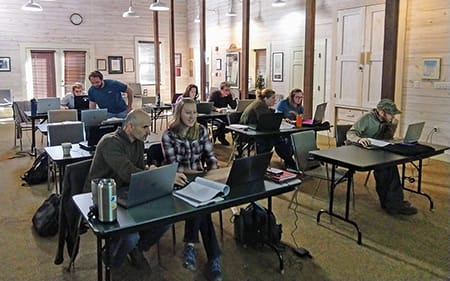
Educating and guiding the next generation of fire researchers and managers is a key goal of Wildland Fire Science and a resource for testing new ideas in fire research.
Tall Timbers hosts the premier fire technology transfer organization—the Southern Fire Exchange. This JFSP funded effort helps connect research to management through webinars, workshops, and support of the Prescribed Fire Science Consortium.
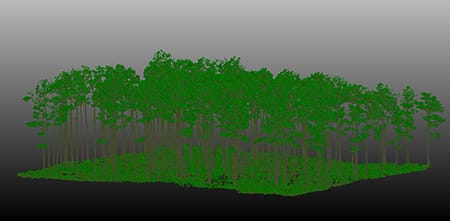
Working with partners in the Prescribed Fire Science Consortium, the program is building nexgen 3-D fuel beds using terrestrial LiDAR and novel sampling techniques to power new fire behavior models for prescribed fire managers. This work links to Tall Timbers work in wildlife habitat usage and ecological forestry.
The Longleaf Legacy landscape prescribed fire burn team arm of Wildland Fire Science works directly with landowners and partners to effectively put fire on the ground and promote prescribed fire throughout the region.
Tall Timbers is leading an effort to map fire regimes at the landscape scale. Staff work with numerous agencies to evaluate fire records and satellite imagery to build this critical conservation database. https://skfb.ly/6DqOY
Tall Timbers hosts the Prescribed Fire Science Consortium, a national network of researchers and managers who promote integrated research and management to advance next generation tools for fire practitioners. https://arcg.is/1DSjDT
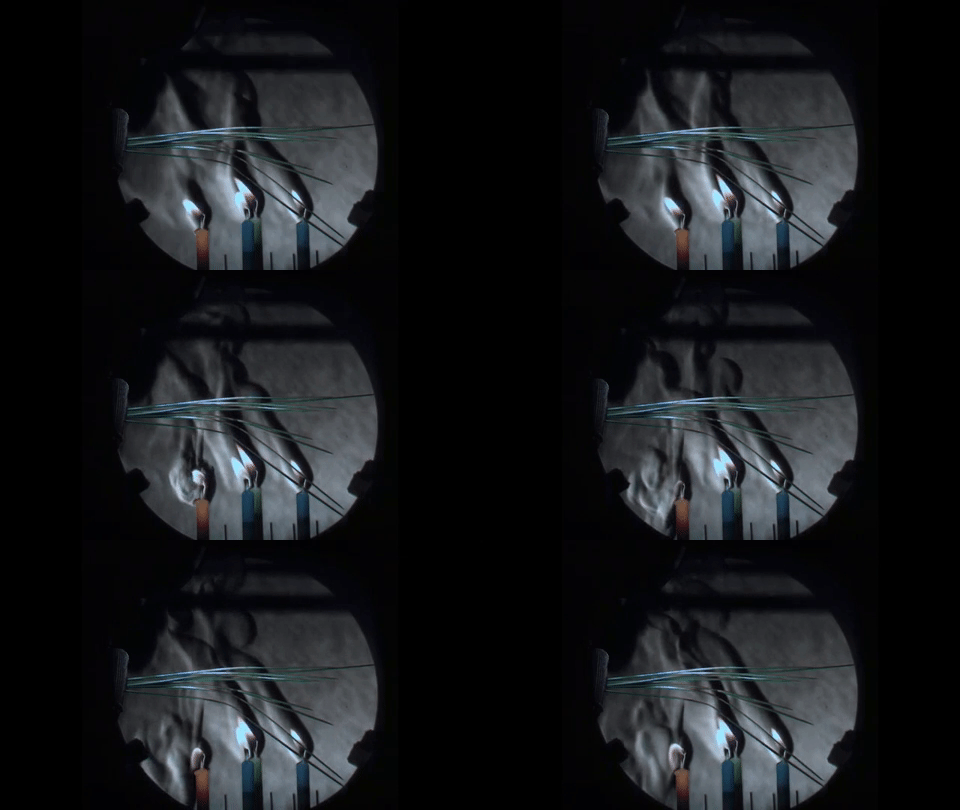
We are linking physics and field observations to understand the fluid dynamics of fire behavior surface fire regimes. Our work combines field observations using advanced thermal imaging techniques, laboratory studies, and coupled fire-atmospheric modeling to help managers improve outcomes of managed fire regimes.
Selected Publications authored by Wildland Fire Science staff.
Staff and researchers support Federal fire training by serving as a cadre for NWCG training courses, ranging from basic wildland fire to advanced fire effects.
(PFTC) specializes in training fire fighters the principles and techniques of prescribed fire through practical hands-on experience. https://www.fws.gov/fire/pftc/
Private land owners are the largest source of prescribed fire in the country. These land owners and the culture of fire that was maintained by them during decades of suppression are a part of why Tall Timbers is a world-wide center for prescribed fire science. Workshops and fire training are a critical focus of the Longleaf Legacy Landscape Burn Team and our support of the Georgia Forestry Commission Prescribed Fire Center in Marion County.
The conserved lands of the Greater Red Hills region are found on working, income-producing properties that support agriculture, forestry, and recreational hunting. These properties contribute $272 million annually to local economies and support 2,300 jobs. [link to Planning & Advocacy section] The landowners’ strong stewardship ethic preserves their working lands while replenishing drinking water supplies, protecting water quality, and providing wildlife habitat for dozens of rare and endangered species. Tall Timbers’ conservation easements on these working properties encourage landowners to retain their traditional livelihood by keeping farms in family ownership.
Home to world-class wild quail populations, the Greater Red Hills region contains the largest concentration of gamebird preserves in the United States. These preserves also support the largest community of Red-cockaded woodpeckers on private lands. Indicators of high quality habitat found here include the gopher tortoise, Bachman’s sparrow, fox squirrel, and many amphibians. Tall Timbers’ conservation easements identify and protect the critical habitats of these species.
The region also boasts outstanding aquatic resources. Large river systems, like the Flint/Apalachicola, Ochlockonee, and Aucilla, flow from Georgia and feed into the Gulf of Mexico to support some of the world’s most productive estuaries. Large disappearing sinkhole lakes, like Iamonia, Miccosukee, and Jackson, provide habitat for an array of aquatic species and migratory birds. Tall Timbers’ conservation easements protect these vital watersheds and wetlands that are the lifeblood for the ecological health of the region.
Once dominated by longleaf pine, our pine woodlands support abundant wildlife and local economies. These forests need prescribed fire to stay healthy. Herbert L. Stoddard and his associates Ed and Roy Komarek were pioneers in this emerging scientific field during the mid-20th century. Tall Timbers continues that legacy with applied research on prescribed fire and land management. Today, there is a tremendous need to expand prescribed fire use beyond the Red Hills to ensure ecosystem health and reduce wildfire risk. Additionally, Tall Timbers uses conservation easements to permanently protect private woodlands while balancing the need for economic return from selective timbering.


 With the extraordinarily warm winter, early spring bobwhites have begun pairing and nest building nearly a month earlier than usual. While the warm weather was not ideal for hunting, it did help with overwinter survival of quail. Our hawk counts over a 10-mile survey route were low this entire winter, and have remained about 20% of last year’s counts over the past several months. With low cotton rat numbers this year, few red-tailed hawks were in the region. The warm weather and few cold fronts appeared to keep migratory Cooper’s hawk numbers relatively low as well. Low disturbance and predation by hawks and owls reduces stress on the birds caused by predation and harassment from hawks. In addition, the recent rainfall has helped habitat recover quickly following early burning, and ragweed fields are growing rapidly providing early habitat. When overwinter survival is high, habitat is good, and densities are relatively low, quail tend to nest vigorously. Over the past 15 years, we have had very few nests incubated during April, but this March, we have already flushed pairs from perfectly formed nest bowls. Our hatch is off to a good start.
 For instance, thanks to our endowment, we are able to begin new research to better understand what factors affect bobwhite chick survival on a daily basis. This groundbreaking work will identify what management can be done to offset the causes of chick mortality. Chick ecology remains one of the last pressing issues in bobwhite management that is still largely a “black box”. We know how many are hatched, and how many survive until the next spring, but what happens in between is unknown. It is important to find management solutions to low chick survival, because the majority of quail population declines are the result of below average chick survival. Improving survival, even 25%, would have huge implications for quail populations. We are excited about the potential for new research at Tall Timbers to provide innovative management ideas and help keep the Red Hills and Albany the best quail hunting areas in the world! Thank you to all that provided contributions and pledges to the Endowment Campaign for Game Bird Program research!
 The Florida Grasshopper Sparrow occurs in the wide open prairie lands of central Florida. These flat, treeless expanses occur exclusively in Florida and support a tremendous diversity of rare plants as well endemic Florida grasshopper sparrow. Fire is a key process — occurring approximately every 1-2 years — and the lab is gathering preliminary background information on one sparrow population that will be used to develop studies on the effects that different fire regimes may have.


 With support from the Bahamas National Trust, the Bird Lab will be taking mist nets and banding equipment to the Bahamas this summer to collect DNA samples from birds on Grand Bahamas Island and to develop better estimates for the size and health of the population. The DNA samples are essential for answering long-standing questions about the uniqueness of this population — several authorities list this nuthatch as a distinct species because of its long-term isolation from mainland populations and morphological and behavioral differences. The DNA samples will be compared to samples the Bird Lab and University of Florida have collected from dozens of mainland populations (including the Red Hills region) as well as the Pygmy Nuthatch, a sibling species that occurs in pinewoods in the western U.S.