Tall Timbers is pleased to introduce Dr. Theron M. Terhune, our new Outreach Coordinator, who officially joined our staff October 1. Establishing this position is a goal of our 2010-2019 Strategic Plan to develop effective outreach, education and communication programs…. With Dr. Terhune at the helm, we are excited to embark on the expansion of our outreach, extension and education efforts.
Some of you may already be familiar with Theron, despite his rather unfamiliar name, through his involvement with Tall Timbers at varying levels during the past 10 years. He received both a Bachelor of Science and Master’s Degree in Wildlife Sciences at Auburn University. However, prior to starting his graduate work, Theron worked for Pineland Plantation and the Albany Quail Project, where he gained invaluable field experience implementing basic habitat management actions, such as prescribed burning and woodland management, as well as assisting with traditional quail hunting on the property.
For his Master’s research, Theron worked with Clay Sisson, at the Albany Quail Project, investigating male bobwhite call counts in relation to timing of nest-incubation and fall population size. In 2008, Theron graduated from the University of Georgia (UGA) with a PhD in Forestry and Natural Resources; there, his dissertation research focused on the "Effects of Translocation on Population Genetics and Demographics of a Northern Bobwhite Population Located in a Fragmented Landscape in Southwest Georgia." Theron’s translocation research, conducted in cooperation with Clay Sisson, Bill Palmer and the Georgia Department of Natural Resources, served as the impetus for the development of many state-initiated translocation protocols, whereby findings from his work provide the scientific underpinnings for many of the criteria stipulated within these protocols. More recently during 2008-2010, Dr. Terhune served as a post-doctorate scholar here at Tall Timbers working with Dr. Bill Palmer to revise the National Bobwhite Conservation Initiative, a national strategic plan for recovering bobwhites and grassland songbirds range-wide.
Perhaps as unique as his name, Theron has a broad set of research interests, expertise, and hobbies, far too many to name here (you can read more about Theron and other Tall Timbers staff on our "new" website). He enjoys many kinds of hunting, especially traditional bow hunting, fishing and generally just being outdoors. As you will quickly learn, Theron loves to help folks so feel free to contact him with any of your outreach-, extension-, or education-related needs!
Tall Timbers Naturalists’ Ball to honor endowment donors
Please join us as we honor all those who have made a personal commitment to the Tall Timbers 50th Anniversary Endowment Campaign at the Tall Timbers Naturalists’ Ball.
This year’s event will be held on Saturday, February 18th at Glen Arven Country Club in Thomasville, GA. All proceeds benefit the Tall Timbers Foundation. For more information and to purchase tickets, please visit http://www.talltimbers.org/support-nb.html
By Theron M. Terhune, Outreach Coordinator and Joe Noble, Technology Transfer Specialist
The late Steve Jobs, Apple visionary and creative guru, coined the catch-phrase: "There’s an App For That!" Slang for Application, an App is a simple but targeted application engineered for a specific task or suite of related tasks. Apps are not supposed to be an all-inclusive solution but rather a targeted task-specific solution designed to work quickly and efficiently. There are Native Computer Apps, Mobile Apps, and On-line Web Apps which may work independently or with other applications. MAPS are very similar to Apps in the sense that to ensure quality and efficiently communicate the targeted message; they should be simple, uncluttered and task-oriented.
What to know where in the entire US the nearest bike trail or birding trail is? There’s a mAP for that!
Do you want to know where the highest probability to successfully restore Northern Bobwhite Quail is? There’s a mAP for that! (BTW, this mAP was created by Tall Timbers.)
Along with many of you, I have read Herbert L. Stoddard’s seminal tome "The Bobwhite Quail: It’s Habitats, Preservation, and Increase" more times than I can count. I become more and more amazed each time I read it by how often Stoddard was right more times than he was wrong! This is despite not having the fancy gadgets and advanced technology (e.g., radio transmitters) we have today. Stoddard was indeed a very resourceful, observant, and meticulous naturalist. Above (left) is a map from 1948 that Stoddard created depicting soil classification and another map (above right, created by G.M. Church) depicting habitat classification on what is now Tall Timbers Research Station. By looking closely at these maps, one can ascertain that they were hand drawn and/or color-coded (using colored pencils of some sort) to delineate soil types, slope aspects, habitat types and suitability for management; and, notably, these maps appear to be to scale. I wonder how long it took Stoddard and Church to make these maps? Likewise, I wonder what projects were so important to warrant the time to create them? I would guess that these maps and others like it were pivotal to Stoddard’s precise assessment of the landscape, and the subsequent habitat management recommendations he made. For one reason or another, Stoddard was compelled to create and use maps. It begs the question: "How are you taking advantage of maps?" Is there really, or could there be, "a mAP for that!" to help you better plan, manage, and evaluate your property??
Of course you don’t need an App or a Map to tell you that things are much different today compared to Stoddard’s time. Thankfully, we no longer have to rely on colored pencils to make maps or even hand-draw maps to "see" our properties. Instead, we not only have the capability to create aesthetic, accurate and focused maps, but we have the ability to accomplish this relatively quickly with striking precision. To boot, we have the ability to seamlessly overlay different types of maps in order to evaluate certain habitat conditions and test specific management scenarios that aid us in making the best management decisions.
Tall Timbers Land Cover Map depicting specific habitat types, roads, course names, and various key feature labels.
If designed correctly, Apps and Maps can make one’s life easier and more productive as well as make things possible that at one time were very difficult to accomplish. Tall Timbers Outreach Program is currently working on the development of various interactive Web Apps and Mobile Apps for resource and land management purposes, to better equip Tall Timbers members with task-specific tools to aid in decision making and to foster exemplary land stewardship.
Want to know how big a field is on your property? We can help you have a mAP for that!
Want to know how long your feedline is? We can help you have a mAP for that!
Need to keep track of where/when you burn? We can help you have a mAP for that!
Tall Timbers Land Cover Map depicting specific 2010 Prescribed Burns (orange). Thus, upland sites not in orange would typically be burned the following year (2011).
We are fortunate to have a state of the art GIS lab at Tall Timbers. As such, we are equipped with large-scale map plotters, multiple mapping software programs and three experienced staff members with extensive GIS, GPS and mapping expertise available to help you create useful maps (see figure below) for your property. Whether you want a simple property map or a more detailed habitat map, we can help you have a mAP for that! Contact us for more information and details.
Historic Resources hosts Archaeology and History Day
By Juanita Whiddon, Archives and Historical Resources Coordinator
On Saturday, February 26, Tall Timbers hosted our second annual Archaeology and History Day (commonly referred to by participants as “Dig Day”). Twenty Leon County middle-school students had a chance to tour the Jones Family Tenant Farm and talk with former tenant farm family members, Richard Jones and Gerri Jones Thompson about life on a Red Hills tenant farm in the 1940s. The students also had a chance to excavate at the project site under the supervision of project archaeologist, Ross Morrell. The group was divided into three teams so everyone had a chance for “hands-on” participation. Each group was encouraged to make comparisons of tenant farm life in the 1940s to urban and suburban life in 2012. The final comparison was a sample of a typical tenant family meal, before the group was treated to 21st century hamburgers and hotdogs. Activities like this would be impossible without good volunteers. We had 10 great ones help with "Dig Day". We are already looking forward to next year’s event.
By Vann Middleton, Director of Operations & Support
Over 150 of Tall Timbers closest friends and family attended this year’s Naturalists’ Ball Gala at Glen Arven Country Club in Thomasville, GA; the occasion? To honor the 74 very special donors who have made a lasting commitment to the Tall Timbers Endowment Campaign.
Clad in black tie and formal wear, the night was a special tribute to those who have meant so much to Tall Timbers’ future sustainability. Co-Chaired by Mrs. Daphne Wood and Mr. Tom Rankin, the Tall Timbers Endowment Campaign committee announced that they had raised over $9 million in cash and pledges for the benefit of the Tall Timbers Foundation and our investable Endowment Funds.
Tom Rankin and Daphne Wood, co-chairs of the Endowment Campaign, announce they had raised over $9 million in cash and pledges for the benefit of the Tall Timbers Foundation.
Over the course of the previous three years, this committee (which includes: Charlie Chapin, Tom Barron, Charlie Chapin, Cornie Corbett, Kate Ireland, Mason Hawkins, Dave Perkins, George Simmons, George Watkins and Cindy Webster) helped setup face-to-face meetings with over 100 prospective donors in hopes of convincing them of the importance of making a enduring gift to the campaign. Throughout the silent phase of the campaign, over $9 million has been pledged to support the research, conservation and education programs of Tall Timbers – an incredible feat!
After a sumptuous dinner prepared by the staff at Glen Arven, our patrons took to the dance floor to work off those extra calories to the rockin’ tunes of Jimmy Wells and the Pure Platinum Band.
The night was made even much more special when a guest and longtime Tall Timbers friend announced his intention to make a $500,000 pledge to the campaign. As the guests filed out later into the rainy February evening, staff was thrilled to add another major gift to the tote board.
On behalf of everyone at Tall Timbers, we thank each and every one of our Endowment Campaign donors for the confidence in and support of our long term vision and mission.
Stay tuned for more updates on the Endowment Campaign progress and how YOU can participate!!
The M-CORES program, which includes the proposed Suncoast Connector Toll Road in Jefferson County, passed through the Florida Legislature at breakneck speed with little review or analysis. Tall Timbers has a number of concerns given the potential for significant and wide spread impacts. These include fragmenting public and private conservation lands, robbing business from Main Street Monticello, impacting our rivers and other water resources, and making prescribed fire more difficult and costly.
Join us in asking the Jefferson County Board of County Commissioners to OPPOSE the Suncoast Connector toll road and its path through Jefferson County.
Take action now with our easy email form.
Send an email to all five Jefferson County Board of County Commissioners with one click!
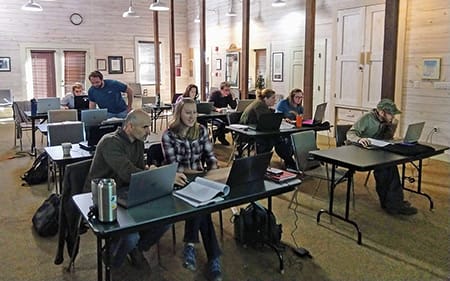
Burn prioritization modeling seminars and fire modeling tools are supported by Wildland Fire Science to train managers in the important planning stages of prescribed fires.
Educating and guiding the next generation of fire researchers and managers is a key goal of Wildland Fire Science and a resource for testing new ideas in fire research.
Tall Timbers hosts the premier fire technology transfer organization—the Southern Fire Exchange. This JFSP funded effort helps connect research to management through webinars, workshops, and support of the Prescribed Fire Science Consortium.
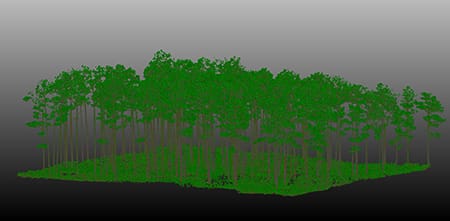
Working with partners in the Prescribed Fire Science Consortium, the program is building nexgen 3-D fuel beds using terrestrial LiDAR and novel sampling techniques to power new fire behavior models for prescribed fire managers. This work links to Tall Timbers work in wildlife habitat usage and ecological forestry.
The Longleaf Legacy landscape prescribed fire burn team arm of Wildland Fire Science works directly with landowners and partners to effectively put fire on the ground and promote prescribed fire throughout the region.
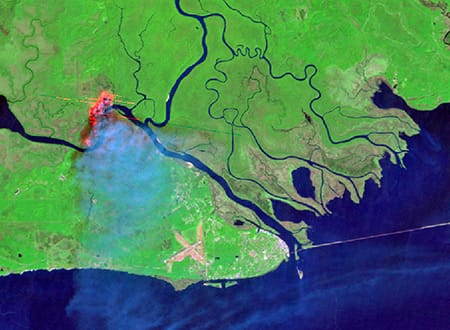
Tall Timbers is leading an effort to map fire regimes at the landscape scale. Staff work with numerous agencies to evaluate fire records and satellite imagery to build this critical conservation database. https://skfb.ly/6DqOY
Tall Timbers hosts the Prescribed Fire Science Consortium, a national network of researchers and managers who promote integrated research and management to advance next generation tools for fire practitioners. https://arcg.is/1DSjDT
We are linking physics and field observations to understand the fluid dynamics of fire behavior surface fire regimes. Our work combines field observations using advanced thermal imaging techniques, laboratory studies, and coupled fire-atmospheric modeling to help managers improve outcomes of managed fire regimes.
Selected Publications authored by Wildland Fire Science staff.
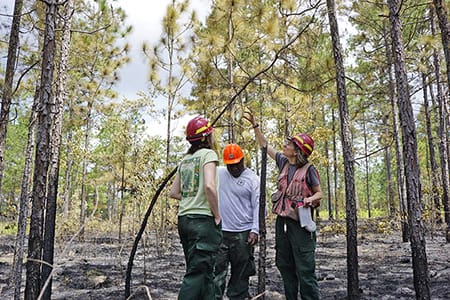
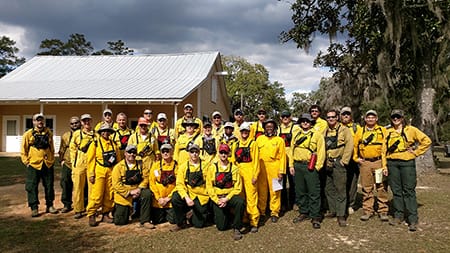
Staff and researchers support Federal fire training by serving as a cadre for NWCG training courses, ranging from basic wildland fire to advanced fire effects.
(PFTC) specializes in training fire fighters the principles and techniques of prescribed fire through practical hands-on experience. https://www.fws.gov/fire/pftc/
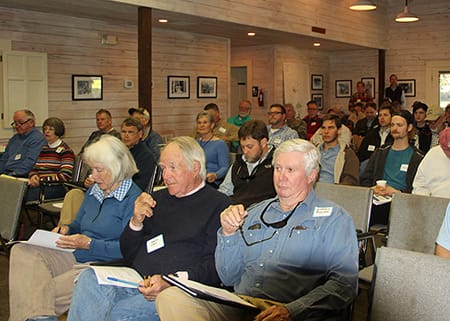
Private land owners are the largest source of prescribed fire in the country. These land owners and the culture of fire that was maintained by them during decades of suppression are a part of why Tall Timbers is a world-wide center for prescribed fire science. Workshops and fire training are a critical focus of the Longleaf Legacy Landscape Burn Team and our support of the Georgia Forestry Commission Prescribed Fire Center in Marion County.
The conserved lands of the Greater Red Hills region are found on working, income-producing properties that support agriculture, forestry, and recreational hunting. These properties contribute $272 million annually to local economies and support 2,300 jobs. [link to Planning & Advocacy section] The landowners’ strong stewardship ethic preserves their working lands while replenishing drinking water supplies, protecting water quality, and providing wildlife habitat for dozens of rare and endangered species. Tall Timbers’ conservation easements on these working properties encourage landowners to retain their traditional livelihood by keeping farms in family ownership.
Home to world-class wild quail populations, the Greater Red Hills region contains the largest concentration of gamebird preserves in the United States. These preserves also support the largest community of Red-cockaded woodpeckers on private lands. Indicators of high quality habitat found here include the gopher tortoise, Bachman’s sparrow, fox squirrel, and many amphibians. Tall Timbers’ conservation easements identify and protect the critical habitats of these species.
The region also boasts outstanding aquatic resources. Large river systems, like the Flint/Apalachicola, Ochlockonee, and Aucilla, flow from Georgia and feed into the Gulf of Mexico to support some of the world’s most productive estuaries. Large disappearing sinkhole lakes, like Iamonia, Miccosukee, and Jackson, provide habitat for an array of aquatic species and migratory birds. Tall Timbers’ conservation easements protect these vital watersheds and wetlands that are the lifeblood for the ecological health of the region.
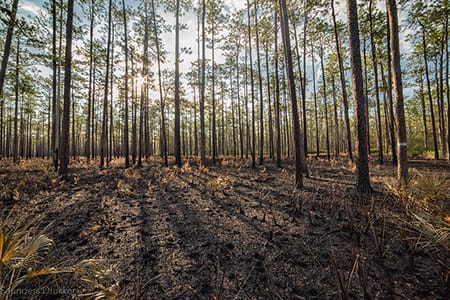
Once dominated by longleaf pine, our pine woodlands support abundant wildlife and local economies. These forests need prescribed fire to stay healthy. Herbert L. Stoddard and his associates Ed and Roy Komarek were pioneers in this emerging scientific field during the mid-20th century. Tall Timbers continues that legacy with applied research on prescribed fire and land management. Today, there is a tremendous need to expand prescribed fire use beyond the Red Hills to ensure ecosystem health and reduce wildfire risk. Additionally, Tall Timbers uses conservation easements to permanently protect private woodlands while balancing the need for economic return from selective timbering.



.jpg?strip=all&w=293)


.jpg?strip=all&w=890 "Tom Rankin and Daphne Wood at the Naturalists' Ball")
 After a sumptuous dinner prepared by the staff at Glen Arven, our patrons took to the dance floor to work off those extra calories to the rockin’ tunes of Jimmy Wells and the Pure Platinum Band.