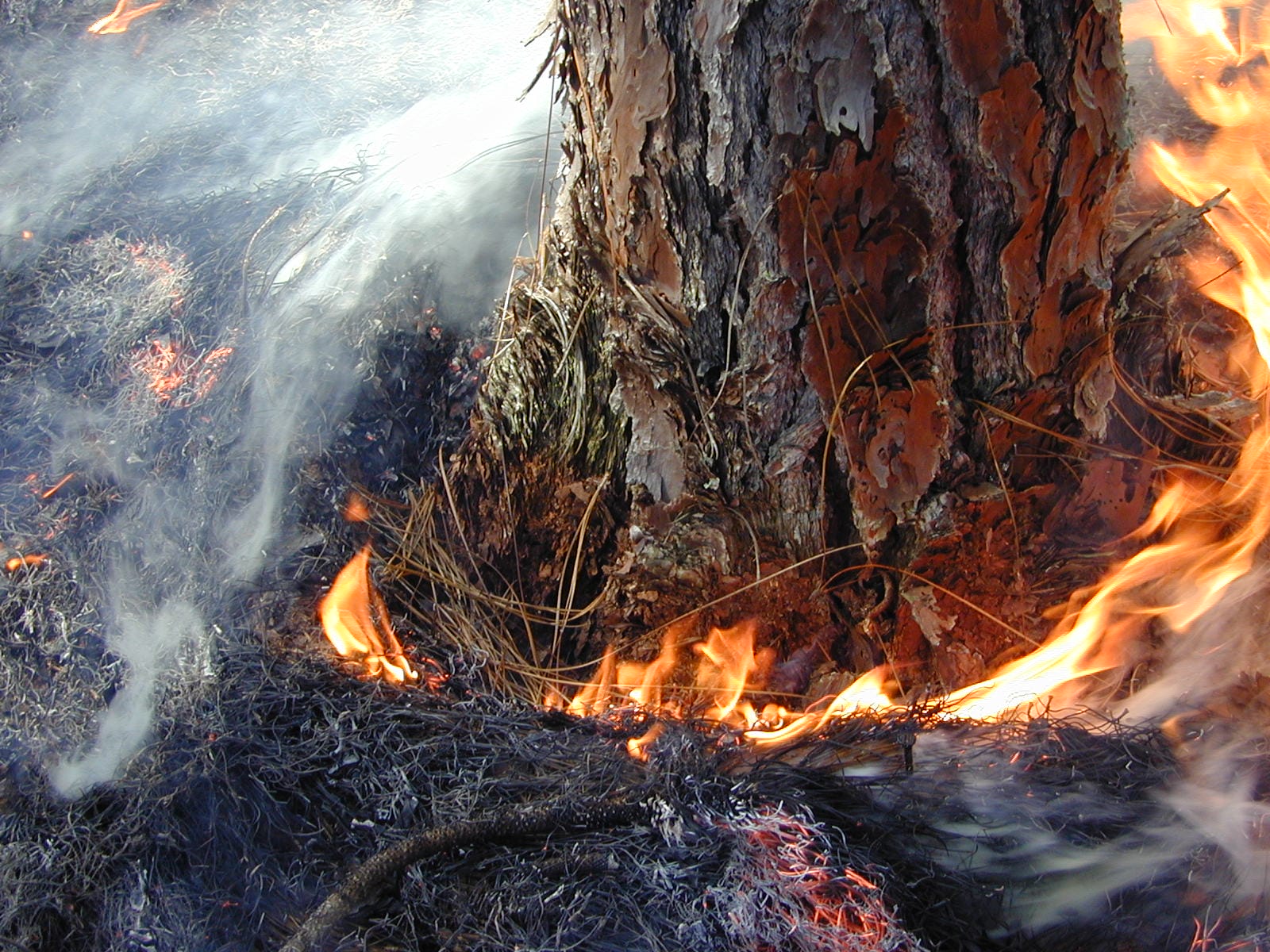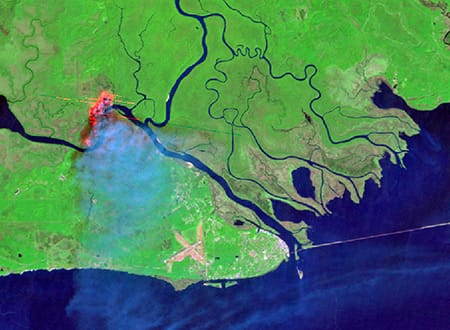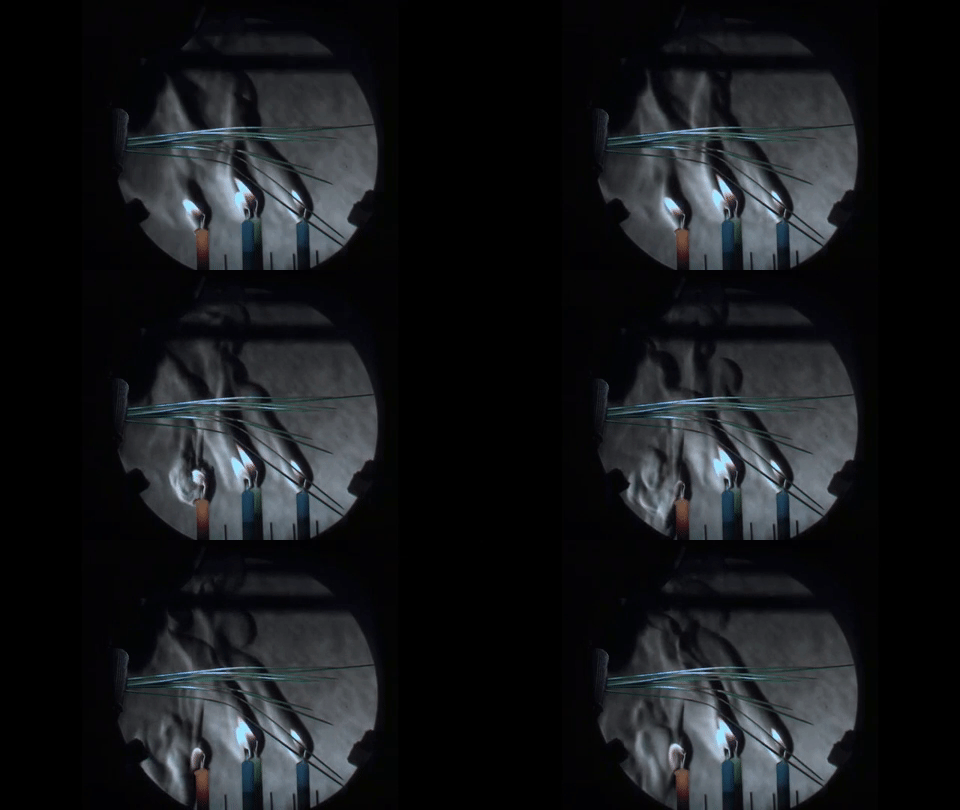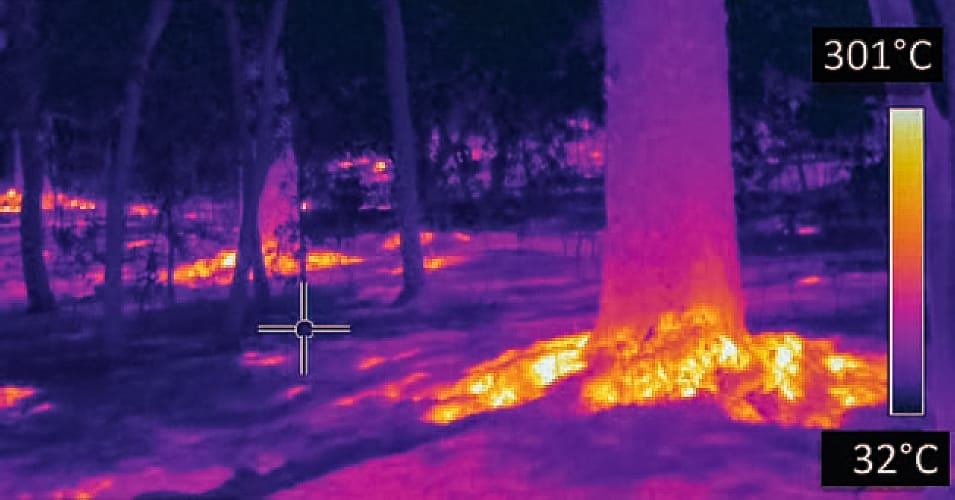
This infrared image clearly illustrates how duff layers at the base of pine trees can smolder long after the surface fire has passed. Long-term residual heat can damage or kill these trees
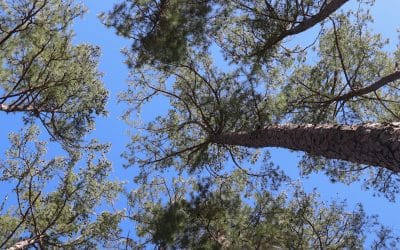
Southern pine stands that have undergone fire exclusion become overgrown and dominated by woody plants and lack the habitat needed to support game and non-game species alike.
But reintroducing fire to these landscapes isn’t as easy as heading off into the woods with a drip torch.
There are a host of issues to consider when putting fire back onto the landscape in the hopes of jumpstarting the biodiversity of forbs and grasses tucked away in the seed bank and to improve the health of the surrounding forest.
The main takeaway is understanding that putting fire back on the landscape is a lengthy process that may require several years of low intensity burns.
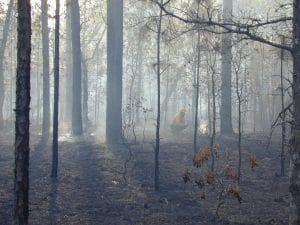
Reintroducing fire onto the landscape requires careful attention to burn conditions, analysis of the vegetative layer at the base of trees and an understanding that reapplying fire is a lengthy process.
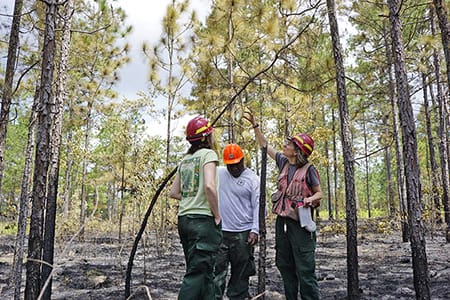
The biggest concern of reintroducing fire is the extent of pine mortality that could occur as high temperatures scorch fine pine tree roots near the surface that have become buried in a thick layer of pine straw/duff accumulation.
The spongy mounds of pine straw and duff that gather when fire is excluded over the years can be several inches deep and, if dry enough, provides a place for fires to smolder for hours and can result in the death of pine trees.
Second of concern is how to approach mid-story hardwoods that have become overgrown and are the focus of reintroducing fire.
They shade out the understory which can make it tough to carry a fire. We want to kill these plants, but a low intensity fire is not likely to do so. They may need to be mechanically or chemically treated first and may need multiple fires to reduce their density enough.
Picking the right weather and moisture conditions can make or break the success of a fire reintroduction.
Typically, burning during cooler, wetter days will help reduce pine tree mortality. Target winter days roughly two days after approximately an inch of rain. These days typically follow cold fronts that are predictable during winters in the South.
Burning under conservative conditions where only the top layer of litter is dry enough to ignite prevents smoldering and allows the slow reduction of duff to occur over time. Additionally, use of a backing fire that can linger and scorch trees should be avoided if possible.
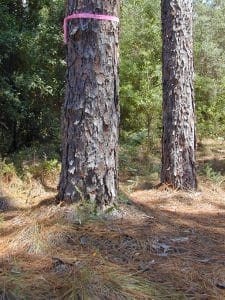
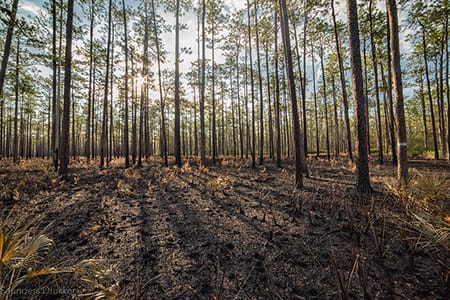
The duff layer at the base of a pine tree can become heavy with fire exclusion.
When the accumulated duff material is eventually brought down to bare mineral soil after multiple burns, then the burn prescription window can be widened to satisfy other needs such as hardwood control, wiregrass flowering, etc.
As previously stated, it will take several fires to achieve the goal of an open savanna of pine trees. Resist the idea of immediate restoration by focusing on the “clean understory look.”
Some managers advocate raking to bare mineral soil around the base of pine trees to reduce the threat of smoldering fires.
There is conflicting evidence on raking- researchers have found that trees died quickly when deep raked to mineral soil, but others have had good luck with raking or using leaf blowers. Both should be gentle and not expose roots. However, raking of individual trees isn’t realistic across a large area where fire is being reintroduced.
Either way, applying water to still smoldering duff mounds (so-called “mop-up”) using ATVs, tractors, or hoses after the flames have passed will decrease tree stress and help secure the burn.
There is no one prescription that will help reintroduce fire into pine stands that have become overgrown.
A conservative approach that focuses on short-term goals will result in successful reintroduction of fire. Forests take decades to grow to maturity but one afternoon of prescribed fire set under the wrong conditions can injure or kill healthy trees.
Quick tips for reintroducing fire
- Avoid the use of a backing fire; use a strip head fire or spot fire (avoid scorch)
- Winter time gives best conditions
- Burn when the duff is moist within 1-2 days of ~ 1” of rain (a patchy burn is ok)
- Conduct a mop-up operation and put water on smoldering hot spots