A common practice on intensively managed quail properties involves cutting hunting lanes, commonly referred to as “blocking the woods”. Blocking is a multi-purpose management practice aimed at reducing groundcover and improving hunter and dog access to hiding coveys of quail.
The two ways lanes are cut are with a drum roller chopper or with a mower.
Both are effective at cutting hunting lanes, but each have a different impact on the structure of groundcover and over time, the types plants that re-sprout or remain in disturbed areas.
There are pros and cons to each.
Ground disturbance is of particular importance in areas that have sensitive native groundcover. In the Red Hills, only a small fraction of this plant community remains.
In the Red Hills region, only about 24,000 acres (6% of the region) have relatively intact native (i.e. uncultivated or converted) groundcover.
Given the rarity of this plant community, biologists are tasked with recommending responsible management practices that both meet landowner objectives and protect sensitive native groundcover.
What’s the difference?
Many land managers prefer using roller choppers for grid-blocking hunting lanes due to their speed, simplicity and durability.
They are especially useful in places where it is hard to see the ground when running or there are a high frequency of stumps and large woody debris on the ground.
The large drum and long cutting blades are able to handle rough, uneven terrain and can easily knock down small brush and hardwoods.
In operation, the roller chopper will often deeply divot the ground, and can create a moderate amount of soil disturbance, which in some situations, can promote annual weeds.
However, repeated ground disturbance can progressively degrade native groundcover quality over time.
Mowing has minimal ground disturbance; as it reduces the height and structure of the above ground plant biomass without disturbing the root structure.
There are additional maintenance costs associated with using mowers over choppers but it is often preferable to keep the native groundcover intact in areas where it still exists.
Impact to habitat
In the coastal plain of the Southeast native groundcover areas are typically determined by the presence of wiregrass and other key native plants in the understory, such as running oak, goat’s rue, bracken fern, slim leaf pawpaw, etc.
These are places that have not experienced extensive amounts of ground disturbance from agriculture or intensive site preparation for pine production.
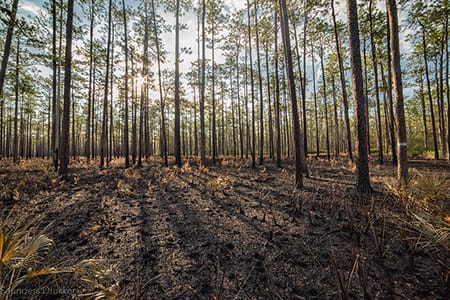
Wherever native groundcover has persisted, it is typically in an area that has had frequent fire. Native groundcover areas have the plant community composition and structure that can resemble pre-settlement conditions — but as explained above, this plant community is extremely rare.
The tolerance of disturbance varies by species, but ground disturbance associated with roller chopping or harrowing can break apart established root structures; this is especially true for wiregrass. Once these plants are removed from a site, they may never reestablish.

Hunting lanes, or blocking the woods, is done with a mower at Tall Timbers.
Significant changes in the plant community from roller chopping are often not noticeable after one pass but, repeated disturbances over many years can have cumulative detrimental effects on native groundcover.
Some of those changes include the encroachment of lower quality, offsite hardwoods, potential for invasive species to seed and the establishment of common weedy annual plants.
These new invaders can compete for sunlight and resources, and over time become more dominant.
Some of these species, such as water oak, live oak, and sweet gum, grow faster and their leaves are much less flammable than running oak, bluejack oak, sand post oak, turkey oak, blueberries and huckleberries.
Roller-chopping can also have negative effects on a variety of animals, such as pocket gophers, gopher tortoises, hog-nose snakes, pine snakes, and tiger salamanders, which live just under the soil surface.
Mowing can be a viable alternative to roller chopping for cutting hunting lanes and controlling problem brush in areas with native ground cover.
On Tall Timbers, we have not found it to impede quail management, nor has it been found to be an issue for managers of lands with these special natural areas.
A practical reason to maintain native groundcover is that it can be cheaper than managing disturbed sites and old field lands, since prescribed fire is often the only management that is needed to maintain quality native groundcover when wiregrass and other highly flammable ground cover is present.
Given the flammability of wiregrass, and other plants in this community, there is a broader prescribed fire window throughout the year within which to meet management objectives, primarily management of hardwood encroachment, which can reduce the need for herbicides and other expensive management practices.
The decision to roller chop or mow hunting lanes ultimately falls on the land manager. Both practices achieve the same goal and both practices have pros and cons. However, if you are fortunate enough to own and manage land with sensitive native groundcover, consider blocking your woods with a mower to maintain this rare and declining vegetation type.