Portions of the article appeared in the Tall Timbers publication Quail Call
Predation issues tend to polarize people and these disagreements can be fueled by misinformation.
As too often is the case, complex issues like predation and habitat management are reduced to “sound bites” which rarely help to find solutions to problems.
Predation management, as promoted by the Game Bird Program at Tall Timbers, is a science-based and practical approach that produces results for the bobwhite manager.
Predation management is based on understanding how to minimize predation on bobwhites through indirect and direct management of predator and prey populations.
The goal of predation management is to maintain predator populations at levels where bobwhite populations can increase when habitat and weather conditions are favorable.
In all situations, managing habitat to minimize predation is the first and most important step.
While we, and our colleagues, are continually learning more about predation, the following techniques have been proven to increase bobwhite numbers on properties in the Red Hills, Albany and elsewhere:
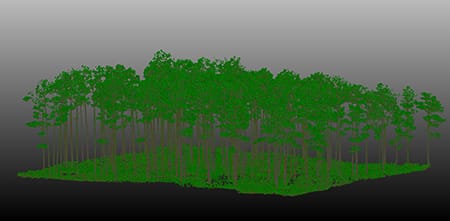
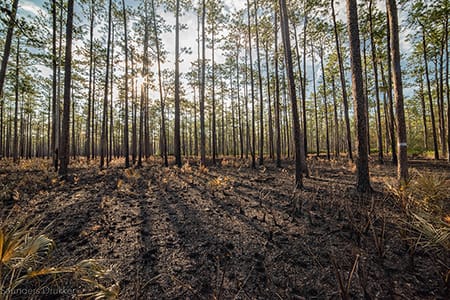
- Thin mature pine timber to < 60 ft2/acre of basal area: As timber becomes denser than this, the quality of the ground cover diminishes rapidly. Poor ground cover will increase losses of quail to avian predators. Thinning may need to be as low as 40 ft/acre of basal areas on properties with sandy soils.
Heavy pine timber produces needles for burning, but can also shade out grasses and many forbes and shrubs. As trees become less dense, grasses become the dominant fuel. Grasses also provide wildlife habitat that needles don’t.
- Thin planted pine stands aggressively: If bobwhite quail are a priority, then thin planted pines. This will provide several years of good ground cover before the pine canopy closes again. Standard thinning practices, such as a “third row thin”, are wholly inadequate to produce good quail habitat. Thinning every other row as well as within the rows left is necessary to recover groundstory plants for a long enough period to benefit quail. However, thinning too aggressively may result in loss of timber revenue and depending on the situation could yield poorly formed trees with lots of limbs.
Thick pines also serve as roosting and loafing sites for Cooper’s hawks from which they forage each morning and afternoon.
- Significantly reduce off-site hardwoods: In upland pine forests, remove unwanted hardwood species. Their shade reduces grasses that fuel fire and they provide habitat for predators.
Some snake species, such as oak snakes, that prey on bobwhite nests prefer hardwood trees in a pine matrix, especially those with spreading branches like live oaks. Similarly, avian predators often use hardwoods for nesting and as feeding or plucking perches.
- Thin hardwoods out of “false” drains and fencerows: In the South, many hardwood “drains” are a result of past farming that created gullies and ditches where hardwoods were protected from fire and other disturbance.
These hardwood thickets not only reduce quail habitat by negatively influencing burning, they reduce access to bobwhites during hunting and harbor many predators of bobwhites.
Properties that implement hardwood cuts can experience higher bobwhite numbers and improved burning.
- Think BIG to gain the new ground effect: Rather than taking many small steps with habitat management look for big projects.
Bobwhites respond quickly to properly planned timber harvests. However, when conducting a big cut, leave enough of the cover for the birds to hold in until the habitat responds. That can vary based on the size of the property and timber cut.
In spring burn areas where the loggers will operate, ask them to stay out of the unburned patches.
When cover returns, the quail will be the first ones back with few if any predators to reduce their reproduction. We have measured > 2 bobwhites per acre in November on large areas heavily cut the previous April and May, although it can sometimes take a year or two for a site to reach its full potential.
- Provide supplemental feed during the entire year: For small properties, feeding in winter will reduce emigration from the property helping you keep birds on your place.
Feeding during the spring and summer will not only extend the nesting season by up to six weeks but will also keep hens in better condition to re-nest after a lost nest. This has the effect of reducing the impact of a clutch lost to predators.
Feeding year round boosts cotton rat and other rodent numbers which can buffer predation on quail.
- Clean Up: Clean up the brush piles, downed logs, and thickets that will harbor predators, especially snakes.
Our research on the movements of rat snakes has found they utilized structure for loafing and feeding sites. Reducing the habitat for snakes may help to reduce their abundance.
These habitat management practices are predation management practices and vice versa, two sides of the same coin.
These very same management activities benefit a whole suite of upland species, including gopher tortoises, woodpeckers, songbirds and other species adapted to frequently burned open piney woods.
What About Trapping?
In many circumstances, however, a quail hunting property is located within a landscape where the abundance of predators is naturally high.
However, not all properties carry the same number of predators because of differing habitat conditions. Properties along rivers, or with more hammocks, tend to have higher abundances of armadillos, raccoons, and opossums than more upland sites.
In these situations, removing hardwoods from those areas is not recommended because these are natural wetlands, rather than the hardwood encroachment into the uplands as described earlier. This is an important habitat for a number of other species including wild turkey, Swainson’s warblers and wood thrush.
Therefore, habitat management alone may not result in satisfactory increases in bobwhite populations if nest predators are overly abundant.
Reducing the abundance of common nest and adult predators, such as armadillo, raccoon, bobcat and opossum may be needed to increase quail reproductive success and fall populations.
We have developed a simple method to assess the abundance of predators and have related this to quail reproductive success.

A simple, inexpensive scent station survey will provide the quail manager with information on the type and relative abundance of key nest predators.
A simple, inexpensive scent station survey will provide the quail manager with information on the type and relative abundance of key nest predators.
A scent station can be set up by placing an attractant inside a meterwide circle of regular playground sand, mixed with mineral oil to hold the track together, and recording the types of tracks found at the site periodically.
If the abundance of key nest predators exceeds recommended levels – 15 to 20 predator visits per hundred scent station-days – then investing in predator reductions may be necessary, assuming habitat management has been completed.
A manager should also be suspicious of nest predators having an impact if habitat is restored but populations are stagnant.
Our research has shown that under modern circumstances (i.e. no fur market or apex predators) very few properties in our area are below this threshold without trapping.
A successful trapping program requires a lot of effort but at roughly $3-$4 an acre in upfront costs, it is a cost-effective management tool.
A sustained trapping effort throughout the year can make a large dent in reducing mammalian predator numbers to sufficiently to affect bobwhite demographics. It can be helpful to intensify efforts around nesting season for quail and turkeys.
One or two weeks of trapping each fall is likely a waste of time. Many managers run box trap programs year-round then hire professional trappers to run leg-hold traps for bobcats, fox and coyotes during the legal trapping season, preferably as close to quail nesting season as possible. Ecological consequences of reducing these mammalian predator populations are unknown but likely to be unimportant in the South. In fact, our research also shows numbers recover quickly from trapping back to pre trapping levels in only a year.
Remember that the natural apex predators of these mid-sized nest predators, like red wolves and panthers, were removed long ago.
Most southeastern state wildlife agencies now acknowledge the scope of this problem and have changed regulations and or policies to allow for legal control.
Taken together, Tall Timbers recommends habitat management programs that provide quail year-round habitat needs but also function as a form of predator management to keep survival and reproduction as high as possible. Predator removals and supplemental feeding are key components of a modern quail program that have proven to increase quail populations.