Florida Leaders Visit Red Hills Conservation Florida Forever Project
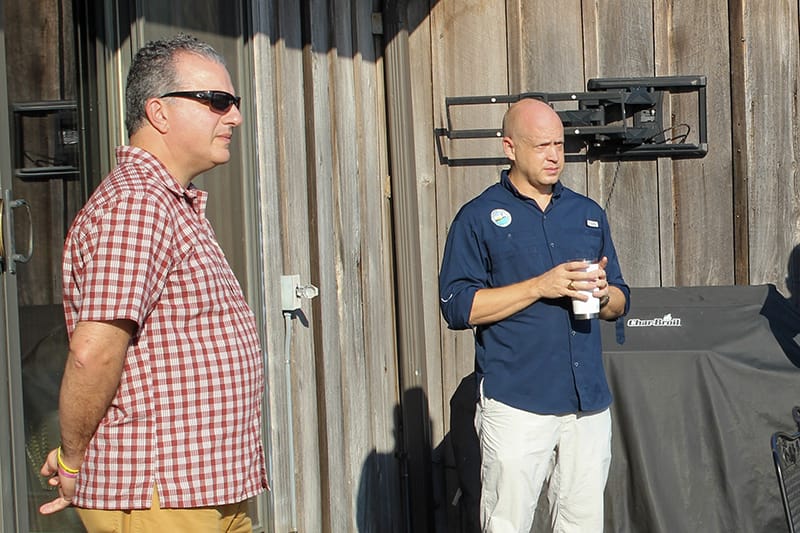
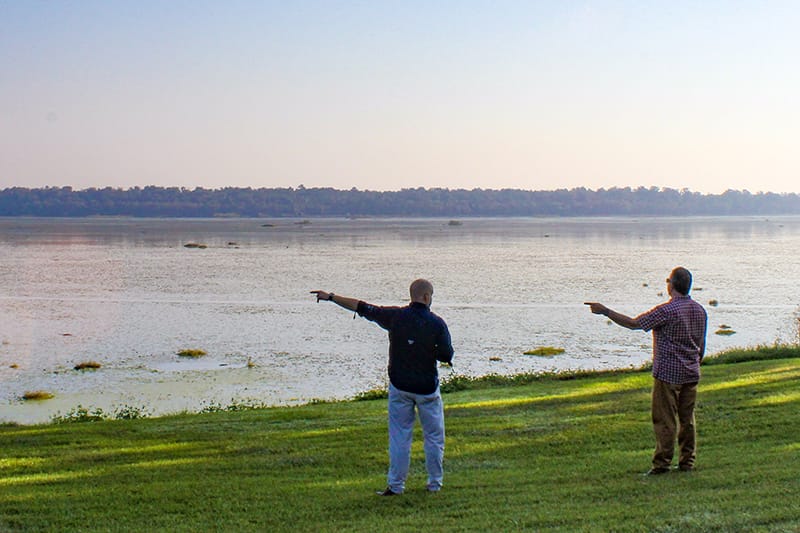
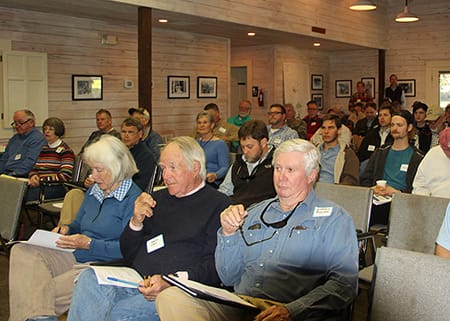
Florida’s Chief Financial Officer (CFO) Jimmy Patronis and Department of Environmental Protection (DEP) Secretary Noah Valenstein joined Tall Timbers’ staff on October 9, 2020, for a tour of private lands included in the Red Hills Conservation Florida Forever Project.
Florida’s Chief Financial Officer (CFO) Jimmy Patronis (at left) and Department of Environmental Protection (DEP) Secretary Noah Valenstein (at right).
Shane Wellendorf, Conservation Coordinator at Tall Timbers, was excited to help host the tour, as he simultaneously works with the state on the possibility of moving forward with the purchase of conservation easements on portions of Red Hills Conservation Project lands. “It’s great to have the opportunity to get Florida’s leadership out on these lands, to see the conservation value and legacy of long-term land stewardship first hand,” explained Wellendorf.
The Red Hills Conservation project was placed on the Florida Forever list in 2019, and includes 16,909 acres from three properties. Tall Timbers helped prepare the application and is working with the landowner and the state to facilitate the purchase of conservation easements, as funding becomes available through the Florida Forever program. This work aligns with Tall Timbers’ strategic goal to permanently protect land in large blocks in the Red Hills and Albany regions, and to compete for conservation dollars to help make that happen when landowners are not in the legal (such as land in a family trust), or financial position to utilize a fully donated conservation easement.
“The Florida Forever Project is crucial to conserving natural lands and waterways and renewing Florida’s commitment to conserve the state’s natural and cultural heritage. This partnership has proven to be great for Florida’s economy and the economic impact from longleaf ecosystems provides a great benefit for our state. I’d like to thank all of the environmental leaders who are working hard to ensure Florida’s natural resources are protected for future generations,” said CFO Jimmy Patronis.
Tall Timbers has long worked with coalitions of partner organizations to advocate for public funding options, to increase the pace of land conservation in Florida and Georgia. The Tall Timbers Board of Trustees supported both the Florida Water and Land Conservation Amendment in 2014, and the Georgia Outdoor Stewardship Amendment in 2018. These efforts help land conservation in both states and now have the opportunity for direct assistance in the Red Hills region.
“The Red Hills Conservation Project, through Florida Forever, is a strategic public partnership that complements decades of private investment to create these large blocks of permanently protected habitat in this incredibly diverse and intact landscape,” explained Tall Timbers President/CEO Dr. Bill Palmer. “We have an opportunity here with willing private landowners, to connect existing protected lands and create large corridors of wildlife habitat, without increasing state land management costs in the future.”
DEP Secretary Valenstein highlighted the importance of coordination to deliver conservation outcomes. “Land conservation has a far-reaching impact on virtually every component of our environment and communities. It is a critical component in our collaborative efforts to ensure our natural resources are protected and remain healthy for generations to come. This property is a great example of the continued coordination among environmental stakeholders that has strengthened our ability to safeguard our state’s conservation lands.”
Albany Quail Hunting Lands Create Jobs & Support Local Businesses
By Neil Fleckenstein
A post card from Radium Springs in 1947 proclaimed: “Albany, the world’s greatest paper shell pecan center, is also the bird dog capital of the world, and the mecca for sportsmen in this field.” While much has changed since 1947, the Albany region, along with the Red Hills, continues to be a destination for quail hunters. That said, it wasn’t until Tall Timbers completed the first economic impact analysis of the region’s quail lands in 2014 that we fully understood the extent of the economic impact and job creation associated with the region’s quail lands. Late in 2019, in conjunction with the Center for Economic Forecasting and Analysis, Tall Timbers surveyed the owners of 295,000 acres of high-quality quail lands to gather data for the second economic impact analysis of Albany region quail properties.
The 2019 analysis revealed that the total economic impact of Albany region quail hunting properties in 2019 was over $145 million. This is a 16% increase compared to the results from our earlier study. Albany region quail lands create or support over 1,160 direct and indirect jobs (a 32% percent increase over the 2014 study) and generate $56 million in labor income. Importantly, owners and managers of these hunting lands shop locally for many of their needs. As an example, they collectively operate nearly 300 tractors and other pieces of heavy machinery and 300 work trucks and ATVs, most of which are locally purchased, leased and serviced.
While Dougherty County received the largest share of the economic pie, with over $73 million in local economic impact and 459 direct and indirect jobs, significant benefits were spread across a dozen other rural counties, including those shown below.
County
Local Economic Impact of Albany Region Quail Lands
Total Labor Income from Albany Region Quail Lands
Direct and Indirect Employment from Albany Region Quail Lands
Dougherty
$73.7 million
$29.1 million
459
Baker
$16.8 million
$8.4 million
139
Lee
$8.8 million
$3.8 million
85
Decatur
$7.0 million
$2.8 million
58
Worth
$5.8 million
$1.6 million
109
Other Counties
$33.4 million
$11.1 million
314
Total
$145.5 million
$56.8 million
1,164
Clay Sisson, the Albany Quail Project Director for Tall Timbers, explained: “The benefit these properties provide by protecting our natural resources, traditional rural land uses, and overall quality of life in the region has long been recognized. These survey numbers reveal just how important they are to the area economically as well; something all of us that live here benefit from.”
Albany region quail hunting lands are truly a vital asset to the regional and local economies. At the same time, these properties provide bountiful supplies of drinking water, protect the quality of our water supply, and provide habitat for many imperiled wildlife species. Tall Timbers believes that working collaboratively with landowners, policy makers, and the business community is essential to sustain the vital economic and ecological benefits of Albany region quail lands for generations to come.
Toll Road Enters New Phase; Tall Timbers Seeks Strategic Changes
By Neil Fleckenstein
The Florida Department of Transportation (DOT) toll road project that threatens the Red Hills region, officially known as the Multi-Modal Corridors of Regional Economic Significance, entered a new phase on November 15, 2020, when the task forces submitted their final reports to the Legislature and the Governor. Throughout the 16-month task force process, Tall Timbers and our conservation partners provided research to the task force, DOT, and the public on critical topics including the potential fiscal impact of the project, potential negative affects to vital natural resources and conservation lands, and vulnerability of the Big Bend region to a changing climate and rising sea levels. View these reports on our website. for updates and opportunities for public input.
We also worked collaboratively with task force members to ensure important recommendations were included in the final report. Tall Timbers, 1000 Friends of Florida and many other conservation organizations helped to inform and educate the public about the toll road proposal and encourage public input throughout the process. As a result of Tall Timbers efforts, members of the public sent more than 2,000 emails to DOT, local county commissions, the regional transportation planning organization, and the Legislature.
What comes next?
The next phases in the planning process are the Alternative Corridor Evaluation (ACE) and the Project Development and Environment study (PD & E). The ACE will include analysis of a range of potential corridor route alignments, potential environmental impacts, and analysis of the engineering feasibility of these routes. The PD & E will include a deeper dive into the economic, environmental, and social impacts of feasible project alternatives evaluated in the ACE. The “no-build” alternative is a potential option in the PD & E analysis.
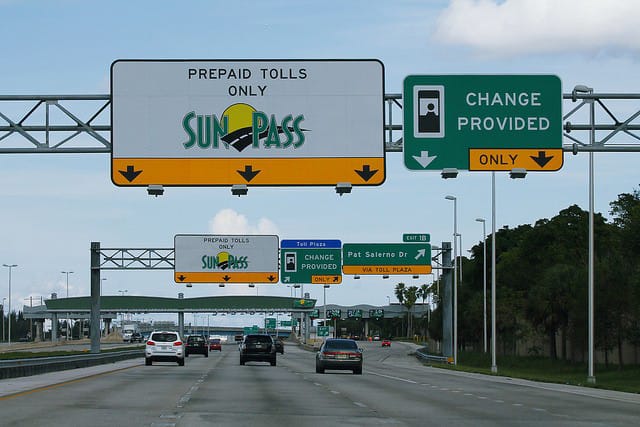
Empty US HWY 19
What will Tall Timbers be working on now?
The next phase for Tall Timbers involves working closely with the Legislature to remove Jefferson County as the stated terminus of the toll road. This will provide DOT and project engineers the needed flexibility to fully evaluate alignments along the I-10 corridor. Another focus will be removing the Legislatively-mandated construction start and completion dates. This will allow adequate time to demonstrate if there is actually a transportation need for the project; assess potential impacts to natural resources, conservation lands, and rural communities; and assess the fiscal impact of this multi-billion-dollar project. Both of these recommendations were included in the task force final report at the urging of Tall Timbers.
Tall Timbers will also continue our robust outreach and education efforts to ensure our members, the conservation community, and the public are informed about the next phase of the project, key issues of concern, and opportunities to participate in the planning process to ensure their voices are heard.
Timing
The Alternative Corridor Evaluation and the Project Development & Environment study will take approximately two years. With fewer opportunities for public participation compared to the task force process, this next phase will require vigilance by conservation organizations and the public to ensure that public and private conservation interests are protected from threats posed by the Suncoast Connector toll road. We will continue our work to keep you up to date on strategic opportunities for public input.
More on the Suncoast Connector Task Force Report
Of greatest interest to Tall Timbers was the final report developed by the Suncoast Connector toll road task force. That report included a series of “high-level needs” identified by the Task Force including improving safety, mobility and connectivity through access to a high speed, high capacity transportation corridor; protecting and enhancing public and private environmentally sensitive areas; enhancing emergency management; improving economic and workforce development; and enhancing rural broadband access.
The report also included task force-developed “guiding principles” to serve as direction for the next phase of the project. These guiding principles include maximizing use of existing facilities before building new transportation alternatives; ensuring consistency with existing local, regional, and state transportation plans; building transportation corridors that accommodate multiple modes of transportation; promoting long-term resilience; and protecting the environment.
For additional information: Contact Tall Timbers Planning Coordinator Neil Fleckenstein.
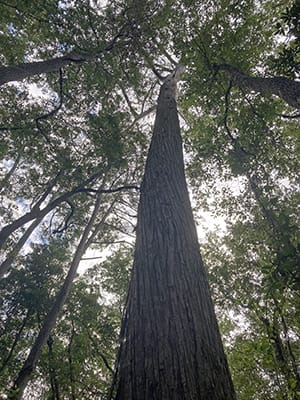
An old-growth pond cypress towers above a Madison County swamp that will be protected by a Tall Timbers conservation easement. Photo by Peter Kleinhenz.
Of Swamps and Spiders
By Peter Kleinhenz
Another spider on my neck?! I was five minutes into my hands and knees crawl through a squishy layer of muck, my body hemmed in by an interconnected tangle of shrubs and greenbrier vines, when I could feel yet another set of eight legs crawling down my back. It was early August, I was hot, and the assault of arachnids in the form of spiders and ticks was getting the best of me. Then I saw it.
Looming in front of me, so gargantuan that it created a hole in the screen of vegetation, was the sentinel of this particular patch of swamp. An enormous pond cypress, at least four feet across and 70 feet high, towered above all else. I squirmed my way to the trunk, put my hands on the bark, and appreciated the fact that here was another incredible natural feature of the Aucilla River watershed that would be protected forever thanks to a conservation-minded landowner with a passion for his land, and the efforts of Tall Timbers.
The slog through the swamp was part of the process to document the habitat conditions, species, and infrastructure on a Madison County, Florida property that is to be conserved via a donated conservation easement. The landowner, who has passionately worked to restore the property by planting longleaf pine, prescribed burning, and protecting his wetlands, recognized that his work could be erased in the future with a simple land sale after he passes. As a result, like several other landowners in the watershed, he generously decided to donate a conservation easement to Tall Timbers.
Little Blue Herons are one of the many wading bird species that find refuge in the conserved wetlands of the Aucilla and St. Marks River watersheds. Photo by Preston Ballard
Conservation easements work well for all parties involved, including the natural resources. A landowner can continue to live on, and even generate income from the land, while the significant natural areas of the property become legally safe from major disturbances in the future. Sometimes, however, a landowner wants to donate a conservation easement, but can’t benefit from the tax incentives or cover the upfront costs. What then?
Tall Timbers staff, in the last few months, have visited several properties with tremendous conservation value, but where a donated conservation easement is not an option. In these instances, the Land Conservancy staff at Tall Timbers has to get creative. To address this potential barrier head-on, Tall Timbers staff wrote and received a $7,066,860 Natural Resources Conservation Service-Regional Conservation Partnership Program (NRCS-RCPP) grant to, among other things, help fund the purchase of conservation easements in the Aucilla and St. Marks River watersheds.
Staff has also been working through other private and government-based funding streams, on a case-by-case basis, to make the permanent conservation of significant natural lands in our area a reality. While it’s a little bit early to divulge much about these projects, you can rest assured that we are working hard to conserve some of the most unique and important conservation lands in the Aucilla and St. Marks watersheds.
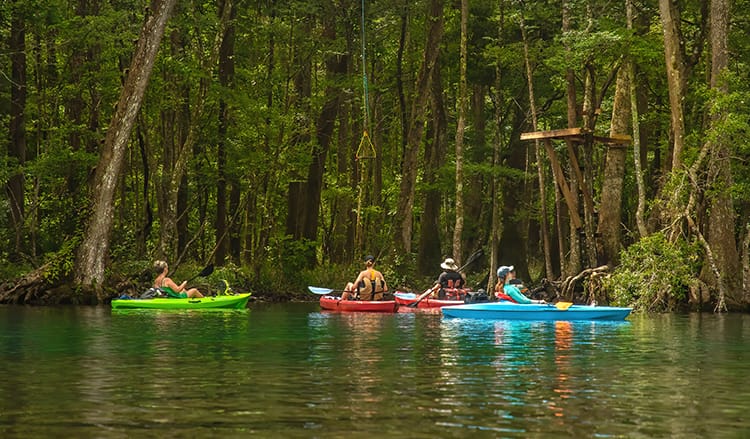
Kayakers explore Big Blue Spring, one of the most pristine springs in Florida. Photo by Preston Ballard
The control of invasive plants, such as this air potato, is critical for the health of our local watersheds and the species that inhabit them. Photo by Peter Kleinhenz
Simultaneous with land conservation efforts, Tall Timbers has sought to bring management assistance to the landowners in these watersheds through the NRCS-RCPP grant mentioned above. Individual landowners all the way up to homeowners’ associations have already contacted Tall Timbers regarding invasive plant management, prescribed burning, or other forms of restoration management. Landowners of properties, like the Madison County tract mentioned earlier, can apply for funding assistance to turn their land into even better wildlife habitat, and we encourage them to do just that. Conservation and land management are virtually one and the same in the Southeastern Coastal Plain, so we are placing an equally strong emphasis on both over the next five years.
The Tall Timbers Land Conservancy is working to conserve some of the most unique and wild places in the Aucilla and St. Marks River watersheds. Photo by Preston Ballard
If Tall Timbers is to make lasting and far-reaching impacts in these watersheds, we must also raise awareness among their residents about the importance of watershed conservation. A recent example comes in the form of the new Aucilla River watershed web pages on the Tall Timbers’ website. Brian Wiebler and I worked to get photos and content together, while Dixie Davis in the Tall Timbers Geospatial Lab produced an impressive interactive map. These two items support each other, enabling a visitor to the pages to familiarize themselves with our efforts to conserve the watershed, while giving them the means with which to experience it. I hope you’ll enjoy exploring these pages, and that you’ll enjoy exploring the watershed even more.
You can probably surmise by now that it’s been a busy few months, despite the omnipresent threat of COVID-19. As I sit here now, at home, writing this and thinking about all that we’ve been up to and plan to do, I feel like I’m caught up in a tornado of activities. It’s easy to get stressed, overwhelmed, and even discouraged at times. But a chigger bite is itching on my foot, and I immediately get carried back to where that bite likely came from.
I’m back in the swamp, covered in mud, with my hands on a tree that has grown for centuries, unconcerned about everything that has gone on around it. It has guarded this swamp, even when virtually every tree around it was cut. I look up into the canopy of this ancient sentinel and I know that all this work is so, so worth it.
If you have an interest in learning more about conserving your property within the Aucilla River or St. Marks River watersheds, please contact Peter Kleinhenz or Shane Wellendorf.
This gorgeous depressional wetland will be permanently conserved through a conservation easement donated to Tall Timbers. Photo by Peter Kleinhenz
By Neil Fleckenstein, Red Hills Planning Coordinator
Update — As many eNews readers are now aware, Tall Timbers is deeply concerned about the proposed Suncoast Connector toll road, a proposed 150+ mile toll road corridor extending from Citrus County through Jefferson County. (Background information below). The Suncoast Connector is just one component of the Multi-Use Corridors of Regional Economic Significance Program (M-CORES), hastily passed by the Florida Legislature in 2019.
A night skies image shows the rural Big Bend coast.
Tall Timbers continues to be actively engaged in this complex issue. We are working with subject matter experts on several important issue papers shedding light on key environmental, coastal resiliency, and economic issues related to the toll road; collaborating with local, regional, and state partners to protect our shared conservation and community interests; meeting with key leaders to share our concerns; and engaging in many outreach and education activities to keep interested parties like you up to speed on this issue.
Jefferson County Board of County Commissioners meeting
In recent weeks, COVID-19 has forced the postponement of in-person Task Force meetings. In their place, the Florida Department of Transportation (DOT) has coordinated two webinars to update Task Force members on key issues, and provide the public with opportunities to provide input. DOT is to be applauded for their efforts to continue this complex process amidst the pandemic. Unfortunately, public participation has suffered as many members of the public have been unable to weigh-in with their concerns. That said, during a recent webinar, 37 out of 38 public speakers opposed the Suncoast Connector toll road.
If you have not already done so, we encourage you to join the more than 1,000 concerned citizens who have signed up to receive periodic updates from Tall Timbers about this project.
Issue background — Tall Timbers remains alarmed about the proposed new toll road’s many potential negative impacts. US Highway 19, a four-lane divided roadway, runs throughout the length of the eight-county Suncoast Connector planning area and is substantially underutilized. In fact, for much of its route through the toll road planning area, US 19 functions at between 16 and 20 percent of its maximum service volume.
Aside from being unnecessary, a new toll road or the co-location of new travel lanes along the US 19 corridor would cost billions of dollars ─ an unnecessary luxury when Florida is struggling with declining tax revenues amidst the COVID-19 pandemic. (April tax collections based on March sales activity were down $773 million or 28 percent). Even without this economic crunch, it will be crucial in the future to avoid placing costly infrastructure in a flood-prone corridor, where over 50 percent of the study area is in a 100- or 500-year floodplain and 30 percent is vulnerable to category 5 storm surge and rising sea levels.
And then there are the irreplaceable natural treasures of the Big Bend region. Government, private landowners, and non-profits have invested millions of dollars protecting forests, wetlands, rivers, and focal species in the most undeveloped coastal area left in the Sunshine State.
Recommendations — For these and other reasons, Tall Timbers opposes the construction of a new toll road corridor or the co-location of new travel lanes within the existing US 19 corridor, from Jefferson County through Levy County. Instead, we support transportation improvements in Citrus County ─ which could include tolled and non-tolled roadways — to address mobility challenges in that rapidly growing county. (Notably, the population of Citrus County exceeds the combined population of the other seven counties in the study area).
North of Citrus County, the existing US 19 corridor is highly underutilized and is not in need of new tolled travel lanes. As an alternative, mobility projects that are broadly supported by local communities, businesses and residents, could enhance traffic flow near rural communities. We also recommend further evaluation by DOT of the consensus recommendations contained in the 2016 Interstate-75 Relief Task Force for enhancing traffic flow in Central and North Florida.
For additional information — contact Red Hills Planning Coordinator Neil Fleckenstein or Tall Timbers CEO/President Bill Palmer.
The M-CORES program, which includes the proposed Suncoast Connector Toll Road in Jefferson County, passed through the Florida Legislature at breakneck speed with little review or analysis. Tall Timbers has a number of concerns given the potential for significant and wide spread impacts. These include fragmenting public and private conservation lands, robbing business from Main Street Monticello, impacting our rivers and other water resources, and making prescribed fire more difficult and costly.
Join us in asking the Jefferson County Board of County Commissioners to OPPOSE the Suncoast Connector toll road and its path through Jefferson County.
Take action now with our easy email form.
Send an email to all five Jefferson County Board of County Commissioners with one click!
Burn prioritization modeling seminars and fire modeling tools are supported by Wildland Fire Science to train managers in the important planning stages of prescribed fires.
Educating and guiding the next generation of fire researchers and managers is a key goal of Wildland Fire Science and a resource for testing new ideas in fire research.
Tall Timbers hosts the premier fire technology transfer organization—the Southern Fire Exchange. This JFSP funded effort helps connect research to management through webinars, workshops, and support of the Prescribed Fire Science Consortium.
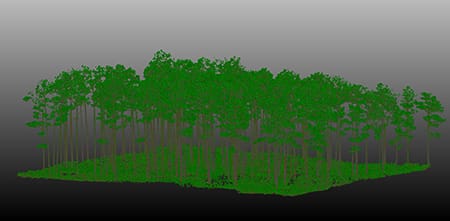
Working with partners in the Prescribed Fire Science Consortium, the program is building nexgen 3-D fuel beds using terrestrial LiDAR and novel sampling techniques to power new fire behavior models for prescribed fire managers. This work links to Tall Timbers work in wildlife habitat usage and ecological forestry.
The Longleaf Legacy landscape prescribed fire burn team arm of Wildland Fire Science works directly with landowners and partners to effectively put fire on the ground and promote prescribed fire throughout the region.
Tall Timbers is leading an effort to map fire regimes at the landscape scale. Staff work with numerous agencies to evaluate fire records and satellite imagery to build this critical conservation database. https://skfb.ly/6DqOY
Tall Timbers hosts the Prescribed Fire Science Consortium, a national network of researchers and managers who promote integrated research and management to advance next generation tools for fire practitioners. https://arcg.is/1DSjDT
We are linking physics and field observations to understand the fluid dynamics of fire behavior surface fire regimes. Our work combines field observations using advanced thermal imaging techniques, laboratory studies, and coupled fire-atmospheric modeling to help managers improve outcomes of managed fire regimes.
Selected Publications authored by Wildland Fire Science staff.
Staff and researchers support Federal fire training by serving as a cadre for NWCG training courses, ranging from basic wildland fire to advanced fire effects.
(PFTC) specializes in training fire fighters the principles and techniques of prescribed fire through practical hands-on experience. https://www.fws.gov/fire/pftc/
Private land owners are the largest source of prescribed fire in the country. These land owners and the culture of fire that was maintained by them during decades of suppression are a part of why Tall Timbers is a world-wide center for prescribed fire science. Workshops and fire training are a critical focus of the Longleaf Legacy Landscape Burn Team and our support of the Georgia Forestry Commission Prescribed Fire Center in Marion County.
The conserved lands of the Greater Red Hills region are found on working, income-producing properties that support agriculture, forestry, and recreational hunting. These properties contribute $272 million annually to local economies and support 2,300 jobs. [link to Planning & Advocacy section] The landowners’ strong stewardship ethic preserves their working lands while replenishing drinking water supplies, protecting water quality, and providing wildlife habitat for dozens of rare and endangered species. Tall Timbers’ conservation easements on these working properties encourage landowners to retain their traditional livelihood by keeping farms in family ownership.
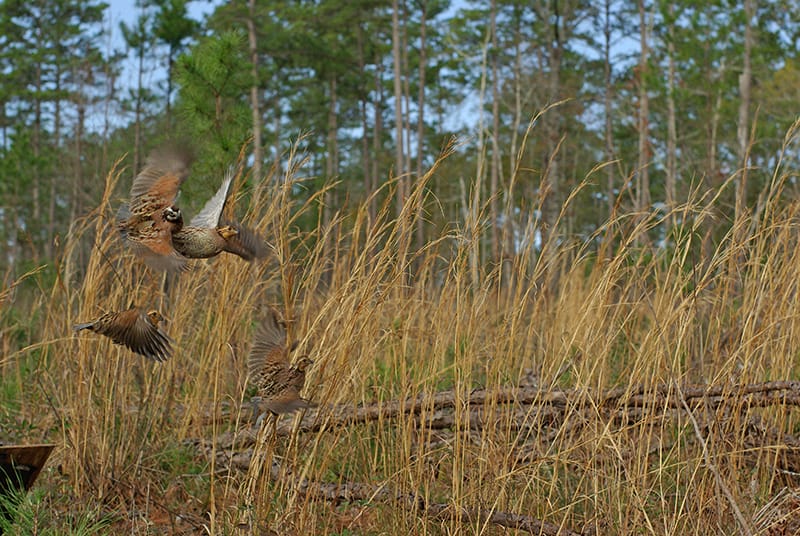
Home to world-class wild quail populations, the Greater Red Hills region contains the largest concentration of gamebird preserves in the United States. These preserves also support the largest community of Red-cockaded woodpeckers on private lands. Indicators of high quality habitat found here include the gopher tortoise, Bachman’s sparrow, fox squirrel, and many amphibians. Tall Timbers’ conservation easements identify and protect the critical habitats of these species.
The region also boasts outstanding aquatic resources. Large river systems, like the Flint/Apalachicola, Ochlockonee, and Aucilla, flow from Georgia and feed into the Gulf of Mexico to support some of the world’s most productive estuaries. Large disappearing sinkhole lakes, like Iamonia, Miccosukee, and Jackson, provide habitat for an array of aquatic species and migratory birds. Tall Timbers’ conservation easements protect these vital watersheds and wetlands that are the lifeblood for the ecological health of the region.
Once dominated by longleaf pine, our pine woodlands support abundant wildlife and local economies. These forests need prescribed fire to stay healthy. Herbert L. Stoddard and his associates Ed and Roy Komarek were pioneers in this emerging scientific field during the mid-20th century. Tall Timbers continues that legacy with applied research on prescribed fire and land management. Today, there is a tremendous need to expand prescribed fire use beyond the Red Hills to ensure ecosystem health and reduce wildfire risk. Additionally, Tall Timbers uses conservation easements to permanently protect private woodlands while balancing the need for economic return from selective timbering.