Staying up to date on conservation efforts and important issues affecting the Red Hills
By Neil Fleckenstein, Land Conservancy Planning Coordinator
The Tall Timbers website is a great way to access information on a wide array of topics related to Tall Timbers and the Red Hills region. The Tall Timbers Land Conservancy (TTLC) portion of the site is focused on two important aspects of our work: land conservation and land use planning/advocacy. By clicking on http://www.talltimbers.org/landconservancy.html, you can learn the basics about conservation easements including financial incentives for doing an easement, easement process and costs, and answers to common easement-related questions.
The TTLC portion of the Tall Timbers website also includes a link to stay informed about the growth and infrastructure-related issues that could adversely affect the Red Hills region. Web surfers pointing their browser to http://www.talltimbers.org/lc-advocacy.html can access detailed issue briefs organized in four subject areas: Land Use and Community Planning, Transportation and Infrastructure, Water Resources, and Air Quality. For example, the Water Resources section includes issue briefs on protecting the Wacissa River from commercial water extraction and the proposed Tired Creek Lake in Grady County.
An important part of each brief is an overview of the issue, how it could affect the Red Hills, and what the public can do to help. We believe this is a great way to provide up to date information on important issues affecting the Red Hills. Tall Timbers staff will also use Twitter (@talltimbers1958) and email to communicate time sensitive information to constituents.
Please contact TTLC Planning Coordinator Neil Fleckenstein at neil@ttrs.org or 850-893-4153, ext. 335 with any comments or questions.
By: Kevin McGorty, Director, Tall Timbers Land Conservancy
The Georgia General Assembly recently passed a major bill, HB 386, (http://www.house.ga.gov/Documents/HB386-LC343484S.pdf) tinkering with Georgia's tax code. The Governor is expected to sign the legislation. Buried deep within the pages of the bill are major reforms to Georgia’s popular tax credit incentives administered by the Georgia Land Conservation Program. Since 2007, the Tax Credit Program has protected over 116,000 acres through the certification of 343 conservation donations. Last year the program got a boost when the Georgia General Assembly passed a bill that allowed the tax credits to be transferred from their original donors to any third parties with state income tax liabilities. It was anticipated that the transfer of tax credits would encourage small farm and forest land owners to consider conservation of their properties as they could sell the tax credits they could not use. Now with some of the tightening provisions, the success of the program is unclear. A highlight of a few of those provisions include:
Starting January 1, 2014, qualified nonprofit organizations must be accredited by the Land Trust Accreditation Commission. Currently, only five of the 27 land trusts in the state are accredited. Tall Timbers is a fully accredited land trust.
The cap on the tax credit is $250,000 for individuals and a total of $500,000 for all parties in a partnership (reduced from previous $1 million).
Subdivision is prohibited for a donated easement of less than 500 acres and limited to one subdivision for a donated easement of 500 acres or more.
There is a $5,000 application fee.
Requires land owners to submit an appraisal to be reviewed by the State Properties Commission.
Any tax credits earned by the taxpayer in the taxable years beginning on or after January 1, 2013 may be transferred or sold only once.
No credit shall be allowed with respect to any amount deducted from taxable net income by the taxpayer as a charitable contribution.
There are a number of other provisions that ensure that the conservation values on a property are protected, thus upholding the public interest in the program. While other states such as Colorado and Virginia offer more flexible programs, hopefully, Georgia’s attempt at offering a transferrable tax credit will be a work in progress and—eventually—a success.
What is the Economic Impact of the Red Hills Hunting Plantations?
Hunting plantations are a major economic driver in the Red Hills.
An important part of protecting the rural character of the Red Hills region has been Tall Timbers’ ability to demonstrate that these rural lands pay more than their fair share to support local services and infrastructure while also providing vital ecosystem services such as clean abundant water, fresh air, and wildlife habitat.
Increasingly however, the message that truly resonates with elected officials and others who make decisions affecting the Red Hills can be summed up in one word: “Jobs.” While clean water and air is indispensable to everyday life, demonstrating the region’s economic and job-related impacts on local communities is crucial during this difficult economic time.
Planning Coordinator Neil Fleckenstein is working on a project that will shed light on these important issues. This project will allow us to estimate the direct and indirect economic impact and job creation provided by Red Hills quail hunting properties. We believe this study will demonstrate what we have long known – that the Red Hills is a major driver of local economies and a significant contributor to the overall regional economy.
One of the first steps in the process is developing and distributing a survey that will be sent to landowners and land managers throughout the Red Hills. This survey is a critical part of this project and the primary means of gathering the information necessary to allow us to estimate the overall economic impact and job creation associated with the Red Hills hunting community. Red Hills landowner participation is crucial as we must obtain a high response rate to accurately estimate the overall economic impact of the region.
This project will play an important role in our continuing efforts to conserve the Red Hills and we would greatly appreciate your support of this effort. You will be hearing much more about this project in the coming weeks and months. Questions about this project can be directed to TTLC Planning Coordinator Neil Fleckenstein at 850-893-4153, ext. 335.
The Tall Timbers Land Conservancy educates about conserving the region at several events
While the focus of our work at the Tall Timbers Land Conservancy (TTLC) is on land conservation, land use planning, and advocacy, we are also involved in efforts to educate the public about the importance of the Red Hills region and why it is deserving of protection. Usually these opportunities are spread throughout the year. This year however, staff were involved in several high profile events in just one week.
On October 13, the 5th annual Pine Run 20K took place at Tall Timbers. More than 200 runners set out on the challenging 12.4 mile course with 192 eventually finishing the event. This race provided a rare opportunity for a small segment of the public to see Tall Timbers in a way that few people do. Both Tall Timbers and the Gulf Winds Track Club, the race sponsor, benefit from the relationship we have developed. The Pine Run 20K has become one of the most popular long distance trail races sponsored by Gulf Winds. Tall Timbers meanwhile has benefitted from excellent media attention and networking opportunities, gained additional members, and received annual financial contributions from Gulf Winds Track Club.
October 14, the day after the Pine Run 20K, was the biennial Tall Timbers Open House. TTLC Planning Coordinator Neil Fleckenstein served as wagon tour wrangler, coordinating 21 wagon tours of Tall Timbers for more than 400 people. Wagon tour interpreters extraordinaire included Shane Wellendorf, Eric Staller, Kim Sash, Bud Bostick and Dr. Christine Ambrose discussing the history of Tall Timbers and explaining why the Red Hills is such a unique landscape. The Open House was a great opportunity to educate the public about the importance of conserving the Red Hills.
On October 18, the LeRoy Collins Library in downtown Tallahassee was the scene for a completely different kind of educational event. Planning Coordinator Neil Fleckenstein coordinated a candidates’ forum attended by nearly all local and state candidates running for office in Leon County. The forum was co-sponsored by the League of Women Voters of Tallahassee and the Big Bend Environmental Forum, a volunteer organization consisting of 17 environmental and conservation organizations in the Florida Big Bend.
More than 255 people attended the October 18 forum and an earlier event held in July. These events provided a great opportunity for Tall Timbers staff to interact with all of the candidates seeking local and state office and a venue to ask the candidates tough questions about the environment and growth management, two issues that are often overlooked in other candidate’ events. Given our advocacy work on behalf of the Red Hills region, our efforts coordinating these two candidates’ forums was time well invested.
The final event of the week was the Ochlockonee River Clean-up, which has been coordinated by TTLC planning staff for the past 8 years. This annual event is one of the largest volunteer opportunities in Thomas County. More than 70 volunteers helped this year providing us with a great chance to talk about the importance of protecting water quality in the Red Hills. Volunteers over the years in this event have helped remove more than 40,000 pounds of trash from the Ochlockonee River floodplain, a key natural resource in the Red Hills and a designated Outstanding Florida Waterbody.
At left, recyclables collected at the Ochlockonee River Clean-up; at right, Tall Timbers Conservation Coordinator Shane Wellendorf with the biggest catch of the day, a 16-foot boat.
Over the past week, all members of the Tall Timbers Land Conservancy played a vital role in sharing with the public our passion for protecting the Red Hills. These efforts, while secondary to our focus on conserving and protecting the Red Hills, are critical for educating the public and gaining their support for the important work we do every day.
By Kevin McGorty, Director Tall Timbers Land Conservancy
A key goal of Tall Timbers’ Strategic Plan is to work with landowners in closing the gap between conserved and unprotected lands in the Red Hills Region of north Florida and southwest Georgia. To date nearly 167,000 of the 300,000 acre Red Hills core area are permanently conserved, mostly by donated conservation easements. This is a remarkable success story, but more work needs to be done to ensure the sustainability for the future of this unique and beautiful region.
With this goal in mind and a love of their land, George and Cyndi Watkins recently donated a conservation easement to Tall Timbers for the remaining 1,595 acres of Dogwood Plantation. Dogwood is located on the Florida-Georgia state line, approximately 8 miles north of Monticello in Jefferson County, Florida and 10 miles south of Thomasville in Thomas County, Georgia. The property was originally part of Greenwood Plantation established in 1827 by Thomas P. Jones.
In 2004, the Watkins’ donated a 711 acre easement protecting the Wards Creek portion of their property. The phase II easement continues protecting the broad forested floodplain associated with Wards Creek, a tributary stream to Lake Miccosukee and part of the St. Marks River watershed, which are both considered important recharge areas for the Floridan Aquifer. The uplands portion of the property contains large longleaf which are extremely rare and worthy of additional protection. Dogwood Plantation has historically managed much of their uplands in a relatively natural way including frequent prescribed fire and multi-aged timber management with single tree harvest. This has allowed the sustainability of keystone plant and animal species. These species include the Bachman sparrow and Gopher tortoise, both listed as a state threatened species in Georgia and Florida.
Dogwood Plantation is strategically located and is adjacent to other conservation easements of similar critical habitats and management styles. At a landscape scale, this conservation easement will ensure connectively and similarity amongst these lands providing significant benefit to Tall Timbers’ efforts to conserve the greater Red Hills Region.
Reflecting the love for his land, George Watkins said it best “it is an honor to be the stewards of this property and comforting to know it is protected in perpetuity”.
The M-CORES program, which includes the proposed Suncoast Connector Toll Road in Jefferson County, passed through the Florida Legislature at breakneck speed with little review or analysis. Tall Timbers has a number of concerns given the potential for significant and wide spread impacts. These include fragmenting public and private conservation lands, robbing business from Main Street Monticello, impacting our rivers and other water resources, and making prescribed fire more difficult and costly.
Join us in asking the Jefferson County Board of County Commissioners to OPPOSE the Suncoast Connector toll road and its path through Jefferson County.
Take action now with our easy email form.
Send an email to all five Jefferson County Board of County Commissioners with one click!
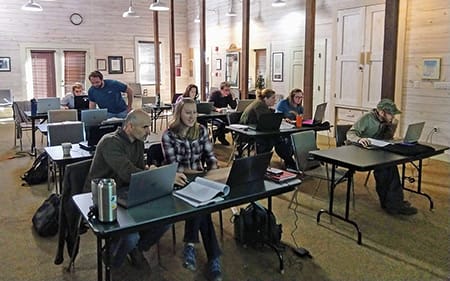
Burn prioritization modeling seminars and fire modeling tools are supported by Wildland Fire Science to train managers in the important planning stages of prescribed fires.
Educating and guiding the next generation of fire researchers and managers is a key goal of Wildland Fire Science and a resource for testing new ideas in fire research.
Tall Timbers hosts the premier fire technology transfer organization—the Southern Fire Exchange. This JFSP funded effort helps connect research to management through webinars, workshops, and support of the Prescribed Fire Science Consortium.
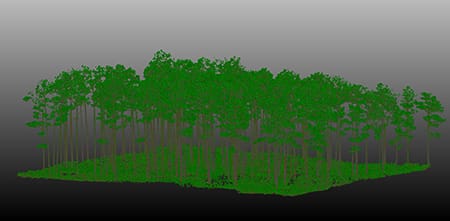
Working with partners in the Prescribed Fire Science Consortium, the program is building nexgen 3-D fuel beds using terrestrial LiDAR and novel sampling techniques to power new fire behavior models for prescribed fire managers. This work links to Tall Timbers work in wildlife habitat usage and ecological forestry.
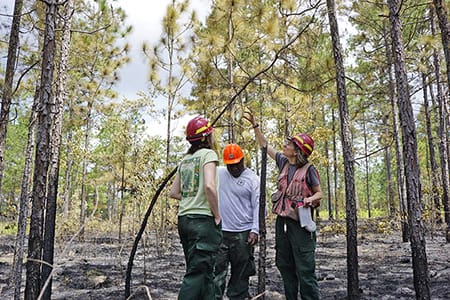
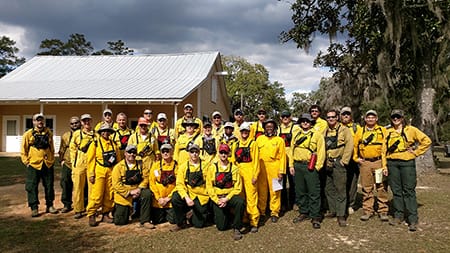
The Longleaf Legacy landscape prescribed fire burn team arm of Wildland Fire Science works directly with landowners and partners to effectively put fire on the ground and promote prescribed fire throughout the region.
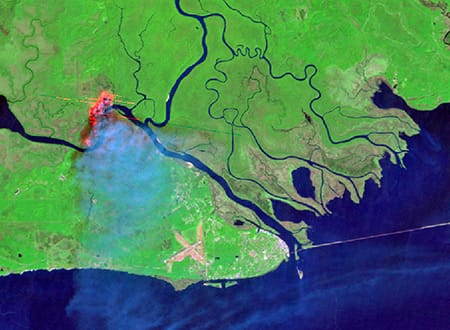
Tall Timbers is leading an effort to map fire regimes at the landscape scale. Staff work with numerous agencies to evaluate fire records and satellite imagery to build this critical conservation database. https://skfb.ly/6DqOY
Tall Timbers hosts the Prescribed Fire Science Consortium, a national network of researchers and managers who promote integrated research and management to advance next generation tools for fire practitioners. https://arcg.is/1DSjDT
We are linking physics and field observations to understand the fluid dynamics of fire behavior surface fire regimes. Our work combines field observations using advanced thermal imaging techniques, laboratory studies, and coupled fire-atmospheric modeling to help managers improve outcomes of managed fire regimes.
Selected Publications authored by Wildland Fire Science staff.
Staff and researchers support Federal fire training by serving as a cadre for NWCG training courses, ranging from basic wildland fire to advanced fire effects.
(PFTC) specializes in training fire fighters the principles and techniques of prescribed fire through practical hands-on experience. https://www.fws.gov/fire/pftc/
Private land owners are the largest source of prescribed fire in the country. These land owners and the culture of fire that was maintained by them during decades of suppression are a part of why Tall Timbers is a world-wide center for prescribed fire science. Workshops and fire training are a critical focus of the Longleaf Legacy Landscape Burn Team and our support of the Georgia Forestry Commission Prescribed Fire Center in Marion County.
The conserved lands of the Greater Red Hills region are found on working, income-producing properties that support agriculture, forestry, and recreational hunting. These properties contribute $272 million annually to local economies and support 2,300 jobs. [link to Planning & Advocacy section] The landowners’ strong stewardship ethic preserves their working lands while replenishing drinking water supplies, protecting water quality, and providing wildlife habitat for dozens of rare and endangered species. Tall Timbers’ conservation easements on these working properties encourage landowners to retain their traditional livelihood by keeping farms in family ownership.
Home to world-class wild quail populations, the Greater Red Hills region contains the largest concentration of gamebird preserves in the United States. These preserves also support the largest community of Red-cockaded woodpeckers on private lands. Indicators of high quality habitat found here include the gopher tortoise, Bachman’s sparrow, fox squirrel, and many amphibians. Tall Timbers’ conservation easements identify and protect the critical habitats of these species.
The region also boasts outstanding aquatic resources. Large river systems, like the Flint/Apalachicola, Ochlockonee, and Aucilla, flow from Georgia and feed into the Gulf of Mexico to support some of the world’s most productive estuaries. Large disappearing sinkhole lakes, like Iamonia, Miccosukee, and Jackson, provide habitat for an array of aquatic species and migratory birds. Tall Timbers’ conservation easements protect these vital watersheds and wetlands that are the lifeblood for the ecological health of the region.
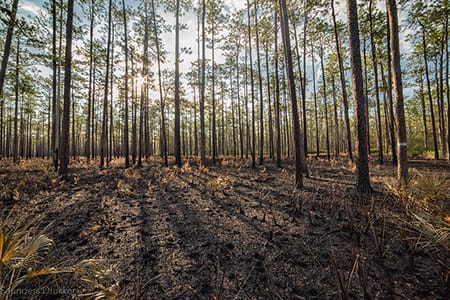
Once dominated by longleaf pine, our pine woodlands support abundant wildlife and local economies. These forests need prescribed fire to stay healthy. Herbert L. Stoddard and his associates Ed and Roy Komarek were pioneers in this emerging scientific field during the mid-20th century. Tall Timbers continues that legacy with applied research on prescribed fire and land management. Today, there is a tremendous need to expand prescribed fire use beyond the Red Hills to ensure ecosystem health and reduce wildfire risk. Additionally, Tall Timbers uses conservation easements to permanently protect private woodlands while balancing the need for economic return from selective timbering.

 The Georgia General Assembly recently passed a major bill, HB 386, (


 A key goal of Tall Timbers’ Strategic Plan is to work with landowners in closing the gap between conserved and unprotected lands in the Red Hills Region of north Florida and southwest Georgia. To date nearly 167,000 of the 300,000 acre Red Hills core area are permanently conserved, mostly by donated conservation easements. This is a remarkable success story, but more work needs to be done to ensure the sustainability for the future of this unique and beautiful region.