Congress recently renewed, through 2013, an incentive that enhances the tax benefits of protecting land by donating a conservation easement. This invaluable tool has helped Tall Timbers accelerate the pace of conservation by working with willing landowners to protect over 52,000 acres on 51 family properties since the enhanced tax incentive was first enacted in 2006.
The legislation allows easement donors to:
Deduct up to 50% of their adjusted gross income in any year (up from 30%);
Deduct up to 100% of their adjusted gross income if the majority of that income came from farming, ranching or forestry; and
Continue to take deductions for as long as 16 years (previously 6 years).
According to Rand Wentworth, President of the Land Trust Alliance, “Taken as a whole with the gradual improvement of the real estate market and the reinstatement of the tax incentive this is a very good year for landowners to make a donation of a conservation easement.” Congress has a lot on its plate with the debt ceiling, sequestration, Farm Bill and other legislative priorities. There is no certainty that the easement incentive will be renewed for 2014. The only certainty is that it is in place this year.
A conservation easement is a legal agreement between a landowner and a non-profit land trust like Tall Timbers, or government agency that permanently limits uses of the land in order to protect important conservation values. For example, typical Tall Timbers’ easements restrict the amount of building and development on the property, but fully allow the landowner the continued use of the property for productive farming, forestry, hunting and wildlife management. Easements allow landowners to sell or pass the land and on heirs. In return, landowners are eligible for federal, state and in some cases local tax incentives. For most easement donors in the greater Red Hills region, the appraised range of easement value for tax deduction purposes has been between 25 and 60% depending on location of property and terms of easement.
As an example of how the federal enhanced conservation tax incentives work, under the prior law, an agricultural landowner earning $50,000 a year who donated a conservation easement worth $1 million could take a total of no more than $90,000 in tax deductions. Under the new law, that landowner can take as much as $800,000 in tax deductions – still less than the full value of their donation, but a significant increase. Certainly landowners need to consult their financial advisors regarding their particular situation, but the incentive has been very popular.
There is strong bipartisan support in Congress for making the federal enhanced incentive permanent. In the 112th Congress H.R. 1964 and S. 339 had 311 House and 28 Senate co-sponsors from 48 states, including majorities of Democrats and Republicans in the House. U.S. Representative Steve Southerland, II, Florida, District 2, supported the House Bill.
For more information about the incentive please see the Land Trust Alliance fact sheet entitled 20 Questions: Conservation and the Fiscal Cliff Deal www.lta.org/easementincentive. In addition, a recent Forbes article on charitable giving in 2013 further explains the incentive http://onforb.es/V5ucbO . Finally, to learn about Tall Timbers’ conservation easement program please visit http://www.talltimbers.org/landconservancy.html .
Tall Timbers history wins Silver Medal from the Florida Book Awards
The Legacy of a Red Hills Hunting Plantation: Tall Timbers Research Station & Land Conservancy has won the Silver Medal in the Florida Book Awards Visual Arts Category for 2012. This history of Tall Timbers by Robert L. Crawford and William R. Brueckheimer traces the evolution of Tall Timbers benefactor Henry Beadel from sportsman and naturalist to conservationist. Complemented by a wealth of previously unpublished, rare vintage photographs, it follows the transformation of the plantation into what its founders envisioned — a long-term research station, independent of government or academic funding and control.
The book was nominated by its publisher, the University Press of Florida. According to Florida Book Awards Co-Director Lisa Tendrich Frank, “In its seven years, the program has honored many of the Sunshine State’s best authors. It is already the nation’s most comprehensive statewide program, and the program promises to bring more distinction to our talent-rich state.”
To further commemorate this achievement, a signed copy of The Legacy of a Red Hills Hunting Plantation will be included in two public displays of past Florida Book Award winners that are frequented by hundreds of people every day. One of the signed copies will be placed in the Governor’s Mansion’s Library. A second copy will be included in the permanent collection maintained in the lobby of Florida State University’s Main Library (which hosts the Florida Book Awards).
Governor Whitman to speak at upcoming Red Hills Spring Dinner
The Honorable Christine Todd Whitman former Governor of New Jersey, who served from 1994 until 2001, will be the featured guest speaker at the Red Hills Spring Dinner on Thursday, March 14, 2013 at Tall Timbers. Governor Whitman served in the cabinet of President George W. Bush as Administrator of the Environmental Protection Agency. As Governor, she earned praise from both Republicans and Democrats for her commitment to preserve a record amount of New Jersey land as permanent green space. As EPA Administrator, she promoted common-sense environmental improvements such as water-shed based water protection policies. She is the author of a New York Time’s best seller, It’s My Party Too. Currently she is the president of The Whitman Strategy Group, a consulting firm that specializes in energy and environmental issues.
This biennial dinner has become one of the most captivating events in the Red Hills region. In addition to hearing from nationally recognized speakers on issues affecting land conservation in America, the dinner also honors those families who have donated conservation easements to Tall Timbers over the last two years.
This special event is held on the lawn of the historic Beadel House overlooking majestic Lake Iamonia. The event begins with cocktails at 5:30 p.m. with full dinner by Mozaik to follow. Tickets are $50.00 per person and seating is limited. To reserve your seat, please contact Jennifer Roberts at jroberts@ttrs.org or (850)893-4153 x228 by March 6, 2013.
147 million additional reasons to love the Red Hills!
By Neil Fleckenstein, Red Hills Planning Coordinator
One year ago, Tall Timbers reached out to many local land owners asking their help with an ambitious project — the first ever comprehensive economic impact analysis of working rural lands in the Red Hills Region. Tall Timbers, along with our project partner the Center for Economic Forecasting and Analysis (CEFA) at Florida State University, undertook this initiative because despite the Red Hills playing a vital role protecting our drinking water, clean air, and wildlife habitat, the messages that truly resonate with many officials and others who make decisions that directly affect the Red Hills region are “jobs” and “economic impact.”
Quail hunting generates a $147 million impact on Red Hills’ economies.
The most important part of this study was our survey of the owners of 110 Red Hills’ hunting properties and other working rural lands, each over 500 acres. We received detailed responses from more than 66 percent of the owners surveyed, which is a fantastic response rate. Survey respondents reported owning well over 300,000 acres in the Red Hills. A huge “Thanks” to the many landowners who helped us with this project!
CEFA’s economic analysis found that in 2012, the regional economic impact of Red Hills’ hunting properties exceeded $147 million. This tremendous impact is the result of a wide range of operating, capital improvement, and discretionary spending as well as local charitable contributions that benefit every Red Hills’ community. In addition, over 1,400 jobs are directly or indirectly related to Red Hills’ hunting properties. These 1,400 jobs generated more than $51 million in total employment income meaning they paid more than the average wage in nearly every Red Hills’ county.
One unique aspect of this project is a county-specific focus on the economic and employment impacts for individual Red Hills’ counties. This provided unique insights into the importance of working rural lands are for small and medium sized businesses throughout the Region.
The results of the study are contained in a publication titled The Economic Impact of the Red Hills Region of Southwest Georgia and North Florida(click here for a PDF file of this publication). This study will play an important role in Tall Timbers’ efforts to educate elected officials, other community leaders, landowners, and the general public about the tremendous economic impact and job creation generated by Red Hills’ hunting lands and other working properties.
Photo, above, right. GT Metal Works, co-owned by Todd Ferrell and Dallas Wilcox, is one of many local businesses supported by Red Hills’ working rural lands
As an aside, we will soon undertake a similar project for the hunting lands in the greater Albany, Georgia area and look forward to working with landowners in those communities.
Please contact Red Hills Planning Coordinator Neil Fleckenstein at 850-893-4153, ext. 335 or Neil@ttrs.org if you have any questions about this important project.
Celebrating and conserving one of “America’s Last Great Places”
By Georgia Ackerman
The Greater Red Hills Awareness Initiative was launched last November at Tall Timbers with the overarching goal of broadening public awareness about the matchless, revered American landscape known as the Red Hills. This public awareness about the ecology, history and culture of the Red Hills begins at home with us, the residents of the Region. For example, did you know that we live in a place designated by The Nature Conservancy as one of “America’s Last Great Places?” This eco-region stretching from Thomasville to Tallahassee, nicknamed the land between two rivers, is rich in biological diversity, historic resources, and scenic beauty and public recreational opportunities. Can you name our two rivers flowing to the east and west of the Region or perhaps, where these rivers begin or end? Correct! Both Ochlockonee and Aucilla rivers originate in Georgia and meander to the gulf serving as a lifeline between coastal and northern wild lands.
2013 map of Plantations and protected lands within the Red Hills and Southwest Georgia regions. Map by Kim Sash.
Over the past few months, Tall Timbers, along with other organizations and community leaders from Georgia and Florida, has worked collaboratively to communicate more fully on existing public outreach activities and plan some new, exciting awareness events and undertakings. It seems that there are limitless choices to help us celebrate the history, culture, and ecology of this enchanted place in which we live. Additionally, here are a just few new opportunities evolving in the coming weeks planned by Initiative partners:
Exploring the Red Hills blog in the Tallahassee Democrat with writers sharing stories about a favorite regional experience;
Red Hills Speakers Bureau with experts in fields of history, culture, and ecology of our Region; and
Red Hills Second Saturday series with guest educators at rotating venues throughout the Region.
By increasing awareness and appreciation for the remarkable resources of our distinctive landscape, we can simultaneously celebrate and conserve what makes the Red Hills Region truly unique.
Georgia Ackerman is Project Manger of the Greater Red Hills Awareness Initiative at Tall Timbers Research Station and Land Conservancy. She greatly enjoys exploring the trails and waterways of the Region. Georgia can be reached at gackerman@ttrs.org or 850-893-4153, ext 345.
Recent Sustainable Tallahassee story in Tallahassee Democrat
The M-CORES program, which includes the proposed Suncoast Connector Toll Road in Jefferson County, passed through the Florida Legislature at breakneck speed with little review or analysis. Tall Timbers has a number of concerns given the potential for significant and wide spread impacts. These include fragmenting public and private conservation lands, robbing business from Main Street Monticello, impacting our rivers and other water resources, and making prescribed fire more difficult and costly.
Join us in asking the Jefferson County Board of County Commissioners to OPPOSE the Suncoast Connector toll road and its path through Jefferson County.
Take action now with our easy email form.
Send an email to all five Jefferson County Board of County Commissioners with one click!
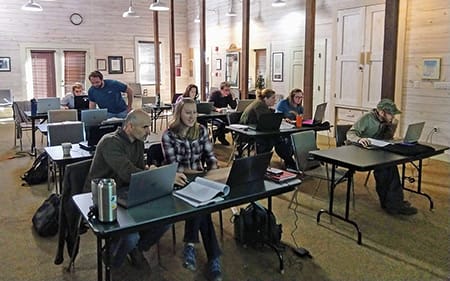
Burn prioritization modeling seminars and fire modeling tools are supported by Wildland Fire Science to train managers in the important planning stages of prescribed fires.
Educating and guiding the next generation of fire researchers and managers is a key goal of Wildland Fire Science and a resource for testing new ideas in fire research.
Tall Timbers hosts the premier fire technology transfer organization—the Southern Fire Exchange. This JFSP funded effort helps connect research to management through webinars, workshops, and support of the Prescribed Fire Science Consortium.
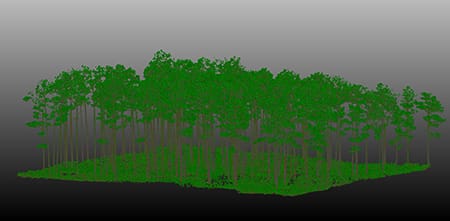
Working with partners in the Prescribed Fire Science Consortium, the program is building nexgen 3-D fuel beds using terrestrial LiDAR and novel sampling techniques to power new fire behavior models for prescribed fire managers. This work links to Tall Timbers work in wildlife habitat usage and ecological forestry.
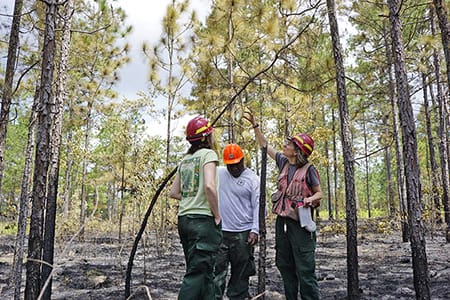
The Longleaf Legacy landscape prescribed fire burn team arm of Wildland Fire Science works directly with landowners and partners to effectively put fire on the ground and promote prescribed fire throughout the region.
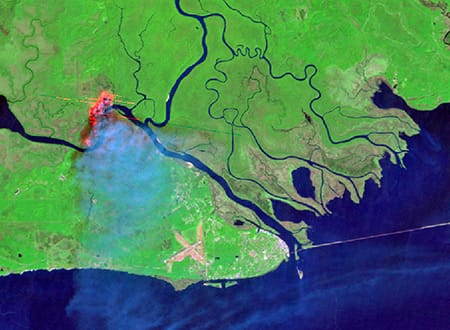
Tall Timbers is leading an effort to map fire regimes at the landscape scale. Staff work with numerous agencies to evaluate fire records and satellite imagery to build this critical conservation database. https://skfb.ly/6DqOY
Tall Timbers hosts the Prescribed Fire Science Consortium, a national network of researchers and managers who promote integrated research and management to advance next generation tools for fire practitioners. https://arcg.is/1DSjDT
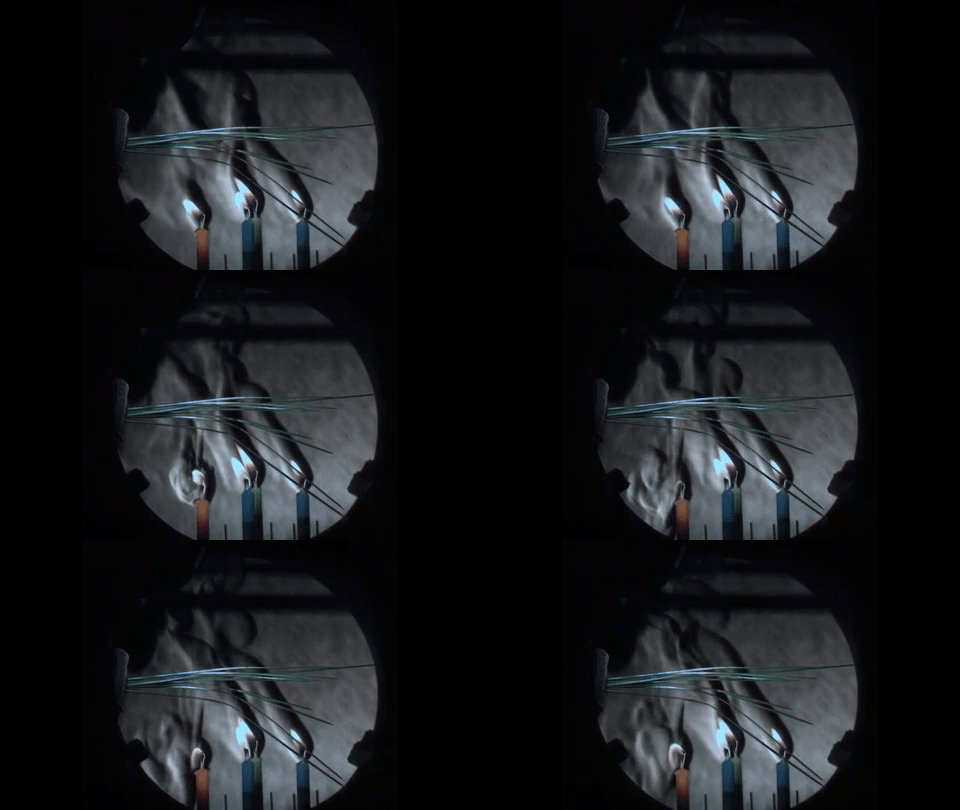
We are linking physics and field observations to understand the fluid dynamics of fire behavior surface fire regimes. Our work combines field observations using advanced thermal imaging techniques, laboratory studies, and coupled fire-atmospheric modeling to help managers improve outcomes of managed fire regimes.
Selected Publications authored by Wildland Fire Science staff.
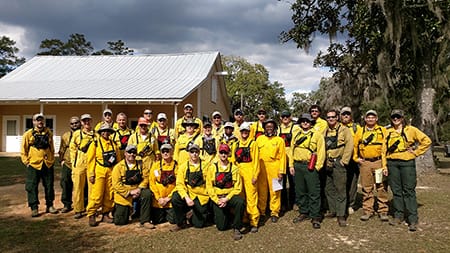
Staff and researchers support Federal fire training by serving as a cadre for NWCG training courses, ranging from basic wildland fire to advanced fire effects.
(PFTC) specializes in training fire fighters the principles and techniques of prescribed fire through practical hands-on experience. https://www.fws.gov/fire/pftc/
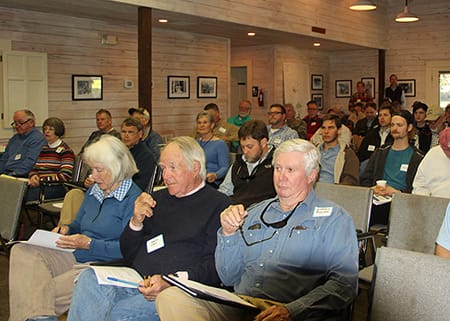
Private land owners are the largest source of prescribed fire in the country. These land owners and the culture of fire that was maintained by them during decades of suppression are a part of why Tall Timbers is a world-wide center for prescribed fire science. Workshops and fire training are a critical focus of the Longleaf Legacy Landscape Burn Team and our support of the Georgia Forestry Commission Prescribed Fire Center in Marion County.
The conserved lands of the Greater Red Hills region are found on working, income-producing properties that support agriculture, forestry, and recreational hunting. These properties contribute $272 million annually to local economies and support 2,300 jobs. [link to Planning & Advocacy section] The landowners’ strong stewardship ethic preserves their working lands while replenishing drinking water supplies, protecting water quality, and providing wildlife habitat for dozens of rare and endangered species. Tall Timbers’ conservation easements on these working properties encourage landowners to retain their traditional livelihood by keeping farms in family ownership.
Home to world-class wild quail populations, the Greater Red Hills region contains the largest concentration of gamebird preserves in the United States. These preserves also support the largest community of Red-cockaded woodpeckers on private lands. Indicators of high quality habitat found here include the gopher tortoise, Bachman’s sparrow, fox squirrel, and many amphibians. Tall Timbers’ conservation easements identify and protect the critical habitats of these species.
The region also boasts outstanding aquatic resources. Large river systems, like the Flint/Apalachicola, Ochlockonee, and Aucilla, flow from Georgia and feed into the Gulf of Mexico to support some of the world’s most productive estuaries. Large disappearing sinkhole lakes, like Iamonia, Miccosukee, and Jackson, provide habitat for an array of aquatic species and migratory birds. Tall Timbers’ conservation easements protect these vital watersheds and wetlands that are the lifeblood for the ecological health of the region.
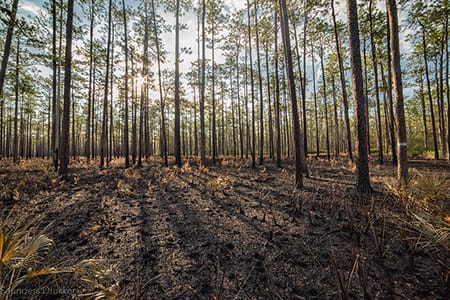
Once dominated by longleaf pine, our pine woodlands support abundant wildlife and local economies. These forests need prescribed fire to stay healthy. Herbert L. Stoddard and his associates Ed and Roy Komarek were pioneers in this emerging scientific field during the mid-20th century. Tall Timbers continues that legacy with applied research on prescribed fire and land management. Today, there is a tremendous need to expand prescribed fire use beyond the Red Hills to ensure ecosystem health and reduce wildfire risk. Additionally, Tall Timbers uses conservation easements to permanently protect private woodlands while balancing the need for economic return from selective timbering.
 A conservation easement is a legal agreement between a landowner and a non-profit land trust like Tall Timbers, or government agency that permanently limits uses of the land in order to protect important conservation values. For example, typical Tall Timbers’ easements restrict the amount of building and development on the property, but fully allow the landowner the continued use of the property for productive farming, forestry, hunting and wildlife management. Easements allow landowners to sell or pass the land and on heirs. In return, landowners are eligible for federal, state and in some cases local tax incentives. For most easement donors in the greater Red Hills region, the appraised range of easement value for tax deduction purposes has been between 25 and 60% depending on location of property and terms of easement.


 The Honorable Christine Todd Whitman former Governor of New Jersey, who served from 1994 until 2001, will be the featured guest speaker at the Red Hills Spring Dinner on Thursday, March 14, 2013 at Tall Timbers. Governor Whitman served in the cabinet of President George W. Bush as Administrator of the Environmental Protection Agency. As Governor, she earned praise from both Republicans and Democrats for her commitment to preserve a record amount of New Jersey land as permanent green space. As EPA Administrator, she promoted common-sense environmental improvements such as water-shed based water protection policies. She is the author of a New York Time’s best seller, It’s My Party Too. Currently she is the president of The Whitman Strategy Group, a consulting firm that specializes in energy and environmental issues.

 CEFA’s economic analysis found that in 2012, the regional economic impact of Red Hills’ hunting properties exceeded $147 million. This tremendous impact is the result of a wide range of operating, capital improvement, and discretionary spending as well as local charitable contributions that benefit every Red Hills’ community. In addition, over 1,400 jobs are directly or indirectly related to Red Hills’ hunting properties. These 1,400 jobs generated more than $51 million in total employment income meaning they paid more than the average wage in nearly every Red Hills’ county.
 Photo, above, right. GT Metal Works, co-owned by Todd Ferrell and Dallas Wilcox, is one of many local businesses supported by Red Hills’ working rural lands
.jpg?strip=all&w=1)