Governor Whitman to speak at upcoming Red Hills Spring Dinner
The Honorable Christine Todd Whitman former Governor of New Jersey, who served from 1994 until 2001, will be the featured guest speaker at the Red Hills Spring Dinner on Thursday, March 14, 2013 at Tall Timbers. Governor Whitman served in the cabinet of President George W. Bush as Administrator of the Environmental Protection Agency. As Governor, she earned praise from both Republicans and Democrats for her commitment to preserve a record amount of New Jersey land as permanent green space. As EPA Administrator, she promoted common-sense environmental improvements such as water-shed based water protection policies. She is the author of a New York Time’s best seller, It’s My Party Too. Currently she is the president of The Whitman Strategy Group, a consulting firm that specializes in energy and environmental issues.
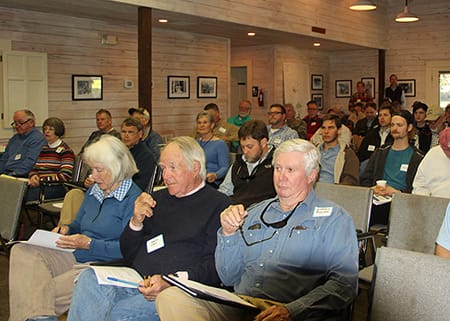
This biennial dinner has become one of the most captivating events in the Red Hills region. In addition to hearing from nationally recognized speakers on issues affecting land conservation in America, the dinner also honors those families who have donated conservation easements to Tall Timbers over the last two years.
This special event is held on the lawn of the historic Beadel House overlooking majestic Lake Iamonia. The event begins with cocktails at 5:30 p.m. with full dinner by Mozaik to follow. Tickets are $50.00 per person and seating is limited. To reserve your seat, please contact Jennifer Roberts at jroberts@ttrs.org or (850)893-4153 x228 by March 6, 2013.
Quail Report: over-winter survival for bobwhites bodes well for early hatch
By Dr. Bill Palmer, Tall Timbers President/CEO
November was about three degrees cooler than the long-term average, but unfortunately for dog handlers, the cooler temperatures did not last through December and January. According to the National Weather Service, December was nearly four degrees warmer than average and January was eight degrees warmer. During December and January there were 14 fewer days than normal with below freezing temperatures. The growing season appears to be already beginning with early bud break for many plant species and ovaries on bobwhites began to recrudesce (re-grow) in early February. Quail have been calling “bobwhite” along with covey calls on our study area in South Florida since January; and we heard the first “bobwhite” calls February 13, this year.
Click on the following link to view a roostng bobwhite covey via FLIR Infrared Camera:https://vimeo.com/59655215
On warm nights coveys roost in a more open pattern. This video shows dispersed pairs of bobwhites rather than the classic “covey circle”. We notice increased aggression among individuals within a covey this time of year as pair-bonding has begun. While conjecture, pairs in this video may have established a pair-bond and are now awaiting nesting conditions.
While the unseasonably warm weather and ample ground cover has made finding coveys inconsistent from day to day, the benefit has been above average overwinter survival. From November through January, survival of our radio tagged sample of quail on our study areas has exceeded 80%, which is well above what we see during colder winters. The combination of less natural mortality and lower harvests should result in an excellent carry-over of breeders. Over the last 20 years, we have seen several cases of peak populations as a result of two back to back years of excellent overwinter carry-over.
Weather predictions are for warmer and drier weather for the short-term (through March), followed by significant uncertainty in the forecast, with predicted variability for summer time weather, with periods of drought and periods of above average rainfall. With an early breeding season forecasted, typical burning in March and early April will set the stage for quail to take advantage of an early nesting season. If severe drought takes hold during March, stretch out burning, at least on more fertile sites, until rainfall returns; this will minimize the length of time for the cover to rebound, and benefit the birds by providing more habitat, which will increase their survival.
The Director of Development and Marketing will plan, implement and coordinate the full range of development activities at Tall Timbers including: annual giving, grant writing, major gift solicitations, special project fundraising and coordinate all special event fundraisers. Additionally, the position will develop and implement a comprehensive marketing program aimed at increasing the visibility and reach of Tall Timbers across several mediums.
Primary responsibilities:
Plan, cultivate and implement the annual membership program to increase individual giving, including donor cultivation and stewardship efforts
Prospect, vet and cultivate foundation and agency grant opportunities that further Tall Timbers’ mission and purpose
Manage and coordinate all special event fundraisers of the Tall Timbers Foundation
Develop and maintain a planned giving program including estate planning and bequests
Coordinate all special project fundraising needs (capital campaigns, corporate giving program, program specific giving)
Integrate a strategic marketing process and plan through branding, messaging, social media and other traditional sources
Collaborate with all aspects of the organization to deliver messaging that will increase visibility and financial support
Provide coordination and leadership support to the Development Committee of the Board of Trustees and Development Committee of the Tall Timbers Foundation
Qualifications:
Experience in development and/or marketing
Demonstrated track record designing and executing major gift fundraising initiatives
An understanding and knowledge of southwest Georgia and north Florida a plus
Must share a passion for conservation of natural resources
Exceptional written and verbal communication skills; ability to communicate to a wide audience of constituents
Strong team management experience – must work collaboratively with others;
Creative writing skills, social media development experience, and visual artistic management skills required to direct, design and produce a full suite of collateral marketing materials and public relations information consistent with the mission of Tall Timbers
Demonstrated conceptual skills, analytical capabilities and creative thinking
Excellent interpersonal, organizational and computer skills
Proficient in Microsoft Office applications
Attention to sensitive and confidential issues a must
Bachelor’s degree in marketing or non-profit management required
About Tall Timbers:
Tall Timbers Research Station and Land Conservancy is a charitable, non-profit ecological research station and conservation land trust founded in 1958 on the 4,000 acre Tall Timbers property in rural Leon County, Florida. The mission of Tall Timbers Research Station & Land Conservancy is to foster exemplary land stewardship through research, conservation & education.
Our primary research focus is the ecology of fire and natural resource management especially bobwhite quail and other wildlife in southeastern pine systems. Our conservation efforts are dedicated to helping protect the distinctive rural Red Hills landscape of south Georgia and north Florida and selected strategic properties outside this region. Our education program transfers research, land management and conservation information to enhance natural resource management on private and public lands.
To Apply:
Candidates should send resume and cover letter to: Bill Palmer, Ph.D., President, Tall Timbers 13093 Henry Beadel Drive, Tallahassee, FL 32312 or to bill@ttrs.org. Sorry, phone calls cannot be accepted.
Tall Timbers implements new weather station solution
By Joe Noble and Theron Terhune
In 2003, a Remote Automated Weather Station (RAWS) was installed on the main campus at Tall Timbers for collection of hourly weather data. This was a huge step forward, as previous weather data was collected at a daily scale. While the 2003 RAWS was state of the art at the time, it lacked certain functionality – mainly the ability for researchers, fire practitioners, and collaborators to see data in real time. It also lacked the robustness of a true database for storing and analyzing the data.
During the past few months, the Outreach program completed an upgrade to the 2003 RAWS, as well as implemented a new weather station and database to provide accurate, local and real-time weather for field staff and collaborators. For example, managers and field staff can access the web app to view current weather data prior to or during a prescribed burn. The current station’s sensors are calibrated to National Fire Danger Ratings System (NFDRS) standards, which allow our data to be shared and used in a variety of fire and meteorological models. However, the RAWS and NFDRS should not be replacements for using on-site weather instruments for site-specific weather parameters impacting fire behavior. In addition to the NFDRS collection schema, collection of one-minute incremental weather data will better facilitate the use in current and long-term research. We used a program called Vista Data Vision to store weather data in a relational database, which is available real time via smart phones and mobile devices (e.g., Droid, iPhone, tablets) and on the web. Additionally, historic (long-term archived) weather datasets were added to the database so they could easily be searched and downloaded. In the future, we hope to add a few additional weather stations for more regional coverage across the Red Hills./p>
Nature has a way of tossing some nasty things at you once in a while.
Spring 2013 was one of the least productive years on record for the Brown-headed Nuthatches on Tall Timbers. The exceptional warm weather we had in January and February quickly gave way to the wet and cold of March as frontal system after frontal system came through the Red Hills.
Nuthatch responded by initiating nests earlier than ever – a nest found with five eggs on February 21 beat the previous record for an early nest by a full week. Great start, seemingly, but then the birds shut down as the onslaught of rain and cold mounted from late Feb through the middle of March. Very few nests were initiated during this period of time when typically more than 50% of the nests are initiated each year. Many birds that had initiated in late February simply gave up on the effort – including at least four cases where the young were simply abandoned.
Surely one of the most unusual casualties was a female nuthatch that died in attempt to give life to a clutch of five eggs. The nest was initiated after the cold and rain on March 19, but the inclement weather can take a lot out of these birds, especially when they are nesting. The five eggs represented about half of the total body mass of the female. It’s well known that the health of females coming into the breeding season can be diminished when birds have difficulty finding food and temperatures consistently dip into the low 30s.
Fortunately, nuthatches have very high annual survivorship, and low recruitment for a single year can be offset quickly. Those that abandoned nests may have averted the fate of the unfortunate female pictured above.
Rare and Getting Rarer
The Stoddard Bird Lab also has been working on a bird that is quickly becoming one of the rarest in North America – the Florida Grasshopper Sparrow. This resident of open prairies in Central Florida used to occur in the hundreds on three different public landholdings. At present, only one of the sites still has a significant population, estimated to be about 100 total birds, while the other sites have gone from supporting hundreds to almost none during the past 5-10 years. The Stoddard Bird Lab helped develop a project looking at the effects of prescribed fire on the site that still has a sizeable population and is quickly trying to train a dog, Lily, to help find nests. Knowing how nesting success varies in relation to winter, spring, and summer burning is critically needed information, but finding a nest often takes hours or days for a well-trained biologist.
Our approach has been to try to locate nests of the Northern Grasshopper Sparrows that occur in our region, where it is not endangered, and then train the dog on these. A site near Bainbridge, GA, holds a fairly large breeding population that we are working regularly, and we hope to have Lily ready for the 2014 nesting season. Dr. James Tucker has returned to the Lab to head up this project with support from the U.S. Fish and Wildlife Service.
The M-CORES program, which includes the proposed Suncoast Connector Toll Road in Jefferson County, passed through the Florida Legislature at breakneck speed with little review or analysis. Tall Timbers has a number of concerns given the potential for significant and wide spread impacts. These include fragmenting public and private conservation lands, robbing business from Main Street Monticello, impacting our rivers and other water resources, and making prescribed fire more difficult and costly.
Join us in asking the Jefferson County Board of County Commissioners to OPPOSE the Suncoast Connector toll road and its path through Jefferson County.
Take action now with our easy email form.
Send an email to all five Jefferson County Board of County Commissioners with one click!
Burn prioritization modeling seminars and fire modeling tools are supported by Wildland Fire Science to train managers in the important planning stages of prescribed fires.
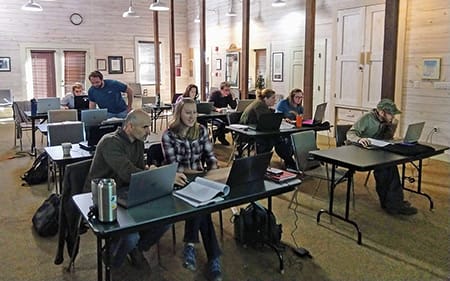
Educating and guiding the next generation of fire researchers and managers is a key goal of Wildland Fire Science and a resource for testing new ideas in fire research.
Tall Timbers hosts the premier fire technology transfer organization—the Southern Fire Exchange. This JFSP funded effort helps connect research to management through webinars, workshops, and support of the Prescribed Fire Science Consortium.
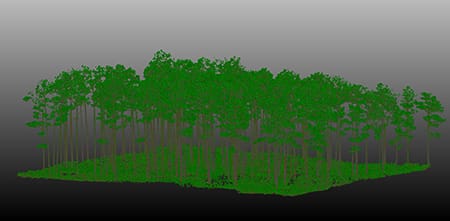
Working with partners in the Prescribed Fire Science Consortium, the program is building nexgen 3-D fuel beds using terrestrial LiDAR and novel sampling techniques to power new fire behavior models for prescribed fire managers. This work links to Tall Timbers work in wildlife habitat usage and ecological forestry.
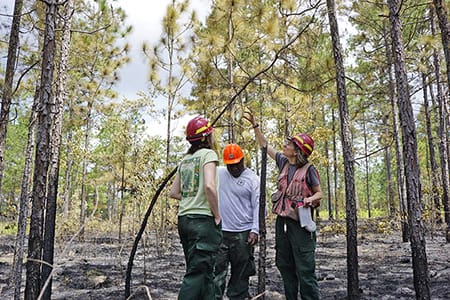
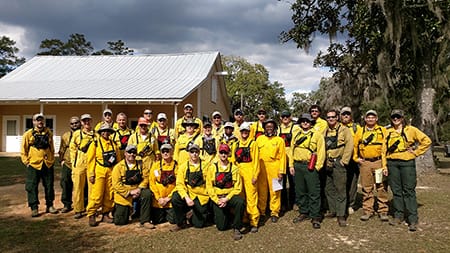
The Longleaf Legacy landscape prescribed fire burn team arm of Wildland Fire Science works directly with landowners and partners to effectively put fire on the ground and promote prescribed fire throughout the region.
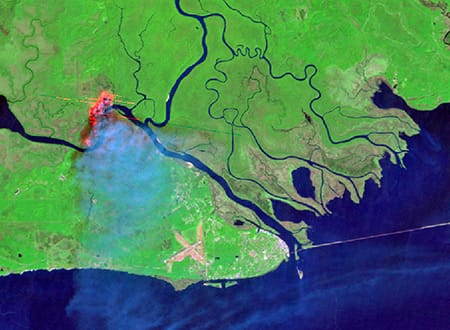
Tall Timbers is leading an effort to map fire regimes at the landscape scale. Staff work with numerous agencies to evaluate fire records and satellite imagery to build this critical conservation database. https://skfb.ly/6DqOY
Tall Timbers hosts the Prescribed Fire Science Consortium, a national network of researchers and managers who promote integrated research and management to advance next generation tools for fire practitioners. https://arcg.is/1DSjDT
We are linking physics and field observations to understand the fluid dynamics of fire behavior surface fire regimes. Our work combines field observations using advanced thermal imaging techniques, laboratory studies, and coupled fire-atmospheric modeling to help managers improve outcomes of managed fire regimes.
Selected Publications authored by Wildland Fire Science staff.
Staff and researchers support Federal fire training by serving as a cadre for NWCG training courses, ranging from basic wildland fire to advanced fire effects.
(PFTC) specializes in training fire fighters the principles and techniques of prescribed fire through practical hands-on experience. https://www.fws.gov/fire/pftc/
Private land owners are the largest source of prescribed fire in the country. These land owners and the culture of fire that was maintained by them during decades of suppression are a part of why Tall Timbers is a world-wide center for prescribed fire science. Workshops and fire training are a critical focus of the Longleaf Legacy Landscape Burn Team and our support of the Georgia Forestry Commission Prescribed Fire Center in Marion County.
The conserved lands of the Greater Red Hills region are found on working, income-producing properties that support agriculture, forestry, and recreational hunting. These properties contribute $272 million annually to local economies and support 2,300 jobs. [link to Planning & Advocacy section] The landowners’ strong stewardship ethic preserves their working lands while replenishing drinking water supplies, protecting water quality, and providing wildlife habitat for dozens of rare and endangered species. Tall Timbers’ conservation easements on these working properties encourage landowners to retain their traditional livelihood by keeping farms in family ownership.
Home to world-class wild quail populations, the Greater Red Hills region contains the largest concentration of gamebird preserves in the United States. These preserves also support the largest community of Red-cockaded woodpeckers on private lands. Indicators of high quality habitat found here include the gopher tortoise, Bachman’s sparrow, fox squirrel, and many amphibians. Tall Timbers’ conservation easements identify and protect the critical habitats of these species.
The region also boasts outstanding aquatic resources. Large river systems, like the Flint/Apalachicola, Ochlockonee, and Aucilla, flow from Georgia and feed into the Gulf of Mexico to support some of the world’s most productive estuaries. Large disappearing sinkhole lakes, like Iamonia, Miccosukee, and Jackson, provide habitat for an array of aquatic species and migratory birds. Tall Timbers’ conservation easements protect these vital watersheds and wetlands that are the lifeblood for the ecological health of the region.
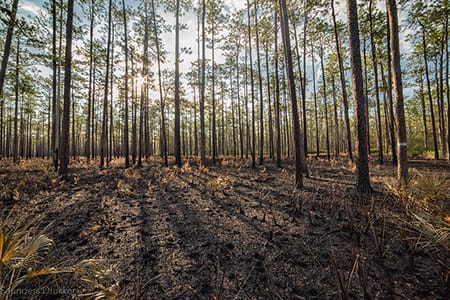
Once dominated by longleaf pine, our pine woodlands support abundant wildlife and local economies. These forests need prescribed fire to stay healthy. Herbert L. Stoddard and his associates Ed and Roy Komarek were pioneers in this emerging scientific field during the mid-20th century. Tall Timbers continues that legacy with applied research on prescribed fire and land management. Today, there is a tremendous need to expand prescribed fire use beyond the Red Hills to ensure ecosystem health and reduce wildfire risk. Additionally, Tall Timbers uses conservation easements to permanently protect private woodlands while balancing the need for economic return from selective timbering.


 The Honorable Christine Todd Whitman former Governor of New Jersey, who served from 1994 until 2001, will be the featured guest speaker at the Red Hills Spring Dinner on Thursday, March 14, 2013 at Tall Timbers. Governor Whitman served in the cabinet of President George W. Bush as Administrator of the Environmental Protection Agency. As Governor, she earned praise from both Republicans and Democrats for her commitment to preserve a record amount of New Jersey land as permanent green space. As EPA Administrator, she promoted common-sense environmental improvements such as water-shed based water protection policies. She is the author of a New York Time’s best seller, It’s My Party Too. Currently she is the president of The Whitman Strategy Group, a consulting firm that specializes in energy and environmental issues.