The first weekend in May, Florida Fish and Wildlife Conservation Commission (FWC) biologist, Pierson Hill and I led a group of fifteen people ranging in age from 6-45 to Livingston Place. This trip was a silent auction item Tall Timbers offered at our annual Kate Ireland Memorial Dinner and Auction (the 18th annual event is coming up on September 20). The purpose of the trip was to catch and identify as many species of reptiles and amphibians (collectively known as herpetofauna) as we could over the course of two days. Although we didn’t expect any news worthy species to be caught, you never know when you have 9,000 acres at your disposal.
While dip-netting a small wetland we caught several larval newts. The newt life cycle is like that of a frog, the newts lay eggs in water and tiny larva hatch out with gills. These larval animals live and feed in the water until they eventually absorb their gills and transition to a terrestrial form. We knew that these small, one inch creatures were larval newts but assumed they were the common newt that is widely found throughout the southeast and also found on Livingston. Hill decided to keep one individual and allow it to undergo metamorphosis in a tank to ensure that it was indeed the more common species. After waiting two months, the newt started to develop the diagnostic stripes indicating that it was in fact, the rare striped newt!
The striped newt has no listing status beyond being recognized as a “Species of Greatest Conservation Need” in Florida, and is listed as state threatened in Georgia. The striped newt is currently a candidate species for Federal listing due to the disappearance of populations from many areas of their former range.
There are two distinct evolutionary lineages of striped newts (an “eastern clade” and a “western clade”), which are recognized as separate conservation units. The dividing line between these two clades is roughly the Suwanee River. FWC believes the Livingston population is the only known population of the “western clade” of striped newts in Florida. Only two other locations, a total of only five breeding ponds, remain of the western clade, both located in Georgia.
Tall Timbers Receives Major Grant for Dixie Main House Rehabilitation
The Florida Legislature approved a $350,000 restoration grant for the historic main house at Dixie Plantation in Jefferson County. The phase I grant was part of the Department of State’s Special Category Grant appropriation request that successfully awarded 33 grants to historically significant properties throughout Florida.
According to project coordinator Kevin McGorty, the grant will provide funds for roof and masonry repairs and upgrade the plumbing and electrical systems to the 14,000 square foot building in preparation for installing a centralized heating and cooling system in phase II. The total rehabilitation is estimated to take two years to complete and additional fundraising will be needed.
This is truly a unique project that has ramifications beyond saving one building. Located in the heart of the Red Hills Region, the 9,000-acre Dixie Plantation has tremendous potential to be a regional resource for exemplary land management, conservation, education and historic preservation. Under Tall Timbers’ stewardship, Dixie Plantation will be an important research and educational center. Once restored, the mansion will host conferences, meetings, and cultural events that the public can enjoy while also serving as an attractive guest house. The historic house, designed by noted American architect John Russell Pope, will be returned to its original grandeur. The economy of one of Florida’s more rural counties will be enhanced by a vibrant center of activity.
Tall Timbers is grateful for the support the grant received from the Secretary of State, Florida Historical Commission, and the north Florida legislative delegation. In addition, numerous Jefferson County community leaders, landowners, and organizations lent their support to make the grant possible.
By Theron M. Terhune, PhD, Game Bird Program Director
Reports from managers suggest that bobwhite populations have a good chance of increasing this year across the Red Hills and Albany region. “Mega-broods” (broods of greater than 20 birds) comprised of varying ages of chicks have been consistently reported, which points to a quality hatch already thus far. Our radio-telemetry data on Tall Timbers, Dixie Plantation, and the Albany area support these observations and indicate that nest production and brood production is up significantly from last year. In fact, at the season’s midpoint compared to last year, brood production is up 110% in Albany and 320% on Tall Timbers. This is a direct result of good adult survival and better nest production in Albany, and much improved brood production as a result of brilliant nest survival (64%) on Tall Timbers. This is welcomed news for many, especially those in the Albany area experiencing low production last year (2014).
Many of our radio-tagged birds recently started incubating nests beginning last week, and with any luck this final surge will yield as good a late-season production as during the first half of the season. We are hopeful that weather conditions remain favorable for a strong late hatch, which may turn a regionally good hatch into a great one!
Regional pulses in bobwhite populations typically indicate large-scale influences on local demographics. For example, bad weather in the form of droughts may result in reproductive shutdown as seen this time last year in the Albany area. As such, these “good times” we are seeing across the region this year may be a direct result of ample spring/summer rains, which has produced abundant cover quickly after prescribed burning (resulting in good breeding season survival) and quality native food resources (reducing overall impact of predators). In addition, snake abundance may be down and/or snake movements may be reduced this year, as we have observed relatively low capture and recapture rates of snakes, potentially impacting nest and brood survival. This underscores the importance of quality habitat management year after year to take advantage of good weather, abundant resources, and low predation.
FLIRting with Bobwhite Chicks
During the past couple of nesting seasons the Game Bird Program has been using Forward-Looking Infra-Red (FLIR) technology in hopes to unravel the mystery of bobwhite chick survival and brood amalgamation (mixing of broods). Bumping birds with broods off the roost allows us to count the thermal signatures of scattering chicks. In collaboration with the University of Georgia, we have successfully used these data to obtain survival estimates during the “brooding period” – typically the first 3 weeks of age. What we have discovered is that chick survival is much lower than originally anticipated, such that daily mortality rate can be as high as about 6% per day during the first 21 days of life. This suggests that, on average, only about 30% of chicks make it to 3 weeks of age. Put another way, 70 out of every 100 chicks don’t make it to 3 weeks old. However, right now as compared to previous years, we are observing high levels of brood mixing, which is an indicator that overall nest production and nest survival are good. This makes sense in that as more broods hatch and chicks survive, the opportunity for mixing of broods also goes up.
This breeding season, we have also successfully tested a new suture technique to attach miniature radio-tags on 10-12 day old chicks. We have deployed more than 45 radio-tags on chicks through mid-August. The survival of these radio-tagged chicks corroborate our FLIR results in that many don’t make it to 3 weeks of age. But, daily survival seems to improve substantially at about 4 weeks of age. As predicted, snakes are proving to be a primary predator of quail chicks during the first 3 weeks post-hatch, but then snake mortalities markedly decline as chicks grow to a size beyond that preferred by smaller snakes (e.g., corn snakes). Stay tuned as we continue to try and unravel the mysteries of chick ecology! More details on these results will be provided this fall in the upcoming Quail Call.
Join Us for the 18th Annual Kate Ireland Memorial Dinner & Auction
The 18th Annual Kate Ireland Memorial Dinner & Auction will be held Sunday evening, September 20, 2015 at Pebble Hill Plantation – Uno Hill Barn, Thomas County, Georgia, and will be catered by Liam’s Restaurant of Thomasville, GA. The festivities include a cocktail reception, a silent and live auction, and a Red Hills Region inspired dinner. Tall Timbers is so honored to have The Kate Ireland Foundation and North Florida Animal Hospital as presenting sponsors for this year’s event. These presenting sponsors along with our event sponsors, guests, and donors are essential to successfully fulfilling our mission.
Named in honor of one of Tall Timbers’ most treasured supporter, the Kate Ireland Memorial Dinner & Auction is a fundraising event held annually benefitting Tall Timbers Foundation, Inc., for Tall Timbers research and conservation programs. This event attracts bidders not only from within the Red Hills Region, but due to auction items unique to this event, our auction attracts a national audience. Each year the auction features an inspiring collection of world class artwork, unparalleled hunting and fishing opportunities, and unique offerings from the Red Hills Region and beyond. The auction will also available online; going live on September 1, and closing on September 18, when all bids will be transferred to the evening of the event for final bids.
If you would like more information on the online auction, please contact the Development Office at (850) 893-4153, x 249.
Quail Plantations Receive National Legacy Landscape Award
The Red Hills and Albany Area quail plantations received an impressive designation – National Legacy Landscape – in recognition of the landscape scale conservation efforts for bobwhites. The award honors the region’s landowners for their longstanding dedication to bobwhite management, the skilled managers that have sustained bobwhite populations, and the partnership with research and management agencies that has been a trademark of this region for nearly a century. The longstanding alliance between landowners dedicated to the best quail management, and researchers developing and refining management practices, goes back to 1924, when Lewis Thompson, Henry Beadel and many others supported Herbert Stoddard’s quail investigation, followed by the Cooperative Quail Study and finally Tall Timbers and the Albany Game Project!
The National Bobwhite Conservation Initiative (NBCI) and its technical advisory body, the National Bobwhite Technical Committee (NBTC), announced the awards during the annual meeting, August 6, 2015, in Galloway, New Jersey.
The Legacy Landscape Award recognizes special landscapes that provide national significance for Northern Bobwhite conservation. Specific criteria must be met for a region to be designated as a Legacy Landscape which includes:
An extensive area of contiguous habitat that currently supports and has historically maintained high densities of wild northern bobwhites (in the regionmore than 600,000 acres of habitat are managed across more than 200 properties);
A tradition of implementing land use practices that promote quail habitat conservation (this isthe only region in the Southeast with a dedicated, consistent use of prescribed fire in a natural frequency for over 100 years);
A community of landowners, hunters, lessees, and other stakeholders demonstrating strong support for quail and/or quail research over many years (the region’s community providesfinancial support as well as access to land for study);
A community with a deep appreciation of other species of high-priority conservation concern and they support these additional species by maintaining large expanses of habitat for quail (over 150,000 acres of the region are perpetually protected through conservation easements and other means).
Tall Timbers and Georgia Wildlife Resources Division receive Group Achievement Award
The National Bobwhite Technical Committee Group Achievement Award was presented to Tall Timbers and Georgia Wildlife Resources Division (WRD) for collaborative efforts in developing and successfully implementing the WRD Northern Bobwhite Quail Translocation Policy in focal areas of southwest Georgia and northern Florida.
“Bobwhites have declined by about 90% in Georgia since 1966, due primarily to changes in land use,” said Reggie Thackston, WRD Bobwhite Project Leader. “This policy provides a science-based approach to expedite the recovery of bobwhite populations following habitat restoration.”
Dr. Theron Terhune, whose research with TTRS provided the scientific basis for the policy, emphasized, “Suitable habit is the most important step to restoration success and must first be established before a translocation occurs.”
Development of the current translocation policy guidelines began in 1997, initiated by WRD with input from Tall Timbers Research Station (TTRS) based on research. The policy standards permit the translocation of wild bobwhites from private land with high density populations to lands with newly developed high quality habitat (1,500+ acres) and ongoing management that have low density bobwhite populations. The policy was finalized in 2006, and since that time Georgia has participated in the movement of 1,275 birds to five properties. Through this policy and the efforts of TTRS and working with dedicated private landowners, bobwhites have been restored across 18,700 acres. In addition to Georgia acres restore, more than 50,000 acres have been restored to wild bobwhites using translocation.
The M-CORES program, which includes the proposed Suncoast Connector Toll Road in Jefferson County, passed through the Florida Legislature at breakneck speed with little review or analysis. Tall Timbers has a number of concerns given the potential for significant and wide spread impacts. These include fragmenting public and private conservation lands, robbing business from Main Street Monticello, impacting our rivers and other water resources, and making prescribed fire more difficult and costly.
Join us in asking the Jefferson County Board of County Commissioners to OPPOSE the Suncoast Connector toll road and its path through Jefferson County.
Take action now with our easy email form.
Send an email to all five Jefferson County Board of County Commissioners with one click!
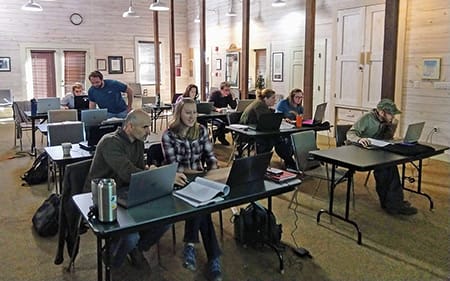
Burn prioritization modeling seminars and fire modeling tools are supported by Wildland Fire Science to train managers in the important planning stages of prescribed fires.
Educating and guiding the next generation of fire researchers and managers is a key goal of Wildland Fire Science and a resource for testing new ideas in fire research.
Tall Timbers hosts the premier fire technology transfer organization—the Southern Fire Exchange. This JFSP funded effort helps connect research to management through webinars, workshops, and support of the Prescribed Fire Science Consortium.
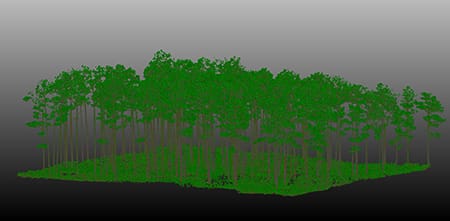
Working with partners in the Prescribed Fire Science Consortium, the program is building nexgen 3-D fuel beds using terrestrial LiDAR and novel sampling techniques to power new fire behavior models for prescribed fire managers. This work links to Tall Timbers work in wildlife habitat usage and ecological forestry.
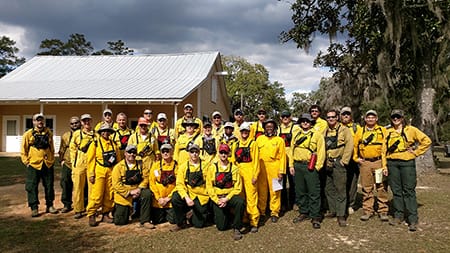
The Longleaf Legacy landscape prescribed fire burn team arm of Wildland Fire Science works directly with landowners and partners to effectively put fire on the ground and promote prescribed fire throughout the region.
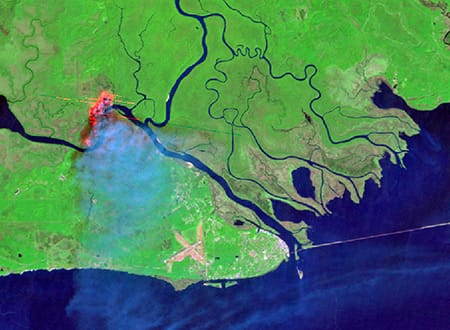
Tall Timbers is leading an effort to map fire regimes at the landscape scale. Staff work with numerous agencies to evaluate fire records and satellite imagery to build this critical conservation database. https://skfb.ly/6DqOY
Tall Timbers hosts the Prescribed Fire Science Consortium, a national network of researchers and managers who promote integrated research and management to advance next generation tools for fire practitioners. https://arcg.is/1DSjDT
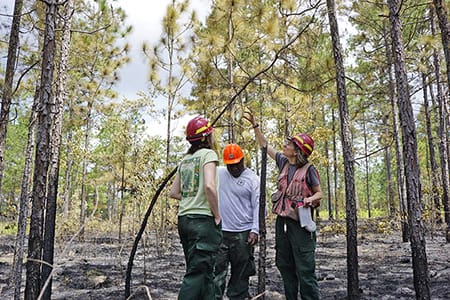
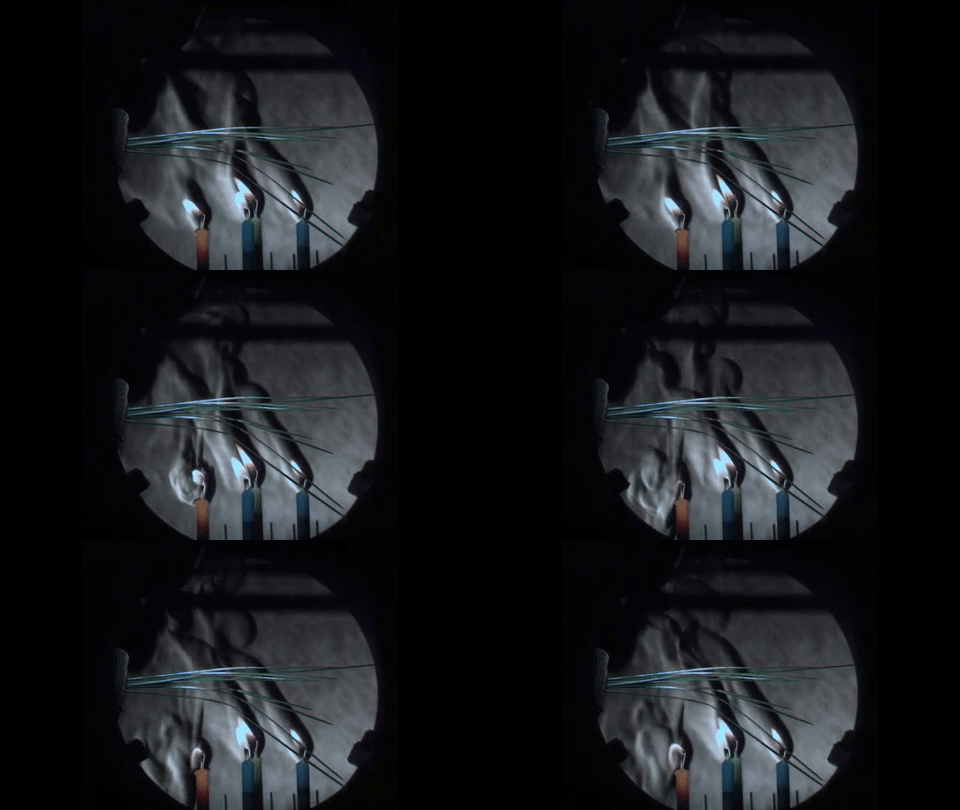
We are linking physics and field observations to understand the fluid dynamics of fire behavior surface fire regimes. Our work combines field observations using advanced thermal imaging techniques, laboratory studies, and coupled fire-atmospheric modeling to help managers improve outcomes of managed fire regimes.
Selected Publications authored by Wildland Fire Science staff.
Staff and researchers support Federal fire training by serving as a cadre for NWCG training courses, ranging from basic wildland fire to advanced fire effects.
(PFTC) specializes in training fire fighters the principles and techniques of prescribed fire through practical hands-on experience. https://www.fws.gov/fire/pftc/
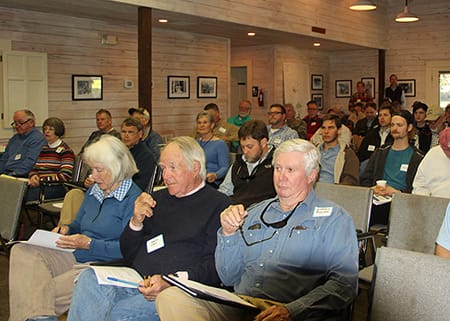
Private land owners are the largest source of prescribed fire in the country. These land owners and the culture of fire that was maintained by them during decades of suppression are a part of why Tall Timbers is a world-wide center for prescribed fire science. Workshops and fire training are a critical focus of the Longleaf Legacy Landscape Burn Team and our support of the Georgia Forestry Commission Prescribed Fire Center in Marion County.
The conserved lands of the Greater Red Hills region are found on working, income-producing properties that support agriculture, forestry, and recreational hunting. These properties contribute $272 million annually to local economies and support 2,300 jobs. [link to Planning & Advocacy section] The landowners’ strong stewardship ethic preserves their working lands while replenishing drinking water supplies, protecting water quality, and providing wildlife habitat for dozens of rare and endangered species. Tall Timbers’ conservation easements on these working properties encourage landowners to retain their traditional livelihood by keeping farms in family ownership.
Home to world-class wild quail populations, the Greater Red Hills region contains the largest concentration of gamebird preserves in the United States. These preserves also support the largest community of Red-cockaded woodpeckers on private lands. Indicators of high quality habitat found here include the gopher tortoise, Bachman’s sparrow, fox squirrel, and many amphibians. Tall Timbers’ conservation easements identify and protect the critical habitats of these species.
The region also boasts outstanding aquatic resources. Large river systems, like the Flint/Apalachicola, Ochlockonee, and Aucilla, flow from Georgia and feed into the Gulf of Mexico to support some of the world’s most productive estuaries. Large disappearing sinkhole lakes, like Iamonia, Miccosukee, and Jackson, provide habitat for an array of aquatic species and migratory birds. Tall Timbers’ conservation easements protect these vital watersheds and wetlands that are the lifeblood for the ecological health of the region.
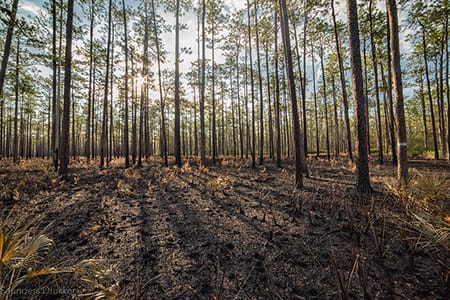
Once dominated by longleaf pine, our pine woodlands support abundant wildlife and local economies. These forests need prescribed fire to stay healthy. Herbert L. Stoddard and his associates Ed and Roy Komarek were pioneers in this emerging scientific field during the mid-20th century. Tall Timbers continues that legacy with applied research on prescribed fire and land management. Today, there is a tremendous need to expand prescribed fire use beyond the Red Hills to ensure ecosystem health and reduce wildfire risk. Additionally, Tall Timbers uses conservation easements to permanently protect private woodlands while balancing the need for economic return from selective timbering.
 While dip-netting a small wetland we caught several larval newts. The newt life cycle is like that of a frog, the newts lay eggs in water and tiny larva hatch out with gills. These larval animals live and feed in the water until they eventually absorb their gills and transition to a terrestrial form. We knew that these small, one inch creatures were larval newts but assumed they were the common newt that is widely found throughout the southeast and also found on Livingston. Hill decided to keep one individual and allow it to undergo metamorphosis in a tank to ensure that it was indeed the more common species. After waiting two months, the newt started to develop the diagnostic stripes indicating that it was in fact, the rare striped newt!
 The Florida Legislature approved a $350,000 restoration grant for the historic main house at Dixie Plantation in Jefferson County. The phase I grant was part of the Department of State’s Special Category Grant appropriation request that successfully awarded 33 grants to historically significant properties throughout Florida.
 Reports from managers suggest that bobwhite populations have a good chance of increasing this year across the Red Hills and Albany region. “Mega-broods” (broods of greater than 20 birds) comprised of varying ages of chicks have been consistently reported, which points to a quality hatch already thus far. Our radio-telemetry data on Tall Timbers, Dixie Plantation, and the Albany area support these observations and indicate that nest production and brood production is up significantly from last year. In fact, at the season’s midpoint compared to last year, brood production is up 110% in Albany and 320% on Tall Timbers. This is a direct result of good adult survival and better nest production in Albany, and much improved brood production as a result of brilliant nest survival (64%) on Tall Timbers. This is welcomed news for many, especially those in the Albany area experiencing low production last year (2014).
 This breeding season, we have also successfully tested a new suture technique to attach miniature radio-tags on 10-12 day old chicks. We have deployed more than 45 radio-tags on chicks through mid-August. The survival of these radio-tagged chicks corroborate our FLIR results in that many don’t make it to 3 weeks of age. But, daily survival seems to improve substantially at about 4 weeks of age. As predicted, snakes are proving to be a primary predator of quail chicks during the first 3 weeks post-hatch, but then snake mortalities markedly decline as chicks grow to a size beyond that preferred by smaller snakes (e.g., corn snakes). Stay tuned as we continue to try and unravel the mysteries of chick ecology! More details on these results will be provided this fall in the upcoming Quail Call.


 The National Bobwhite Technical Committee Group Achievement Award was presented to Tall Timbers and Georgia Wildlife Resources Division (WRD) for collaborative efforts in developing and successfully implementing the WRD Northern Bobwhite Quail Translocation Policy in focal areas of southwest Georgia and northern Florida.