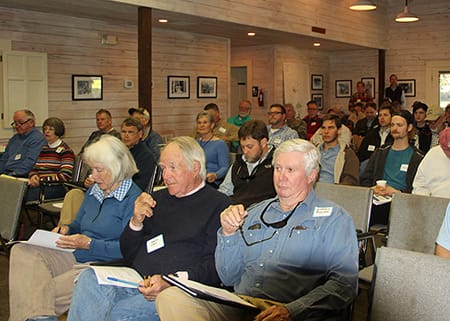
5 Stand is a type of shotgun sport shooting similar to sporting clays, trap and skeet. There are five stations, or stands and six to eighteen strategically placed clay target throwers(called traps). Shooters shoot in turn at various combinations of clay birds. Each station will have a menu card that lets the shooter know the sequence of clay birds he or she will be shooting at (i.e. which trap the clay bird will be coming from). The shooter is presented with 5 targets at each station, first a single bird followed by two pairs. Pairs can be either “report pairs,” in which the second bird will be launched after the shooter fires at the first; or “true pairs” when both birds launch at the same time. After shooting at the 5 birds on the menu at that station, the shooter proceeds to the next stand, where they find a new menu of 5 targets.
Typical five stand targets are a rabbit, chandelle, overhead, standard skeet high house and low house shots, teal (launched straight up into the air), trap (straight ahead from ground level), and an incoming bird.
Rotation starts at 9am – Brunch served
Limited to 40 participants
Pre-registration required by 4pm on Friday, September 16th
Five Stand Shoot – 50 targets
Any gauge gun, 1-ounce shot or less
$100 Entry Fee
Rules will be provided upon inquiry/registration.
Prizes award to:
1st place – $500, engraved Yeti cup
2nd place – $300, engraved Yeti cup
3rd place – $200, engraved Yeti cup
10th place – engraved Yeti cup
To register for 5 Stand Sporting Shoot, click here.
Winners will be announced at the 19th Annual Kate Ireland Memorial Dinner & Auction on Sunday, September 18th, Glen Arven Country Club – tickets additional – Register online at talltimbers.org
For More Information
Contact:Dale Fuller, Tall Timbers Research Station & Land Conservancy
850-893-4153 ext. 343 | dfuller@ttrs.org
Dixie Plantation and the Continental Field Trial Club were proud to host the 124th running of the Continental Field Trial in late January — the 83rd consecutive year the trial has been held at Dixie. An entry of 48 derby and 71 all-age dogs made for a good field that took 12 days to complete. Congratulations to this year’s winners (see photos). A special thanks goes to the Continental Field Trial Club board members led by club president (and Dixie Plantation manager) Randy Floyd. Thanks as well to the many sponsors, donors, and volunteers who help make the trial a success, and to the Dixie Plantation staff that spends two weeks out of their busy year consumed by the activities of the trial. We greatly appreciate the auction donors, bidders and winners. Thank you to Julie Livingston Ripley for donating the raffle gun and thanks to all who bought tickets. Photos here are thanks to Chris Mathan, Sporting Dog & Outdoor Images.
MAIN SPONSORS Ag-Pro
Sportsman’s Pride
Purina
Hunter Drew/The Wright Group
WATER TANK SPONSORS Jim Hamilton
Dixie Trace
Sportsman’s Pride
Karen & Bruce Norton
Mike Shea
Hank Bush/Bush Development Group
Sean Derrig/Covey Pointe Plantation
Dr. Ron Deal
David Thompson
Doyle Hancock & Sons Construction
Bill & Margie Ricci
ALL-AGE WINNERS: (dog on the right) All-Age Champion ‒ Showtime Sam Houston ‒ owner/handler Larron Copeland; (dog on the left) All-Age Runner-up ‒ Erin’s Hidden Shamrock ‒ owner/handler Sean Derrig. Photo by Chris Mathan
DERBY WINNERS: (dog on the left) Derby Champion ‒ Dogwood Bill ‒ owner Dogwood Plantation, handler Jamie Daniels; (dog on the right) Derby Runner-up ‒ Lester’s Storm Surge ‒ owner/handler Gary Lester. Photo by Chris Mathan
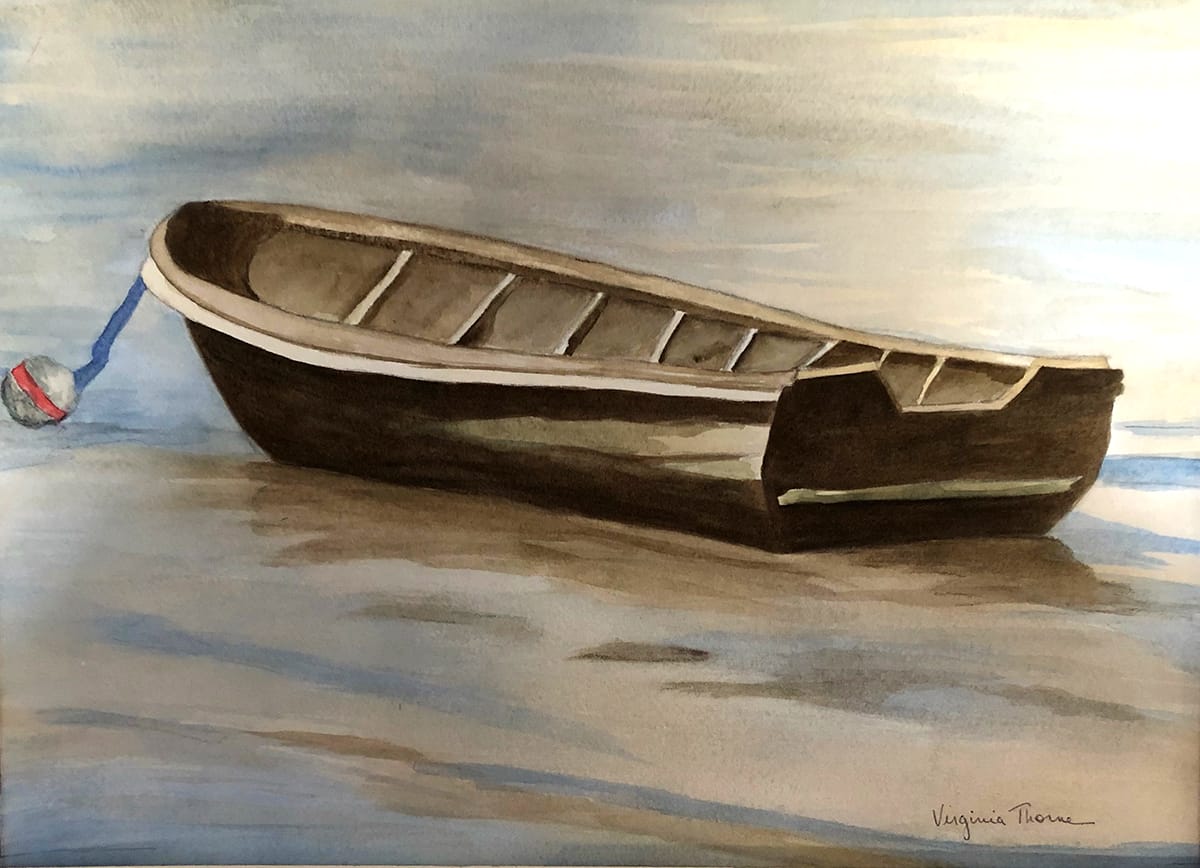
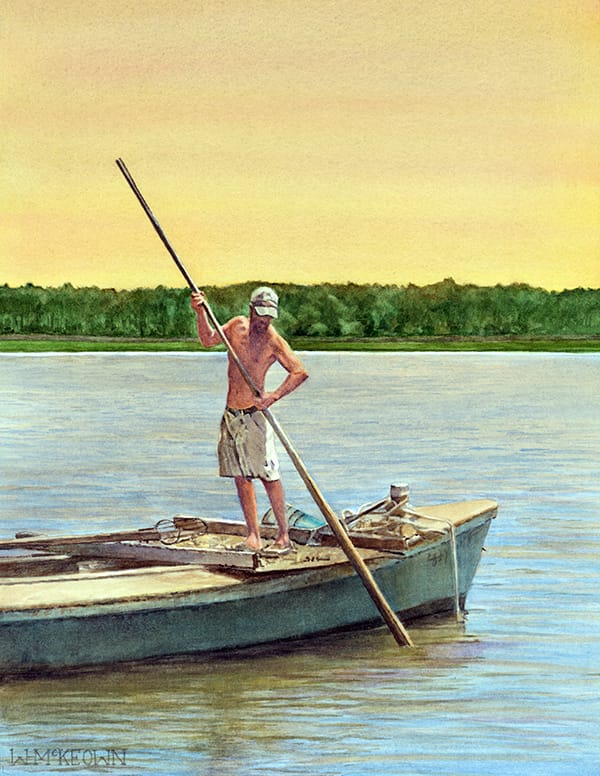
On March 10, our new exhibit opening kicks off with a “Meet the Artists” reception. Artists were encouraged to feature a water scene in their current submissions. We are excited about the quality and variety of the paintings we have received. We are doubly grateful this quarter because the Tallahassee Watercolor Society members are busy placing paintings at the TMH Cancer Center and Rehab Center, as well as submitting works for the Tri-State show to be held at the LeMoyne Art Center in May. Tall Timbers is proud to partner with such a productive group. After the opening, the exhibit will be up until the end of May. In addition to our first Sunday open house hours, the paintings are open to the public on Tuesday and Thursday afternoons between 2:00 and 4:00. For special group tours, please call Juanita Whiddon at 850-566-3390. Here are some of the featured paintings.
Our winter exhibit, “Artists Choice” was a very successful show for the artists and for Tall Timbers. Five paintings were sold during this exhibit.
Jones Family Tenant Farm Welcomes Distinguished Visitors
Tall Timbers was pleased to host Jerry Pinkney on November 2, 2018. Mr. Pinkney is one of America’s most admired children’s book illustrators. He has won the Caldecott Medal and five Caldecott Honors, among many other awards. The Caldecott medal is given by the American Library Association to the artist who has created the most distinguished children’s picture book of the year. In 2010, Mr. Pinkney won the medal for his book The Lion & the Mouse.
Mr. Pinkney was in the Red Hills for an event at the Thomasville, Georgia library. He told his hosts that while he was in the area he particularly wanted to see the Jones Family Tenant Farm at Tall Timbers. We arranged for Mr. Pinkney and his wife, Gloria, to meet Eluster Richardson, the artist for the interpretative exhibits at the tenant farm. Also, joining us was Eluster’s wife, Lessie, who has assisted with many events at the farm. Juanita Whiddon, curator of the exhibits, led the tour and was assisted with the audio portion of the exhibits by volunteer Curtis Johnson. It was stimulating for the rest of us to see and hear both artists engaged in conversation about their works. Mrs. Pinkney, a former gospel singer, was charmed with the musical recordings of Richard Jones.
It was wonderful to be able to share our tenant farm treasure with such appreciative guests on one of this year’s wettest days in the Red Hills, but our hearts were warmed by their visit. We would like to thank Abby Watt and Thomasville Landmarks for coordinating the visit.
Front row, seated: Eluster Richardson, Lessie Richardson, Jerry Pinkney, and Gloria Pinkney. Back row: Juanita Whiddon, Curtis Johnson and Abby Watt. Photo by Rose Rodriguez
Hurricane Michael Severely Damages Forest Lands in the Region
By William Palmer, PhD, D. Clay Sisson and Kevin Hiers
Hurricane Michael made landfall at 12:30 PM, Wednesday, October 10, near Mexico Beach, Florida with sustained winds of 155 mph. It entered Georgia as a Category 4 storm, and quickly headed to the northeast causing catastrophic damage to timber stands as far north as Albany, Georgia. Tall Timbers sustained modest timber damage, and has had a salvage crew for the past 6 weeks to capture some saw timber value before fungus infects the wood and reduces its marketability. Dixie Plantation, 30 miles to the east, sustained almost no timber loss. Generally speaking, the Red Hills region was spared significant damage.
Although the Red Hills took a glancing blow, property owners to the west and north were not as fortunate. The Florida Forest Service estimates over 2.8 million acres were impacted in Florida with damages in excess of $1.3 billion dollars to forest resources. In Georgia, damage estimates are around $750 million to forest resources. Bobwhite plantations in the Albany, Georgia, area sustained substantial damage to the timber on their quail managed areas, timber stands, and agricultural areas. Cotton crops were decimated as were pecan groves. Salvage operations are underway, and a few properties with the greatest damage have cancelled their quail season due to difficulties getting around the area, and the extensive cleanup needed. Others have postponed or significantly reduced the amount of hunting scheduled. In addition to loss of upland pine stands, bottomland hardwood forests were completely toppled in the path of the hurricane. Salvage operations are underway in some of these areas as well but have become challenging due to recent heavy rains.
The trick is to capture as much of the salvage revenue as possible and get the woods cleaned up without negative impacts on the quail population itself. Impacts on hunting are unavoidable—the ease of access and scenic nature of these properties will not be the same for the foreseeable future. Many properties are leaving much of the non-merchantable cleanup to spring, to not effect overwinter survival any more than necessary. Brush piles and tree tops also make good cover for birds, even though they are unsightly and awkward to hunt around. It could be years on some of the larger properties before things are completely back to normal. We will be monitoring all this closely with radio-tagged birds going forward.
Estimates of tons of fuels show a 10-fold increase in areas with severe damage, but even areas with modest damage will have significantly more fuels on the ground during burning season and appropriate preparation is needed. Significant fuel build-up, from blow downs and additional needle drop, will change fire behavior and result in much greater flame length and intensity than normal. We anticipate greater scrutiny from agencies permitting burning in areas hit by the storm, and there is the potential for burning bans in the hardest hit areas. That said, where fire can be safely applied, it is important to begin to reduce fuels, and this winter is a good time to begin. While this storm was exceptional in many ways, fire managers in the path of Hurricanes Hugo and Katrina have a number of lessons learned. With residual smoke from smoldering fire cited as a long-term problem that lasted more than 10 years, managers in South Carolina and Mississippi emphasized the need to resume burning as soon as possible to begin the restoration process, and prevent timber stands from seeding into dense loblolly or shortleaf regeneration.
The Georgia legislature has passed legislation to provide funding for clean-up and reforestation. Check with your local Florida Forest Service or Georgia Forestry Commission office for details. If there is any way Tall Timbers can be of help, don’t hesitate to contact us as well.
The M-CORES program, which includes the proposed Suncoast Connector Toll Road in Jefferson County, passed through the Florida Legislature at breakneck speed with little review or analysis. Tall Timbers has a number of concerns given the potential for significant and wide spread impacts. These include fragmenting public and private conservation lands, robbing business from Main Street Monticello, impacting our rivers and other water resources, and making prescribed fire more difficult and costly.
Join us in asking the Jefferson County Board of County Commissioners to OPPOSE the Suncoast Connector toll road and its path through Jefferson County.
Take action now with our easy email form.
Send an email to all five Jefferson County Board of County Commissioners with one click!
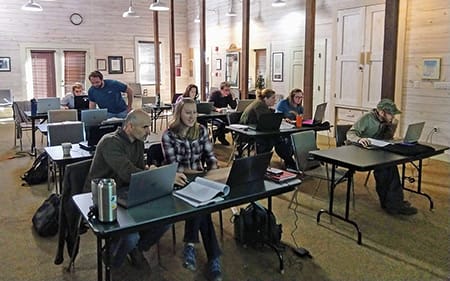
Burn prioritization modeling seminars and fire modeling tools are supported by Wildland Fire Science to train managers in the important planning stages of prescribed fires.
Educating and guiding the next generation of fire researchers and managers is a key goal of Wildland Fire Science and a resource for testing new ideas in fire research.
Tall Timbers hosts the premier fire technology transfer organization—the Southern Fire Exchange. This JFSP funded effort helps connect research to management through webinars, workshops, and support of the Prescribed Fire Science Consortium.
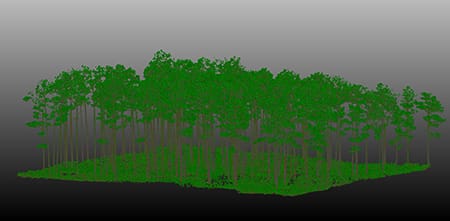
Working with partners in the Prescribed Fire Science Consortium, the program is building nexgen 3-D fuel beds using terrestrial LiDAR and novel sampling techniques to power new fire behavior models for prescribed fire managers. This work links to Tall Timbers work in wildlife habitat usage and ecological forestry.
The Longleaf Legacy landscape prescribed fire burn team arm of Wildland Fire Science works directly with landowners and partners to effectively put fire on the ground and promote prescribed fire throughout the region.
Tall Timbers is leading an effort to map fire regimes at the landscape scale. Staff work with numerous agencies to evaluate fire records and satellite imagery to build this critical conservation database. https://skfb.ly/6DqOY
Tall Timbers hosts the Prescribed Fire Science Consortium, a national network of researchers and managers who promote integrated research and management to advance next generation tools for fire practitioners. https://arcg.is/1DSjDT
We are linking physics and field observations to understand the fluid dynamics of fire behavior surface fire regimes. Our work combines field observations using advanced thermal imaging techniques, laboratory studies, and coupled fire-atmospheric modeling to help managers improve outcomes of managed fire regimes.
Selected Publications authored by Wildland Fire Science staff.
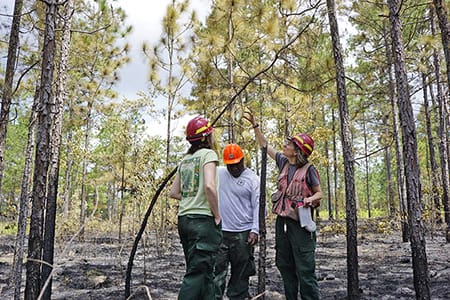
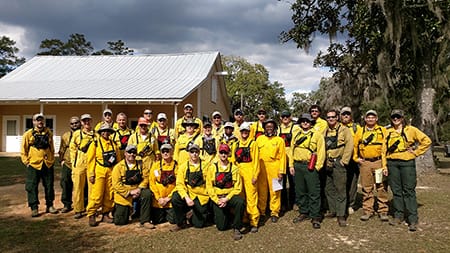
Staff and researchers support Federal fire training by serving as a cadre for NWCG training courses, ranging from basic wildland fire to advanced fire effects.
(PFTC) specializes in training fire fighters the principles and techniques of prescribed fire through practical hands-on experience. https://www.fws.gov/fire/pftc/
Private land owners are the largest source of prescribed fire in the country. These land owners and the culture of fire that was maintained by them during decades of suppression are a part of why Tall Timbers is a world-wide center for prescribed fire science. Workshops and fire training are a critical focus of the Longleaf Legacy Landscape Burn Team and our support of the Georgia Forestry Commission Prescribed Fire Center in Marion County.
The conserved lands of the Greater Red Hills region are found on working, income-producing properties that support agriculture, forestry, and recreational hunting. These properties contribute $272 million annually to local economies and support 2,300 jobs. [link to Planning & Advocacy section] The landowners’ strong stewardship ethic preserves their working lands while replenishing drinking water supplies, protecting water quality, and providing wildlife habitat for dozens of rare and endangered species. Tall Timbers’ conservation easements on these working properties encourage landowners to retain their traditional livelihood by keeping farms in family ownership.
Home to world-class wild quail populations, the Greater Red Hills region contains the largest concentration of gamebird preserves in the United States. These preserves also support the largest community of Red-cockaded woodpeckers on private lands. Indicators of high quality habitat found here include the gopher tortoise, Bachman’s sparrow, fox squirrel, and many amphibians. Tall Timbers’ conservation easements identify and protect the critical habitats of these species.
The region also boasts outstanding aquatic resources. Large river systems, like the Flint/Apalachicola, Ochlockonee, and Aucilla, flow from Georgia and feed into the Gulf of Mexico to support some of the world’s most productive estuaries. Large disappearing sinkhole lakes, like Iamonia, Miccosukee, and Jackson, provide habitat for an array of aquatic species and migratory birds. Tall Timbers’ conservation easements protect these vital watersheds and wetlands that are the lifeblood for the ecological health of the region.
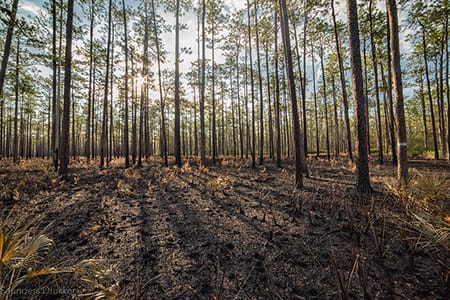
Once dominated by longleaf pine, our pine woodlands support abundant wildlife and local economies. These forests need prescribed fire to stay healthy. Herbert L. Stoddard and his associates Ed and Roy Komarek were pioneers in this emerging scientific field during the mid-20th century. Tall Timbers continues that legacy with applied research on prescribed fire and land management. Today, there is a tremendous need to expand prescribed fire use beyond the Red Hills to ensure ecosystem health and reduce wildfire risk. Additionally, Tall Timbers uses conservation easements to permanently protect private woodlands while balancing the need for economic return from selective timbering.