We compare midsummer (July 15) demographics among years to provide our first dependable indication of where quail populations are headed for the fall. Bumper hatches of quail occur when we have a very strong early hatch, often followed by a moderate late hatch. This year, with mild winter weather and an early spring, nesting began weeks earlier than normal and have continued relatively strong through July. Here are the results for our study areas in Florida and Georgia.
Albany Hatch Improved over Past Years
Below is a graph (Figure 1) showing the average for the last 10 years for 48% of nests and 27% broods produced per 100 radio-tagged hens as well as 53% summer survival of these birds. Quail demographics on the Albany Quail Project study area are above the 10-year average in all categories and are well above figures from this time last year. Indications are that chick survival is very good as brood sizes have remained large. Improvements are due to improved weather conditions combined with some management modifications on our study areas.
Figure 1. Mid-summer hatch statistics on the Albany Quail Project study site relative to the last five years.
Mild winter weather across the country resulted in fewer than normal migratory hawks and improved overwinter survival of quail. Nesting began early and weather was ideal during much of the early nesting season. Conservative burning and mowing, fertilization of weed fields, and adequate spring rains provided good cover conditions during covey break up and the onset of nesting season. Care was taken to keep supplemental feed in the best cover possible, even if this meant moving the feed trail. All these efforts combined helped improve the summer survival of adult nesters, which is what drives the reproductive output. Yet to be seen is what role cotton rat numbers may be playing in this increase, as we will not do our surveys until late August.
Hopefully, the weather will continue to cooperate for the remaining summer months and populations will be able to recover from last year's drought impacted numbers. We have seen a recent increase in nesting during late July. The first half of the nesting season was excellent but we need a strong late hatch to go with it to see the kind of recovery we are hoping for.
Tall Timbers Hatch Improves over 2010 and 2011
The first half of the nesting season has been a good one. Nesting and adult survival continue to be strong as they have been over the past several years. The main difference in productivity is an increase in nesting success from last year (27%) to this year (68%) and much improved survival of chicks through the first two weeks post-hatch.
Figure 2. Mid-summer hatch statistics on Tall Timbers Research Station relative to the last five years.
Nesting success has increased over last year likely due to increased alternative prey and food items (Figure 2).Rodent numbers were very low last year during the drought, as were blackberries, another staple for omnivorous predators, providing fewer food items for the predator population.Cotton rats have made a surprising rebound this year likely offsetting some predation on adult quail and their nests. Our long-term study shows a direct correlation between cotton rat numbers and nesting success.
The Game Bird Lab, led by biologist Bud Bostick, has captured and banded 188, 8-day old chicks thus far. Nesting seasons, in which we have captured over 200 chicks, based on about the same number of radio-tagged hens, have been years in which our quail population on Tall Timbers increased, and the Red Hills observed above average hunting success. Other positive signs include steady nesting, large number of male incubated nests, and good adult survival. Nearly a quarter of male bobwhites have hatched a nest this year! Of the 188 chicks banded, 52 came from male incubated nests! Collectively, the wild quail demographic machine is on full steam ahead. Hopefully, August through September will bring fair weather as a late hatch on top of our base would make for a significant increase this year.
Male bobwhite incubates a nest. Photo by Bud Bostick
We are in our last year of feeding at 3 treatment levels (0.5, 1 and 2 bushels per acre per year) on Tall Timbers. The differences this year indicate the highest productivity at the 1 and 2 bushels per acre per year level, with 0.49 and 0.78 nests produced per hen, respectively, versus 0.44 nests produced per hen, for the 0.5 bushel per acre per year treatment. So, even in a fantastic weather year, the direct relationship among level of spreading supplemental feed and quail productivity continues to hold. Careful use and management of a supplemental feeding program appears to improve quail production in areas of good habitat.
South Carolina Report
Monitoring radio-tagged hens in South Carolina indicates reproductive output has been similar to the past two years. Managers report seeing good numbers of broods; and we saw good nest production in early May, but nesting success was relatively low, resulting in somewhat lower broods per hen this year compared to past years (see graph). We suspect greater depredation of nests was a result of lower cover in nesting areas due to last summer’s drought. However, since about mid-May, nest success has increased and brood production is increasing.
Comparing the reproductive output of radio-tagged hens to last summer, we are slightly behind in the number of broods produced per 100 hens, but better than 2009 and 2010 (Figure 3). With most of the low county seeing plenty of rainfall in June and July, the cover has responded well in both the brood fields and burned woods. This should help with increased brood survival, which in turn should mean very good fall bobwhite populations. We have had good adult survival this summer, which puts us in a great position for a good late hatch, as long as the weather stays favorable through September. It’s too early to say whether we will have more birds this season than last, but with a little luck we should have just as many.
Figure 3. Mid-summer hatch statistics on South Carolina Quail Project study site relative to the last five years.
Candidates will answer your questions on environmental, energy, sustainability, and growth management issues
For their Future Forward Grant Contest,SportDOG Brand® has chosen the conservation project that Tall Timbers Outreach & Education Coordinator, Dr. Theron Terhune proposed, along with Dr. James Martin at Mississippi State University. Tall Timbers’ project,Operation Outdoors, was nominated as 1 of 7 projects to choose from to receive a $25,000 grant. The project receiving the most votes will be awarded the grant. To win the grant contest, we need your vote today, and every day until November 30.
About Operation Outdoors
The Operation Outdoors grant request is for developing and planning an intensive semester of outdoor education for young adults at the college/university level. Grant funds, if awarded, will go towards paying for travel of project planning partners (i.e., from Clemson University, Mississippi State University, Washington College, etc.), for course development, and to undergraduate students and young adults to offset costs incurred for university classes, such as Upland Avian Ecology, when visiting the field site. Project Outdoors allow students to visit field research stations, participate in research and learn about practical habitat management without paying the out-of-pocket expenses associated with field site visits.
You can start voting today and can vote once every day until November 30. You can also vote at the SportDOG™ contest page on their website: www.sportdog.com/FFF.
Voting for Operation Outdoors enhances conservation and natural resource education for young adults by bringing them into the outdoors for a practical, hands-on research and education experience at Tall Timbers. The intent of the project is to foster the integration of hunting and game management into education. The ultimate goal of this project is to conserve and protect upland and grassland ecosystems, the species inhabiting them, and retaining the hunting legacy. Students will leave the program as effective upland bird biologists, well-versed in habitat management, and the ability to educate others on these topics. We believe this will have a cascading effect such that our culture of upland hunting will be preserved for future generations. PLEASE vote for Operation Outdoors!
Why did SportDOG™ have a contest?
SportDOG™ and their families enjoy many of the same hunting opportunities and outdoor activities as their customers. As a result, they recognize the importance of wise conservation and habitat-enhancement initiatives. SportDOG supports conservation efforts by contributing time and funding to projects that ensure hunters will have wild places to hunt wild game for generations to come. From habitat-enhancement projects at the local level to partnerships with some of the most proactive and respected national conservation organizations, SportDOG is proud to contribute.
Candidates will answer your questions on environmental, energy, sustainability, and growth management issues
The Big Bend Environmental Forum and the League of Women Voters of Tallahassee are hosting a candidates' forum on Thursday, October 18th, 2012 for candidates including Tallahassee City Commission Seat 1, Leon County Commission At Large District and District 2, Florida House District 9, and Florida Senate District 3.
Citizens will have the opportunity to suggest questions covering environmental, energy, sustainability, and growth management issues. WFSU's Tom Flanigan will serve as moderator.
The event will be held at the LeRoy Collins Library, 200 West Park Avenue, Meeting Rooms A & B. The forum will run from 6:00 PM – 8:00 PM, and will be preceded at 5:15 PM by a candidate meet and greet along with displays by host environmental and civic organizations. Your presence is needed to show the candidates you care about these critical issues in our community.
As of today, the following candidates have committed to participate:
We need your vote today, and every day until November 30 for Operation Outdoors
For their Future Forward Grant Contest,SportDOG Brand® has chosen the conservation project that Tall Timbers Outreach & Education Coordinator, Dr. Theron Terhune proposed, along with Dr. James Martin at Mississippi State University. Tall Timbers’ project,Operation Outdoors, was nominated as 1 of 7 projects to choose from to receive a $25,000 grant. The project receiving the most votes will be awarded the grant. To win the grant contest, we need your vote today, and every day until November 30.
About Operation Outdoors
The Operation Outdoors grant request is for developing and planning an intensive semester of outdoor education for young adults at the college/university level. Grant funds, if awarded, will go towards paying for travel of project planning partners (i.e., from Clemson University, Mississippi State University, Washington College, etc.), for course development, and to undergraduate students and young adults to offset costs incurred for university classes, such as Upland Avian Ecology, when visiting the field site. Project Outdoors allow students to visit field research stations, participate in research and learn about practical habitat management without paying the out-of-pocket expenses associated with field site visits.
You can start voting today and can vote once every day until November 30. You can also vote at the SportDOG™ contest page on their website: www.sportdog.com/FFF.
Voting for Operation Outdoors enhances conservation and natural resource education for young adults by bringing them into the outdoors for a practical, hands-on research and education experience at Tall Timbers. The intent of the project is to foster the integration of hunting and game management into education. The ultimate goal of this project is to conserve and protect upland and grassland ecosystems, the species inhabiting them, and retaining the hunting legacy. Students will leave the program as effective upland bird biologists, well-versed in habitat management, and the ability to educate others on these topics. We believe this will have a cascading effect such that our culture of upland hunting will be preserved for future generations. PLEASE vote for Operation Outdoors!
Why did SportDOG™ have a contest?
SportDOG™ and their families enjoy many of the same hunting opportunities and outdoor activities as their customers. As a result, they recognize the importance of wise conservation and habitat-enhancement initiatives. SportDOG supports conservation efforts by contributing time and funding to projects that ensure hunters will have wild places to hunt wild game for generations to come. From habitat-enhancement projects at the local level to partnerships with some of the most proactive and respected national conservation organizations, SportDOG is proud to contribute.
The M-CORES program, which includes the proposed Suncoast Connector Toll Road in Jefferson County, passed through the Florida Legislature at breakneck speed with little review or analysis. Tall Timbers has a number of concerns given the potential for significant and wide spread impacts. These include fragmenting public and private conservation lands, robbing business from Main Street Monticello, impacting our rivers and other water resources, and making prescribed fire more difficult and costly.
Join us in asking the Jefferson County Board of County Commissioners to OPPOSE the Suncoast Connector toll road and its path through Jefferson County.
Take action now with our easy email form.
Send an email to all five Jefferson County Board of County Commissioners with one click!
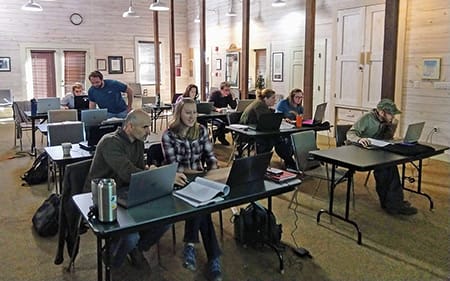
Burn prioritization modeling seminars and fire modeling tools are supported by Wildland Fire Science to train managers in the important planning stages of prescribed fires.
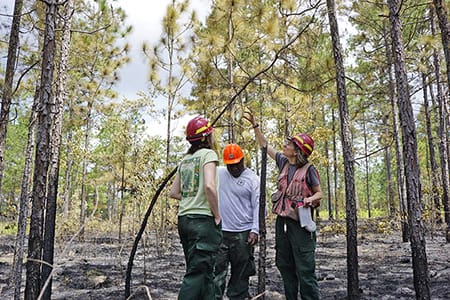
Educating and guiding the next generation of fire researchers and managers is a key goal of Wildland Fire Science and a resource for testing new ideas in fire research.
Tall Timbers hosts the premier fire technology transfer organization—the Southern Fire Exchange. This JFSP funded effort helps connect research to management through webinars, workshops, and support of the Prescribed Fire Science Consortium.
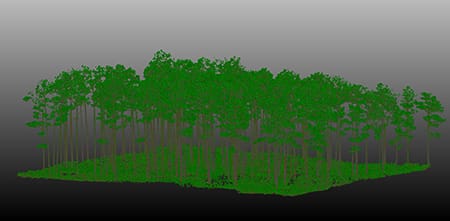
Working with partners in the Prescribed Fire Science Consortium, the program is building nexgen 3-D fuel beds using terrestrial LiDAR and novel sampling techniques to power new fire behavior models for prescribed fire managers. This work links to Tall Timbers work in wildlife habitat usage and ecological forestry.
The Longleaf Legacy landscape prescribed fire burn team arm of Wildland Fire Science works directly with landowners and partners to effectively put fire on the ground and promote prescribed fire throughout the region.
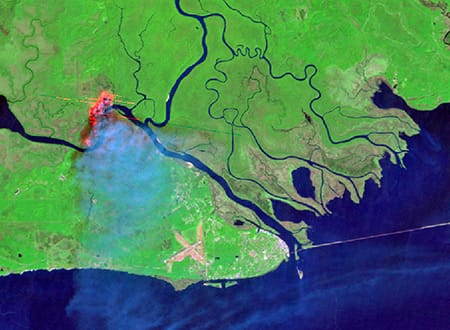
Tall Timbers is leading an effort to map fire regimes at the landscape scale. Staff work with numerous agencies to evaluate fire records and satellite imagery to build this critical conservation database. https://skfb.ly/6DqOY
Tall Timbers hosts the Prescribed Fire Science Consortium, a national network of researchers and managers who promote integrated research and management to advance next generation tools for fire practitioners. https://arcg.is/1DSjDT
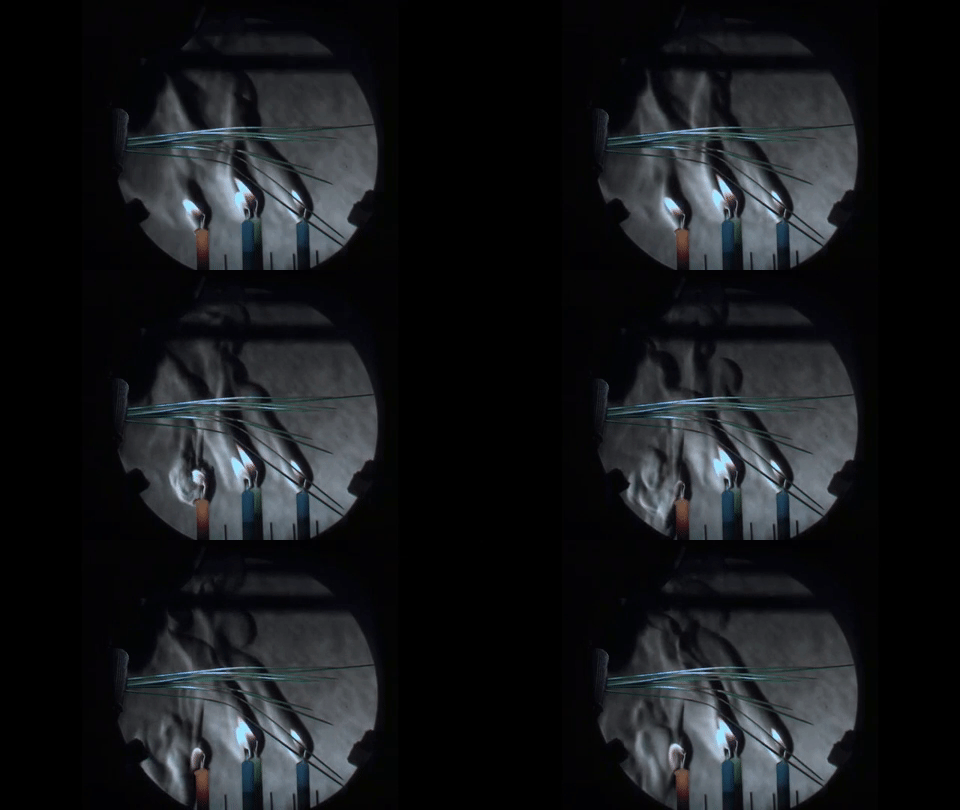
We are linking physics and field observations to understand the fluid dynamics of fire behavior surface fire regimes. Our work combines field observations using advanced thermal imaging techniques, laboratory studies, and coupled fire-atmospheric modeling to help managers improve outcomes of managed fire regimes.
Selected Publications authored by Wildland Fire Science staff.
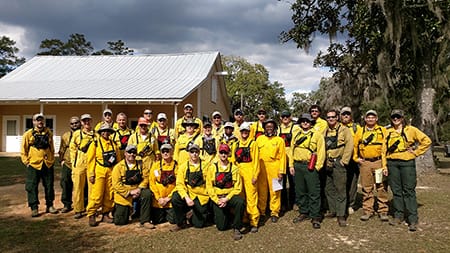
Staff and researchers support Federal fire training by serving as a cadre for NWCG training courses, ranging from basic wildland fire to advanced fire effects.
(PFTC) specializes in training fire fighters the principles and techniques of prescribed fire through practical hands-on experience. https://www.fws.gov/fire/pftc/
Private land owners are the largest source of prescribed fire in the country. These land owners and the culture of fire that was maintained by them during decades of suppression are a part of why Tall Timbers is a world-wide center for prescribed fire science. Workshops and fire training are a critical focus of the Longleaf Legacy Landscape Burn Team and our support of the Georgia Forestry Commission Prescribed Fire Center in Marion County.
The conserved lands of the Greater Red Hills region are found on working, income-producing properties that support agriculture, forestry, and recreational hunting. These properties contribute $272 million annually to local economies and support 2,300 jobs. [link to Planning & Advocacy section] The landowners’ strong stewardship ethic preserves their working lands while replenishing drinking water supplies, protecting water quality, and providing wildlife habitat for dozens of rare and endangered species. Tall Timbers’ conservation easements on these working properties encourage landowners to retain their traditional livelihood by keeping farms in family ownership.
Home to world-class wild quail populations, the Greater Red Hills region contains the largest concentration of gamebird preserves in the United States. These preserves also support the largest community of Red-cockaded woodpeckers on private lands. Indicators of high quality habitat found here include the gopher tortoise, Bachman’s sparrow, fox squirrel, and many amphibians. Tall Timbers’ conservation easements identify and protect the critical habitats of these species.
The region also boasts outstanding aquatic resources. Large river systems, like the Flint/Apalachicola, Ochlockonee, and Aucilla, flow from Georgia and feed into the Gulf of Mexico to support some of the world’s most productive estuaries. Large disappearing sinkhole lakes, like Iamonia, Miccosukee, and Jackson, provide habitat for an array of aquatic species and migratory birds. Tall Timbers’ conservation easements protect these vital watersheds and wetlands that are the lifeblood for the ecological health of the region.
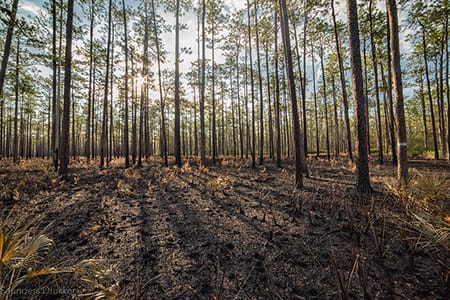
Once dominated by longleaf pine, our pine woodlands support abundant wildlife and local economies. These forests need prescribed fire to stay healthy. Herbert L. Stoddard and his associates Ed and Roy Komarek were pioneers in this emerging scientific field during the mid-20th century. Tall Timbers continues that legacy with applied research on prescribed fire and land management. Today, there is a tremendous need to expand prescribed fire use beyond the Red Hills to ensure ecosystem health and reduce wildfire risk. Additionally, Tall Timbers uses conservation easements to permanently protect private woodlands while balancing the need for economic return from selective timbering.