Big Push to Pass Conservation Easement Incentive Act (S.330)
Land Trusts throughout the nation are making a big push for Congress to pass the Conservation Easement Incentive Act (S.330). Currently the bill has 49 Senate cosponsors — evenly divided between Democrats and Republicans — including support from Senators Bill Nelson of Florida and Johnny Isakson of Georgia.
S. 330 would make permanent key tax incentives for private landowners who donate conservation easements. Since the incentives were enacted in 2006, they have been extended regularly, but only temporarily, by Congress. Just such a limited extension was approved by the Senate Finance Committee in July. Land trusts believe that it is time to improve on that, by making these powerful conservation provisions permanent, and giving landowners certainty to plan and conserve.
Passed overwhelmingly by the House of Representatives, as part of a charities tax package in February, S. 330 also enjoys broad organizational support:
CONSERVATIONISTS: The Nature Conservancy, Conservation Fund, Trust for Public Land, Theodore Roosevelt Conservation Partnership, Wilderness Society, Land Trust Alliance.
FARMERS & FORESTERS: American Farm Bureau Federation, National Cattlemen’s Beef Association, American Forest Foundation, National Alliance of Forest Owners, American Farmland Trust, Hardwood Federation.
HUNTERS & FISHERS: National Rifle Association, National Sports Shooting Foundation, Ducks Unlimited, Izaak Walton League, Pheasants Forever, Quail Forever, Mule Deer Foundation.
HISTORIC PRESERVATIONISTS: National Trust for Historic Preservation, Civil War Trust, Scenic America.
Tall Timbers supports the Enhanced Easements Incentives as they have helped permanently conserve nearly 130,000 acres of forestland, scenic landscapes, and wildlife habitat in the greater Red Hills Region.
The incentives are good public policy because:
Tax incentives are a cost-effective way to protect land. By encouraging donated easements, every dollar of tax incentives leverages $2.80 worth of conservation.
The budget impact is small. This incentive has widespread, lasting impact on land conservation but only a minor impact on the federal budget—$1.2 billion over ten years.
This incentive makes the tax system fairer. The enhanced incentive allows working farmers and ranchers, as well as forest landowners with modest incomes, to realize more of the value of the tax deduction.
Easements are a voluntary, private-sector approach to conservation. Landowners and community-supported nonprofits take the lead, rather than the government.
The goal is to get all Senators to cosponsor this important legislation! Please contact the Capitol Switchboard at 202-224-3121. But don’t just leave a message at the front desk, ask to speak with the senate staffer who handles tax issues.
Thank you for your support and help in getting this important federal legislation across the finish line.
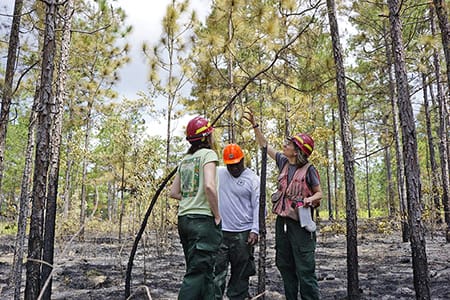
About the photo: Sisters Jane Preyer and Kathleen Reid-Scott (pictured above), and their brother Dr. James Reid III, donated a conservation easement to Tall Timbers for their family’s forestland that protects the Ochlockonee River Watershed. For landowners, donating a conservation easement is a way to conserve places they love. It’s also a major financial decision. When landowners donate a conservation easement, they give up part of the value of their property — often their family’s biggest asset. Tax incentives offset some of that loss in property value, making conservation a viable option for more landowners.
Technology, grasshoppers and their poop combine for a new study in the Red Hills region
By Jim Cox, Stoddard Bird Lab Director
Technological changes may soon turn a lot of great field biologists out to pasture. Satellite imagery, automated recording devices, and digital cameras provide eyes and ears that never sleep, and perhaps nowhere is the technological transformation more evident than in a growing ability to know where things are and what they’re doing simply by collecting a little poop.
Consider this new study underway on the Wade Tract and other properties in the region. Dr. JoVonn Hill (Mississippi Entomological Museum, Mississippi State University in Starkville, MS) has studied grasshoppers for decades and is overwhelmed by the diversity sustained by longleaf pine forests. You might think we know everything we need to know about the plants and animals found in southeastern pinelands, but this is clearly not the case.
During the past decade, Dr. Hill has discovered close to 30 undescribed species of grasshoppers inhabiting the biologically rich grasslands of the southeast. Much like plants, the highest diversity of grasshoppers occurs in regularly burned areas containing large patches of native groundcover, but the biology of the many species found in such areas is totally unknown.
Working with Dr. John Barone (Columbus State University’s Biology Department, in Columbus, Georgia), Hill has begun to use DNA to help determine which plants are being consumed by the many different species of grasshoppers. Grasshoppers are some of the most important herbivores found in grassland ecosystems, and detailed information on their ecological roles requires knowledge of their diets. Direct observations of grasshoppers during fieldwork can provide some data about food plants, but their wariness and mobility make this challenging.
Drs. Hill and Barone are using a technique known as DNA barcoding to help figure out grasshopper diets. By collecting the DNA from different plant species and then analyzing the unique chemical make-up of each species, a telltale signature can be developed. If you catch a grasshopper, wait patiently for it to provide a feces, and then analyze the plant DNA found in the poop, you conveniently can see the same DNA signatures from all the plants that species has eaten within the past few hours.
The duo has developed a DNA barcode library for about 200 different species of plants found in the grasslands of Mississippi and Alabama, and now they’re turning their attention to plants and grasshoppers in the Red Hills region. Since September, they been collecting samples from plants and grasshoppers and sending the material through the ringers. There are many questions the process could be used to assess. How does the ground cover diversity affect the diversity of grasshoppers? Are there specialist grasshoppers out there that focus narrowly on selected plants or do grasshopper diets shift in relation do different suites of plants species present? How does the grasshopper community vary in relation to the disturbance of native ground cover? Do non-native species of grasshoppers take over and reduce the number of other species? Are there shifts in diet based on groundcover conditions?
The study is in a very early stage, but it provides a wonderful reminder of the role that biological field stations. The forests of the Red Hills region have attracted biologists for over a hundred years. The region contains an unparalleled diversity of plants and animals as well as some of the best examples of longleaf pine forests left anywhere on earth. Exploring the complex diversity of this rich landscape is fundamental goal of Tall Timbers Research Station and our many colleagues. The tools we use may be changing daily, but the goal remains the same as it did when Stoddard first slapped an aluminum band on a quail way back in the 1920s.
By David Godwin, PhD, Southern Fire Exchange Program and Outreach Coordinator
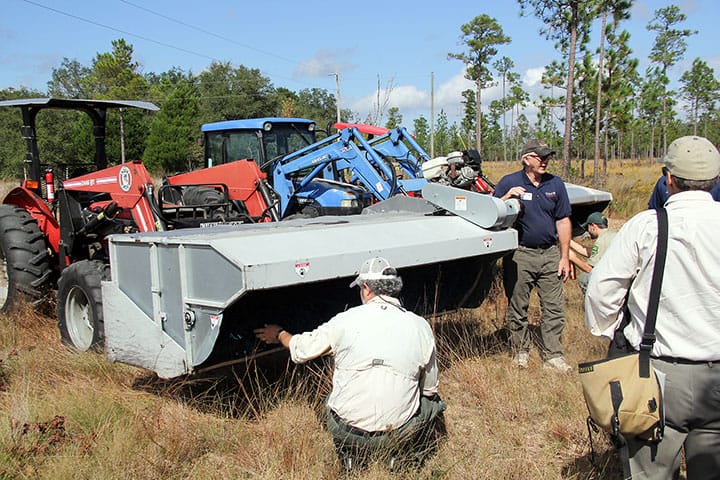
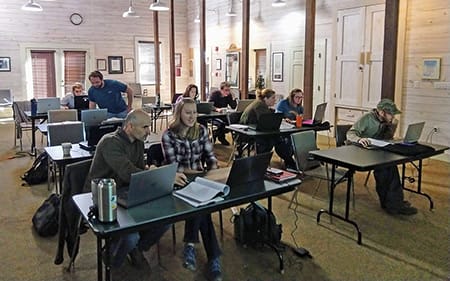
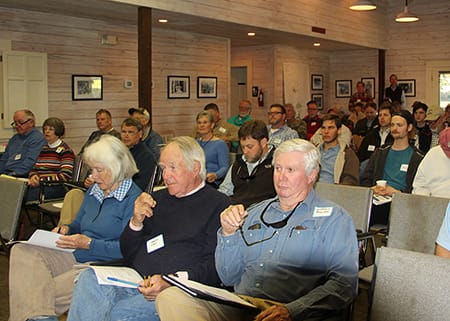
Over 30 participants at an October upland ecosystem ground cover restoration workshop had unique hands-on opportunities to inspect and learn about various native ground cover seed collection and planting equipment used by The Nature Conservancy of Florida (TNC). The workshop was held at TNC’s Apalachicola Bluffs and Ravines Preserve in Bristol, Florida, and was co-hosted by Tall Timbers’ partner the Southern Fire Exchange.
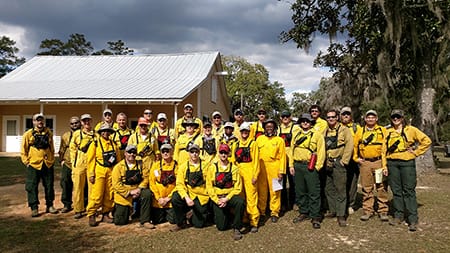
Tall Timbers Fire Ecology Program Director, Dr. Kevin Robertson, gave an invited special presentation on the relationships between disturbance, ground cover species, and prescribed fire management opportunities. Held in partnership with The Nature Conservancy and the Apalachicola Regional Stewardship Alliance, the successful workshop connected with land managers who are collectively responsible for over one-million acres in Florida and Georgia.
Workshop participants inspect native seed collection equipment used by The Nature Conservancy to restore longleaf pine sand hill communities in North Florida.
A new exhibit opens at the Webster Art Gallery in December
It’s artists’ choice this time at the Webster Art Gallery. The Tallahassee Area Watercolor Society opens a new exhibit the first week of December at the Gallery, which is on the second floor of the historic Beadel House. Artists who submitted their paintings weren’t restricted to a theme for this exhibit, so there is a wide range of subjects represented.
The Webster Art Gallery is open on Tuesdays from 2-4 PM and during Tall Timbers monthly Open House. Those interested in meeting the artists can do so at a reception on December 6 at 2:15 during our Open House. The Beadel House will be decorated for the holidays with vintage ornaments. Light refreshments will be served.
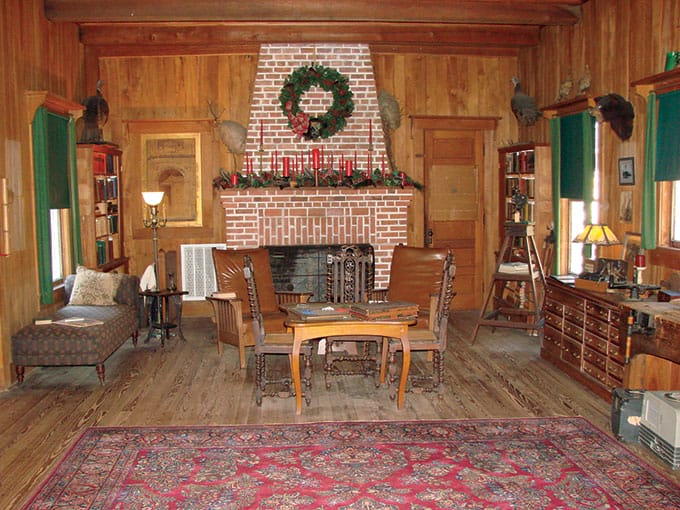
The Beadel House Living Room decorated for the holidays. Photo by Christine Ambrose
By Georgia Ackerman, Greater Red Hills Awareness Initiative Coordinator
The partners of the Red Hills Initiative contribute articles for the twice monthly column, “Exploring the Red Hills” published in the Tallahassee Democrat. Authors share stories celebrating the cultural, historical, and ecological wonders of the Red Hills. Find more blogs and videos at Red Hills Region.
The M-CORES program, which includes the proposed Suncoast Connector Toll Road in Jefferson County, passed through the Florida Legislature at breakneck speed with little review or analysis. Tall Timbers has a number of concerns given the potential for significant and wide spread impacts. These include fragmenting public and private conservation lands, robbing business from Main Street Monticello, impacting our rivers and other water resources, and making prescribed fire more difficult and costly.
Join us in asking the Jefferson County Board of County Commissioners to OPPOSE the Suncoast Connector toll road and its path through Jefferson County.
Take action now with our easy email form.
Send an email to all five Jefferson County Board of County Commissioners with one click!
Selected Publications authored by Wildland Fire Science staff.
Educating and guiding the next generation of fire researchers and managers is a key goal of Wildland Fire Science and a resource for testing new ideas in fire research.
Tall Timbers hosts the Prescribed Fire Science Consortium, a national network of researchers and managers who promote integrated research and management to advance next generation tools for fire practitioners. https://arcg.is/1DSjDT
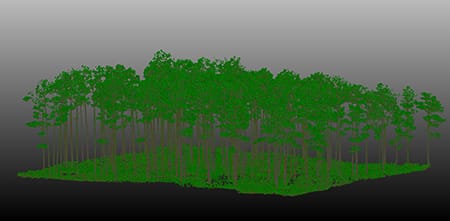
Working with partners in the Prescribed Fire Science Consortium, the program is building nexgen 3-D fuel beds using terrestrial LiDAR and novel sampling techniques to power new fire behavior models for prescribed fire managers. This work links to Tall Timbers work in wildlife habitat usage and ecological forestry.
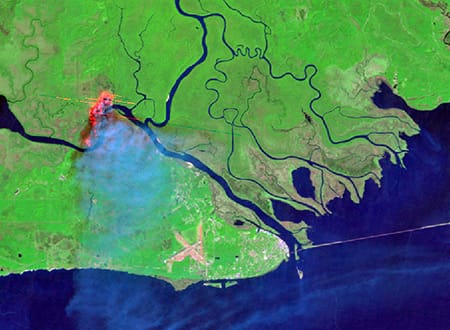
Tall Timbers is leading an effort to map fire regimes at the landscape scale. Staff work with numerous agencies to evaluate fire records and satellite imagery to build this critical conservation database. https://skfb.ly/6DqOY
We are linking physics and field observations to understand the fluid dynamics of fire behavior surface fire regimes. Our work combines field observations using advanced thermal imaging techniques, laboratory studies, and coupled fire-atmospheric modeling to help managers improve outcomes of managed fire regimes.
Burn prioritization modeling seminars and fire modeling tools are supported by Wildland Fire Science to train managers in the important planning stages of prescribed fires.
The conserved lands of the Greater Red Hills region are found on working, income-producing properties that support agriculture, forestry, and recreational hunting. These properties contribute $272 million annually to local economies and support 2,300 jobs. [link to Planning & Advocacy section] The landowners’ strong stewardship ethic preserves their working lands while replenishing drinking water supplies, protecting water quality, and providing wildlife habitat for dozens of rare and endangered species. Tall Timbers’ conservation easements on these working properties encourage landowners to retain their traditional livelihood by keeping farms in family ownership.
Home to world-class wild quail populations, the Greater Red Hills region contains the largest concentration of gamebird preserves in the United States. These preserves also support the largest community of Red-cockaded woodpeckers on private lands. Indicators of high quality habitat found here include the gopher tortoise, Bachman’s sparrow, fox squirrel, and many amphibians. Tall Timbers’ conservation easements identify and protect the critical habitats of these species.
The region also boasts outstanding aquatic resources. Large river systems, like the Flint/Apalachicola, Ochlockonee, and Aucilla, flow from Georgia and feed into the Gulf of Mexico to support some of the world’s most productive estuaries. Large disappearing sinkhole lakes, like Iamonia, Miccosukee, and Jackson, provide habitat for an array of aquatic species and migratory birds. Tall Timbers’ conservation easements protect these vital watersheds and wetlands that are the lifeblood for the ecological health of the region.
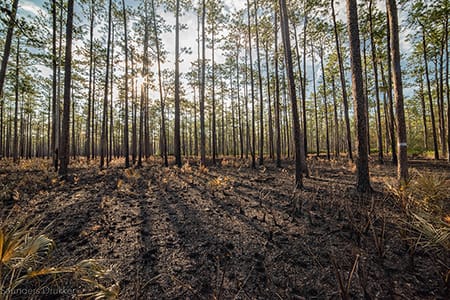
Once dominated by longleaf pine, our pine woodlands support abundant wildlife and local economies. These forests need prescribed fire to stay healthy. Herbert L. Stoddard and his associates Ed and Roy Komarek were pioneers in this emerging scientific field during the mid-20th century. Tall Timbers continues that legacy with applied research on prescribed fire and land management. Today, there is a tremendous need to expand prescribed fire use beyond the Red Hills to ensure ecosystem health and reduce wildfire risk. Additionally, Tall Timbers uses conservation easements to permanently protect private woodlands while balancing the need for economic return from selective timbering.
Tall Timbers hosts the premier fire technology transfer organization—the Southern Fire Exchange. This JFSP funded effort helps connect research to management through webinars, workshops, and support of the Prescribed Fire Science Consortium.
The Longleaf Legacy landscape prescribed fire burn team arm of Wildland Fire Science works directly with landowners and partners to effectively put fire on the ground and promote prescribed fire throughout the region.
Staff and researchers support Federal fire training by serving as a cadre for NWCG training courses, ranging from basic wildland fire to advanced fire effects.
(PFTC) specializes in training fire fighters the principles and techniques of prescribed fire through practical hands-on experience. https://www.fws.gov/fire/pftc/
Private land owners are the largest source of prescribed fire in the country. These land owners and the culture of fire that was maintained by them during decades of suppression are a part of why Tall Timbers is a world-wide center for prescribed fire science. Workshops and fire training are a critical focus of the Longleaf Legacy Landscape Burn Team and our support of the Georgia Forestry Commission Prescribed Fire Center in Marion County.

 Land Trusts throughout the nation are making a big push for Congress to pass the Conservation Easement Incentive Act (S.330). Currently the bill has 49 Senate cosponsors — evenly divided between Democrats and Republicans — including support from Senators Bill Nelson of Florida and Johnny Isakson of Georgia.
 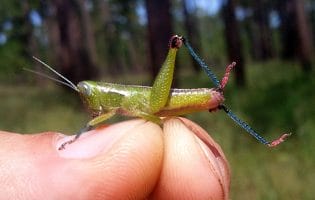 During the past decade, Dr. Hill has discovered close to 30 undescribed species of grasshoppers inhabiting the biologically rich grasslands of the southeast. Much like plants, the highest diversity of grasshoppers occurs in regularly burned areas containing large patches of native groundcover, but the biology of the many species found in such areas is totally unknown.
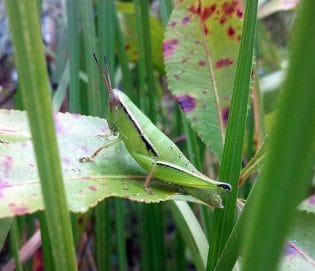 The duo has developed a DNA barcode library for about 200 different species of plants found in the grasslands of Mississippi and Alabama, and now they’re turning their attention to plants and grasshoppers in the Red Hills region. Since September, they been collecting samples from plants and grasshoppers and sending the material through the ringers. There are many questions the process could be used to assess. How does the ground cover diversity affect the diversity of grasshoppers? Are there specialist grasshoppers out there that focus narrowly on selected plants or do grasshopper diets shift in relation do different suites of plants species present? How does the grasshopper community vary in relation to the disturbance of native ground cover? Do non-native species of grasshoppers take over and reduce the number of other species? Are there shifts in diet based on groundcover conditions?